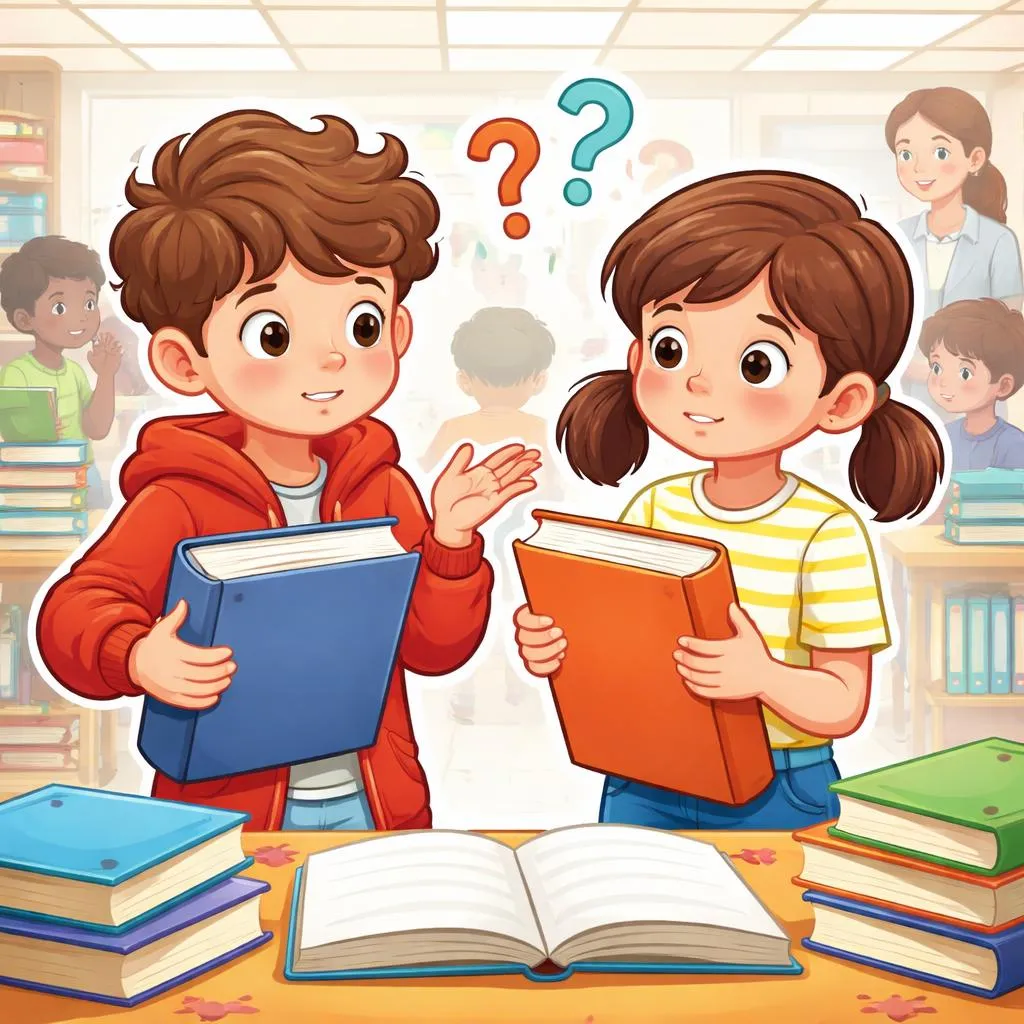

Many English learners see the words “book” and “volume” in stories, libraries, and school lessons. At first, the two words may look almost the same. Both can talk about printed pages with information or stories inside.
However, native speakers do not always use them in the same way. “Book” is common in daily English. “Volume” sounds more formal and specific. Children who understand this difference can read more naturally and speak with greater confidence.
Learning small vocabulary differences helps children grow into stronger readers. It also helps them understand school texts, museums, libraries, and even online articles more clearly.
What Do These Expressions Mean?
The word “book” usually means a set of printed pages joined together. People read books for learning, fun, or information. Children hear this word very early in life.
A child-friendly explanation is simple. A book is something you hold and read. It may tell a story, teach science, or show pictures.
The word “volume” can also mean a book, but it often describes one part of a larger set. For example, a long encyclopedia may have many volumes.
Children may think these words are identical because both describe reading materials. Still, their tone and usage are different in real English.
“Book” appears in almost every daily situation. “Volume” appears more often in libraries, history lessons, or formal writing.
For example, a teacher may say:
“Please bring your math book.”
But a librarian may say:
“This encyclopedia has twelve volumes.”
In many cases, “volume” sounds more academic. It gives the idea of organization, collections, or large works divided into parts.
Children also meet “volume” in fantasy novels and comic collections. A manga series may have Volume 1, Volume 2, and Volume 3.
That is why understanding both expressions is useful for reading and school success.
What’s the Difference?
The biggest difference is simplicity versus formality.
“Book” is more general and common. People use it in everyday life. It can describe novels, picture books, notebooks, and textbooks.
“Volume” is more specific and formal. It often refers to one book inside a series or collection.
One word feels casual. The other feels organized and academic.
For example:
“My favorite book is about space.”
This sentence sounds natural in daily conversation.
Now compare it with:
“I borrowed the second volume of the history series.”
This sentence sounds more formal and detailed.
Another important difference involves size and structure.
A “book” can stand alone. It does not need other books around it.
A “volume” usually belongs to something larger. It may be part of a set.
Imagine a long adventure story split into five parts. Each part is a volume. Together, all five volumes form the complete work.
Tone also matters.
“Book” feels friendly and easy for children.
“Volume” feels serious or educational.
That is why schools, libraries, and research materials often use “volume.”
Children should also know that “volume” has other meanings in English. It can describe sound level in music or the amount of space inside an object.
Still, when people discuss reading materials, “volume” usually means one part of a collection.
Understanding context helps children avoid confusion.
When Do We Use Each One?
People use “book” almost everywhere.
Children use it at school, at home, in bookstores, and during reading time.
Parents may say:
“Put your book on the shelf.”
Teachers may say:
“Open your English book.”
Friends may ask:
“Did you finish the book?”
These situations sound natural because “book” fits normal conversation.
People use “volume” in more special situations.
Libraries often organize materials by volume number.
Schools may use the word in history or science lessons.
Collectors also use it when discussing comic books, manga, or encyclopedia sets.
For example:
“I cannot find Volume 4 of the series.”
This sentence tells listeners that the speaker needs one specific part.
A museum guide might also say:
“This ancient work contains three volumes.”
That sounds formal and educational.
Children should notice that native speakers rarely replace “book” with “volume” in casual speech.
Most people say:
“I bought a new book.”
Very few people say:
“I bought a new volume.”
The second sentence only sounds natural if the speaker discusses a series.
This difference helps English sound more smooth and natural.
Example Sentences for Kids
Here are simple examples with “book.”
“I read a funny book after dinner.”
“My teacher gave me a new math book.”
“This book has beautiful animal pictures.”
Now look at examples with “volume.”
“My brother owns every volume of the comic series.”
“I borrowed Volume 2 from the library.”
“This volume explains dinosaurs in detail.”
Children can compare the feeling of these sentences.
The “book” examples sound friendly and everyday.
The “volume” examples sound more organized and specific.
Reading many examples helps learners notice these patterns naturally.
Why Children Often Mix These Words
Young learners usually translate directly from their first language. In some languages, one word may cover both meanings.
Because of this, children sometimes say:
“I lost my science volume.”
Native speakers would usually say:
“I lost my science book.”
Another reason is reading level.
Children first learn “book.” Later, they meet “volume” in school libraries or advanced reading materials.
The new word feels exciting, so some learners try to use it everywhere.
However, English vocabulary depends heavily on context.
Using the correct word makes speech sound smoother and more natural.
Children also become confused when they see labels like:
“Volume One”
“Volume Two”
These labels appear on books themselves, so learners may think “volume” always replaces “book.”
Actually, it only works in certain situations.
Common Mistakes to Avoid
One common mistake is using “volume” for every book.
Incorrect:
“I carry three school volumes every day.”
Correct:
“I carry three school books every day.”
Another mistake happens when learners forget that “volume” often belongs to a set.
Incorrect:
“I bought a cooking volume yesterday.”
Correct:
“I bought a cooking book yesterday.”
Now look at a situation where “volume” works correctly.
Correct:
“I finished the final volume of the adventure series.”
Children should also avoid mixing meanings.
Remember that “volume” may describe sound.
For example:
“Please lower the volume.”
This sentence has nothing to do with books.
Context changes meaning in English, so learners should pay close attention.
Another mistake involves articles.
Incorrect:
“She read volume.”
Correct:
“She read a volume.”
English nouns usually need articles like “a” or “the.”
Practicing these details helps children become more accurate writers and speakers.
Easy Memory Tips
A simple memory trick can help.
Think about “book” as one friendly reading item.
Think about “volume” as one part inside a big collection.
Children can imagine a bookshelf.
One colorful storybook sits alone. That is a book.
Next to it stands a giant encyclopedia set with many matching covers. Each part is a volume.
Another fun trick uses the letter “V.”
“V” in “volume” can remind children of “very large collection.”
That idea helps learners remember that volumes often belong together.
Parents can also encourage children to notice labels in libraries or bookstores.
Real examples make vocabulary easier to remember.
How Reading Habits Improve Vocabulary Understanding
Children learn vocabulary best through repeated exposure.
Reading different kinds of materials helps them notice how words work naturally.
Picture books mostly use “book.”
School research materials often use “volume.”
Comic collections and fantasy novels may use both.
For example, a child may hear:
“This book is exciting.”
Later, the same child may read:
“Volume 5 arrives next month.”
Over time, the brain connects each word with the correct situation.
This process builds natural language skills.
Parents can support this learning by discussing reading materials together.
Simple conversations help children notice vocabulary patterns without stress.
Questions like these work well:
“Is this one book or part of a series?”
“Do you see a volume number on the cover?”
These small moments strengthen understanding.
Quick Practice Time
Try these simple exercises.
Choose the Correct Word
I borrowed the third _____ of the comic series.
(book / volume)
Answer: volume
My sister reads a picture _____ before bed.
(book / volume)
Answer: book
Fill in the Blank
Our library has every _____ in the fantasy collection.
Answer: volume
I put my English _____ in my backpack.
Answer: book
These short exercises help children practice real usage.
How Parents Can Support English Vocabulary Growth
Parents do not need difficult lessons to help children learn vocabulary.
Simple reading time is enough.
Children remember words better when they hear them naturally.
A parent might say:
“This is your favorite book.”
Later, while visiting a library:
“Look at all these encyclopedia volumes.”
These natural examples teach tone and context at the same time.
Children also enjoy organizing bookshelves.
Parents can ask children to separate single books from book series.
Hands-on activities make learning more memorable.
Watching reading habits also helps.
Children who read regularly often understand vocabulary differences faster.
They begin noticing patterns on their own.
That confidence improves both speaking and writing skills.
Why These Small Vocabulary Differences Matter
Some learners wonder why these details are important.
The answer is simple.
Natural vocabulary makes communication easier.
A child who understands “book” and “volume” can read instructions, library labels, and school materials more clearly.
This understanding also supports stronger academic English later in life.
Small vocabulary differences build large language skills over time.
English becomes easier when children notice how native speakers truly use words.
“Book” usually means any reading item, while “volume” usually means one part of a larger collection or series.