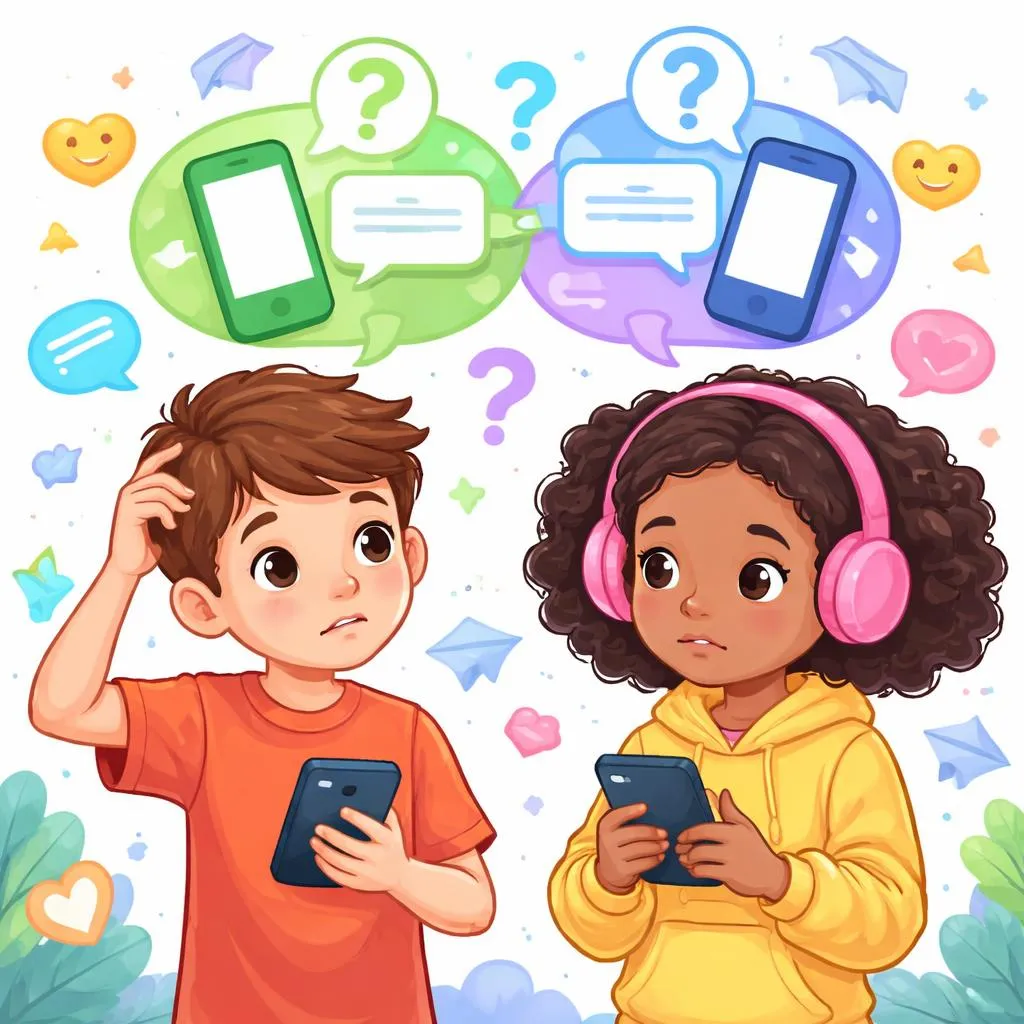

Children today grow up surrounded by phones, tablets, and online chats. Because of this, they hear many similar English expressions every day. Two common examples are “message to” and “text to.” These expressions seem almost identical at first.
Many learners use them in the same way without thinking about the small differences. That is understandable because both expressions involve sending words to another person. Both also appear in apps, games, classrooms, and family conversations.
Still, native speakers often choose one expression more naturally depending on the situation. Understanding this difference helps children communicate more clearly and confidently.
Learning small vocabulary details also improves reading, writing, listening, and speaking skills. Simple comparisons like this help young learners sound more natural in real-life English.
What Do These Expressions Mean?
The expression “message to” usually means sending information, words, or communication to another person. A message can appear in many forms. It may be spoken, written, typed, or recorded.
Children can think of a message as any information shared with someone else.
For example:
A teacher may leave a message to parents.
A friend may send a message in a game app.
A coach may record a message to the team.
The expression “text to” usually refers to sending a written phone message. People often use it with mobile phones or messaging apps.
A child-friendly explanation is simple:
A text is a short message sent on a phone.
These expressions seem similar because a text is actually one type of message. That is why learners often mix them up.
Still, not every message is a text.
This small idea helps children understand the difference more easily.
What’s the Difference?
The biggest difference is scope.
“Message to” is broader. It can describe many kinds of communication.
“Text to” is more specific. It usually means typing and sending words through a phone or digital device.
One expression is more general. The other is more connected to technology and texting.
For example:
“I sent a message to my teacher.”
This sentence could mean:
An email
A voice message
A chat app message
A written note
Now look at this example:
“I sent a text to my teacher.”
This clearly suggests a phone text or messaging app.
Tone also matters.
“Message” often sounds slightly more formal or flexible.
“Text” feels more casual and modern.
Children should also notice that “text” strongly connects to smartphones and quick digital communication.
Another small difference appears in verbs.
People often say:
“Send a message”
“Leave a message”
But with texting, native speakers often say:
“Send a text”
“Text someone”
For example:
“I texted my friend after school.”
This sounds very natural in spoken English today.
When Do We Use Each One?
People use “message to” in many situations.
Children may hear it:
At school
In online games
In family chats
In emails
In voice recordings
A principal may send a message to families about school events.
A parent may leave a message to remind a child about homework.
A friend may send a birthday message online.
Because “message” works in many situations, it appears very often in English.
People use “text to” in more specific situations involving phones or digital typing.
Children may:
Text a friend after class
Send a text to parents
Text teammates about practice
Texting usually happens quickly and casually.
For example:
“Please text me when you arrive.”
This sounds natural because texting often shares short updates.
Children should also notice that texting usually involves short writing instead of long paragraphs.
In modern life, texting has become one of the most common forms of communication. That is why children hear the word so often.
Still, “message” remains more flexible because it can describe many communication styles.
Why Native Speakers Often Choose “Text”
Language changes with technology.
Years ago, people used “message” more often because texting did not exist yet. Today, phones and apps make texting part of daily life.
Native speakers now use “text” naturally in casual conversations.
For example:
“I’ll text you later.”
This sentence sounds friendly and modern.
But people still use “message” when the communication type is unclear.
For example:
“She left a message.”
Listeners do not know whether the message was:
Written
Spoken
Recorded
Typed
That flexibility makes “message” useful in many situations.
Children who understand this difference sound more natural in real conversations.
Example Sentences for Kids
Here are some examples using “message to.”
Mom sent a message to my teacher.
Leo left a message for his friend.
Our coach shared a message with the team.
Now look at examples using “text to.”
I sent a text to Dad after school.
Emma texted her cousin yesterday.
Please text me when you get home.
These examples help children notice how the expressions appear in everyday English.
Common Mistakes to Avoid
One common mistake is thinking every digital communication is a text.
Incorrect:
“I sent a text to the school website.”
Correct:
“I sent a message through the school website.”
Websites usually involve messages, not texting.
Another mistake happens when learners use “message” too generally in phone situations.
Incorrect:
“I messaged my mom by SMS text message phone.”
Correct:
“I texted my mom.”
Simple wording sounds more natural.
Some learners also confuse nouns and verbs.
“Text” often works as both:
Noun: “I sent a text.”
Verb: “I texted my friend.”
Children should practice both forms.
Another mistake is assuming texting always means long conversations.
Texts are usually short and quick.
Long detailed communication may sound more like messaging or emailing.
Easy Memory Tips
Here is a simple trick:
“Text” starts with “T.”
Children can connect “T” with:
Tiny
Typing
Telephone
This helps learners remember that texting usually involves phones and short writing.
Now think about “message.”
A message can move through many paths:
Voice
Email
Chat
Notes
Apps
So “message” is bigger and more flexible.
Another fun memory idea uses containers.
Imagine:
A big box labeled “messages”
A smaller box inside labeled “texts”
That works because every text is a message, but not every message is a text.
Visual learning often makes vocabulary easier to remember.
How These Expressions Appear in School Life
Schools use both expressions often.
Teachers may send messages through school apps or websites. These messages often contain:
Homework updates
Event reminders
Schedule changes
Students may text classmates about group projects or sports practice.
Children also hear these words during online learning.
For example:
“Please send a message in the class chat.”
Or:
“Text your partner after the meeting.”
Because digital learning is common today, children need to understand both expressions clearly.
Why Vocabulary Comparisons Help Young Learners
Learning similar words together builds stronger understanding.
Instead of memorizing vocabulary alone, children compare meaning, feeling, and usage.
This method improves:
Reading comprehension
Listening skills
Speaking confidence
Writing accuracy
Children also become more aware of natural English patterns.
That awareness helps them communicate more comfortably.
Vocabulary comparison teaches children that English is not only about rules. It is also about context and tone.
Quick Practice Time
Choose the correct answer.
Mia typed a short phone message to her dad.
a) message to
b) text to
Answer: b) text to
The principal shared information with all parents online.
a) message to
b) text to
Answer: a) message to
Fill in the blank.
I will ______ my friend after soccer practice.
Answer: text
The teacher sent a ______ to families about the trip.
Answer: message
Short practice activities help children remember vocabulary more naturally.
How Families Can Practice These Expressions at Home
Parents can turn daily communication into learning moments.
For example, children can:
Send short texts to family members
Write kind messages on sticky notes
Create pretend phone conversations
Families can also discuss examples together.
Ask:
“Is this a message or a text?”
Children then explain why.
This simple habit strengthens vocabulary understanding in a natural way.
Movies, cartoons, and games also provide useful examples. Children often hear these expressions during everyday entertainment.
Building Stronger English Through Everyday Communication
Learning the difference between “message to” and “text to” helps children understand modern English more clearly.
A message can take many forms and works in many situations. A text usually means a short typed phone communication.
Once children notice this small difference, they can choose words more naturally in conversations, schoolwork, and digital communication. Small vocabulary improvements often create big progress in confident English learning.