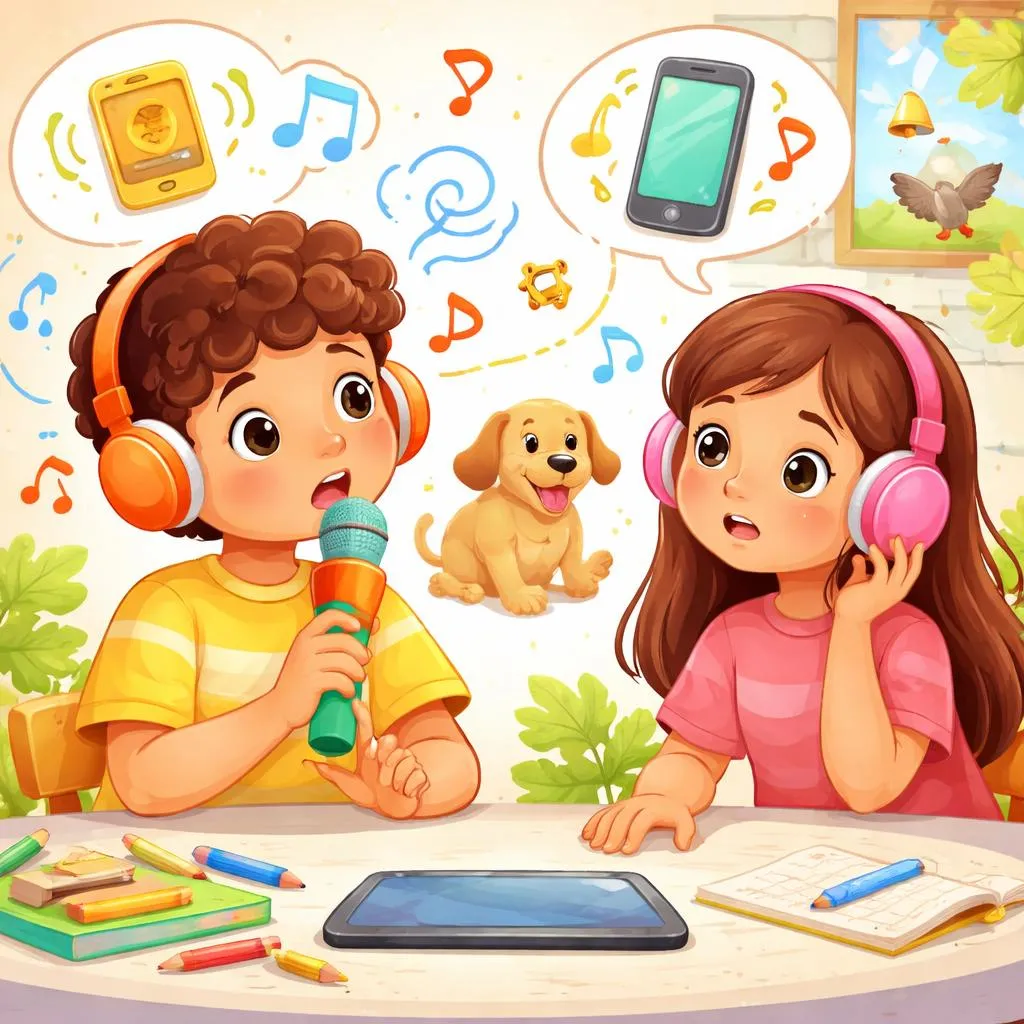

Children hear many different noises and speaking styles every day. English includes several words that describe what people hear, and some of those words seem very similar at first. The expressions “voice to” and “sound to” often confuse young learners because both connect to hearing and listening.
A child may say, “I heard a voice in the hallway.” Another child may say, “I heard a strange sound outside.” Both sentences involve hearing something, so learners sometimes believe the two expressions mean exactly the same thing.
However, English speakers use these words differently depending on what creates the noise and how specific the meaning becomes. Understanding these small differences helps children speak more clearly and understand stories, songs, and conversations more naturally.
Kids also meet these expressions in cartoons, games, books, and school activities. Learning how they work step by step makes listening and speaking easier.
What Do These Expressions Mean?
The word “voice” usually means the sound a person or animal makes when speaking or singing. It connects directly to living beings that communicate.
For children, a simple explanation works well: a voice comes from someone talking or singing.
People may describe voices as soft, loud, cheerful, sleepy, or excited.
The word “sound” has a broader meaning. It can describe any noise people hear.
For example:
music
rain
bells
footsteps
animal noises
machine noises
A child-friendly explanation could be this: sound means almost any noise your ears can hear.
The two expressions seem similar because voices are also sounds. Every voice creates sound, but not every sound is a voice.
This idea helps children understand the relationship between the two words.
“Voice” is more specific.
“Sound” is more general.
That small difference matters in everyday English.
What’s the Difference?
The biggest difference between “voice” and “sound” is the source of the noise.
A “voice” usually comes from a person or sometimes an animal speaking or singing.
A “sound” can come from almost anything.
For example:
a dog barking
a piano playing
thunder outside
a door closing
These are sounds, but they are not necessarily voices.
One expression is more human-centered. The other covers many kinds of noise.
Another difference appears in emotional meaning.
“Voice” often carries personality and feeling. People recognize emotions through voices.
For example:
happy voice
nervous voice
gentle voice
“Sound” usually focuses more on the noise itself.
For example:
loud sound
strange sound
soft sound
Children should also notice that “voice” often connects to communication.
People use voices to speak ideas, stories, and feelings.
“Sound” does not always involve communication. Wind and rain create sounds without speaking.
Another small difference involves grammar patterns.
People often say:
hear a voice
hear a sound
But they use different descriptive words afterward.
For example:
Her voice sounds kind.
The sound seems strange.
Understanding these patterns helps children sound more natural in English.
When Do We Use Each One?
People use “voice” when talking about speaking, singing, or recognizable human communication.
Children hear this word often in situations involving:
conversations
songs
storytelling
phone calls
classroom reading
A teacher might say:
“Please use a quiet voice in the library.”
That sentence focuses on the way a person speaks.
Parents may also say:
“I heard your voice from downstairs.”
This example clearly connects to a person talking.
People use “sound” when talking about general noises.
Children hear this word during:
weather discussions
music lessons
nature walks
movies
everyday listening
A child may say:
“I heard a funny sound outside the window.”
The listener may not know what created the noise yet.
“Sound” also appears often when people describe hearing experiences.
For example:
The music sounds beautiful.
The bell sounds loud.
That idea sounds fun.
Children should notice that English sometimes uses “sound” for opinions too.
For example:
“That sounds exciting!”
In this case, “sound” does not describe hearing only. It describes an impression or feeling.
Learning these flexible meanings helps children understand real conversations more easily.
Example Sentences for Kids
Sentences Using “Voice”
My teacher has a calm voice.
I heard Mom’s voice in the kitchen.
The singer’s voice sounded beautiful.
These examples show human speaking or singing.
Sentences Using “Sound”
I heard a strange sound outside.
The rain made a soft sound on the roof.
That drum sounds very loud.
These examples show general noises and listening experiences.
Short examples help children notice how naturally each word fits certain situations.
Common Mistakes to Avoid
Many learners use “voice” for every kind of noise.
Incorrect:
“I heard a voice from the thunder.”
Correct:
“I heard a sound from the thunder.”
Thunder creates sound, not voice.
Another common mistake happens when children use “sound” for speaking situations.
Incorrect:
“My dad has a funny sound.”
Correct:
“My dad has a funny voice.”
A person’s speaking style uses “voice.”
Children also sometimes believe animals cannot have voices.
In English, animals may also have voices when they communicate vocally.
For example:
“The bird’s voice sounded sweet.”
Another confusion happens with opinion expressions.
Incorrect:
“That voice fun.”
Correct:
“That sounds fun.”
Here, “sounds” means “seems” or “feels.”
These small differences become easier with repeated practice and listening.
Children should not worry about perfection immediately. Hearing real examples over time helps vocabulary become natural.
Easy Memory Tips
Simple memory tricks can make learning easier.
Think about this idea:
“Voice” belongs to people speaking.
“Sound” belongs to everything you hear.
Another fun trick uses circles.
Imagine a small circle inside a big circle.
The small circle is “voice.”
The big circle is “sound.”
This works because every voice is a sound, but many sounds are not voices.
Children can also remember this:
Voices talk.
Sounds happen.
Parents can create listening games at home. Play different noises and ask children:
“Is it a voice or a sound?”
This kind of playful practice helps vocabulary stay in memory longer.
Quick Practice Time
Exercise 1: Choose the Correct Word
I heard a strange ______ in the hallway.
a) voice
b) sound
Answer: b) sound
Grandma has a soft ______ when she reads stories.
a) voice
b) sound
Answer: a) voice
Exercise 2: Fill in the Blank
The baby’s ______ woke me up this morning.
Answer: voice
The rain made a relaxing ______ outside.
Answer: sound
Exercise 3: True or False
Every voice is a kind of sound.
Answer: True
Thunder has a voice.
Answer: False
Small exercises help children organize vocabulary more clearly in their minds.
Why Learning These Differences Helps Communication
Children become stronger listeners when they understand small vocabulary differences.
Words like “voice” and “sound” appear often in stories, songs, videos, and classroom activities. Understanding them helps children follow conversations more naturally.
These words also improve descriptive speaking skills.
Instead of saying “noise” for everything, learners can choose more accurate words. This makes communication clearer and more expressive.
Understanding listening vocabulary also supports reading comprehension. Children can imagine scenes more vividly when they know what kind of sound a story describes.
Strong vocabulary builds confidence step by step.
Building Better Listening Skills Through Everyday Life
Daily life gives children many chances to practice these expressions naturally.
Parents can ask simple questions during walks:
“Was that a voice or a sound?”
Children can also practice while watching cartoons or listening to music.
For example:
“Whose voice do you hear?”
“What sounds can you notice?”
These short conversations turn ordinary moments into useful language learning experiences.
Reading aloud together also helps. Storybooks often describe whispers, singing, bells, thunder, and animal noises. Children quickly begin to notice how English separates voices from general sounds.
Over time, these patterns become automatic.
“Voice to” usually connects to speaking or singing from living beings, while “sound to” connects to all kinds of noises and listening experiences. Understanding this simple difference helps children communicate more clearly and confidently in English every day.