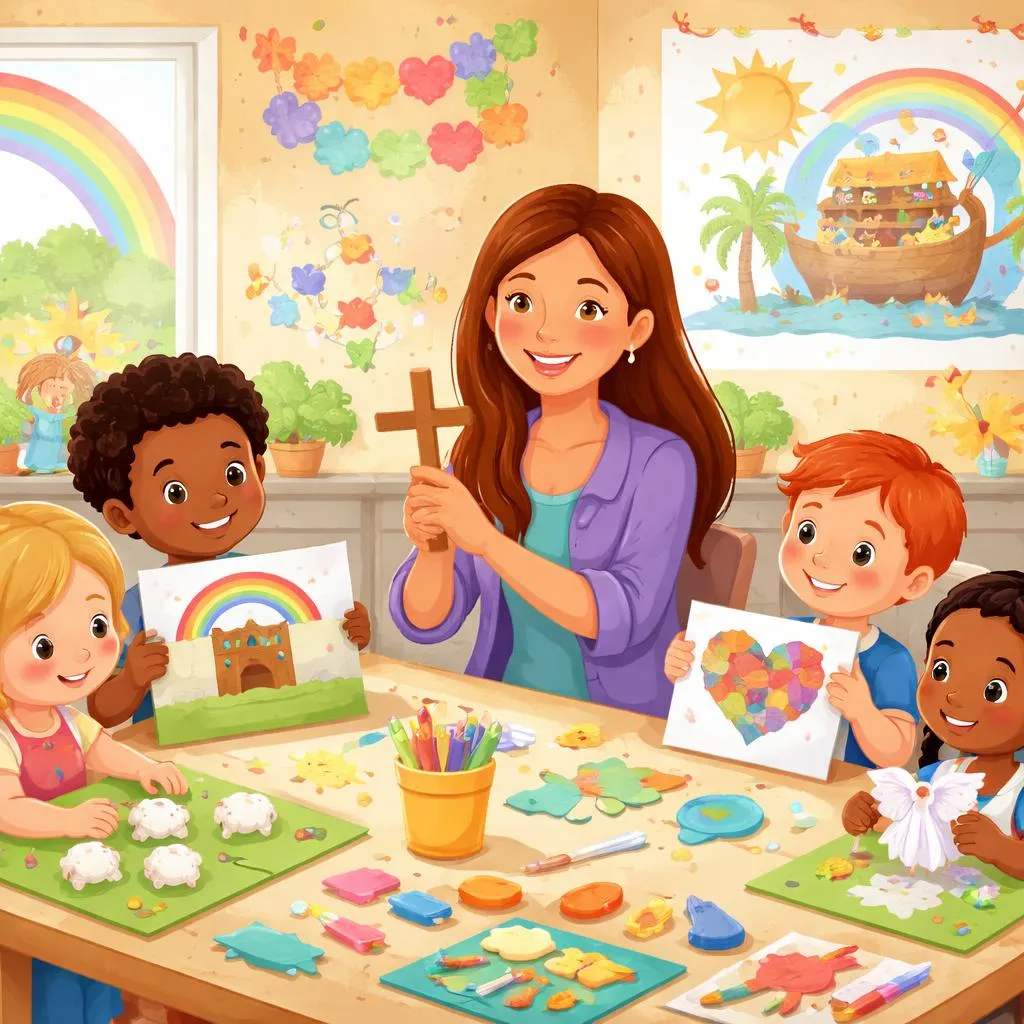

Hands need something to do while hearts learn. Minds remember more when fingers create. Children's bible stories and crafts combine narrative learning with physical expression. The story enters through ears. The craft reinforces through hands. This dual approach builds deeper understanding. This article explores methods for using this powerful combination in teaching.
What Defines Bible Stories and Crafts Together?
Children's bible stories and crafts pair narrative with creative activity. A story comes first. Noah builds an ark. David faces Goliath. Jesus calms the storm. After the story, hands begin working. A small ark from popsicle sticks. A shepherd's staff from paper. A storm in a bottle.
The craft connects directly to story elements. Children create something they just heard about. This physical connection makes the story more real. Abstract concepts become tangible through craft.
The best craft activities match children's abilities. Simple for younger ones. More complex for older children. The focus stays on reinforcing story themes rather than perfect creation.
Why Add Crafts to Bible Stories?
Adding crafts to bible stories offers several advantages for learning. First, crafts engage kinesthetic learners. Children who struggle to sit still often thrive when hands are busy. The craft provides appropriate movement while learning continues.
Second, crafts create memory anchors. Physical objects trigger story recall. A child who made a rainbow craft remembers Noah's promise. The object carries the memory.
Third, crafts extend learning time. The story may last ten minutes. The craft adds another twenty. This extended engagement deepens comprehension.
Fourth, crafts produce something to share. Children take creations home. They explain the story to family. This retelling reinforces learning while sharing faith.
Vocabulary Learning Through Stories and Crafts
Bible stories introduce vocabulary. Crafts reinforce through physical connection. The word "ark" appears in story. Children build an ark. The word gains physical meaning.
Materials vocabulary emerges through crafts. Glue, scissors, paper, and paint become part of the experience. These everyday words gain context through use.
Action words for crafting connect to story actions. Cut, fold, glue, and color describe what hands do. These verbs gain meaning through physical performance.
Children's bible stories and crafts also introduce words for story elements. Rainbow, staff, sling, and boat become real through creation. Abstract story elements become concrete objects.
Simple Phonics Points Through Stories and Crafts
Stories provide phonics through repeated words. Crafts reinforce through labels and instructions. Children see and hear key words multiple times. This dual exposure supports sound learning.
Craft instructions use directional words. Cut, paste, fold, and color each contain distinct sounds. Following instructions builds phonics while creating.
Story character names appear on craft projects. Children write "Noah" on their ark. They label "David's sling." This writing practice reinforces name sounds.
Exploring Grammar Through Stories and Crafts
Stories provide grammar models. Crafts provide context for using grammar. Children hear past tense in story. "Noah built an ark." They use present tense while crafting. "I am building my ark now."
Instructions use imperative forms. "Cut the paper." "Glue the pieces." These commands show the simplest sentence form in meaningful context.
Prepositions appear in crafting directions. Put the stick on top. Glue this under the window. Place the animal inside the ark. Each preposition gains meaning through physical action.
Learning Activities with Stories and Crafts
Active engagement through crafting deepens learning. These activities pair specific stories with related crafts.
Noah's Ark Rainbow Craft Read the story of Noah and the rainbow promise. Provide paper plates cut in half, cotton balls, and rainbow-colored strips. Children glue cotton on plate top for clouds. Attach rainbow strips hanging down. Discuss God's promise while crafting. This builds story recall through physical creation.
David's Shepherd Staff Read the story of David the shepherd boy. Provide paper towel tubes, brown paper, and yarn. Children wrap tubes with brown paper. Add yarn for the strap. Decorate with markers. Discuss how shepherds care for sheep. This connects to David's role.
Daniel's Lion Mask Read the story of Daniel in the lion's den. Provide paper plates, orange paint, and craft fur. Children paint plates orange. Add fur around edges. Cut out eye holes. Add nose and whiskers. Discuss how God protected Daniel. This makes the story memorable through role play.
Jesus Calms the Storm Bottle Read the story of Jesus calming the storm. Provide small water bottles, blue food coloring, and glitter. Fill bottles with water and blue coloring. Add glitter for waves. Seal tightly. Children shake to create storm, then watch it settle. Discuss how Jesus brought peace. This physical representation reinforces the miracle.
Educational Games with Stories and Crafts
Games add playful interaction with crafted items. These activities extend learning through play.
Craft Story Retell After crafting, children use their creations to retell the story. Noah's ark children move animals into the boat. Lion mask children act out Daniel's story. This builds narrative skills through physical props.
Craft Matching Game Create pairs of story elements. One card has story name. Another has picture of related craft. Noah matches rainbow ark. David matches sling and stones. Learners match stories to crafts. This builds comprehension and connection.
Craft Show and Tell Children present their crafts to the group. They explain what story connects to their creation. They share what they learned. This builds speaking skills and story recall.
Printable Materials for Story and Craft Learning
Tangible resources support extended exploration of Bible themes. These materials work well for independent practice.
Story and Craft Cards Create cards pairing each story with a simple craft idea. Front has story name and brief summary. Back has materials list and instructions. This builds a resource library for future use.
Craft Response Page Provide a simple page for reflecting on story and craft. Story title, what I made, what I learned, my favorite part. This builds comprehension and writing practice.
Story Element Templates Create simple templates for common Bible story elements. Ark shape. Sheep shape. Lion face. Star shape. Children use these for crafts while learning element names. This builds vocabulary and fine motor skills.
Craft Instruction Cards Create simple picture cards showing craft steps. Step one picture. Step two picture. Step three picture. Non-readers follow visual instructions independently. This builds following directions and sequencing.
The lasting value of children's bible stories and crafts lies in their multisensory approach. Stories enter through ears. Crafts engage hands. Memories form through both channels. Weeks later, a child may not recall every story detail. But holding a crafted rainbow brings Noah's promise back. Seeing a lion mask recalls Daniel's courage. The physical objects become faith anchors. Each story and craft completed together builds not just Bible knowledge but also fine motor skills, following directions, and creative expression. The classroom becomes a place where faith and hands work together.