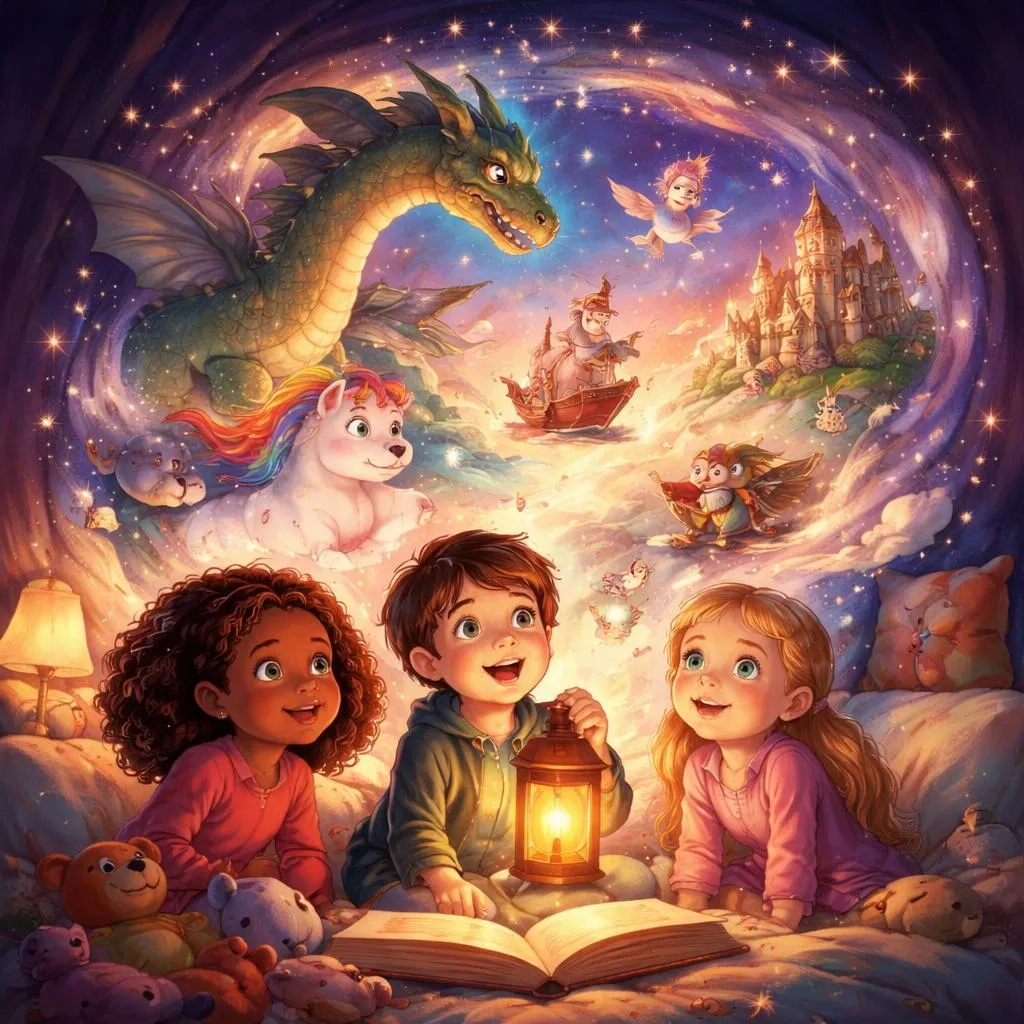

What Are Children's Fantasy Stories? Let us explore this magical genre together. Children's fantasy stories are tales that go beyond ordinary reality. They introduce elements that cannot exist in our everyday world. Talking animals appear as characters with thoughts and feelings. Magic spells create extraordinary changes and events. Imaginary creatures like dragons and unicorns populate these worlds. Ordinary children might discover hidden powers or secret doors. They might travel to lands that exist only in dreams. The rules of our world do not always apply here. Time might move differently. Animals might speak. People might fly. These stories create spaces where anything becomes possible. The imagination sets the only limit. Young readers enter worlds where wonder waits around every corner.
Meaning and Value of Fantasy for Children Fantasy stories serve important purposes beyond entertainment. They stretch the imagination like exercise for creativity. Children practice thinking beyond what they can see. They consider possibilities outside daily experience. This mental flexibility supports problem-solving in real life. Fantasy also provides safe spaces to explore big feelings. A dragon might represent something scary to face. A magic spell might stand for feeling powerful when small. Characters in fantasy face challenges and grow stronger. Readers journey with them and learn vicariously. Good triumphs over evil in most fantasy tales. This reinforces hope and moral clarity. Children learn that courage and kindness matter. They see that small characters can make big differences. These messages build resilience and character alongside imagination.
Common Elements in Fantasy Stories We can identify several elements common to fantasy tales. Magic appears in many forms throughout the genre. Spells, potions, and enchanted objects change ordinary situations. Imaginary creatures populate fantasy worlds with variety. Dragons, fairies, trolls, and giants each bring unique qualities. Portal devices transport characters between worlds. Wardrobes, rabbit holes, and train platforms serve as doorways. Special powers emerge in ordinary characters. A child might discover they can talk to animals or become invisible. Quests send characters on important journeys. They must find something, save someone, or defeat evil. Talking animals act as friends, guides, or tricksters. They bring wisdom from the natural world. Time behaves differently in fantasy settings. Years might pass in minutes or moments stretch for ages.
Categories of Children's Fantasy Stories We can organize fantasy stories into helpful categories. High fantasy creates completely imaginary worlds. These lands have their own maps, histories, and rules. Low fantasy brings magic into our ordinary world. A dragon might appear in a modern city park. Portal fantasy sends characters through doorways to other worlds. A secret passage leads to magical adventures. Animal fantasy features creatures as main characters. They wear clothes, live in houses, and have adventures. Toy fantasy brings playthings to life when humans leave. Dolls and stuffed animals have secret lives. Magical realism mixes small magic with ordinary life. A single impossible thing happens in a realistic setting. Quest fantasy sends characters on important journeys. They face trials and grow along the way. Each category offers different reading experiences.
Daily Life Connections Through Fantasy Fantasy stories connect to children's daily experiences in surprising ways. A child facing a bully connects to a hero facing a dragon. The feelings of fear and hope feel similar. Waiting for something important mirrors a quest's suspense. Working with others on a project feels like a fellowship. Solving a difficult puzzle at school requires creativity like solving fantasy riddles. Imaginary play during recess builds on fantasy themes. Children naturally create magical scenarios with friends. The frustration of something not working feels like a broken spell. The joy of success mirrors defeating the villain. We can point out these connections during discussions. "That took courage like the hero in our story." "You worked together like the characters in the book." These links help children see themselves in heroic tales.
Vocabulary Learning from Fantasy Stories Fantasy introduces wonderfully rich vocabulary. Words like enchantment, spell, and potion appear regularly. Creature names expand children's word banks. Dragon, griffin, troll, and pixie each carry specific meanings. Descriptive words paint magical pictures. Glowing, shimmering, mysterious, and ancient set fantasy moods. Action words describe magical events. Disappear, transform, levitate, and summon create vivid images. Place words build imaginary worlds. Kingdom, realm, forest, and castle establish settings. Character words define roles. Wizard, knight, queen, and villain each have distinct meanings. We can teach these words with picture cards showing examples. Use them in sentences about the story. Practice using them in new contexts. "Your drawing looks magical, like something from our story." This builds vocabulary through meaningful association.
Phonics Points in Fantasy Reading Fantasy stories provide rich material for phonics practice. Magical creature names often have interesting sound patterns. Dragon begins with the DR blend. Phoenix has the F sound and long E. Troll features the TR blend. Spell words contain useful phonetic elements. Abracadabra repeats the short A sound. Presto has the PR blend and long O. Place names offer sound practice. Kingdom has the NG ending. Castle has the soft C and silent T. Action words demonstrate various patterns. Vanished practices the SH sound. Flew shows the long U and past tense. We can focus on one sound pattern from each story. Find all words with that sound in the chapter. Write them on magic wand shapes for practice. This connects phonics instruction with enchanting content.
Grammar Patterns in Fantasy Narratives Fantasy stories model rich grammar for young readers. Past tense carries the main narrative. "The dragon flew over the mountains." Present tense appears in dialogue. "I believe we can defeat the darkness," she says. Future tense shows characters planning. "We will reach the castle by morning." Questions drive the plot forward. "Who will brave the enchanted forest?" Commands appear in magical instructions. "Drink this potion before the moon rises." Descriptive language uses adjectives abundantly. "The ancient, twisting forest held mysterious secrets." Prepositional phrases place characters in worlds. "Through the wardrobe, beyond the trees, into the clearing." We can point out these patterns during reading. Notice how the author describes the setting. See how the characters speak to each other. This awareness builds writing skills alongside comprehension.
Learning Activities for Fantasy Stories Many activities extend the magic of fantasy reading. Create a map of the fantasy world from the story. Include mountains, forests, castles, and marked paths. Design a magical creature that could live in this world. Draw it and write about its special powers. Write a spell that characters might use. Include words, ingredients, and what it does. Act out a scene from the story with simple props. Build a setting from the book using blocks or boxes. Create a new character who could join the adventure. Describe their appearance and special abilities. Cook a simple "magical" snack related to the story. Green jello might be dragon slime. These activities make the fantasy world tangible. They invite children to become co-creators of the magical realm.
Printable Materials for Fantasy Learning Printable resources support deep engagement with fantasy tales. Create character cards showing each figure from the story. Include name, description, and special abilities. Design a story map template for tracking the adventure. Mark where the character starts and where they end. Make magical vocabulary cards with words and pictures. Create a spell book template for children to write their own magic. Design creature cards for inventing new fantasy beings. Include spaces for name, habitat, powers, and drawing. Create a quest map with blank spaces for children to fill. They decide what happens at each stop. Design simple comprehension sheets with fantasy-focused questions. "What magical thing happened first? How did the hero feel?" These printables structure creative responses to reading.
Educational Games Inspired by Fantasy Games bring fantasy worlds to life in playful ways. Play "Magical Creature Charades" acting out beings from stories. Others guess what creature appears. Create "Spell Word Scramble" mixing up letters from magical vocabulary. Children unscramble to find the word. Design a "Quest Board Game" where players travel through story locations. Draw cards with challenges based on the book. Play "Dragon's Treasure" hiding objects for children to find. Give magical clues for each location. Create "Character Match" pairing heroes with their magical objects. Match the wizard with the wand, the fairy with the wand. Play "If I Had a Magic Power" taking turns sharing ideas. Others ask questions about the power. These games extend fantasy thinking into active play. Children live inside the magical world for a while longer.
Building Creative Writing Through Fantasy Fantasy stories provide perfect models for creative writing. Children can write their own magical adventures after reading. Start with character creation. What is their name? Do they have special powers? Move to setting development. Where does the story happen? Describe this place using senses. What does it look like? What sounds are there? Plan a simple plot. What problem does the character face? How do they solve it? Include a magical element. Perhaps a talking animal helps. Maybe a magic object appears. Use vivid describing words from fantasy vocabulary. Write a short story with beginning, middle, and end. Draw pictures to accompany the writing. Share finished stories with classmates. This process builds confidence as writers. Children see themselves as creators of magical worlds.
The Emotional Intelligence in Fantasy Fantasy stories develop emotional understanding alongside imagination. Characters face fear, loneliness, and doubt. Readers see how they cope and grow. Heroes make mistakes and learn from them. Villains often have reasons for their choices. This complexity teaches empathy. Children learn that even "bad" characters might have pain. Friendship appears as a powerful force in fantasy. Characters succeed because they help each other. Loyalty and trust prove essential for quests. Courage means being scared but acting anyway. This models emotional strength for readers. Hope persists even in dark moments. The light always returns in fantasy tales. These emotional lessons transfer to real life. Children face their own challenges with fantasy-inspired courage. They remember that friends help in hard times. They hold onto hope when things feel dark.
Creating a Fantasy-Rich Classroom We can build classroom environments that celebrate fantasy. Create a reading corner that feels magical. Add fairy lights, comfortable cushions, and fantasy books. Display student-drawn maps of imaginary worlds. Hang pictures of magical creatures they invent. Keep a "magical object" box for storytelling inspiration. Include interesting rocks, keys, or costume jewelry. Have dress-up items for fantasy characters available. Simple capes and crowns invite dramatic play. Start each day with a fantasy-themed prompt. "If you found a magic door, where would it lead?" Celebrate fantasy authors and their creative worlds. Learn about how writers imagine such places. This environment signals that imagination matters. It tells children their fantastic ideas belong here. The classroom becomes a place where magic feels possible every day.