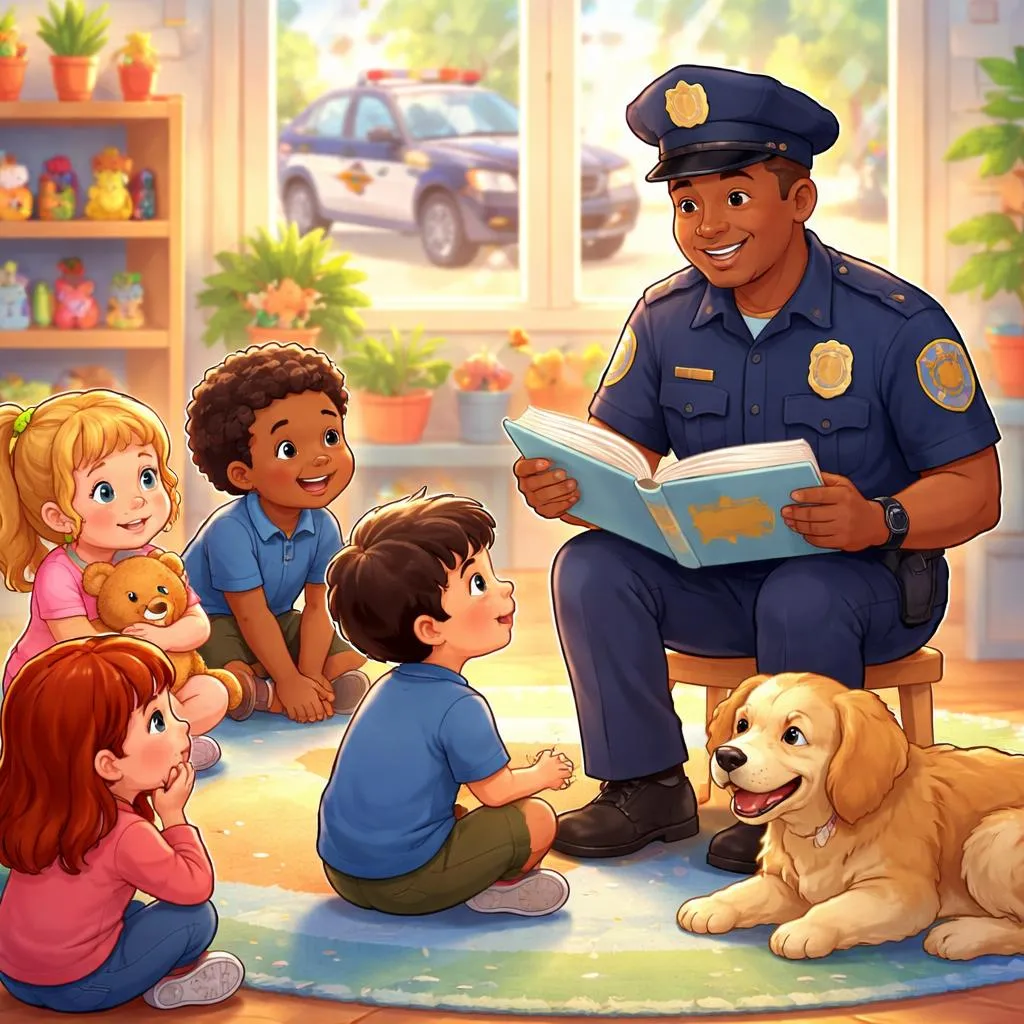

A friendly face in uniform. Someone who helps when trouble comes. A person children can turn to when lost or scared. Children's stories about police officers introduce these community helpers in positive ways. They build understanding of an important role. This article explores methods for using these community-focused tales in teaching.
What Defines a Police Story for Children?
A children's story about police officers presents law enforcement in age-appropriate ways. Some stories show daily police work. Officers patrol neighborhoods. They help people in need. They keep communities safe. These tales build understanding of regular police activities.
Other stories focus on specific situations. A child gets lost and an officer helps find parents. A bike is stolen and officers investigate. Someone needs help and officers respond. These scenarios show police as helpers.
Some stories introduce police officers as friends to the community. Officers visit schools. They talk about safety. They build positive relationships with children. These tales reduce fear and build trust.
The best police stories balance realism with reassurance. They show that officers help people while acknowledging that police work can be serious.
Vocabulary Learning Through Police Stories
Police stories introduce vocabulary about law enforcement. Officer, badge, uniform, and patrol name police elements. Each word gains meaning through story context.
Safety vocabulary appears naturally. Help, protect, rescue, and serve describe police actions. These verbs connect to positive community roles.
Equipment words fill these tales. Radio, handcuffs, flashlight, and police car name tools officers use. These concrete nouns build vocabulary through story context.
Children's stories about police officers also introduce words for community. Neighborhood, citizen, community, and public name who police serve. These words help learners understand police role in society.
Simple Phonics Points in Police Tales
Police stories offer useful phonics material through repeated words. Officer features short o and soft c. Police has long o and long e. Badge contains short a and dge pattern. These words become phonics anchors.
Vehicle names provide sound practice. Car, motorcycle, and bicycle each offer distinct sound patterns. Siren provides long i and er sound.
Action words fill these narratives. Help, protect, patrol, and rescue each provide sound practice in meaningful context.
Exploring Grammar Through Community Narratives
Police stories provide clear grammar models. Present tense describes ongoing police work. "Officers patrol the neighborhood every day. They help people who need assistance." This present expresses regular community service.
Past tense narrates specific story events. "The officer found the lost child. She called the child's parents." This past tense shows completed actions appropriate for storytelling.
Questions appear in police work. "What happened?" "Where did you last see your bike?" "Can you describe the person?" These questions model inquiry forms used in real police work.
Learning Activities with Police Stories
Active engagement with police narratives deepens learning. These activities bring community helper themes into language practice.
Community Helper Web After reading a police story, create a web about police officers. Center circle with "Police Officers." Surrounding circles with what they do, what they wear, what they use, how they help. This builds comprehension and vocabulary organization.
Police Station Drawing Ask learners to draw a police station based on story descriptions. Include officers, police cars, and other elements mentioned. Label parts of drawing with vocabulary words. This builds comprehension and connects visual and verbal understanding.
Safety Discussion Discuss situations where someone might need police help. Lost child. Accident. Stolen item. Suspicious person. What should someone do in each situation? This builds safety awareness and problem-solving language.
Thank You Card for Officers Create thank you cards for local police officers. Include appreciation for their work. This builds authentic writing with real community connection.
Educational Games with Police Stories
Games add playful interaction with community helper themes. These activities work well for groups or individuals.
Police Story Bingo Create bingo cards with police story elements. Badge. Uniform. Police car. Radio. Flashlight. Help. As you describe story moments or call words, learners cover matching squares. This builds listening comprehension and community vocabulary.
Police Equipment Match Create cards with police equipment names on some and pictures or descriptions on others. Radio matches "talks to other officers." Handcuffs matches "keeps people safe." Learners match equipment to functions. This builds understanding of police tools.
Safety Scenario Sort Create cards with different scenarios. Some need police help. Others need different helpers. Lost child needs police. House on fire needs firefighters. Sick person needs doctor. Learners sort into correct helper categories. This builds understanding of community helper roles.
Printable Materials for Police Story Learning
Tangible resources support extended exploration of community helper themes. These materials work well for independent practice.
Police Word Cards Create cards with police vocabulary on one side and simple definitions or pictures on the other. Officer, badge, patrol, radio, uniform. Use these for matching games or quick reviews.
My Police Story Page Provide a template for writing an original police story. Who needed help, what happened, how officer helped, how it ended. This builds narrative skills with community helper themes.
Community Helper Comparison Chart Create a simple chart comparing police officers with other community helpers. Police officer, firefighter, doctor, teacher columns. What they do, what they wear, how they help rows. Learners fill in information. This builds comparative understanding.
Police Officer Interview Questions Create a list of questions someone might ask a police officer if they could interview one. What is your favorite part of your job? What is hardest? How do you help people? This builds question formation and curiosity about community roles.
The lasting value of children's stories about police officers lies in building positive relationships with community helpers. Children who understand police work are less likely to fear officers. They know who to turn to in trouble. They see uniforms as signs of help rather than threat. This understanding builds safer communities for everyone. Each police story read together builds vocabulary while fostering trust in those who protect and serve. The classroom becomes a place where children learn that helpers surround them every day.