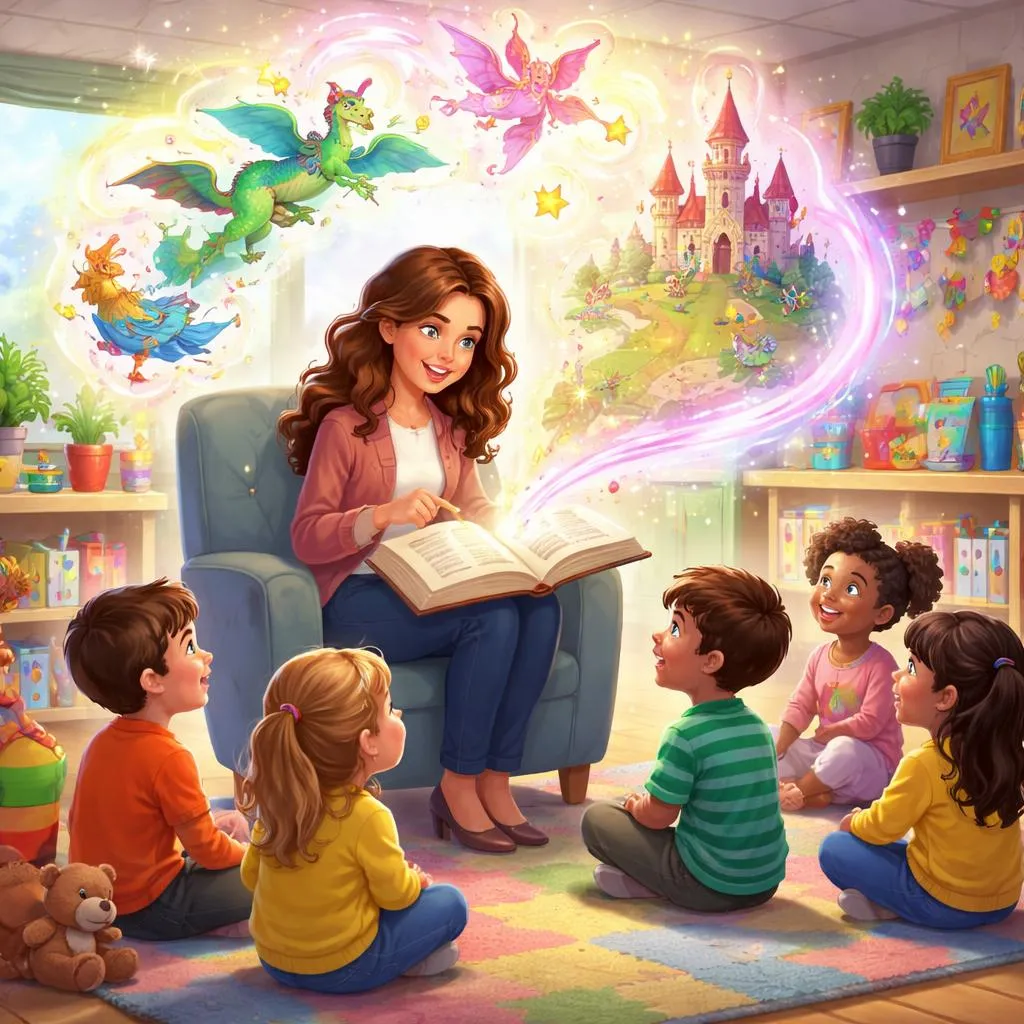

Words spoken aloud carry special power. A storyteller's voice brings characters to life. Listeners lean in, caught by the spell of narrative. Children's stories for storytelling are crafted for oral delivery. They flow off the tongue and into eager ears. This article explores methods for using these spoken tales in teaching.
What Defines a Story for Storytelling?
A children's story for storytelling is crafted to be spoken aloud. The words flow smoothly. Sentences have rhythm. Phrases repeat in pleasing patterns. The tongue moves easily through the language.
These stories often use sound devices. Alliteration pleases the ear. Rhyme creates expectation. Onomatopoeia brings sounds directly into the tale. Each element supports oral delivery.
The best stories for storytelling have memorable structures. Three events happen. Characters appear in threes. Problems resolve satisfyingly. Listeners can follow easily without text support.
Why Use Stories for Storytelling in Teaching?
Stories for storytelling offer several advantages for language development. First, they build listening comprehension. Without text, learners must attend fully to words. This focused listening strengthens auditory processing.
Second, oral stories create community. Listeners share experience together. They laugh together, gasp together, lean in together. This shared experience builds classroom connection.
Third, storytelling models fluent speech. Learners hear how skilled speakers use pace, pause, and emphasis. They internalize these patterns for their own speaking.
Fourth, these stories invite participation. Repeated phrases encourage joining in. Sound effects invite response. Listeners become part of the storytelling.
Vocabulary Learning Through Oral Stories
Oral stories introduce vocabulary through context alone. New words appear surrounded by explanatory language. The storyteller's tone may suggest meaning. Gestures may provide clues. Listeners infer meaning naturally.
Repetition in oral stories helps vocabulary stick. Key words appear multiple times. Each repetition reinforces learning without feeling like drill. The oral context makes repetition natural.
Descriptive language gains power through vocal delivery. When storytellers describe a "gloomy forest," voices become darker. This vocal painting makes descriptive words more memorable.
Children's stories for storytelling also introduce sound words. Onomatopoeia comes alive through vocal representation. Crash, whisper, and creak become real through spoken sound.
Simple Phonics Points in Oral Stories
Oral stories provide excellent phonics support. Learners hear sounds clearly modeled. Storytellers articulate carefully. This clarity helps distinguish similar sounds.
Rhyming becomes especially noticeable in oral stories. The ear catches sound patterns that might be missed in print. Rhyming stories become games of prediction. Listeners guess what word comes next based on sound.
Alliteration stands out when heard. "Peter Piper picked" delights the ear. This auditory experience builds phonemic awareness naturally and enjoyably.
Exploring Grammar Through Oral Narratives
Grammar patterns become audible in oral stories. Learners hear how sentences connect in natural speech. They notice where pauses fall. Questions rise in pitch at the end. This prosodic information supports grammatical understanding.
Verb tenses gain meaning through story context. Storyteller voice may shift slightly between past narration and present dialogue. Learners absorb these distinctions without explicit instruction.
Pronoun references become clear through story events. Listeners must track who "he" or "she" refers to throughout narrative. This builds anaphoric reasoning essential for comprehension.
Learning Activities with Oral Stories
Active engagement with oral narratives deepens learning. These activities move from listening to active language use.
Call and Response Storytelling Choose a story with repeated phrases. Tell it once through. Second time, invite listeners to join on repeated parts. They become co-tellers. This builds participation and language production.
Story Sound Effects Identify places in story where sound effects could enhance telling. Listeners provide sounds at appropriate moments. Wind sounds, animal noises, action sounds. This builds listening for cues and creative participation.
Story Mapping After Telling After hearing oral story, create a group story map. What happened first, next, last? Who were characters? Where did it happen? This builds comprehension and narrative structure understanding.
Retell Partners Learners pair up to retell story to each other. They use their own words but keep main elements. This builds narrative skills and memory.
Educational Games with Oral Stories
Games add playful interaction with spoken narratives. These activities work well for groups.
Story Circle Sit in circle. Begin telling story. After a few sentences, stop and point to next person. They continue story. Keep going around circle until story ends. This builds listening, creativity, and narrative coherence.
Sound Story Create story using only sounds. No words. Listeners guess what story is about. This builds auditory discrimination and inference.
Story Freeze Tell story. When learners hear certain word or phrase, they freeze in pose representing that moment. This builds listening and physical response.
Printable Materials for Oral Story Learning
Tangible resources support oral storytelling activities. These materials work well for preparation and follow-up.
Story Cards Create cards with story elements. Character cards, setting cards, problem cards. Learners draw cards and create oral story combining elements. This builds creative storytelling.
Story Map Templates Create simple templates for mapping oral stories heard. Beginning, middle, end sections. Characters and setting spaces. Learners fill in after listening. This builds comprehension.
Story Scripts Write simple story scripts with narrator and character parts. Learners perform stories orally with different voices. This builds reading fluency and oral expression.
Story Planning Pages Provide templates for planning original oral stories. Character, setting, problem, solution, special phrases to repeat. This builds storytelling skills.
The lasting value of children's stories for storytelling lies in their oral nature. Spoken words carry warmth that print alone cannot convey. The storyteller's voice wraps around listeners. It creates connection between teller and hearer. This human connection makes language learning deeply personal. Each story told builds listening skills while creating shared experience. The classroom becomes a place where stories live in air between teller and listeners, ready to be told again and again.