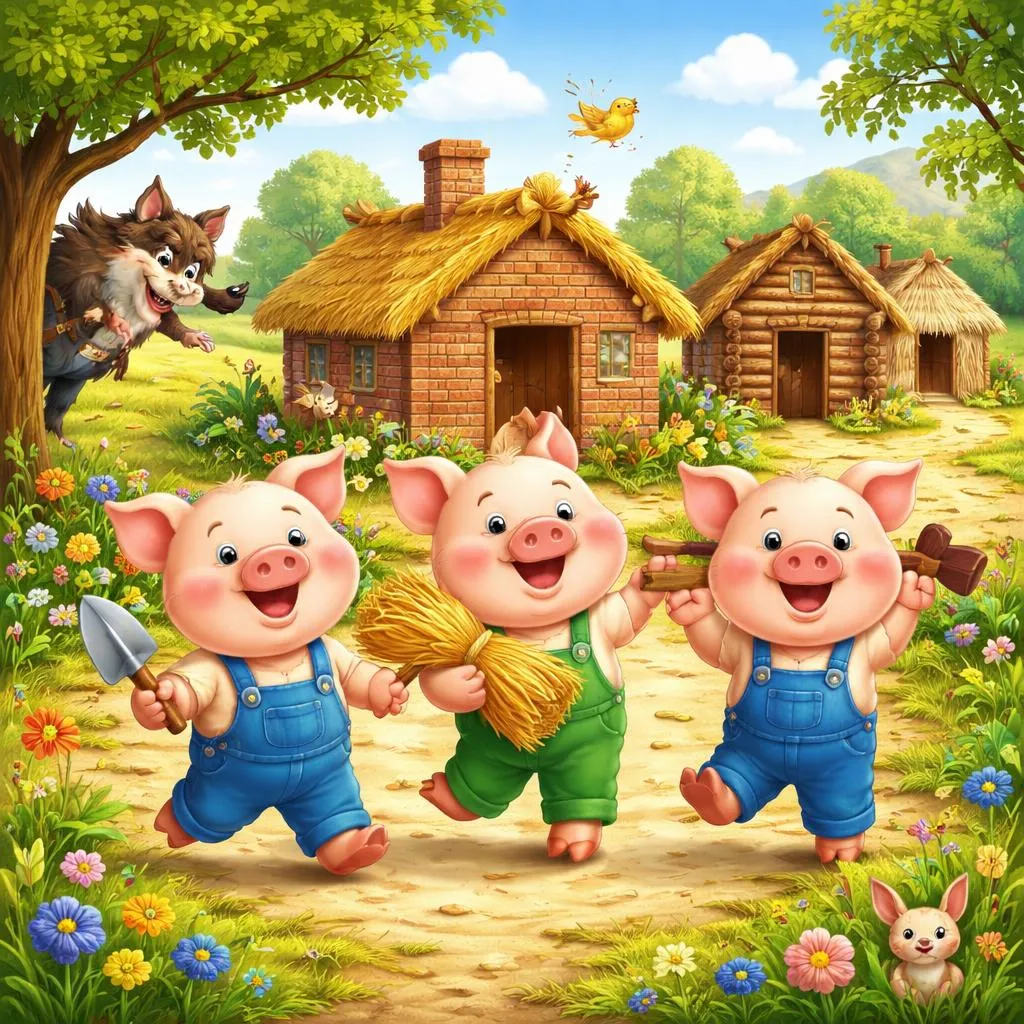

Three houses built from different materials. A wolf who huffs and puffs. Two pigs who learn hard lessons. One pig who planned ahead. Children's stories the three little pigs have entertained and taught for generations. This simple tale carries wisdom about preparation and effort. This article explores methods for using this classic story in teaching.
What Defines the Three Little Pigs Story?
The children's story the three little pigs follows three siblings who leave home to build their own houses. Each chooses different building materials. The first builds quickly with straw. The second builds with sticks. The third works hard to build with bricks.
A wolf comes along who wants to eat the pigs. He blows down the straw house. The first pig escapes to the stick house. He blows down that house too. Both pigs flee to the brick house. The wolf cannot blow it down. He tries to enter through the chimney but falls into a pot of hot water.
The story teaches that hard work and good planning matter. Quick and easy solutions may not last when trouble comes.
Vocabulary Learning Through the Three Little Pigs
This story introduces rich vocabulary about building materials. Straw, sticks, and bricks name what houses are made from. Each word connects to different levels of effort and strength.
Action words fill the narrative. Build, blow, huff, puff, and escape describe story events. These verbs gain power through repeated use in exciting context.
House parts vocabulary appears naturally. Door, roof, chimney, and window name parts the wolf attacks. These concrete nouns build vocabulary through story connection.
Children's stories the three little pigs also introduce words for emotions. Safe, scared, clever, and relieved describe how pigs feel. These adjectives help learners discuss story emotions.
Simple Phonics Points in This Classic Tale
The three little pigs offers excellent phonics material. Repeated phrases provide sound practice. "I'll huff and I'll puff and I'll blow your house down" repeats short u and long o patterns. This repetition reinforces sounds while building anticipation.
Sound words fill the story. Huff, puff, and blow provide onomatopoeic sound-symbol connection. Children enjoy saying these words aloud.
Animal names provide sound practice. Wolf features short o and lf. Pig has short i. Each name becomes familiar through repetition.
Exploring Grammar Through This Narrative
The three little pigs provides clear grammar models. Past tense dominates narration. "The first little pig built a house of straw. The wolf came and blew it down." This consistent past tense builds narrative familiarity.
Dialogue introduces present and future tenses. "Let me in!" demands the wolf. "I will not let you in," replies the pig. These shifts occur naturally within story context.
Repetitive structures support grammar learning. "Not by the hair of my chinny chin chin" repeats each time. This pattern reinforces sentence structure through enjoyable repetition.
Learning Activities with the Three Little Pigs
Active engagement with this classic tale deepens learning. These activities bring the story into productive language use.
Building Materials Exploration After reading the story, explore real examples of straw, sticks, and bricks if possible. Feel the materials. Discuss why brick is strongest. This connects story to real-world understanding.
Story Retelling with Props Create simple props representing the three houses and wolf. Children retell story using props. This builds narrative skills and comprehension through physical manipulation.
Alternate Ending Creation Discuss what might have happened if the wolf succeeded. Or if the pigs built differently. Create alternate endings. This builds creative language use within story framework.
Wolf's Perspective Writing Ask learners to write story from wolf's point of view. Why was he hungry? How did he feel when he couldn't blow down brick house? This builds empathy and perspective-taking.
Educational Games with the Three Little Pigs
Games add playful interaction with this classic tale. These activities work well for groups or individuals.
Three Little Pigs Bingo Create bingo cards with story elements. Straw. Sticks. Bricks. Wolf. Chimney. House. As you describe story moments or call words, learners cover matching squares. This builds listening comprehension and story vocabulary.
House Building Challenge Provide materials like straws, sticks, and blocks. Challenge learners to build structures and test strength. Can wolf (a fan or hairdryer) blow them down? This connects story to science exploration.
Story Sequence Cards Create cards showing key events from story. Pigs leave home. Straw house built. Wolf blows it down. Stick house built. Wolf blows it down. Brick house built. Wolf cannot blow it down. Wolf falls in chimney. Learners arrange in correct order. This builds sequencing skills.
Printable Materials for Three Little Pigs Learning
Tangible resources support extended exploration of this classic tale. These materials work well for independent practice.
Three Little Pigs Word Cards Create cards with story vocabulary on one side and simple definitions or pictures on the other. Straw, sticks, bricks, wolf, huff, puff. Use these for matching games or quick reviews.
My Three Little Pigs Story Page Provide a template for writing or drawing about the story. Beginning, middle, and end sections. Space for illustrations. This builds comprehension and sequencing.
House Comparison Chart Create a simple chart comparing three houses. House type, building time, strength, what happened. Learners fill in information. This builds comparative thinking.
Character Puppets Create simple puppet templates for three pigs and wolf. Children color, cut, and attach to sticks. Use puppets for retelling. This builds fine motor skills and narrative practice.
The lasting value of children's stories the three little pigs lies in its simple but powerful lesson. Preparation matters. Hard work pays off. Quick solutions may fail when tested. Children absorb this wisdom through story rather than lecture. They root for the clever pig who built well. They learn without being taught. Each reading of this tale builds vocabulary while planting seeds for wise choices. The classroom becomes a place where even pigs can teach important lessons.