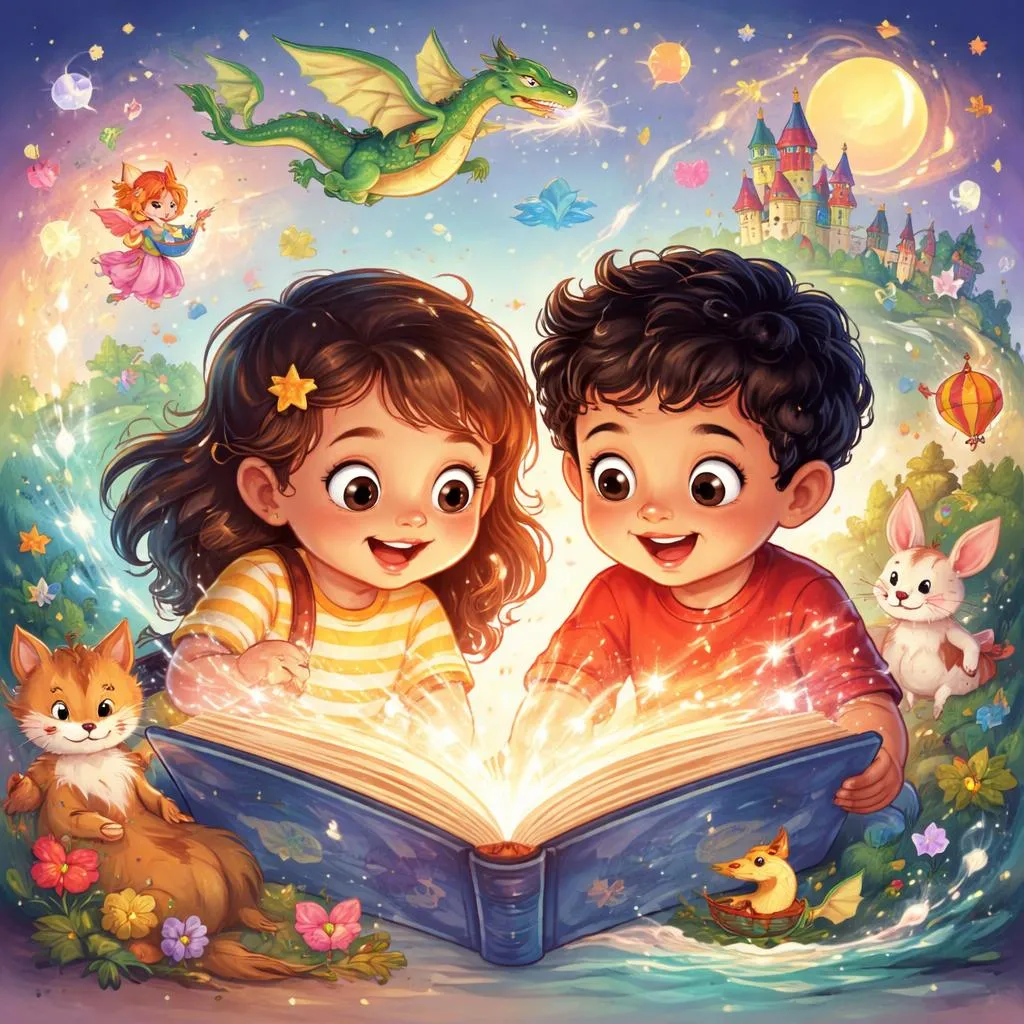

Pictures and words together create magic. The images catch the eye. The words tell the tale. Together they build understanding that neither could achieve alone. This partnership makes illustrated children's stories essential tools for language learning. They support comprehension while developing visual literacy. This article explores methods for using these rich resources in teaching.
What Makes Illustrated Stories Special for Language Learning?
An illustrated children's story combines text with pictures that extend meaning. The images do more than decorate. They provide context for unfamiliar words. A story mentions a "palace" while the picture shows a grand castle. The learner understands through both channels.
Illustrations reveal character emotions too. The text might say "the bear felt sad." The picture shows slumped shoulders and teary eyes. This visual support helps learners connect emotional vocabulary with physical expression.
Action sequences benefit greatly from pictures. Text describing a chase becomes clearer when images show the movement. Prepositions like through, over, and under gain meaning from visual context. The pictures scaffold understanding while learners build reading skills.
Vocabulary Learning Through Illustrated Stories
Pictures provide direct vocabulary support. New words appear alongside their visual representation. A story introduces "gazebo" while the illustration shows exactly what a gazebo looks like. This immediate context eliminates needing a separate dictionary.
Descriptive words become concrete through images. The text describes a "sparkling river." The illustration shows sunlight dancing on water. The connection between word and meaning strengthens through this dual input.
Action verbs gain precision from pictures. "The monkey swung" pairs with an image showing the swinging motion. Learners see what swinging looks like. They understand the word's meaning without translation.
Illustrated children's stories also build vocabulary through visual details. Background elements might show objects not mentioned in text. A classroom scene includes clock, globe, and chalkboard. These items add incidental vocabulary learning.
Simple Phonics Points with Picture Support
Illustrations support phonics instruction in valuable ways. Pictures provide clues for decoding unfamiliar words. A learner sounding out "f-o-x" can check the picture for confirmation. The fox in the image confirms the word attempt.
Alphabet books use this principle directly. Each page shows a letter, a word, and a matching picture. A is for apple with an apple pictured. The visual confirms the sound-spelling connection.
Many illustrated stories feature words woven into the artwork. A speech bubble might contain "Help!" The picture shows who speaks and why. This integration builds print awareness and sight word recognition.
Exploring Grammar Through Visual Context
Grammar becomes visible in illustrated stories. Prepositions show their meaning through character placement. The text says "the bird sat on the branch." The picture confirms the meaning of "on." Spatial relationships become clear through visual support.
Verb tense gains context from illustrations. Past tense actions might show completed events. A picture of a broken vase accompanies text saying "the cat jumped on the table." The visual result confirms the past action.
Pronoun references become clear when pictures show who is who. The text says "she gave him the gift." The illustration shows which character is "she" and which is "him." This visual support aids comprehension of referents.
Learning Activities with Illustrated Stories
Active engagement with pictures deepens learning. These activities move beyond reading to exploration of the image-text relationship.
Picture Prediction Before reading, show only the illustrations. Ask learners to predict what happens in the story based on pictures alone. After predicting, read the text and compare. This builds observational skills and hypothesis testing.
Missing Picture Drawing Read a section of text without showing the illustration. Ask learners to draw what they imagine. Then reveal the actual illustration. Compare interpretations. This builds visualization skills and attention to descriptive language.
Picture Walk Discussion Take a "walk" through the book looking only at pictures. Discuss what seems to be happening. Identify characters and settings. Note how pictures tell parts of the story that words might not mention. This builds visual literacy.
Word-Picture Matching Create cards with vocabulary words from the story. Learners match each word to the part of an illustration showing that item. A feather matches the bird's wing. A shadow matches the dark shape on the ground. This builds vocabulary connections.
Educational Games with Illustrated Stories
Games add playful interaction with story elements. These activities work well for groups or individuals.
Picture Memory Game Create pairs of cards. One card shows a detail from an illustration. The matching card shows the word for that item. Learners find matches and say the word. This builds vocabulary and visual memory.
Story Sequencing with Pictures Copy illustrations from a story out of order. Learners arrange them in correct sequence. Then read the story to check. This builds narrative comprehension and sequencing skills.
I Spy in the Illustration Play I Spy using story illustrations. "I spy something green and bumpy." Learners search the picture for the object. This builds vocabulary and attention to visual detail.
What's Missing Game Show an illustration. Then cover part of it. Ask what is missing from the picture now. Learners must remember details and name what disappeared. This builds observation and memory.
Printable Materials for Illustrated Story Learning
Tangible resources support extended exploration of pictures and text. These materials work well for independent practice.
Picture Story Map Create a template with spaces for drawing key story moments. Learners draw the beginning, middle, and end of a story. Below each drawing, they write a sentence describing that moment. This builds comprehension and sequencing.
Character Description Page Provide a page with space for drawing a character and writing about them. Prompts include character name, appearance, personality, and actions. The drawing comes from story illustrations as reference.
Setting Sketch Page Learners choose a setting from an illustrated story. They redraw it adding details they remember. Below the drawing, they write describing words from the story and their own words. This builds observation and descriptive language.
Word and Picture Cards Create cards featuring words from the story on some and matching picture details on others. Learners match words to pictures. Use these for memory games or sorting activities.
The lasting value of illustrated children's stories lies in their accessibility. Pictures open stories to learners at every reading level. A child just beginning to decode can follow the narrative through images. A more advanced reader gains depth from visual details. Both experience the same story together. This inclusivity builds classroom community around shared narrative experiences. The pictures also create lasting mental connections. Long after closing the book, learners remember the image of the bear in the cave. That memory carries the vocabulary, the grammar, and the emotional content of the story. Words and pictures together create stronger learning than either could alone. Each illustrated story becomes a small universe where language and art combine to welcome young learners inside.