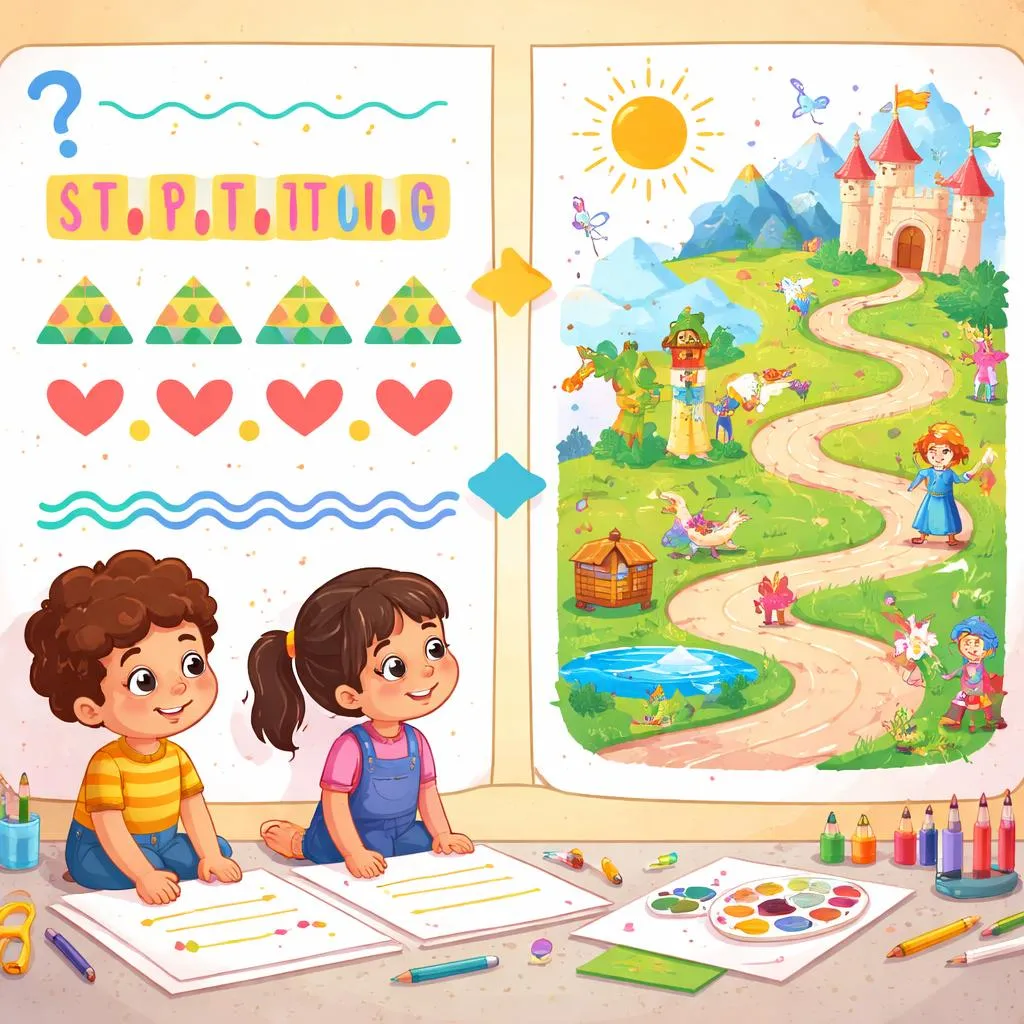

Children love looking at wrapping paper. They see dots that repeat. They see stripes that go on and on. Parents hear kids say, "Look at this pattern" or "I like the design". These two words seem very similar. But they describe different things. Knowing the difference between a "pattern to" and a "design to" helps children understand art and the world around them. Let us explore these two creative words together.
What Do These Expressions Mean?
A "pattern to" means a repeating decoration. The same shapes, colors, or lines repeat again and again. You can predict what comes next. For example, stripes on a shirt make a pattern. Polka dots on a cup make a pattern. A "design to" means a plan or arrangement of elements. A design can have repeating parts or unique parts. A design tells a visual story. For example, a poster for a school play has a design. A birthday card has a design. For a child, a pattern feels like a song that repeats the same chorus over and over.
A design feels like a whole movie with different scenes. Both make things look beautiful. That is why the two expressions seem similar. A pattern is one type of design. A pattern is a special kind of design that uses repetition. But not all designs have repetition. A drawing of a castle has a design. It does not repeat the same tower ten times. Understanding this difference helps children talk about art and decorations correctly.
What's the Difference?
The main difference lies in repetition. A "pattern to" must repeat. The same unit repeats over and over. You can cover a whole wall with one pattern. A "design to" does not need to repeat. It can be a one-of-a-kind arrangement. One is predictable. The other can be surprising. Think of a pattern as a marching band. Every marcher follows the same steps. Row after row looks the same. Think of a design as a parade float. Each float looks different. The whole parade has a design. The band has a pattern.
Another difference is how you create them. A pattern needs a unit called a motif. That motif repeats. A design needs a layout. You decide where each element goes. Patterns are often made by machines or stamps. Designs are often drawn by hand. This difference helps children know which word to use for their own art. Drawing the same star ten times in a row makes a pattern. Drawing one big star with a moon and a cloud makes a design.
When Do We Use Each One?
Use a "pattern to" when things repeat. At home, a child sees a pattern on their pajamas. "My pajamas have a pattern of tiny dinosaurs." Use pattern for fabric. "Her dress has a flower pattern." Use pattern for floors. "The tiles make a checkerboard pattern." Use pattern for nature. "Zebras have a stripe pattern." Patterns are everywhere in clothing, wallpaper, and rugs. They make the world feel organized and rhythmic.
Use a "design to" when talking about a whole plan. In art class, a child makes a design for a new skateboard. Use design for buildings. "The museum has a beautiful design." Use design for logos. "The Nike swoosh is a simple design." Use design for anything someone planned visually. A cake can have a design. A garden can have a design. A website has a design. Design is about arranging elements to look good and work well.
Real-life situations use both together. A parent shows a child a quilt. "The quilt has a repeating pattern of squares. The overall design of the quilt is called a patchwork design." The pattern is the repeating square. The design is how all the squares come together. Another example: a child wraps a gift. The wrapping paper has a pattern of stars. The child adds a bow. The bow is part of the design. The pattern came from the factory. The design came from the child's creativity.
Example Sentences for Kids
Here are simple examples of a "pattern to":
"My socks have a pattern of stripes in three colors."
"The wallpaper pattern has little blue flowers that repeat."
"Can you find the pattern of the tiles on the floor?"
Here are simple examples of a "design to":
"I drew a design for my new notebook cover."
"The design of the playground includes a slide and two swings."
"Her Halloween costume had a clever design."
Notice how the pattern examples always show repetition. The same thing appears many times. The design examples show plans and arrangements that can be unique. A pattern is like a echo. A design is like a blueprint. Both are creative. Both make things beautiful. But they work in different ways.
Common Mistakes to Avoid
Many children call any decoration a pattern. They see a unique drawing and say "nice pattern". That is not correct. The correct way is to say "nice design" for something that does not repeat. If you cannot predict what comes next, it is a design, not a pattern. Teach your child to look for repetition. The same shape again and again means pattern. Different shapes arranged together means design.
Another mistake is forgetting that patterns can be part of designs. A child says "this is a design, not a pattern" about a shirt with stripes. That is not quite right. The correct way is to say "the shirt has a stripe pattern. The overall design of the shirt includes the collar, buttons, and pattern." The pattern is one part of the design. The design includes everything. So pattern is smaller. Design is bigger. This nesting idea helps children think in layers.
A third mistake is using "design" only for fancy things. A child thinks a simple doodle is not a design. The correct way is to know that any visual plan is a design. A stick figure is a design. A smiley face is a design. Design does not have to be perfect or professional. Every time you arrange shapes or lines on purpose, you are designing. That empowers children to see themselves as designers of their own art.
Easy Memory Tips
Here is a simple trick. Imagine a "pattern to" as a stamp. You dip the stamp in ink. You press it again and again. Every stamp looks the same. That is a pattern. Imagine a "design to" as a drawing you make freehand. Every line is your choice. Nothing repeats unless you want it to. That is a design. So pattern = stamp. Design = drawing. This tool comparison works beautifully for children.
Another tip uses the first letters. Pattern starts with P. Think of "P for repeat". The P in pattern looks like a line repeating itself. Design starts with D. Think of "D for different". A design can have many different parts. Practice finding patterns and designs in your home. A patterned rug has repeating shapes. A family photo has a design (people arranged in a certain way). This real-world spotting game makes the difference stick forever.
Quick Practice Time
Try these simple exercises with your child.
Fill in the blank: Choose "pattern" or "design".
"The wrapping paper has a __________ of tiny hearts that repeat." (Answer: pattern)
"The __________ of the toy car includes the shape, color, and wheels." (Answer: design)
Multiple choice: Pick the correct description.
Which one must have repetition of the same element?
A) A design
B) A pattern
(Answer: B)
Which one is a plan or arrangement that can be completely unique?
A) A pattern
B) A design
(Answer: B)
These quick questions take only two minutes. They help children see repetition as the key to pattern. Look around your home. Ask your child to find three patterns (striped towels, dotted dishes, tiled floors). Then ask them to find three designs (a poster, a calendar, a decorated cake). That real practice builds lasting vocabulary and observation skills.
Wrap-up
The key difference is simple. A pattern is a repeating decoration where the same elements appear again and again. A design is a plan for arranging visual elements that can be unique or repeating. Learning this difference helps children describe art, clothing, and objects with precision. Keep looking for patterns and designs everywhere you go. Your child will see the world as a gallery of repeating rhythms and creative plans.