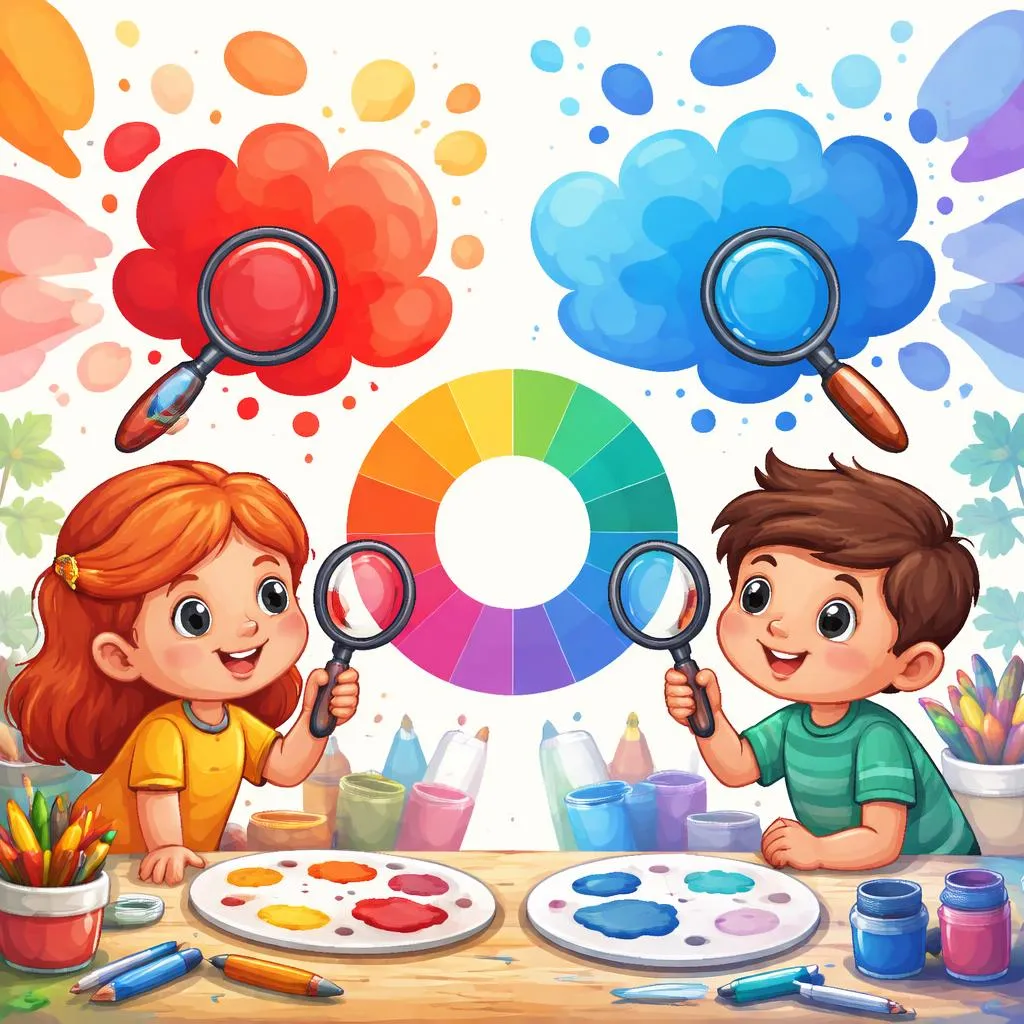

Children love bright things. They pick red crayons first. They point to blue skies. Parents hear kids say, "My favorite color is green" or "This hue is too dark". These two words seem very close. But they have different jobs. Knowing the difference between a "color to" and a "hue to" helps children talk about art and science more clearly. Let us explore these two colorful words together.
What Do These Expressions Mean?
A "color to" means the whole family of visible light sensations. Color includes red, blue, yellow, green, purple, and everything between. Color also includes shades like pink, brown, and gray. A "hue to" means the pure base color without any white, black, or gray added. Hues are the main names on the color wheel. Red is a hue. Blue is a hue. Yellow is a hue. For a child, a color feels like a big box of crayons. The box has many crayons.
A hue feels like the main rainbow colors. Red, orange, yellow, green, blue, indigo, and violet are hues. That is why the two expressions seem similar. All hues are colors. But not all colors are pure hues. Pink is a color but not a pure hue. Pink is red with white added. Brown is a color but not a pure hue. Brown is orange with black added. Understanding this difference helps children mix paints and understand light.
What's the Difference?
The main difference lies in purity. A "color to" includes pure hues and all their lighter, darker, and duller versions. Color is the big umbrella. A "hue to" is pure and simple. It has no white, no black, and no gray mixed in. One is the whole family. The other is the pure parents of the family. Think of hue as the original recipe for a color. Think of color as all the recipes you can make from that original. Start with pure red (a hue). Add white to get pink (a color, not a pure hue).
Add black to get dark red (a color). Add gray to get dusty red (a color). Another difference is how experts use the words. Painters talk about hue when they mean the pure pigment from the tube. Scientists talk about hue as the wavelength of light. Regular people say color for everything. Children learn color first. Hue is a more grown-up word for special situations.
When Do We Use Each One?
Use a "color to" in everyday talk. At home, a child says "Please hand me the blue color." Use color for clothing. "My shirt is the color of the sky." Use color for describing anything. "What color is your backpack?" Use color for art. "I used every color in the box." Color is friendly and common. Every child learns color names early. Color works for all situations.
Use a "hue to" when talking about pure rainbow colors. In art class, a teacher says "Mix two hues to make a new color." Use hue for color theory. "Yellow and blue are primary hues." Use hue for precise description. "The hue of this paint is true red, not orange-red." Use hue when you want to sound like an artist or scientist. Hue is a more precise word. It helps you talk about color mixing and light.
Real-life situations use both naturally. A parent holds up two pink crayons. "Both are the color pink. But their hue is red." The hue is the same. The color name is pink. Another example: a child looks at the sky. "The sky color changes from light blue to dark blue." The hue is blue. The different versions are different colors. The hue stayed the same. The color changed because of light and darkness. That is a beautiful discovery.
Example Sentences for Kids
Here are simple examples of a "color to":
"My favorite color is purple like my backpack."
"The leaves change color in the fall."
"Please color the sun with a yellow color."
Here are simple examples of a "hue to":
"The primary hues are red, yellow, and blue."
"Mixing two pure hues makes a new color."
"The painting used every hue in the rainbow."
Notice how the color examples talk about everyday objects and activities. The hue examples talk about pure colors and art rules. A child uses color many times a day. A child might use hue in art class or when learning about rainbows. Both words are good. Hue just has a smaller, more specific job.
Common Mistakes to Avoid
Many children call every color a hue. They say "I like the hue of my shirt" when they mean color. That is not wrong, but it sounds unusual. The correct everyday word is color. Save hue for art or science talks. Teach your child that hue is like a special tool. You do not need it for simple talking. You use it for mixing paints or describing rainbows. Using hue too much sounds strange to native speakers.
Another mistake is forgetting that black, white, and gray are not hues. A child calls black a hue. That is not correct. The correct way is to say "black is a color, but not a hue. Hues are pure rainbow colors. Black has no hue." The same goes for white and gray. They are colors without hue. This fact surprises many children. But it makes sense when you think of the rainbow. Black is not in the rainbow. So not a hue.
A third mistake is thinking brown is a hue. Brown is not in the rainbow. The correct way is to know that brown is a dark orange. The hue is orange. The color is brown. So every brown thing has an orange hue underneath. Mix orange with black, and you get brown. This is exciting for children who love to mix paints. They can discover that brown comes from orange. That feels like magic.
Easy Memory Tips
Here is a simple trick. Imagine a "color to" as a whole fruit basket. The basket has apples, oranges, bananas, and grapes. Imagine a "hue to" as just the pure fruit. One apple is a hue. The basket of red apples, green apples, and yellow apples is color. Hue is the pure type. Color is all the varieties. This food comparison works well because children know fruit.
Another tip uses the rainbow. Point to a rainbow. "The rainbow has seven hues. They are pure and bright. Now look at your crayon box. You have light red (pink) and dark red (maroon). Those are colors. Their hue is red." Draw a rainbow with your child. Write "HUE" above the rainbow. Draw pink and dark red below. Write "COLORS" below them. This drawing shows that hues live in the rainbow. Colors include everything else. This visual trick lasts forever.
Quick Practice Time
Try these simple exercises with your child.
Fill in the blank: Choose "color" or "hue".
"Pink is a __________, not a pure __________." (Answer: color, hue)
"The primary __________ are red, blue, and yellow." (Answer: hues)
Multiple choice: Pick the correct description.
Which one includes white, black, gray, and brown?
A) Hue
B) Color
(Answer: B)
Which one means a pure rainbow color with nothing added?
A) Color
B) Hue
(Answer: B)
These quick questions take only two minutes. They help children separate the general from the pure. Look at a box of crayons. Ask your child to find the pure hues (red, orange, yellow, green, blue, purple). Then find colors that are not pure hues (pink, brown, gray, light blue). That real practice builds deep understanding of color theory.
Wrap-up
The key difference is simple. Color is the big family of all visible light sensations. Hue is the pure base color from the rainbow without any white, black, or gray added. Learning this difference helps children mix paints, understand rainbows, and talk like young artists. Keep looking at colors and finding hues everywhere. Your child will see the world in a more beautiful and precise way.