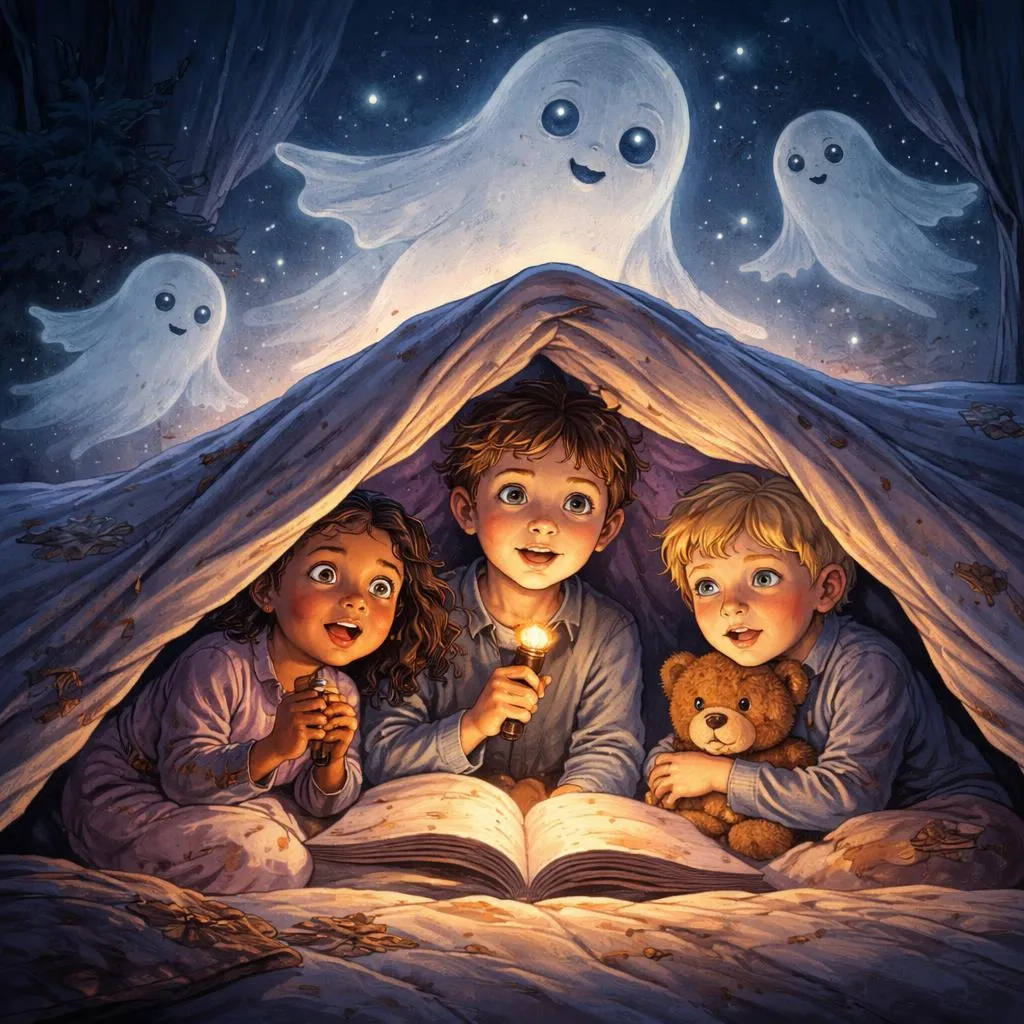

Shadows flicker. Floorboards creak. A whisper seems to come from nowhere. These elements send shivers down young spines while keeping listeners completely engaged. A children's ghost story balances fear with fun, suspense with safety. The tension holds attention completely. The resolution brings relief. This emotional journey makes the language deeply memorable. This article explores methods for using these spooky tales in teaching.
What Defines a Children's Ghost Story?
A children's ghost story creates suspense without genuine terror. The ghost might be friendly rather than frightening. The haunted house might reveal a harmless explanation. Young readers experience spooky feelings knowing the story will end safely.
These stories use specific techniques for age-appropriate scares. Strange sounds always have sources. Dark places eventually reveal light. The ghost often needs help rather than wanting to harm. This approach maintains excitement while ensuring comfort.
The best children's ghost stories also include humor. A ghost who cannot scare anyone. A haunting that turns silly. This comic element reduces tension while maintaining engagement. Readers laugh and feel relieved while still enjoying the spooky atmosphere.
Why Use Ghost Stories for Language Learning?
Ghost stories offer several advantages for language development. First, they demand complete attention. A child cannot drift off during a ghost tale. The suspense holds focus throughout. This engaged attention supports comprehension and retention.
Second, these stories create strong emotional connections to language. Words attached to feelings of suspense and relief become deeply encoded. The vocabulary sticks because it connected to real physical responses.
Third, ghost stories build resilience. Children learn that scary feelings pass. They experience fear in a safe context and emerge fine. This builds confidence for facing both language challenges and real fears.
Fourth, these tales generate intense discussion. Children want to talk about ghost stories. They share reactions. They compare fears. This natural motivation drives language production.
Vocabulary Learning Through Ghost Stories
A children's ghost story introduces rich vocabulary for suspense and mystery. Words like eerie, spooky, and mysterious gain meaning through story context. Whisper, creak, and howl become real through sound descriptions. Shiver, tremble, and freeze connect to character reactions.
Ghost-specific vocabulary appears naturally. Spirit, phantom, apparition, and specter describe the supernatural visitors. Haunt, appear, vanish, and float describe ghostly actions. This themed vocabulary builds around the central concept.
These stories also build vocabulary for describing settings. Dark house descriptions introduce words like shadow, moonlight, and dusty. Graveyard scenes bring tombstone, mist, and silent. Each setting builds related word sets.
Action verbs gain power through suspenseful contexts. Characters creep, sneak, hide, and escape. These verbs connect to tense moments, making them unforgettable. Learners feel the action through the character's danger.
Simple Phonics Points in Ghost Stories
Ghost stories offer excellent phonics material. Onomatopoeia appears frequently. Creak, moan, howl, and whisper provide sound-word connections. These words feel like the sounds they describe, supporting phonemic awareness.
Many ghost stories use repetition for tension. "The door creaked. It creaked again. It creaked louder." This repetition reinforces sound patterns while building suspense. Learners hear target sounds multiple times in meaningful context.
Alliteration creates memorable spooky phrases. "Ghostly groan." "Phantom footsteps." "Wailing wind." These pairs highlight initial sounds while adding to the eerie atmosphere.
Exploring Grammar Through Suspenseful Narratives
Ghost stories provide clear grammar models. Past tense dominates narration. "The children walked through the old house. They heard a strange sound upstairs." This consistent past tense builds familiarity with narrative forms.
Questions create tension. "What was that?" "Who is there?" "Should we go upstairs?" These questions model inquiry forms while advancing the spooky plot.
Conditional sentences appear in character planning. "If we go inside, we might find the source of the noise." "If we run, the ghost might follow." These structures show thinking about possibilities under pressure.
Learning Activities with Ghost Stories
Active engagement with spooky narratives deepens learning. These activities bring ghost tales into productive language use.
Sound Effect Creation After reading a ghost story, identify sounds mentioned. Creaking doors. Howling wind. Whispered voices. Strange footsteps. Learners create these sounds using voices or simple objects. Then retell the story with sound effects. This builds comprehension and adds multisensory engagement.
Spooky Setting Descriptions Read a story with a ghostly setting. Discuss words that made the setting feel eerie. Then show a picture of an ordinary place. Learners describe it using spooky language. The ordinary bedroom becomes a place of mystery. This builds descriptive vocabulary.
Ghost Character Analysis Discuss the ghost in the story. Was it friendly or frightening? What did it want? How did characters respond? Did the ghost change by story end? This builds character analysis and emotional vocabulary.
Fear Discussion Talk about why ghost stories feel good even though they spook us. What makes story scares different from real scares? This builds metacognitive awareness and language for discussing emotions.
Educational Games with Ghost Stories
Games add playful interaction with spooky narratives. These activities work well for groups or individuals.
Ghost Story Bingo Create bingo cards with ghost story elements. Creaking door. Full moon. White sheet. Strange shadow. Whispered voice. As you read or tell a story, learners cover elements that appear. This builds listening comprehension and story element recognition.
Mystery Sound Game Play recordings of sounds that might appear in ghost stories. Creaking door. Howling wind. Footsteps. Whisper. Learners identify sounds and predict what story might include them. This builds listening skills and prediction.
Ghost Story Dice Create dice with ghost story elements. Character die: friendly ghost, scary ghost, helpful ghost. Setting die: old house, cemetery, school at night. Problem die: lost, trapped, misunderstood. Learners roll and create an original ghost story using the elements. This builds creative language use.
Printable Materials for Ghost Story Learning
Tangible resources support extended exploration of spooky themes. These materials work well for independent practice or learning centers.
Ghost Word Collection Sheet Create a sheet for collecting spooky words from stories. Categories might include sounds, feelings, settings, and ghost descriptions. Learners add words as they encounter them. This builds a personal ghost vocabulary resource.
My Not-So-Scary Ghost Story Page Provide a template for writing a story that starts spooky but ends happily. Prompts guide structure. "It seemed scary because..." "But then I discovered..." "I felt better when..." This builds narrative skills while processing fear safely.
Ghost Story Map Template Create a simple map template for plotting ghost stories. Characters, setting, scary moment, discovery, ending. Learners fill this in after reading. This builds comprehension of ghost story structure.
Friendly Ghost Drawing Page Provide a page for drawing a friendly ghost. Prompts ask about the ghost's name, what makes it friendly, and how it helps others. This builds creative writing connected to visual art.
The lasting value of a children's ghost story lies in its ability to make language learning intense and memorable. Words learned under emotional engagement stick longer. Sentences heard during suspenseful moments become deeply encoded. The classroom becomes a place where even spooky things serve learning. Children discover that language gives them power over scary ideas. They can name fears. They can describe eerie settings. They can tell stories that transform terror into triumph. This mastery builds confidence for both reading and life. The child who learns that ghost stories always end safely carries that knowledge into real fears too. Language becomes not just communication but comfort. Each spooky tale read together builds vocabulary, grammar, and courage simultaneously.