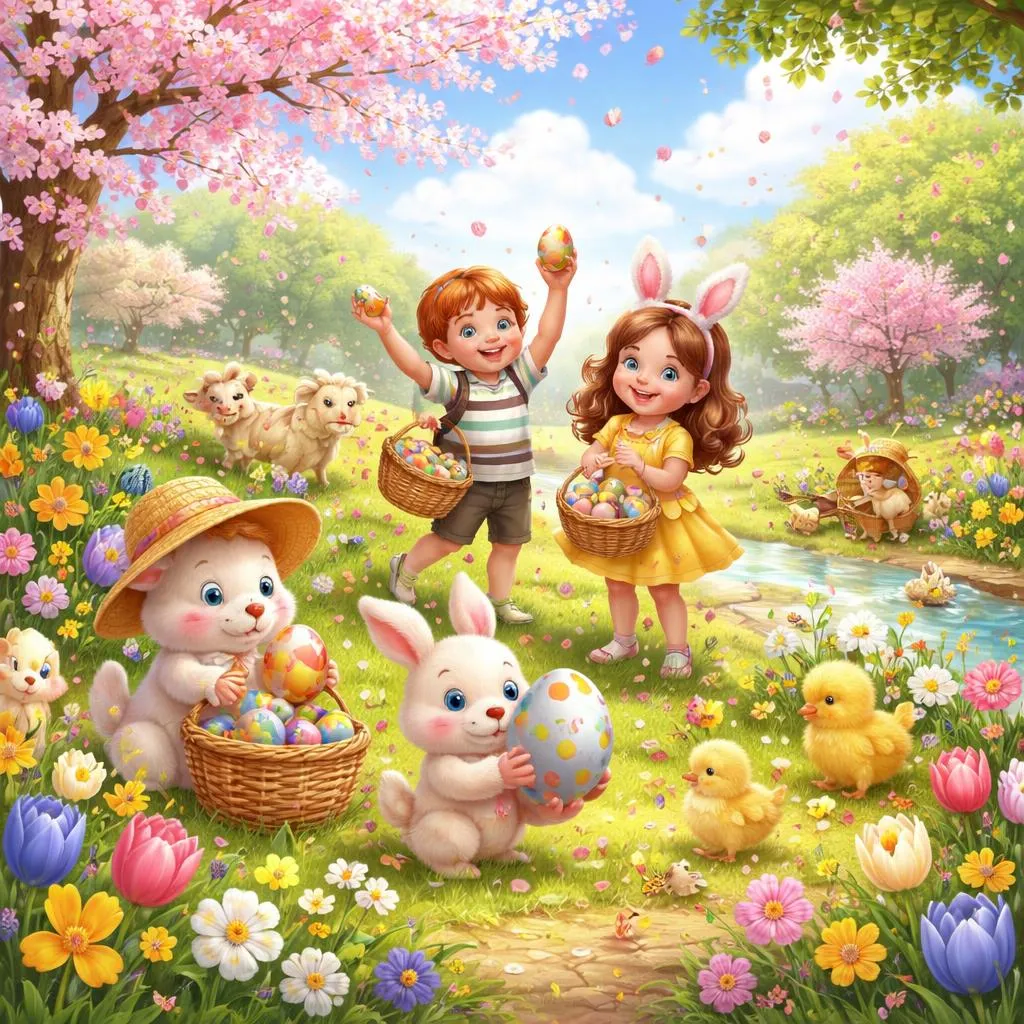

Bunnies hop across pages. Colorful eggs hide in illustrations. Flowers bloom around every corner. Easter brings symbols of new life and celebration. A children's story Easter weaves these elements into narratives that delight young readers. The holiday provides rich material for language learning through engaging tales. This article explores methods for using these seasonal stories in teaching.
What Defines an Easter Story for Children?
A children's story Easter centers on themes connected to the spring holiday. Some stories focus on secular Easter traditions. Bunnies deliver decorated eggs. Children participate in egg hunts. Families gather for special meals. These tales capture the fun and excitement of Easter celebrations.
Other stories present the religious meaning of Easter. They tell of new life and hope. They share the story of Easter in age-appropriate ways. These narratives focus on themes of renewal and joy.
Many Easter stories combine both traditions. Bunnies and eggs appear alongside messages of spring and new beginnings. The holiday's multiple meanings create rich possibilities for storytelling.
Vocabulary Learning Through Easter Stories
Easter stories introduce rich holiday vocabulary. Easter-specific words appear naturally. Bunny, egg, basket, and hunt fill the pages. Each word connects to familiar Easter activities.
Spring vocabulary emerges through Easter settings. Bloom, flower, grow, and new describe the season. These words help learners talk about spring changes.
Color words appear frequently. Dyed eggs come in rainbow hues. Pink, blue, yellow, and purple eggs hide in illustrations. This color vocabulary builds through visual connection.
Children's story Easter also introduces words for emotions. Excited, happy, surprised, and joyful describe Easter morning feelings. These adjectives help learners express holiday emotions.
Simple Phonics Points in Easter Tales
Easter stories offer excellent phonics material. Holiday words provide sound practice. Easter features long e. Bunny contains short u. Egg has short e. Basket offers short a. These words become phonics anchors through repeated reading.
Many Easter stories use onomatopoeia for egg sounds. Crack when eggs open. Tap tap tap when dying eggs. Hop when bunnies move. These sound words connect phonics to holiday actions.
Alliteration appears in Easter language. "Bouncy bunny" repeats b sound. "Easter eggs" features long e in both words. "Spring celebration" highlights s sound. These patterns support phonemic awareness.
Exploring Grammar Through Holiday Narratives
Easter stories provide clear grammar models. Present tense describes Easter traditions. "Every Easter, children hunt for eggs in the garden." This general present expresses recurring holiday events.
Past tense narrates story events. "The bunny hid the eggs carefully. The children searched everywhere." This past tense shows completed action appropriate for storytelling.
Future tense appears in Easter anticipation. "Tomorrow we will have our Easter egg hunt." "The bunny will come tonight." These structures show expectations connected to the holiday.
Learning Activities with Easter Stories
Active engagement with Easter narratives deepens learning. These activities bring holiday themes into productive language use.
Easter Egg Hunt with Words Hide word cards around the room instead of eggs. Cards feature Easter vocabulary from stories. Children hunt for words and read them aloud when found. This combines physical activity with word recognition.
Egg Decorating with Descriptive Language After reading about decorated eggs, provide hard-boiled eggs or paper egg shapes. Learners decorate their own eggs. While decorating, describe colors and patterns using story vocabulary. This connects art and language.
Easter Story Sequencing Take key events from an Easter story and put them on separate cards. Learners arrange events in correct order. This builds comprehension of narrative structure.
Spring and Easter Word Collection Create a class collection of Easter and spring words from stories. Group by category. Animals: bunny, chick, lamb. Objects: egg, basket, candy. Actions: hunt, hide, find. This builds organized vocabulary.
Educational Games with Easter Stories
Games add playful interaction with holiday narratives. These activities work well for groups or individuals.
Easter Bingo Create bingo cards with Easter story elements. Bunny. Egg. Basket. Chick. Flower. Hunt. As you describe story moments or call words, learners cover matching squares. This builds listening comprehension and holiday vocabulary.
Easter Charades Act out Easter activities from stories without speaking. Hiding eggs. Hunting for eggs. Decorating eggs. The Easter bunny hopping. Others guess the activity. This builds comprehension and movement connection.
Easter Memory Match Create pairs of cards with Easter pictures on some and matching words on others. Egg picture matches "egg" word. Bunny picture matches "bunny." Learners find matches and say the word. This builds vocabulary and visual memory.
Printable Materials for Easter Story Learning
Tangible resources support extended exploration of Easter themes. These materials work well for independent practice.
Easter Word Cards Create cards with Easter vocabulary on one side and simple definitions or pictures on the other. Bunny, egg, basket, hunt, chick, spring. Use these for matching games or quick reviews.
My Easter Story Page Provide a template for writing an original Easter story. Prompts guide structure. "On Easter morning..." "The bunny had hidden..." "I found..." "The best part was..." This builds narrative skills with holiday themes.
Easter Story Map Template Create a simple map template for plotting Easter stories. Characters, setting, Easter activity, surprise, ending. Learners fill this in after reading. This builds comprehension of Easter story structure.
Easter Card Template Create simple card templates for writing Easter messages. Inside space for original message using holiday vocabulary. This builds authentic writing practice.
The lasting value of a children's story Easter lies in its connection to real celebration. Children experience Easter in their own lives. They hunt eggs. They receive baskets. They celebrate spring. Stories that mirror these experiences become deeply meaningful. The vocabulary learned connects to actual holiday activities. Words like basket and hunt describe what children themselves do. This connection makes language learning natural and immediate. Each Easter story read together builds vocabulary while celebrating the season's joy. The classroom becomes a place where holiday traditions and language development join together in colorful celebration.