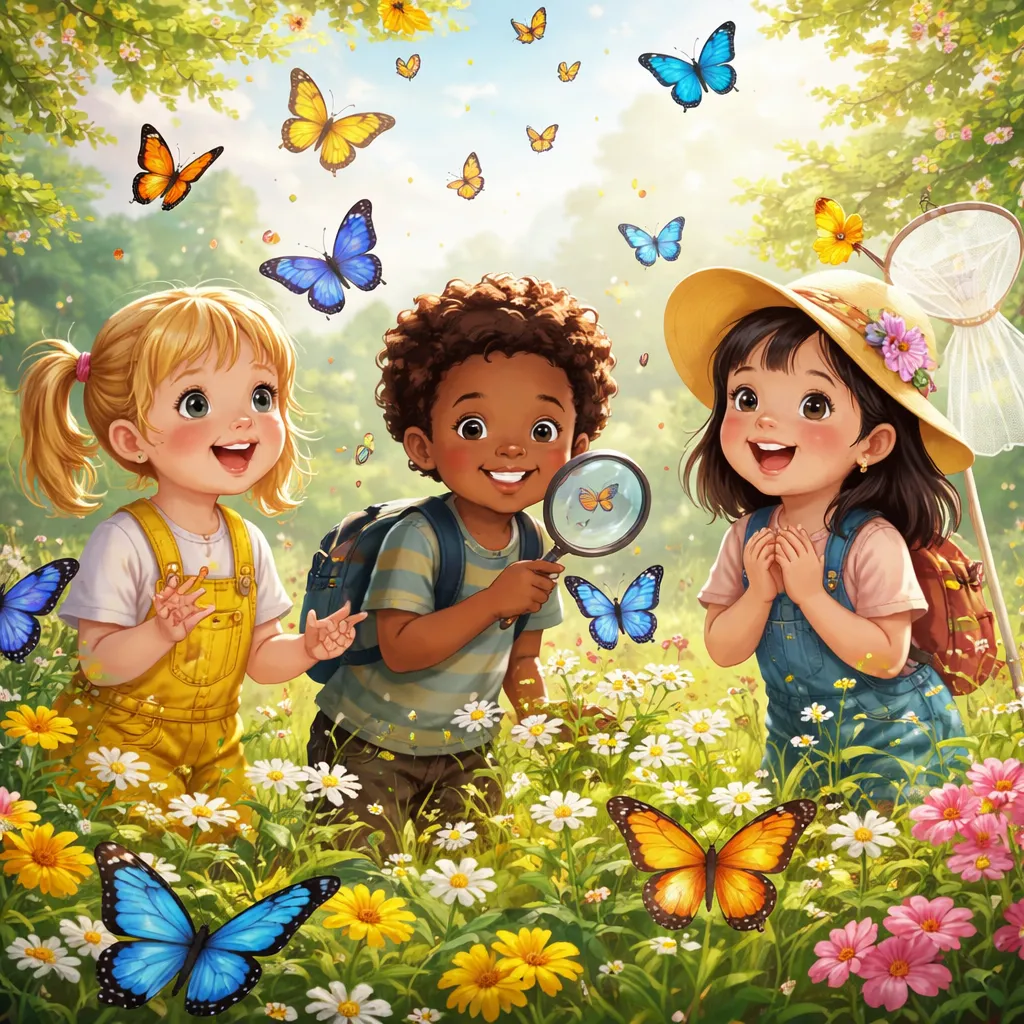

What Is This Animal?
A butterfly is an insect with large, colorful wings. It has six legs and a long, thin body. Its wings are covered in tiny scales. These scales create beautiful patterns. Butterflies fly during the day. They move from flower to flower.
Butterflies belong to the insect group. They are not birds or bugs. They are a special kind of insect known for their beauty. People love watching butterflies in gardens. Their bright colors make them easy to spot. Children often feel happy when they see a butterfly.
Butterflies start their lives as caterpillars. This is a big change. A tiny caterpillar eats leaves. Then it forms a hard case called a chrysalis. Inside, it changes completely. When it comes out, it has wings. This process amazes children and adults alike.
Butterflies live in many places. You can find them in gardens, meadows, and forests. Some live in mountains. Others live near the ocean. They need flowers for food. They need sunny spots to warm their bodies. For children, butterflies represent beauty, change, and the wonders of nature.
English Learning About This Animal
Let us learn the English word butterfly. We say it like this: /ˈbʌtərflaɪ/. The word has three parts: butter and fly. Some say the name came from an old belief that butterflies stole butter. Others think it comes from the yellow color of some butterflies. Say the word slowly: but-ter-fly. Now say it three times. Butterfly. Butterfly. Butterfly.
Now let us learn words about a butterfly’s body. The head holds its eyes and antennae. The antennae are two long feelers on top of the head. The thorax is the middle part where wings and legs attach. The abdomen is the long back part. The wings come in two pairs. The scales are the tiny pieces that make the wing colors.
There is a beautiful English saying about butterflies. It goes, “Happiness is like a butterfly. The more you chase it, the more it eludes you. But if you turn your attention to other things, it comes and sits softly on your shoulder.” This means we find joy when we are not trying too hard. Another simple proverb is, “A butterfly does not look back at the caterpillar in shame.” This reminds us that change is natural and we should accept who we are.
These English words help children describe what they see. When they say antennae, they learn a precise word. When they say scales, they understand how wings work. Parents can practice these words while looking at butterfly pictures. Point to each part. Say the word together. This builds both language and observation skills.
Animal Facts and Science Knowledge
Butterflies belong to the insect group called Lepidoptera. This name comes from Greek. It means “scaly wings.” Butterflies are insects. They have three body parts. They have six legs. They have two pairs of wings covered in scales. These scales give butterflies their bright colors.
Butterflies go through four life stages. The first stage is the egg. A female butterfly lays eggs on a leaf. The second stage is the caterpillar. This is the larva. Caterpillars eat leaves and grow fast. The third stage is the pupa. Inside the chrysalis, the caterpillar changes into a butterfly. The fourth stage is the adult butterfly. This process is called metamorphosis.
Butterflies eat liquid food. They use a long tube called a proboscis. This tube works like a straw. They drink nectar from flowers. They also drink juice from fruit. Butterflies do not chew. They only sip liquids. Their favorite flowers are bright and smell sweet.
Butterflies have special abilities. Their wings help them fly fast. Some butterflies fly up to thirty miles per hour. They also use their wings to hide. The patterns on their wings can look like eyes. This scares away birds. Butterflies taste with their feet. When they land on a leaf, their feet tell them if it is food.
Butterflies live alone. They do not live in groups like bees. But they sometimes gather in large numbers during migration. The monarch butterfly travels thousands of miles. It flies from Canada to Mexico. This journey takes many generations. No single butterfly makes the whole trip. This shows how amazing these small creatures are.
How to Interact With This Animal Safely
Butterflies are wild insects. We should watch them without touching. If a butterfly lands on you, stay very still. It will leave when it is ready. Do not try to grab it. A butterfly’s wings are delicate. Touching them can remove the scales. This makes it hard for the butterfly to fly.
If you want to attract butterflies to your garden, plant flowers. Butterflies love bright flowers like marigolds, zinnias, and milkweed. They need sunny spots. Place a shallow dish of water with small stones. Butterflies can drink from the stones. This gives them a safe place to rest.
If a child wants to hold a butterfly, use a gentle method. Wait for a butterfly to land on a flower. Slowly place a finger near its legs. Let it crawl onto your finger. Do not pinch or hold it. Watch it for a moment. Then let it fly away. Always wash hands afterward.
Never take a butterfly home from the wild. Butterflies need flowers and sunlight. They cannot live long inside a jar. If your family wants to watch butterflies grow, consider a butterfly kit. These kits provide safe caterpillars. You can watch them change. Then you release the butterflies together. This teaches children about life cycles and respect for nature.
Teach children to protect butterfly homes. Do not pick all the flowers. Leave some for butterflies. Do not use strong chemicals in the garden. These can harm butterflies and caterpillars. Small actions make a big difference. When children help protect butterflies, they learn to care for the environment.
What Can We Learn From This Animal
Butterflies teach us about change. They start as tiny eggs. They become caterpillars. Then they transform inside a chrysalis. Finally, they emerge with wings. This shows that change can be beautiful. Children experience many changes as they grow. Learning new things can feel hard at first. But change leads to wonderful results.
Butterflies teach us patience. A caterpillar waits inside the chrysalis. It does not rush. It trusts the process. Children can learn this patience. When learning to read or write, progress takes time. Like the butterfly, good things come to those who wait.
Butterflies teach us to try again. A butterfly sometimes struggles to leave its chrysalis. This struggle strengthens its wings. If someone helps too soon, the butterfly cannot fly. Children learn that challenges make them stronger. When something is hard, it is preparing them for the next step.
Butterflies teach us to find the good in each stage. The caterpillar enjoys eating leaves. The butterfly enjoys flying and sipping nectar. Each stage has its own joy. Children can learn to enjoy where they are now. Being small has its own adventures. Growing up brings new adventures too. Both are valuable.
Fun Learning Activities
Let us make learning about butterfly fun. One activity is the butterfly dance. Ask your child to stand with arms out like wings. Move slowly around the room. Flutter the arms up and down. Pretend to land on flowers. Say “butterfly flies” and “butterfly lands on a flower.” This movement builds coordination and language.
Another activity is making a butterfly life cycle wheel. Cut a circle from paper. Divide it into four parts. Draw an egg, a caterpillar, a chrysalis, and a butterfly. Attach a pointer with a paper fastener. Turn the wheel and name each stage. This helps children remember the four stages.
Create a butterfly garden together. Choose a small spot outside. Plant flowers that butterflies like. Add a flat rock for basking. Place a shallow dish with water and stones. Visit the garden each day. Count how many butterflies come. Write down the colors you see.
Draw a butterfly and label its parts. Draw the head, antennae, thorax, abdomen, and wings. Write the words next to each part. Say them aloud. For younger children, you can draw the butterfly first. Let them point to the parts as you say the words.
Make up a butterfly story. Ask your child what the butterfly sees during the day. Does it visit red flowers? Does it fly over a pond? Write three sentences together. Let your child draw pictures for the story. Read it aloud before bedtime.
These simple activities bring learning to life. Children build English vocabulary while playing. They learn science through hands-on exploration. They connect with nature in gentle ways. Learning about butterfly becomes a journey of discovery. Each moment spent together strengthens language skills, curiosity, and a love for the natural world.