
Who Is This Celebrity?
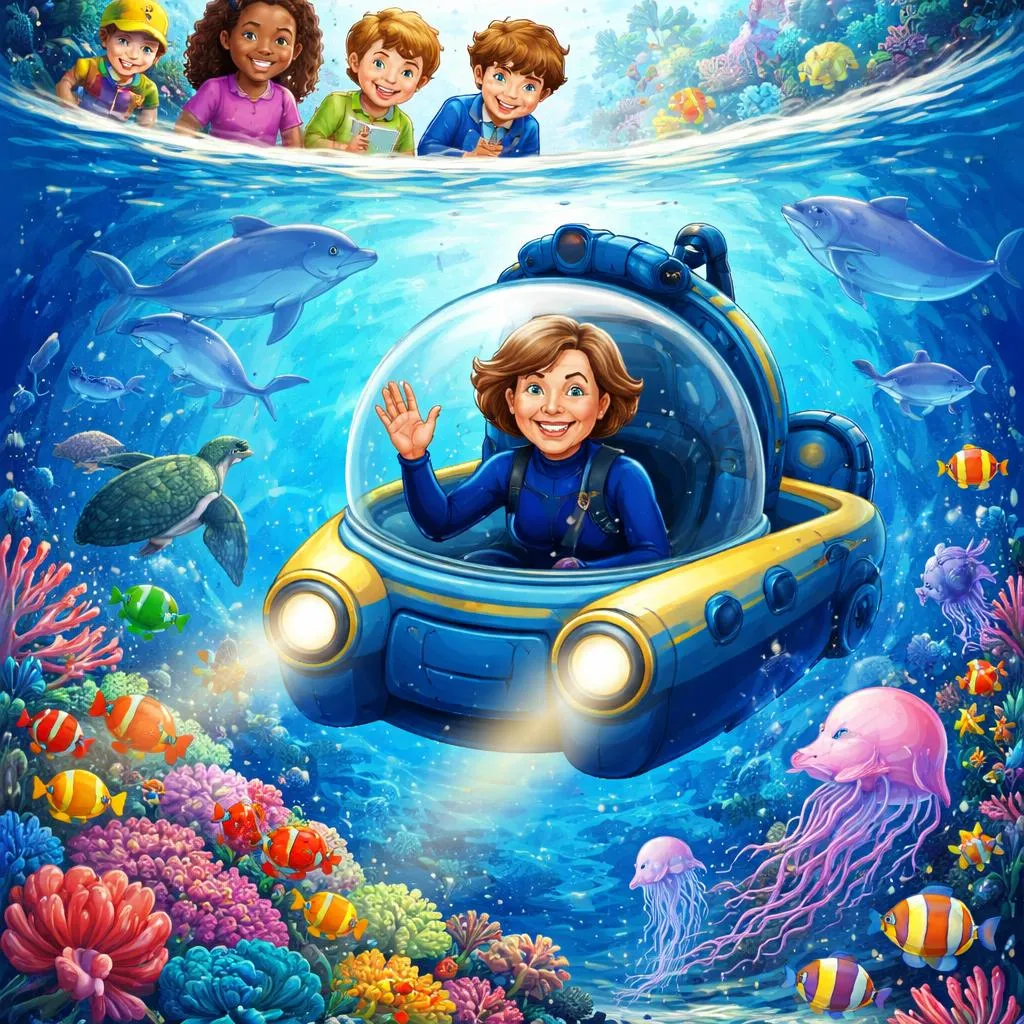
Sylvia Earle is a famous ocean scientist and explorer. She has spent more time underwater than almost any other human. People call her “Her Deepness” with great respect.
This celebrity story introduces a woman who fell in love with the sea. Sylvia Earle has walked on the ocean floor. She has lived in underwater houses. She has seen creatures no one had seen before.
Kids who love science and nature will find her inspiring. Sylvia shows that girls can become great explorers too. She proved that curiosity leads to amazing places.
She has written many books and made many films. She speaks to world leaders about protecting the ocean. Her voice has become one of the most important on Earth.
Early Life and Childhood
Sylvia Earle was born in 1935. She grew up on a small farm in New Jersey. Her family did not live near the ocean at first.
Her parents loved nature. They took young Sylvia on walks through forests and fields. She learned the names of plants and animals. She watched birds and collected bugs.
When Sylvia was 12 years old, her family moved to Florida. She saw the Gulf of Mexico for the first time. The ocean took her breath away.
She waded into the water and looked down. She saw fish, crabs, and sea grass. She felt like she had entered a new world. That moment changed her life.
Sylvia started spending every free moment at the beach. She learned to swim and dive. She collected shells and watched fish for hours.
Her mother gave her a mask and snorkel. Sylvia put her face in the water and stayed there as long as possible. She wanted to see everything.
Education and Learning Journey
Sylvia Earle worked very hard in school. She loved science classes the most. Biology and chemistry made sense to her.
She went to college at Florida State University. She studied botany, which is the science of plants. She graduated with high honors.
Then Sylvia moved to Duke University in North Carolina. She earned a master’s degree and a PhD. Her doctoral work focused on algae and sea plants.
At that time, very few women became ocean scientists. Many people doubted that a woman could do this work. They thought the sea was too dangerous for girls.
Sylvia ignored these voices. She knew she belonged in the water. She took every chance to dive and explore.
She learned to use scuba gear. She learned to pilot small submarines. She learned to take photographs underwater.
Her teachers saw her talent and dedication. They encouraged her to keep going. Sylvia never stopped learning. She still studies the ocean today at age 89.
How Did They Become Successful?
Sylvia Earle became successful through bold choices. She did not wait for permission. She created her own opportunities.
In 1964, Sylvia joined a scientific expedition to the Indian Ocean. She was the only woman among 70 scientists. She spent months at sea studying plants and fish.
In 1969, Sylvia led a team of women aquanauts. They lived in an underwater habitat called Tektite II. For two weeks, they slept, ate, and worked on the ocean floor.
People had never seen women do this before. The media called them “aquababes” at first. But Sylvia and her team proved they were serious scientists.
In 1979, Sylvia did something even more amazing. She walked on the ocean floor at a depth of 1,250 feet. No woman had ever gone that deep alone.
She wore a special hard suit called a JIM suit. The suit protected her from the crushing pressure. She walked for two and a half hours in total darkness.
Sylvia became famous after that dive. Newspapers called her “Her Deepness.” The name stuck because it fit her perfectly.
Big Ideas and Achievements
Sylvia Earle achieved many things that changed ocean science. Her biggest idea is simple. The ocean is the most important part of our planet. If the ocean dies, we all die.
She discovered new species of sea plants and animals. She named them and described them for science. Her work helped us understand how ocean life works.
Sylvia served as the first female chief scientist of the United States National Oceanic and Atmospheric Administration. She advised the government on ocean issues.
In 2009, Sylvia started an organization called Mission Blue. This group creates protected areas in the ocean called Hope Spots. These spots give sea life a safe place to recover.
Today, Mission Blue has more than 140 Hope Spots around the world. Each spot protects important habitats like coral reefs and deep sea mountains.
Sylvia has written over 200 scientific papers and 15 books. Her book “The World Is Blue” explains why the ocean matters to every person on Earth.
She has also received many awards. The TED organization gave her a $1 million prize. She used the money to grow Mission Blue.
Challenges and Difficult Times
Sylvia Earle faced many challenges as a woman in science. People told her that women did not belong on research ships. Some male scientists refused to work with her.
She could not join certain expeditions because ships had no space for women. Scientists considered women bad luck on boats. Sylvia proved this belief was wrong.
The deep ocean itself is very dangerous. The pressure can crush a human body. The cold can shut down your hands and feet. One small mistake can kill you.
Sylvia survived many close calls. Her equipment failed underwater several times. Each time, she stayed calm and solved the problem.
She also faced financial challenges. Ocean exploration costs a lot of money. Sylvia raised funds from private donors and foundations. She wrote books and gave speeches to support her work.
In recent years, Sylvia has faced a different challenge. She watches the ocean change in terrible ways. Coral reefs are dying. Fish populations are falling. Plastic fills the water.
This knowledge hurts her deeply. But she does not give up. She works harder to save what remains.
Fun Facts About the Celebrity
Sylvia Earle has many fun facts that kids enjoy. She has spent more than 7,000 hours underwater. That is almost 300 full days.
She holds the record for the deepest untethered walk on the ocean floor. No one has gone deeper alone without a cable to the surface.
Sylvia has met Jacques Cousteau. They became friends and shared a love of the sea. He inspired her to make films about the ocean.
She has a species of plant named after her. Scientists called it Pilina earleae. This sea plant lives only in Hawaii.
Sylvia does not like eating seafood. She loves fish too much to eat them. She prefers vegetables and grains instead.
She has appeared on many television shows. Kids might remember her from “The Simpsons” or “David Letterman.”
Sylvia became the first person to walk on the ocean floor under the North Pole. She did this in her 70s. Age does not stop her.
Why Is This Celebrity Important Today?
Sylvia Earle remains very important today. She speaks to world leaders about ocean protection. Many governments listen to her advice.
Her Mission Blue Hope Spots protect millions of square miles of ocean. Fish and whales live safely in these areas. Coral reefs have time to heal.
Sylvia trains young scientists to continue her work. She believes children will save the ocean. She gives them the tools they need.
She has inspired a whole generation of women scientists. Many female oceanographers say Sylvia showed them what was possible.
Her films and books reach millions of people. Families watch her documentaries together. Children learn about the ocean from her gentle voice.
Sylvia continues to dive at age 89. She still wears a wet suit and mask. She still gets excited about seeing a new fish.
What Can Kids Learn from This Story?
Kids can learn many lessons from Sylvia Earle. The first lesson is about following your curiosity. Sylvia saw the ocean as a girl and never looked back.
The second lesson is about ignoring people who doubt you. Many said a woman could not be an ocean explorer. Sylvia proved them wrong through action.
The third lesson is about taking risks. Sylvia walked on the deep ocean floor. She lived underwater for weeks. Great adventures require courage.
The fourth lesson is about protecting what you love. Sylvia loves the ocean. She spends her life fighting for it. You can protect something you love too.
The fifth lesson is about staying humble. Sylvia has achieved great fame. But she still talks to children with kindness. She still answers their questions.
The final lesson is about never stopping. Sylvia is almost 90 years old. She still dives. She still explores. She still learns.
Quick Quiz or Practice Time
Let us see what you remember about Sylvia Earle. Ask a parent to help you with these questions.
Question 1: What nickname do people call Sylvia Earle?
Question 2: How old was Sylvia when her family moved to Florida?
Question 3: What was the name of the underwater habitat where Sylvia lived for two weeks?
Question 4: What organization did Sylvia start to protect the ocean?
Question 5: How many hours has Sylvia spent underwater?
Activity Time: Draw Sylvia Earle walking on the ocean floor in her JIM suit. Draw fish and sea plants around her feet.
Another Activity: Find a picture of an ocean animal you have never seen before. Draw that animal and write three facts about it. Share your drawing with a family member.
Think about one thing you love in nature. It could be a tree, a bird, or a local pond. Write one way you can help protect that thing this week.
Sylvia Earle saw the ocean as a young girl and fell in love. She faced doubt and danger. She kept going anyway. She walked on the bottom of the sea. She spoke to presidents. She started a movement to save the waves. Her story tells us that one person can make a difference. You do not need to be big or loud. You just need to care deeply and act bravely. The ocean is counting on all of us. And Sylvia Earle is still leading the way.