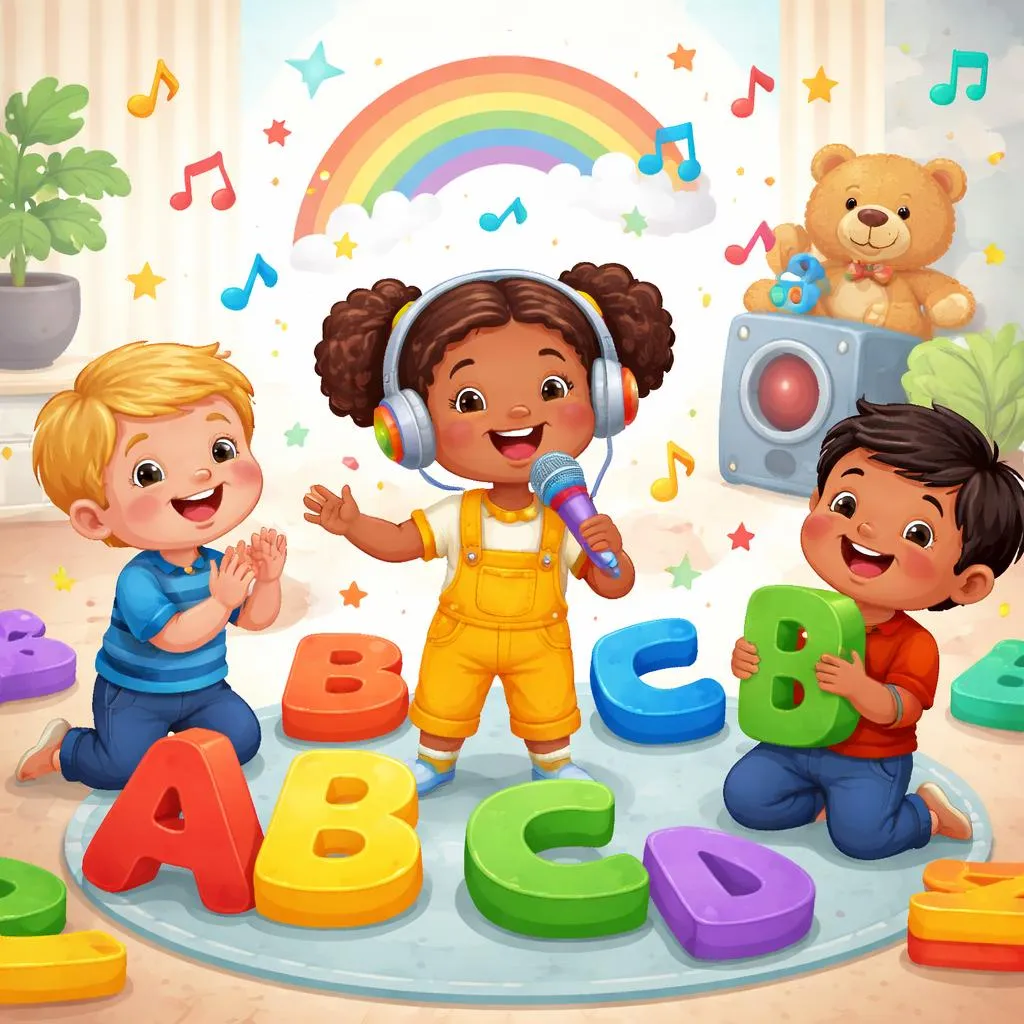

Hello, wonderful young learners! Today brings an exciting opportunity to explore one of the most famous songs in the world. This simple tune helps children everywhere learn their letters. The "ABC Song with Words" combines music with learning in a powerful way. Each letter gets its own moment in the melody. Children hear the letter names in order. They sing along and remember. Let us discover together why this song works magic for learning the alphabet.
What Is the "ABC Song" Nursery Rhyme? The "ABC Song" is a beloved alphabet learning tool. It uses the same tune as "Twinkle Twinkle Little Star." This familiar melody makes learning easy. Children already know the music. They just need to learn the new words.
The song presents all twenty-six letters in order. Each letter gets sung clearly. The rhythm helps children anticipate what comes next. After singing through the alphabet, the song ends with a reminder. "Now I know my ABCs. Next time won't you sing with me?" This invites participation and repetition.
What makes the "ABC Song with Words" special is its predictable pattern. The melody splits the alphabet into phrases. A B C D E F G comes first. H I J K L M N O P follows. Then Q R S T U V. Finally W X Y Z. This grouping helps children remember letter sequences.
The song has been translated into many languages. Children around the world learn their alphabets through similar tunes. English learners everywhere recognize this melody. It creates a shared cultural experience across countries and classrooms.
The Lyrics of the "ABC Song" Nursery Rhyme Let us look closely at the words of this essential song. The lyrics are simple and repetitive. This makes them easy for young children to memorize.
The song begins with the first letters:
A B C D E F G H I J K L M N O P Q R S T U V W X Y Z
After naming all the letters, the song continues:
Now I know my ABCs Next time won't you sing with me?
Some versions add "and" between letters at certain points. Others pronounce letters slightly differently. The core structure remains the same across most versions. Children learn to recognize both uppercase and lowercase forms through repeated exposure.
The "ABC Song with Words" works because of its simplicity. No complex vocabulary distracts from the letter names. Children focus completely on the alphabet. The friendly melody keeps them engaged. The invitation at the end encourages social singing.
Vocabulary Learning from the ABC Song The "ABC Song with Words" teaches the most fundamental vocabulary of all. Letter names form the basis for reading and writing. Each letter name becomes a building block for future learning.
Children learn to recognize letter names through repetition. They hear A, B, and C many times. The song presents them in a fixed order. This order helps with dictionary skills later. Knowing alphabetical order supports research and organization.
The song introduces the concept of letters as symbols. Children understand that these sounds have names. They learn that letters combine to make words. This understanding develops gradually through repeated singing.
The phrase "my ABCs" teaches an important expression. Children learn that "ABCs" means the alphabet. This shortened form appears in everyday language. "She knows her ABCs" means she knows the alphabet. The song introduces this useful phrase naturally.
The invitation "won't you sing with me" models polite language. "Won't you" offers a gentle request. Children absorb this social language through the song. They learn how to invite others to join activities.
Phonics Points in the ABC Song The "ABC Song with Words" primarily teaches letter names, not letter sounds. This distinction matters for phonics learning. Letter names and letter sounds are different. Both are important for reading development.
Letter names help children talk about letters. They can ask, "How do you spell cat?" The answer uses letter names. C-A-T spells cat. Knowing letter names enables this conversation.
Letter sounds help children decode words. They learn that C makes a /k/ sound. They blend sounds to read words. The ABC song does not teach these sounds directly. It provides the foundation for later phonics learning.
Some versions of the song include the "and" between L M N O P. This can confuse children. They may think "elemenop" is one letter. Teachers often emphasize separating these letters clearly. "L M N O P" without rushing helps children distinguish each one.
The song highlights the alphabet's order. This order helps with phonics patterns too. Children notice that Q always comes before U in English words. The song reinforces that Q and U are separate letters that often appear together.
Grammar Patterns Emerging from the Song The "ABC Song with Words" contains simple but important grammar. The phrases model basic English sentence structure.
"Now I know my ABCs" shows subject-verb-object order. "I" is the subject. "Know" is the verb. "My ABCs" is the object. Children absorb this basic pattern through repetition. They learn that "know" means having information in memory.
The possessive "my" appears in this sentence. Children learn to talk about things that belong to them. "My ABCs" means the alphabet they have learned. This possessive form transfers to other contexts. "My book" and "my toy" follow the same pattern.
"Next time won't you sing with me?" models question formation. "Won't you" combines "will not" and "you" into a contraction. This polite question form appears frequently in English. Children learn that questions can be invitations, not just requests for information.
The preposition "with" shows togetherness. "Sing with me" means singing together. Children learn that "with" indicates joining or accompanying. This small word appears in many useful phrases. "Play with me" and "come with me" use the same structure.
Learning Activities for the ABC Song The "ABC Song with Words" inspires countless learning activities. These ideas extend the song into deeper literacy practice. Each activity builds different skills while maintaining the fun.
Letter hunting connects the song to the environment. After singing, look for letters around the room. Point to alphabet posters. Find letters on classroom labels. Notice letters in book titles. Children see that the letters from the song appear everywhere.
Alphabet charts provide visual support during singing. Display a large chart showing all letters. Point to each letter as the song mentions it. Children connect the written form with the spoken name. This builds important letter recognition skills.
Letter manipulatives offer hands-on practice. Provide magnetic letters or letter tiles. Children arrange them in alphabetical order while singing. They touch each letter as they sing its name. This multisensory experience strengthens memory.
Name activities personalize alphabet learning. After singing the ABC song, focus on children's names. Which letters appear in each name? Whose name starts with A? Whose name has a Z? Children see that the alphabet builds their own names.
Letter crafts create lasting connections. Assign each child a letter to decorate. Use glitter, stickers, or drawings. Display all letters in order around the room. Children see their work as part of the complete alphabet.
Printable Materials for the ABC Song Printable materials support learning at home and school. These resources give children something to hold and use. They extend the song into independent practice.
Alphabet charts provide a permanent reference. Print a colorful chart showing all letters. Display it where children can see during singing. Point to letters as the song progresses. Children learn to connect the written and spoken forms.
Letter tracing pages build writing skills. Create pages with dotted letters to trace. Children practice forming each letter. They say the letter name as they write. This combines handwriting with alphabet knowledge.
Mini books let children own the alphabet. Create a simple folded book with a page for each letter. Each page shows the uppercase and lowercase form. Children color the letters and review their book independently. This builds pride and reading confidence.
Matching cards provide versatile practice. Print cards with uppercase letters and matching lowercase forms. Children match A to a, B to b, and so on. They sing the song while finding matches. This builds recognition of both letter forms.
Alphabet strips attach to desks for quick reference. Print long strips showing all letters in order. Tape them to each child's desk. Children can reference them during writing activities. The constant presence reinforces learning.
Educational Games Based on the ABC Song Games turn learning into pure joy. These game ideas use the "ABC Song with Words" as their foundation. Children practice letter recognition while having fun.
Letter Freeze Dance combines movement with learning. Play the ABC song while children dance. Stop the music randomly. Call out a letter. Children freeze and point to that letter somewhere in the room. This builds quick letter recognition skills.
Alphabet Hopscotch creates a physical alphabet. Draw a hopscotch grid with letters instead of numbers. Children hop through the alphabet in order. They call out each letter as they land on it. This combines gross motor skills with letter learning.
Letter Bingo reinforces recognition. Create bingo cards with random letters. Call out letters instead of numbers. Children cover matching letters on their cards. The first to cover a row wins. This builds listening skills along with letter knowledge.
Pass the Letter builds cooperation. Sit in a circle with a basket of magnetic letters. Pass the basket while singing the ABC song. When the song stops, each child pulls out a letter. They name their letter before the song resumes. This builds quick recall under fun pressure.
Alphabet Scavenger Hunt sends children on letter adventures. Give each child a letter card. They search the classroom for something starting with that letter. A finds apple. B finds book. This connects letters to word meanings.
Letter Hop encourages active learning. Place large letter cards on the floor in a path. Children hop from letter to letter while singing. When they land on a letter, they say its name loudly. This builds energy and engagement.
The "ABC Song with Words" remains one of the most effective tools for alphabet learning. Its simple melody carries the entire alphabet in an unforgettable sequence. Children around the world learn their letters through this song. The tune provides a structure for memory. The words name each letter clearly. Together, they create a foundation for all future literacy. Every time children sing, they reinforce letter names and order. They build confidence in their alphabet knowledge. They prepare for reading and writing. The song's invitation at the end creates community. "Next time won't you sing with me?" brings children together in learning. This simple song, passed down through generations, continues to open the door to literacy for millions of children. Its power lies in its beautiful simplicity.