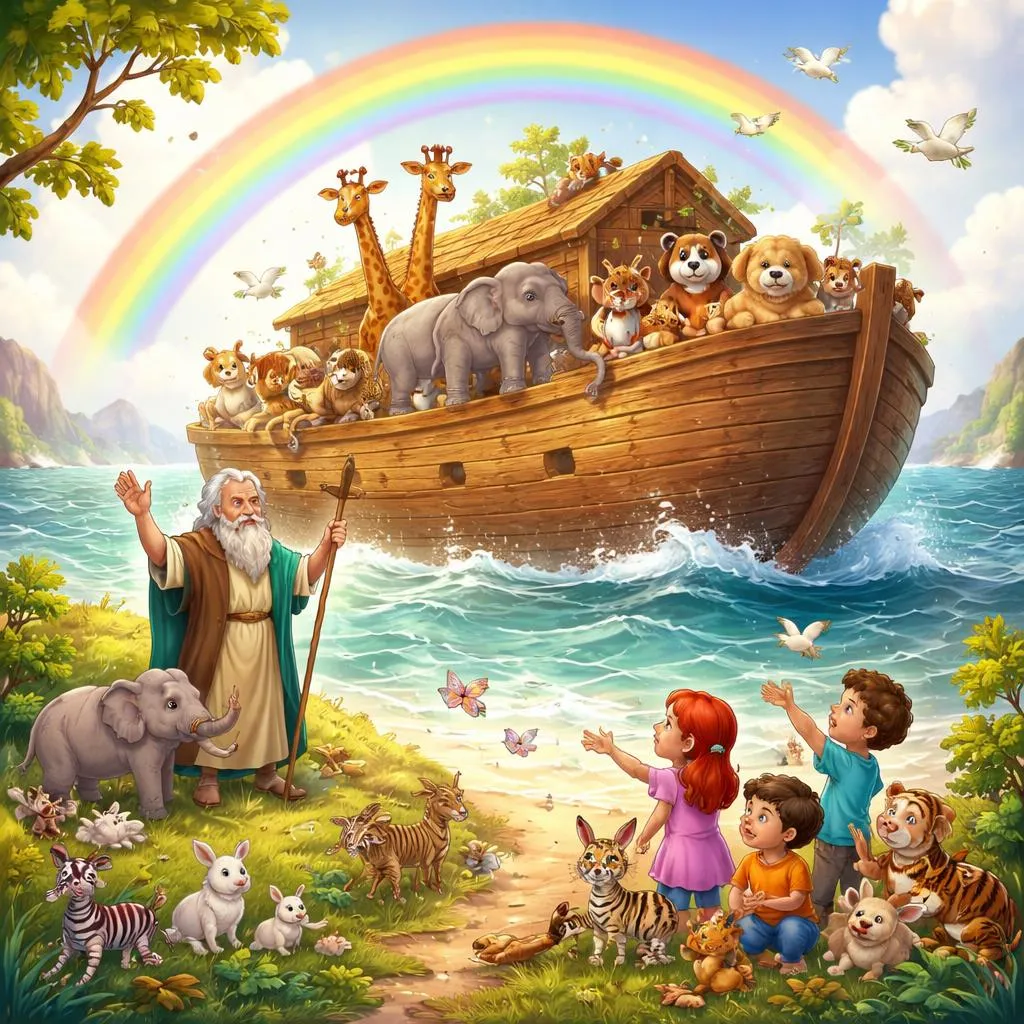

What Is the Children's Story of Noah's Ark? Let us explore this beloved Bible story together. The children's story of Noah's Ark comes from the book of Genesis. It tells of a man named Noah who loved and obeyed God. The world had become filled with violence and wrongdoing. God looked upon the earth and felt sadness. But Noah found favor in God's eyes. God warned Noah about a great flood coming. He instructed Noah to build an enormous ark. The ark would save Noah's family and many animals. God gave specific instructions about the ark's size. It needed rooms for people and creatures of every kind. Noah listened carefully and did everything exactly as God said.
Meaning and Purpose of the Noah Story This story carries profound meaning for children and families. It teaches about obedience even when things seem strange. Building a giant boat on dry land looked foolish to others. But Noah trusted God and followed instructions anyway. The story also shows God's care for all creation. Every kind of animal found safety on the ark. God wanted the creatures preserved, not just people. The rainbow promise appears at the story's end. God promised never to flood the whole earth again. The rainbow serves as a sign of this covenant. Children learn that God keeps promises forever. The story also offers hope after difficult times. The flood ended, dry land appeared, and life began again.
Main Parts of the Noah Story We can divide the Noah story into several important sections. God's decision to send a flood begins the narrative. Human wickedness had filled the earth completely. Noah's obedience shows his faithful character. He built the ark exactly as God commanded. The animals coming two by two delights children. Clean and unclean animals entered the ark. The door being shut by God provides protection. No one could open it from outside. The flood covering the earth lasts forty days. Water rises above the highest mountains. The ark floating safely holds its precious cargo. God remembers Noah and sends a wind. The waters gradually recede from the earth.
Vocabulary Learning from the Noah Story The Noah story introduces rich biblical vocabulary. Ark names the large boat built for survival. It comes from the same word as Moses' basket. Gopher wood describes the type of timber used. Pitch covered the ark to make it waterproof. Flood means the great waters covering the earth. Forty days and nights of rain fell. Animals appear in pairs throughout the story. Clean animals meant seven pairs for sacrifice. Dove returns with an olive leaf in her beak. This showed the waters had gone down. Rainbow appears as God's promise sign. Covenant means a sacred agreement between God and people. We can teach these words with picture cards showing examples. Use them in sentences about the story events.
Phonics Points in the Noah Story The Noah story provides useful phonics practice. Noah itself offers the long O sound. Ark has the AR combination. Flood has the FL blend and long OO sound. Rain has the R sound and AI digraph. Animal words contain valuable patterns. Dove has the long O and V sound. Raven has the long A and short E. Lion has the long I and short O. Construction words provide phonics elements. Build has the UI combination. Wood has the long OO sound. Pitch has the short I and CH ending. Weather words demonstrate patterns. Rain has the AI digraph. Cloud has the OU diphthong. Wind has the short I and ND blend. We can focus on one sound pattern from each section. Find all words with that sound in the Noah story. Write them on ark or animal shapes for practice.
Grammar Patterns in the Noah Narrative The Noah story models useful grammar for young readers. Past tense carries the main narrative throughout. "Noah built the ark exactly as God commanded." Present tense appears in applications and lessons. "God still cares for all creation today." Future tense shows God's promises ahead. "Never again will I flood the whole earth." Questions explore character motivations. "Why did Noah keep building on dry land?" "How did the animals know to come?" Commands appear in divine instructions. "Build an ark of gopher wood." "Bring two of every living creature." Descriptive language paints vivid scenes. "The great, towering ark stood on dry ground." Prepositional phrases describe locations. "In the ark, on the mountain, through the flood." We can point out these patterns during reading.
Daily Life Connections Through Noah The Noah story connects to children's experiences in meaningful ways. Following instructions matters in daily life. Noah obeyed even when he did not understand. Children follow parents and teachers similarly. Waiting for something to end takes patience. Noah waited inside the ark for many days. Children wait for seasons to change too. Caring for animals appears in many homes. Noah fed and protected creatures on the ark. Promises made and kept build trust. God's rainbow promise shows faithfulness forever. New beginnings after hard times bring hope. Dry land appeared and life started fresh. We can point out these connections during reading. "You waited patiently like Noah did." "Taking care of our pet is like the ark."
Learning Activities for the Noah Story Many activities deepen understanding of Noah's journey. Build a model ark using boxes or blocks. Include rooms for animals and people inside. Create pairs of animal puppets on craft sticks. Act out them entering the ark two by two. Make a rainbow with colored paper strips. Hang it as reminder of God's promise. Create a water play experience with toy boats. Discuss how the ark floated safely. Sort plastic animals into pairs by kind. Practice the concept of two by two. Make a dove with an olive leaf craft. Use paper plates and real leaves for authenticity. These activities make the ancient story tangible and memorable.
Printable Materials for Noah Learning Printable resources support deep engagement with the Noah story. Create sequencing cards showing major story events. Building ark, animals entering, flood, dove, rainbow. Design animal pair cards for matching games. Each animal appears with its matching partner. Make vocabulary cards with words and simple definitions. Ark, flood, dove, olive leaf, rainbow, covenant appear. Create a ark template for children to cut and assemble. Add windows, door, and roof details. Design rainbow promise coloring pages with clouds. Write God's promise on the rainbow arcs. Make animal counting sheets for math connections. Count animals entering the ark two by two. These printables structure Bible learning activities.
Educational Games About Noah Games make the Noah story playful and interactive. Play "Animal Pair Match" finding two of each kind. Scatter animal cards and match correctly. Create "Build the Ark" relay race with blocks. Teams build structures following instructions. Play "Rainbow Hunt" finding colored objects around room. Arrange in correct rainbow order. Design "Animal Charades" acting out different creatures. Others guess which animal appears. Play "Forty Days and Nights" counting game. Count to forty with actions each number. Create "Dove Says" like Simon Says with story actions. "Dove says flap your wings." These games build Bible knowledge through active participation.
Teaching Obedience Through Noah Noah's story teaches powerful lessons about obedience. God gave specific instructions for the ark. Noah followed them exactly as told. He did not change the measurements or materials. He built even when neighbors laughed and mocked. This shows that obedience sometimes means standing alone. Children face choices about following rules daily. Listening to parents and teachers matters. Doing right even when others do wrong takes courage. Noah's example gives them a model to follow. We can discuss these connections during reading. "Noah obeyed even when it was hard." "You can follow rules even when others don't." The story shows that obedience brings blessing. Noah and his family were saved because he listened.
God's Care for All Creation The Noah story emphasizes care for every creature. God told Noah to bring animals of all kinds. Not just useful ones or pretty ones. Every species mattered and deserved saving. Birds, mammals, reptiles, all found places on the ark. This teaches children about valuing all life. The smallest creature mattered to God. The largest animal received equal care. Noah's job included feeding and tending them all. Children can learn responsibility for creatures today. Pet care, bird watching, respecting wildlife all connect. The story builds foundation for environmental stewardship. God entrusted creation to human care. Noah fulfilled that trust faithfully on the ark.
The Symbolism of the Rainbow The rainbow carries deep meaning at story's end. After the flood, God placed it in the clouds. It serves as a sign of promise forever. Never again will flood destroy all life. Every rainbow reminds us of this covenant. The colors arching across the sky bring hope. Children delight in spotting rainbows after storms. This connects natural wonder to biblical truth. The rainbow also represents God's beauty and creativity. Light refracting through water drops creates magic. Science and faith meet in this colorful display. We can help children see rainbows as special signs. Each one whispers God's faithful promise. The story transforms how children see weather events.
New Beginnings After Hard Times The ark story ultimately celebrates fresh starts. The flood ended, waters dried, land appeared. Noah and family stepped onto new ground. Animals spread out to fill the earth again. God blessed them to be fruitful and multiply. This teaches that difficult times do not last forever. Storms eventually pass and sunshine returns. New opportunities appear after challenges end. Children experience this pattern in small ways. After illness comes health. After sadness comes joy. After conflict comes peace. The ark story validates these rhythms of life. It promises that God walks through floods with us. And brings us safely to dry ground on the other side.