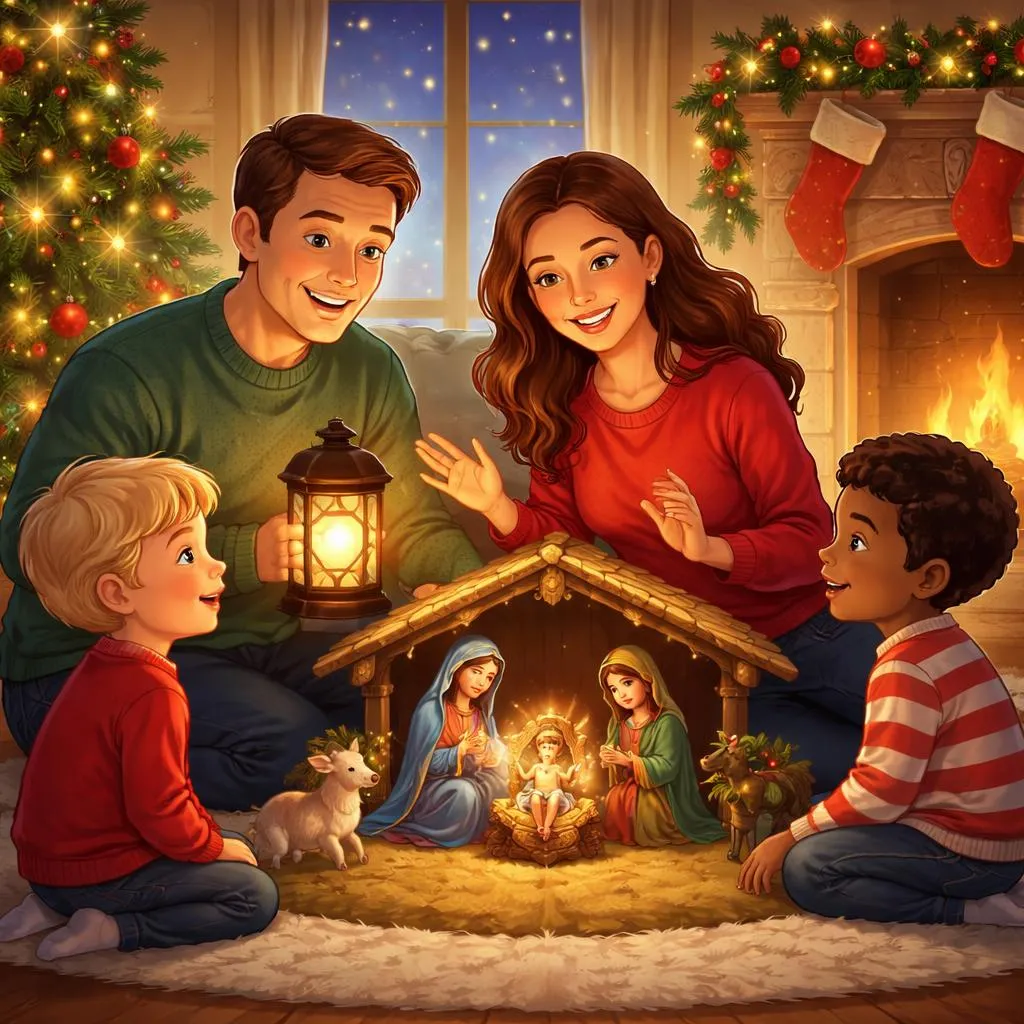

What Is the Christian Children's Christmas Story? Let us explore this sacred and beloved story together. The Christian children's Christmas story tells of Jesus Christ's birth. It comes from the Bible in the books of Matthew and Luke. The story begins with a young woman named Mary. An angel named Gabriel appeared to her one day. He told her she would have a special baby. This child would be the Son of God. Mary trusted God and said yes to this plan. Her fiancé Joseph also received angel messages. He learned the baby came from God's Holy Spirit. Together they traveled to Bethlehem for a census. The town was crowded with people returning home. No room remained in any inn for them to stay.
Meaning and Purpose of the Christmas Story This story carries the deepest meaning of the Christmas season. It explains why Christians celebrate this holiday with joy. God came to earth as a tiny, helpless baby. The Creator of the universe became a human child. This shows how much God loves all people everywhere. The story teaches that greatness comes in small packages. A king was born in a stable, not a palace. Humble shepherds heard the news first, not powerful rulers. Children learn that everyone matters to God. Rich and poor, young and old all received the invitation. The story also models faith and obedience. Mary and Joseph trusted God despite difficult circumstances. Their courage inspires families facing their own challenges today.
Main Characters in the Christmas Story We can introduce each character in the Christmas narrative. Mary was a young woman from Nazareth. She showed remarkable faith and courage. Joseph was a carpenter who loved Mary deeply. He protected his family through dangerous times. The angel Gabriel brought messages from heaven. He appeared to both Mary and Joseph. The innkeeper had no room but offered a stable. His small kindness provided shelter for the birth. Shepherds watched their flocks on nearby hills. Angels appeared to them with glorious news. Wise men followed a star from distant lands. They brought expensive gifts for the newborn king. King Herod felt threatened by the baby's birth. His jealousy caused danger for the holy family.
Vocabulary Learning from the Christmas Story The Christmas story introduces sacred seasonal vocabulary. Advent means the coming or arrival of something important. Christians use this word for the season before Christmas. Nativity means the birth of Jesus Christ specifically. It comes from a word meaning birth or birthplace. Angel names the heavenly messengers in the story. Gabriel and the angelic host appear in scripture. Shepherd describes those watching flocks at night. They received the first announcement of Jesus' birth. Manger means the feeding trough used as a baby bed. It shows the humble circumstances of Jesus' arrival. Frankincense and myrrh name two of the wise men's gifts. These were expensive perfumes and oils. Stable describes the shelter where Jesus was born. It held animals and provided simple protection. We can teach these words with picture cards showing examples. Use them in sentences about the story events.
Phonics Points in the Christmas Story The Christmas story provides useful phonics practice. Christmas itself offers the CH digraph and short I. Mary has the long A and long E. Joseph has the long O and soft G. Angel has the long A and soft G. Bethlehem has the short E and short E. Place words contain valuable patterns. Nazareth has the short A and short E. Galilee has the short A and long I. Judea has the long U and long E. Gift words provide phonics elements. Gold has the long O and LD blend. Myrrh has the Y sounding like ER. Frankincense has the short A and soft C. Action words demonstrate patterns. Travel has the TR blend and short A. Worship has the OR combination and short I. Celebrate has the soft C and long A. We can focus on one sound pattern from each section. Find all words with that sound in the Christmas story. Write them on star or angel shapes for practice.
Grammar Patterns in the Christmas Narrative The Christmas story models useful grammar for young readers. Past tense carries the main narrative throughout. "Mary and Joseph traveled to Bethlehem." Present tense appears in applications and lessons. "God still loves the world today." Future tense shows prophecy and hope. "Jesus will save his people from their sins." Questions explore character experiences. "Why was there no room at the inn?" "How did the shepherds feel when angels appeared?" Commands appear in angel messages. "Do not be afraid." "Name him Jesus." Descriptive language paints holy scenes. "The brilliant, glowing angels filled the night sky with light." Prepositional phrases describe locations. "In the stable, over Bethlehem, beside the manger." We can point out these patterns during reading.
Daily Life Connections Through the Christmas Story The Christmas story connects to children's experiences in meaningful ways. Traveling with family feels familiar from vacations. Mary and Joseph journeyed together too. Sleeping in new places happens on trips. The stable was different from their usual home. Receiving special visitors brings excitement. Shepherds and wise men came to see Jesus. Giving gifts to loved ones shows love. The wise men brought presents for the child. Protecting family members matters to everyone. Joseph kept Mary and Jesus safe from danger. Feeling surprised by good news happens often. The angel's message surprised Mary completely. We can point out these connections during reading. "We travel to see family like Mary and Joseph." "You give gifts to people you love too."
Learning Activities for the Christmas Story Many activities deepen understanding of the nativity. Create a nativity scene with simple figures. Use paper, clay, or small toys for each character. Make angel crafts with paper plates and glitter. Hang them as reminders of the good news. Create star decorations to represent the wise men's guide. Follow the star around the room like the magi. Act out the Christmas story with simple costumes. Scarves for head coverings and robes work well. Bake simple cookies shaped like stars and angels. Share while telling the story together. Create a stable scene in a shoebox. Use hay, small figures, and a baby doll. These activities make the sacred story tangible and memorable.
Printable Materials for Christmas Learning Printable resources support deep engagement with the nativity. Create sequencing cards showing major story events. Angel appears, journey to Bethlehem, Jesus born, shepherds visit, wise men come. Design character cards for each person in the story. Mary, Joseph, angels, shepherds, wise men appear. Make vocabulary cards with words and simple definitions. Nativity, manger, frankincense, myrrh, and star included. Create a nativity scene coloring page with all characters. Children color while hearing the story again. Design a star template for following the wise men's journey. Move the star across the page each day. Make simple reading comprehension sheets with questions. "Who came to see baby Jesus?" "What gifts did they bring?" These printables structure Christmas learning activities.
Educational Games About the Nativity Games make the Christmas story playful and interactive. Play "Find Baby Jesus" hiding a small doll in a stable scene. Children search like the shepherds and wise men. Create "Angel Says" like Simon Says with nativity actions. "Angel says kneel like the shepherds." "Angel says follow the star." Play "Nativity Memory" matching pairs of story pictures. Mary, angel, shepherd, wise man cards appear. Design "Follow the Star" path game on the floor. Move forward by answering story questions. Play "Pack for Bethlehem" collecting items for the journey. Gather what Mary and Joseph might need. Create "Gift Guessing" feeling wrapped presents. Guess which wise man's gift is inside. These games build Bible knowledge through active participation.
Teaching About God's Love Through Christmas The Christmas story reveals God's love most clearly. God did not stay far away in heaven. He came to live among ordinary people. Jesus experienced human life completely. He felt cold, hunger, and tiredness like everyone. This shows that God understands our experiences completely. Children learn they can talk to God honestly. He knows what being human feels like. The baby in the manger grew up to teach and heal. He showed God's love through every action. This love continues reaching toward children today. The story builds foundation for understanding God's character. Not distant and angry, but near and loving. Christmas celebrates this incredible gift of presence.
The Humility of Jesus' Birth The circumstances of Jesus' birth teach powerful lessons. The King of Kings was born in a stable. His first bed was a feeding trough for animals. No fancy palace or soft cradle awaited him. Common shepherds received the first invitation. Not wealthy or powerful people. This shows that God values humble things. Children learn that status does not matter to God. What matters is the heart's condition. The stable setting makes the story accessible to everyone. Any child can imagine being there that night. The humility invites all people to approach without fear. God comes to us in our ordinary circumstances.
Including All People in the Story The Christmas story deliberately includes diverse people. Shepherds represented the working class of society. They spent nights outside with smelly sheep. Wise men came from foreign countries far away. They followed different customs and beliefs. Rich and poor, local and foreign, all came together. The stable welcomed everyone who sought the child. This teaches children about God's inclusive love. No one is too unimportant to be invited. No one is too different to be welcome. The story models the community God desires. All nations, all peoples, all backgrounds belong. Children learn to welcome others as God welcomes them.
Keeping Christ at the Center The Christian children's Christmas story keeps focus on Jesus. Amid presents, Santa, and holiday excitement, the story centers. It reminds everyone why Christmas exists at all. Without Jesus, there would be no Christmas celebration. The lights and gifts celebrate his birth ultimately. We can help children maintain this focus through traditions. Read the nativity story before opening presents. Display a nativity scene prominently in the home. Sing Christmas carols that tell the story. Say thank you to God for the gift of Jesus. These practices anchor the holiday in its true meaning. Children grow up knowing Christmas as Jesus' birthday first. All other celebrations flow from this central truth.