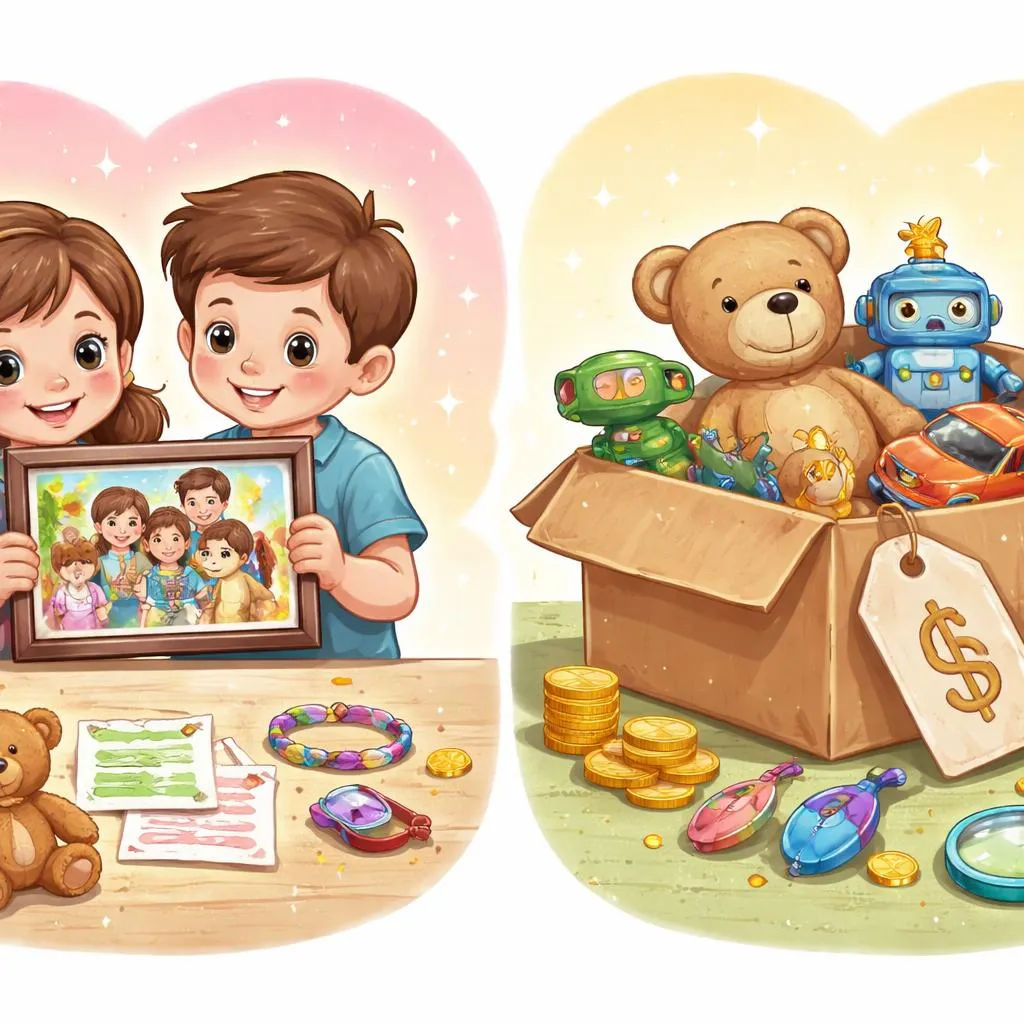

Children treasure certain things. They keep a worn-out stuffed animal. They save a drawing from kindergarten. Parents hear kids say, "This has so much value to me" or "What is this old toy worth?" These two words seem very close. But they describe different ways of measuring how much something matters. Knowing the difference between a "value to" and a "worth to" helps children understand that some things are precious for reasons beyond money. Let us explore these two meaningful words together.
What Do These Expressions Mean?
A "value to" means how important or useful something is to a person. Value can be emotional, practical, or moral. It is often personal. For example, a homemade card has great value to a grandparent. A family heirloom has value beyond money. A "worth to" means how much money something could sell for. Worth is often about price. For example, an old phone might be worth twenty dollars. A rare coin might be worth one hundred dollars. For a child, value feels like love and memories. Worth feels like a price tag.
Both are about how much something means. That is why the two expressions seem similar. Value can be emotional. Worth is usually about money. Understanding this difference helps children know that the most important things in life do not have a price tag.
What's the Difference?
The main difference lies in what is being measured. A "value to" measures importance, usefulness, or emotional attachment. Value is subjective. Different people give different value to the same thing. A "worth to" measures monetary value. Worth is what someone would pay. It is more objective. Think of value as the love you feel for a handmade gift from a friend. The gift might cost little money. But its value is huge. Think of worth as the price of a video game at the store. You can sell it for that much. The worth is a number.
Another difference is that value can apply to ideas and people. "Honesty has value." "She is a valuable team member." Worth is almost always about things or money. "The car is worth 5000 dollars." You would not say a person is "worth" money. This difference helps children use the words respectfully.
When Do We Use Each One?
Use a "value to" for emotional, practical, or moral importance. At home, a child says "This blanket has value to me because Grandma made it." Use value for principles. "Kindness is a value our family shares." Use value for usefulness. "A good dictionary has value when you write stories." Value is about what matters. You decide value with your heart, not just your wallet.
Use a "worth to" for monetary questions. At a garage sale, a child asks "How much is this toy worth?" Use worth for selling. "I wonder what my old video games are worth." Use worth for comparing. "Is this bike worth one hundred dollars?" Use worth for price discussions. Worth is about money. You can look up worth online. You can calculate worth.
Real-life situations use both naturally. A parent says "This necklace was Grandma's. It is not worth much money. Maybe twenty dollars. But its value to our family is huge. It holds memories. Value is about the heart. Worth is about the wallet. Both matter, but they are different." Another example: a child draws a picture. The worth as a piece of art is zero dollars. But the value to the parent is beyond measure. The worth is nothing. The value is everything.
Example Sentences for Kids
Here are simple examples of a "value to":
"Honesty has great value in our family."
"I learned the value of hard work from my dad."
"This seashell has value to me because I found it on vacation with you."
Here are simple examples of a "worth to":
"The old comic book might be worth fifty dollars."
"How much is this used bicycle worth?"
"I don't think this broken toy is worth anything."
Notice how the value examples talk about feelings, lessons, and memories. The worth examples talk about money, selling, and price. A thing can have high value and low worth. A thing can have low value and high worth. A gold ring might be worth a lot of money but have little emotional value. A faded photograph might be worth nothing but have huge value to you.
Common Mistakes to Avoid
Many children say "worth" when they mean "value". They say "This teddy bear has worth to me." That is not wrong, but it sounds like money. The correct way is to say "This teddy bear has value to me" for emotional importance. Save worth for money discussions. This helps children be precise about what they mean.
Another mistake is thinking value is only about money. A child says "If it is not worth money, it has no value." That is not correct. The correct way is to know that value can be about love, memories, lessons, and kindness. Some of the most valuable things in life cost nothing. A hug has no monetary worth but huge value. This is a beautiful lesson for children.
A third mistake is forgetting that worth can change. A child says "Worth is always the same." That is not true. The correct way is to know that worth goes up and down. A toy is worth more when many people want it. A collectible is worth less when people stop collecting. Value also changes. A gift from a friend becomes more valuable over time as you remember the friendship. Both words describe things that can grow or shrink.
Easy Memory Tips
Here is a simple trick. Imagine a "value to" as a heart. The heart holds love, memories, and kindness. Value comes from the heart. Imagine a "worth to" as a dollar sign. The dollar sign holds numbers and prices. Worth comes from money. So value = heart. Worth = dollar sign. This comparison works beautifully.
Another tip uses the first letters. Value starts with V. Think of "V for Very personal." Value is very personal to you. Worth starts with W. Think of "W for Wallet." Worth is about wallet money. Practice with your child. Ask "Is this about feelings or money?" If feelings, say value. If money, say worth. This question works for almost every situation.
Quick Practice Time
Try these simple exercises with your child.
Fill in the blank: Choose "value" or "worth".
"This bracelet was my grandmother's. Its __________ to me is beyond any price." (Answer: value)
"I checked online and saw that my old game is __________ twenty dollars." (Answer: worth)
Multiple choice: Pick the correct description.
Which one measures emotional, practical, or moral importance, often personal and not about money?
A) Worth
B) Value
(Answer: B)
Which one measures monetary value, what something could sell for in dollars?
A) Value
B) Worth
(Answer: B)
These quick questions take only two minutes. They help children separate emotional importance from monetary price. Look around your home. Ask your child "What has value to you because of feelings?" Then ask "What has worth in money?" That real practice builds emotional intelligence and financial literacy together.
Wrap-up
The key difference is simple. Value is about emotional, practical, or moral importance, often personal and not about money. Worth is about monetary value, what something could sell for in dollars. Learning this difference helps children understand that the most precious things in life cannot be bought or sold. Keep cherishing what has value to you. Keep learning what things are worth. Your child will grow up knowing that a full heart matters more than a full wallet.