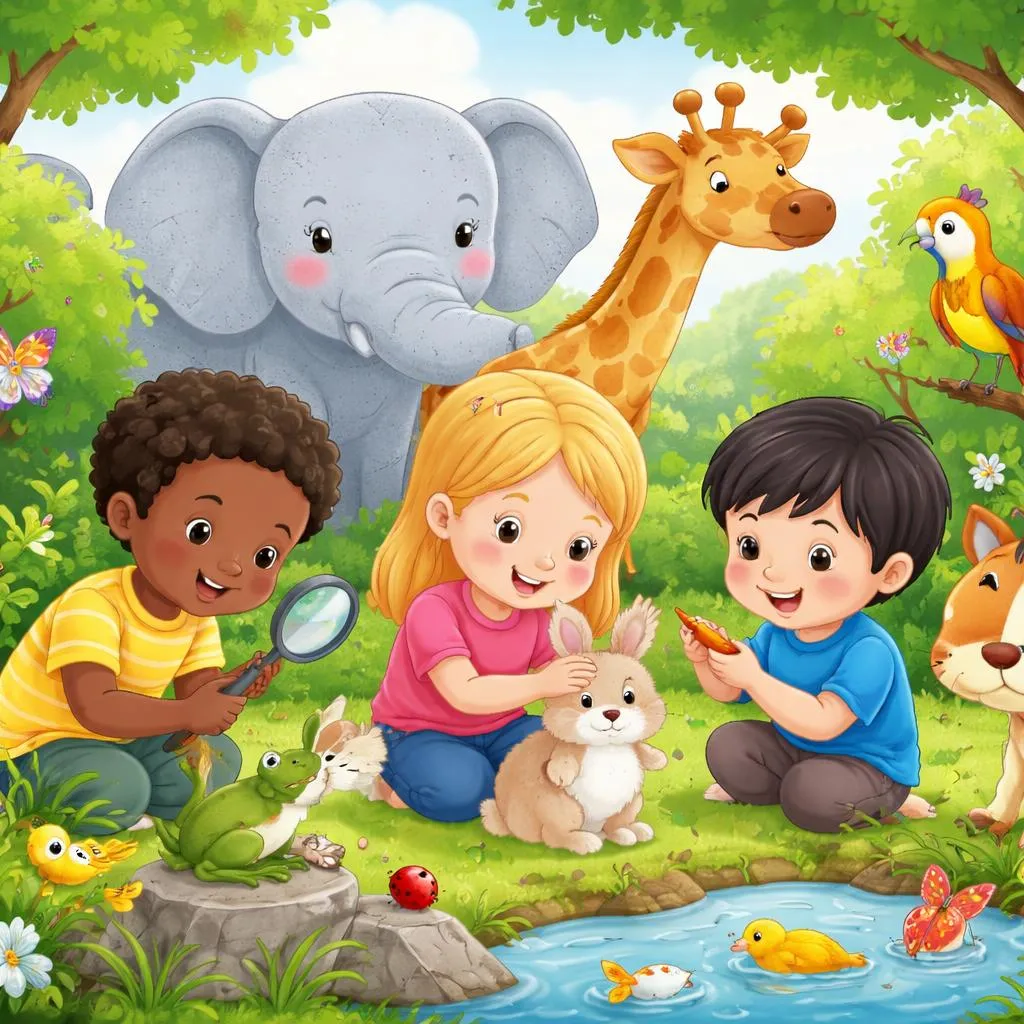

Hello, wonderful educators! Today we are exploring a topic that naturally fascinates young children. We will focus on how to "learn animals." Animals capture children's imaginations. They appear in stories, songs, and daily life. Learning about animals builds vocabulary and science knowledge. We will examine what animal learning involves. We will explore different categories and examples. We will share practical teaching strategies. We will provide engaging classroom activities. This guide will help you teach animal vocabulary effectively. Let's begin this wild learning journey together.
What Does It Mean to Learn Animals? Learning animals means understanding the names and characteristics of different creatures. It includes knowing where they live, what they eat, and how they sound. It builds connections between words and the natural world.
Children are naturally curious about animals. They see pets at home. They visit zoos and farms. They watch animals in cartoons and books. This natural interest makes animal learning highly motivating.
Learning animals builds vocabulary in a fun way. Animal names are interesting to say. Animal sounds are playful. Animal facts are surprising. Children absorb new words eagerly.
Animal learning also builds science concepts. Children learn about habitats, diets, and behaviors. They begin to understand living things and their needs. This is early biology education.
Categories of Animals for Learning Organizing animals into categories helps learning. It creates mental folders for students. Let us look at helpful categories.
Pets: These are animals that live with people. Dogs, cats, rabbits, hamsters, guinea pigs, fish, birds, turtles. Children often have these at home.
Farm Animals: These live on farms and provide food or work. Cows, pigs, chickens, horses, sheep, goats, ducks, donkeys, turkeys, geese. Many children visit farms.
Zoo Animals: These are wild animals kept in zoos. Lions, tigers, elephants, giraffes, zebras, monkeys, bears, penguins, kangaroos, rhinos, hippos. Children love seeing these.
Jungle Animals: These live in rainforests. Monkeys, snakes, parrots, toucans, sloths, jaguars, frogs, butterflies. They are colorful and exotic.
Ocean Animals: These live in water. Fish, sharks, dolphins, whales, octopus, jellyfish, crabs, seals, sea turtles, starfish. The ocean is mysterious and exciting.
Forest Animals: These live in wooded areas. Deer, bears, foxes, raccoons, squirrels, owls, rabbits, woodpeckers, chipmunks. Children may see these in nature.
Desert Animals: These live in dry places. Camels, snakes, lizards, scorpions, meerkats, coyotes, roadrunners. They have special adaptations.
Arctic Animals: These live in cold places. Polar bears, penguins, seals, walruses, arctic foxes, snowy owls, reindeer. They have thick fur or blubber.
Birds: These have feathers and wings. Eagles, robins, sparrows, parrots, penguins, owls, ducks, chickens, peacocks. Some fly, some swim.
Insects: These are small creatures with six legs. Bees, butterflies, ants, grasshoppers, ladybugs, crickets, fireflies, caterpillars. They are everywhere.
Reptiles and Amphibians: These are cold-blooded. Snakes, lizards, turtles, frogs, toads, salamanders, crocodiles, alligators. They have scales or moist skin.
Daily Life Examples with Animal Learning We can weave animal words into everyday conversations. This makes learning natural and continuous.
During morning greetings, ask about pets. "Do you have a pet at home?" "What is your dog's name?" "Does your cat like to play?" This connects to real life.
During story time, point to animal pictures. "Look at the lion. What sound does a lion make?" "The elephant has a long trunk. What does it do with its trunk?"
During outdoor play, notice real animals. "I see a bird in that tree." "Look at the ant carrying a leaf." "A squirrel is running across the grass."
During snack time, talk about animal foods. "Milk comes from cows." "Eggs come from chickens." "Honey comes from bees." This builds food connections.
During transitions, use animal movements. "Let's hop like bunnies to the door." "Waddle like penguins to the carpet." "Stomp like elephants to lunch."
Printable Flashcards for Animal Learning Flashcards provide excellent visual support for vocabulary lessons. Here are many ideas for creating them.
Animal Picture Cards: Create cards with clear photographs of each animal on one side. Write the animal name on the other side. Include a wide variety from all categories.
Animal Sound Cards: Create cards that represent animal sounds. Woof for dog. Meow for cat. Moo for cow. Oink for pig. Roar for lion. Students match sounds to animals.
Animal Habitat Cards: Create cards showing different habitats. Farm, jungle, ocean, forest, desert, arctic. Students match animals to their homes.
Animal Baby Cards: Create cards showing adult animals and their babies. Cow and calf. Cat and kitten. Dog and puppy. Chicken and chick. This builds vocabulary.
Animal Food Cards: Create cards showing what animals eat. Grass for cow. Fish for penguin. Bugs for bird. Students match animals to their food.
Learning Activities or Games for Animals Games make vocabulary practice fun and memorable. Here are many engaging ideas.
Activity 1: Animal Sounds Game Make an animal sound. "Moo!" Students guess the animal. "Cow!" Take turns letting students make sounds for others to guess. This builds listening and animal knowledge.
Activity 2: Animal Charades Act out an animal without speaking. Hop like a frog. Swing arms like an elephant. Slither like a snake. Students guess the animal. This builds observation and movement.
Activity 3: Animal Bingo Create bingo cards with animal pictures. Call out animal names. Students cover matching pictures. First to cover a row wins. This builds listening and recognition.
Activity 4: Animal Habitat Sorting Provide animal pictures. Create habitat mats. Farm, jungle, ocean, forest. Students sort animals into their correct habitats. This builds science knowledge.
Activity 5: I Spy an Animal Say, "I spy with my little eye, an animal that lives on a farm and says moo." Students guess cow. "I spy an animal that has a long trunk." Students guess elephant.
Activity 6: Animal Walk Call out an animal. Students move around the room like that animal. Hop like a bunny. Crawl like a bear. Fly like a bird. Swim like a fish. This adds movement.
Activity 7: Animal Memory Match Create pairs of animal cards. Place them face down. Students turn over two trying to find matches. They name the animal when they make a match.
Activity 8: Animal Guessing Game Describe an animal without naming it. "I am big and gray. I have a long trunk. I live in Africa and Asia. What am I?" Students guess elephant.
Activity 9: Animal Art Project Students draw or paint their favorite animal. They tell the class about it. What is it? Where does it live? What sound does it make? Display the artwork.
Activity 10: Animal Song Creation Create simple songs about animals using familiar tunes. "Old MacDonald Had a Farm" works perfectly. Add verses for different animals and sounds.
Activity 11: Animal Footprint Matching Create cards with animal footprints. Students match footprints to the animal that made them. This builds observation and deduction.
Activity 12: Animal Movement Freeze Play music. Students move like animals. When music stops, they freeze in an animal pose. Call out an animal for everyone to pose as.
Activity 13: Animal Interview Students pretend to be an animal. Others interview them. "Where do you live?" "What do you eat?" "Do you have any predators?" This builds research and speaking.
Activity 14: Animal Pattern Game Create patterns using animal pictures. Cow, pig, cow, pig. Students continue the pattern. They create their own animal patterns.
Activity 15: Animal Scavenger Hunt Hide animal pictures around the room. Give clues. "Find an animal that lives in the ocean." "Find an animal that gives us milk." Students find and name them.
Activity 16: Animal Puzzles Create simple puzzles with animal pictures cut into pieces. Students assemble the puzzles and name the animal. This builds problem-solving.
Activity 17: Animal Sorting by Size Provide animal pictures in different sizes. Small animals, medium animals, large animals. Students sort them by size. This builds comparison skills.
Activity 18: Animal Alphabet Go through the alphabet naming an animal for each letter. A for alligator. B for bear. C for cat. See how many the class can name together.
Activity 19: Animal Counting Count animal toys or pictures. How many cows? How many pigs? How many total animals? This builds counting skills.
Activity 20: Animal Story Time Read books about animals. Many wonderful picture books exist. Discuss the animals in the story and what they did.
Activity 21: Animal Opinion Line Create a line across the room. One end says "favorite" other end "least favorite." Name an animal. Students stand where they agree. Discuss reasons.
Activity 22: Animal Pictionary Draw an animal on the board. Students guess what it is. The drawer cannot speak or write words. This builds visual literacy.
Activity 23: Animal Question Game One student thinks of an animal. Others ask yes or no questions to guess. "Does it live in water?" "Does it have fur?" "Is it bigger than a car?" This builds questioning skills.
Activity 24: Animal Collage Provide magazines with animal pictures. Students cut out animals and create a collage. They name each animal they include.
Activity 25: Animal Flashlight Game Turn off lights. Shine a flashlight on animal cards on the wall. Students name the animal lit up. This adds excitement.
Activity 26: Animal Egg Hunt Place small animal toys in plastic eggs. Hide them. Students find eggs, open them, and name the animal. They can sort them by type.
Activity 27: Animal Tower Game Write animal names on stacking cups. Students stack them. They try to build the tallest tower while naming animals.
Activity 28: Animal Beanbag Toss Place animal cards on the floor. Students toss a beanbag onto a card. They name the animal and say one fact.
Activity 29: Animal Rhythm Clap Clap the syllables in animal names. El-e-phant (3 claps). Ti-ger (2). But-ter-fly (3). Students clap along. This builds phonological awareness.
Activity 30: Animal Letter Hunt Call out a letter. Students find animals that start with that letter. B for bear, bird, butterfly. This builds letter-sound connections.
Activity 31: Animal Partner Match Give each student an animal card. They must find their partner with the same animal. This builds cooperation.
Activity 32: Animal Habitat Diorama Create shoebox dioramas showing animal habitats. Include animal figures. Students present their dioramas to the class.
Activity 33: Animal Masks Create simple animal masks using paper plates. Students wear them and act like that animal. They make sounds and movements.
Activity 34: Animal Feet Prints Dip toy animal feet in washable paint. Make prints on paper. Students match prints to animals.
Activity 35: Animal Snack Time Make snacks that look like animals. Animal crackers. Sandwiches cut with animal cookie cutters. Name the animals while eating.
Activity 36: Animal Yoga Practice yoga poses named after animals. Downward dog. Cat pose. Cobra pose. Lion pose. This combines movement and animal learning.
Activity 37: Animal Veterinarian Play Set up a pretend vet clinic. Stuffed animals are patients. Students examine them and describe what's wrong. This builds empathy and language.
Activity 38: Animal Race Game Create a simple board game with animal pictures. Students move their pieces. When they land on an animal, they name it and say one fact.
Activity 39: Animal Shadow Matching Create animal shadow silhouettes. Students match animal figures to their shadows. This builds visual discrimination.
Activity 40: Animal Celebration Day Have an animal celebration day. Students bring a stuffed animal. Share about it. Sing animal songs. Do animal activities all day.
We have explored the wonderful world of learning animals. This topic naturally engages young children. Animals capture imagination and curiosity. Learning animal names builds vocabulary. Learning about habitats builds science knowledge. Animal sounds and movements add fun. We looked at what animal learning involves. We explored helpful categories. We found examples in daily life. We created printable flashcards for practice. We shared engaging games and activities. This integrated approach makes learning natural and joyful. Use these strategies in your classroom. Adapt them to your students' needs. Watch as your learners become animal experts. They will name creatures great and small. They will understand where animals live and what they need. Their love for animals will grow alongside their knowledge.