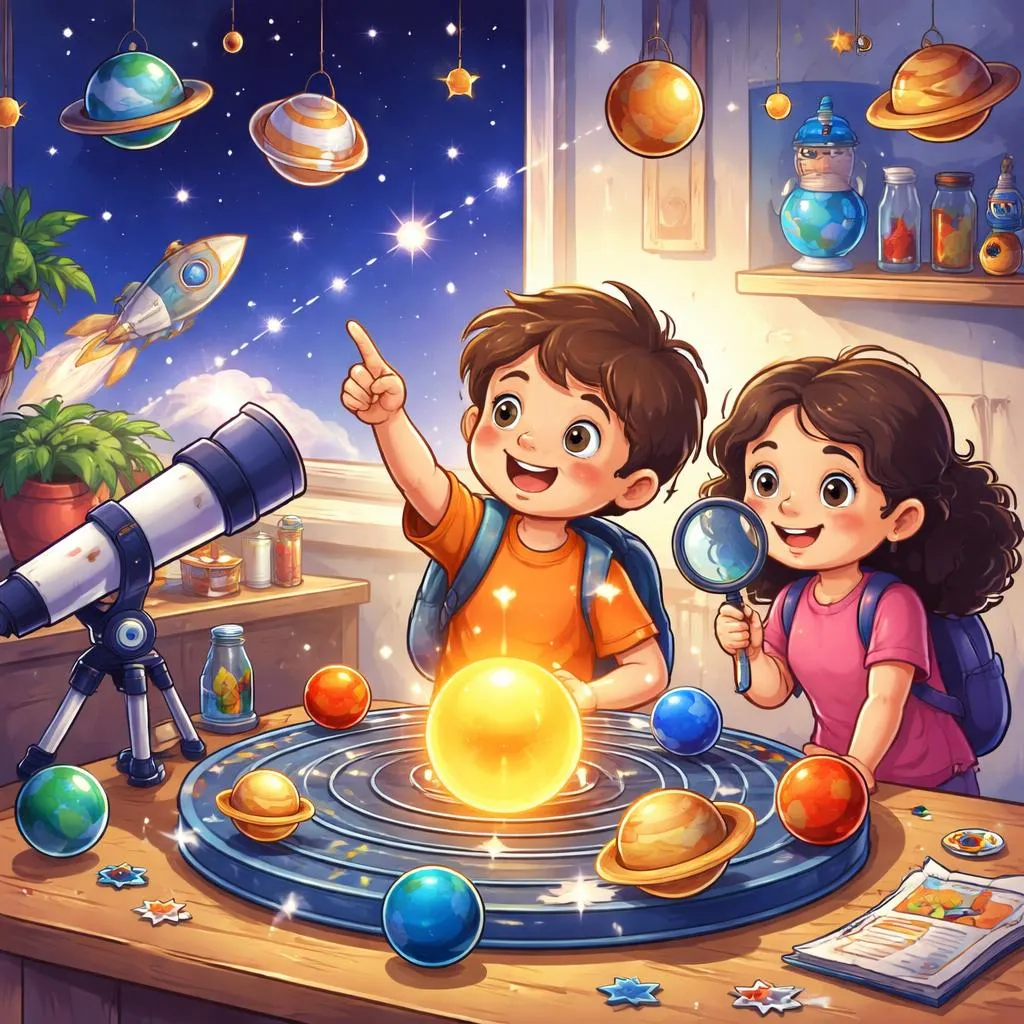

Hello, wonderful educators! Today we are embarking on an exciting journey through space. We will focus on the "name solar system planets." Our solar system is a fascinating place. It has one star and eight planets. Each planet is unique and wonderful. Learning their names opens the door to space science. We will examine what the solar system is. We will explore each planet's features. We will share practical teaching strategies. We will provide engaging classroom activities. This guide will help you teach planetary names effectively. Let's begin this cosmic adventure together.
What Is the Solar System? The solar system is our cosmic neighborhood. It includes the Sun and everything that orbits around it. This includes eight planets, their moons, dwarf planets, asteroids, comets, and meteoroids.
The Sun is at the center. It is a star made of hot gas. Its gravity holds the solar system together. All planets travel around the Sun in paths called orbits.
The eight planets are divided into two groups. The inner planets are small and rocky. The outer planets are large and made of gas. Each planet has its own special characteristics.
Learning the planet names helps children understand their place in the universe. They begin to grasp the vastness of space. They develop curiosity about science and astronomy.
The Planets in Order from the Sun Let us explore each planet in order from the Sun. This is the most common way to remember them.
Mercury: The closest planet to the Sun. It is very small and rocky. It has no moons. Days are very hot. Nights are very cold. It is covered with craters.
Venus: The second planet from the Sun. It is similar in size to Earth. It has a thick, poisonous atmosphere. It is the hottest planet. It is covered with volcanoes.
Earth: The third planet from the Sun. This is our home. It has water and air. It has one moon. It is the only planet known to have life.
Mars: The fourth planet from the Sun. It is called the Red Planet because of its color. It has the largest volcano in the solar system. It has two small moons.
Jupiter: The fifth planet from the Sun. It is the largest planet. It is made of gas. It has a giant red spot, which is a huge storm. It has many moons.
Saturn: The sixth planet from the Sun. It is famous for its beautiful rings. The rings are made of ice and rock. It is also a gas giant. It has many moons.
Uranus: The seventh planet from the Sun. It is an ice giant. It rotates on its side. It has faint rings. It is very cold.
Neptune: The eighth planet from the Sun. It is also an ice giant. It is very windy. It has a dark spot like Jupiter. It is the farthest planet.
Mnemonic Devices for Remembering Planet Names Memorizing the planets in order can be fun with memory tricks. Here are some popular mnemonics.
My Very Educated Mother Just Served Us Noodles. This matches Mercury, Venus, Earth, Mars, Jupiter, Saturn, Uranus, Neptune.
My Very Eager Mother Just Served Us Nine Pizzas. This older version includes Pluto when it was considered a planet.
My Very Excellent Mother Just Sent Us Nachos. Another tasty variation.
Students can create their own mnemonics. This makes learning personal and memorable. The sillier the sentence, the easier to remember.
Meaning and Explanation of Each Planet Name The planet names come from Roman mythology. Understanding the origins adds depth to learning.
Mercury: Named for the Roman messenger god. Mercury was fast. The planet moves quickly around the Sun.
Venus: Named for the Roman goddess of love and beauty. Venus is the brightest planet. It shines beautifully in the sky.
Earth: Comes from Old English and Germanic words for ground. It is the only planet not named after a Roman god.
Mars: Named for the Roman god of war. Mars is red like blood. This connects to its warlike name.
Jupiter: Named for the king of the Roman gods. Jupiter is the largest planet. It rules over the others.
Saturn: Named for the Roman god of agriculture. Saturn is father of Jupiter. It is slower and more distant.
Uranus: Named for the Greek god of the sky. Uranus is father of Saturn. It was the first planet discovered with a telescope.
Neptune: Named for the Roman god of the sea. Neptune is deep blue like the ocean. It fits its windy, watery appearance.
Fun Facts About Each Planet Children love interesting facts. Here are some engaging details about each planet.
Mercury: A day on Mercury is longer than its year. It rotates very slowly but orbits quickly.
Venus: Venus rotates backward compared to most planets. The Sun rises in the west and sets in the east there.
Earth: Earth is not a perfect sphere. It is slightly squashed at the poles and bulging at the equator.
Mars: Mars has the tallest mountain in the solar system. Olympus Mons is three times taller than Mount Everest.
Jupiter: Jupiter has a giant storm that has been raging for hundreds of years. It is called the Great Red Spot.
Saturn: Saturn's rings are very thin. They are only about 30 feet thick in places, but stretch thousands of miles wide.
Uranus: Uranus was almost named "George" after King George III. The name Uranus was eventually accepted.
Neptune: Neptune has the strongest winds in the solar system. They can reach speeds of 1,200 miles per hour.
Daily Life Examples with Planet Names We can weave planet names into everyday conversations. This makes learning natural and continuous.
During morning sky observation, notice planets visible. Sometimes Venus or Jupiter can be seen. "Look, that bright star might actually be Venus."
During story time, read books about space. Many wonderful children's books explore the solar system. Discuss the planets in the story.
During art time, create planet projects. Students paint or draw the planets. They label each one with its name.
During science discussions, talk about space exploration. Rovers on Mars. Telescopes studying Jupiter. This builds real-world connections.
During transition times, use planet themes. "Line up in order from the Sun." "If you can name all eight planets, you may go first."
Printable Flashcards for Planet Names Flashcards provide excellent visual support for vocabulary lessons. Here are many ideas for creating them.
Planet Picture Cards: Create cards with clear photographs or illustrations of each planet on one side. Write the planet name on the other side.
Planet Order Cards: Create cards showing the planets in order. Students arrange them from closest to farthest from the Sun.
Planet Fact Cards: Create cards with the planet name and three key facts. Students learn and share facts about each planet.
Mnemonic Cards: Create cards showing different mnemonics for remembering planet order. Students choose their favorite.
Planet Size Comparison Cards: Create cards showing the relative sizes of planets. This helps students understand scale.
Learning Activities or Games for Planet Names Games make science learning fun and memorable. Here are many engaging ideas.
Activity 1: Planet Mobile Craft Provide paper plates, string, and art supplies. Students create a hanging mobile showing the planets in order. They label each planet. Hang the mobiles around the room.
Activity 2: Solar System Walk Create a scale model of the solar system outside. Use different spots for each planet. Students walk from the Sun to Neptune. This helps them understand distances.
Activity 3: Planet Role Play Assign each student a planet. They research and present facts about their planet. They can dress up or create props. This builds research and presentation skills.
Activity 4: Planet Sorting Provide planet cards. Students sort them by different categories. Inner planets vs outer planets. Rocky planets vs gas giants. Planets with rings vs without.
Activity 5: Planet Bingo Create bingo cards with planet names. Call out planet facts instead of names. "I am the largest planet." Students cover Jupiter. This builds fact knowledge.
Activity 6: Planet Memory Match Create pairs of planet cards. Place them face down. Students turn over two trying to find matches. They name the planet when they make a match.
Activity 7: Planet Order Race Give each student a planet card. They must line up in correct order from the Sun as quickly as possible. Time them for extra challenge.
Activity 8: Planet Guessing Game Describe a planet without naming it. "I am the Red Planet. I have two small moons. What planet am I?" Students guess Mars.
Activity 9: Planet Art Gallery Students create detailed drawings or paintings of a planet. They write facts to display with their art. Host a gallery walk to admire the work.
Activity 10: Planet Song Creation Create a song about the planets using a familiar tune. Include the names in order. Add fun facts about each one.
Activity 11: Planet Mobile App Exploration Use educational apps or websites to explore the solar system. Many interactive tools let students explore planets in 3D.
Activity 12: Planet Question Game One student thinks of a planet. Others ask yes or no questions to guess. "Is it a gas giant?" "Does it have rings?" "Is it closer to the Sun than Earth?"
Activity 13: Planet Snack Creation Create snacks that look like planets. Use round fruits or cookies. Decorate to match each planet. Jupiter needs a red spot. Saturn needs a ring.
Activity 14: Planet Writing Activity Students write a short story about visiting a planet. What would they see? What would they do? How would it feel?
Activity 15: Planet Comparison Chart Create a large chart comparing all planets. Include size, distance from Sun, number of moons, and interesting facts. Display for reference.
Activity 16: Planet Hopscotch Draw a hopscotch grid with planet names in each square. Students toss a marker. They hop to that planet and say one fact.
Activity 17: Planet Pictionary Draw a planet on the board. Students guess which planet it is. The drawer cannot speak or write words.
Activity 18: Planet Scavenger Hunt Hide planet fact cards around the room. Students find them and match each fact to the correct planet.
Activity 19: Planet Model Building Use clay or playdough to create models of the planets. Make them different sizes and colors. Arrange them in order.
Activity 20: Planet Interview Students pretend to be a planet. Other students interview them. "Mercury, what is it like to be so close to the Sun?" "Jupiter, how big is your red spot?"
Activity 21: Planet Word Search Create a word search with planet names. Students find and circle each planet.
Activity 22: Planet Crossword Puzzle Create a simple crossword with planet clues. "The Red Planet" for Mars. "The largest planet" for Jupiter.
Activity 23: Planet Mobile Phone Activity If technology is available, students can create a short video report about a planet. They share with the class.
Activity 24: Planet Trading Cards Create trading cards for each planet. Include a picture and key facts. Students can collect and trade them.
Activity 25: Planet Venn Diagram Compare two planets using a Venn diagram. How are Earth and Mars alike? How are they different?
Activity 26: Planet Acrostic Poems Write acrostic poems using planet names. Each line starts with a letter from the planet name. M for Mercury: Mighty close to the Sun.
Activity 27: Planet Size Line-Up Create planet cutouts to scale. Students arrange them by size. This helps visualize the differences.
Activity 28: Planet Distance Walk Mark the Sun's location. Walk steps representing distances to each planet. Students see how far apart they are.
Activity 29: Planet Spin Game Create a spinner with planet names. Students spin and must say three facts about that planet.
Activity 30: Planet Celebration Day Have a Solar System Day. Students dress as planets. Share projects. Sing planet songs. Celebrate space learning.
We have explored the wonderful world of our solar system together. Knowing the "name solar system planets" is the first step to understanding space. Each planet has a unique name and story. Children learn their order from the Sun. They discover fascinating facts. They begin to grasp the vastness of the universe. We looked at what the solar system is. We explored each planet's features. We learned mnemonic devices for remembering order. We discovered the mythology behind names. We shared engaging activities and games. We created printable materials for practice. This integrated approach makes learning natural and exciting. Use these strategies in your classroom. Adapt them to your students' needs. Watch as your learners become space explorers. Their curiosity about the cosmos will grow with each planet they learn.