
What Is This Animal?
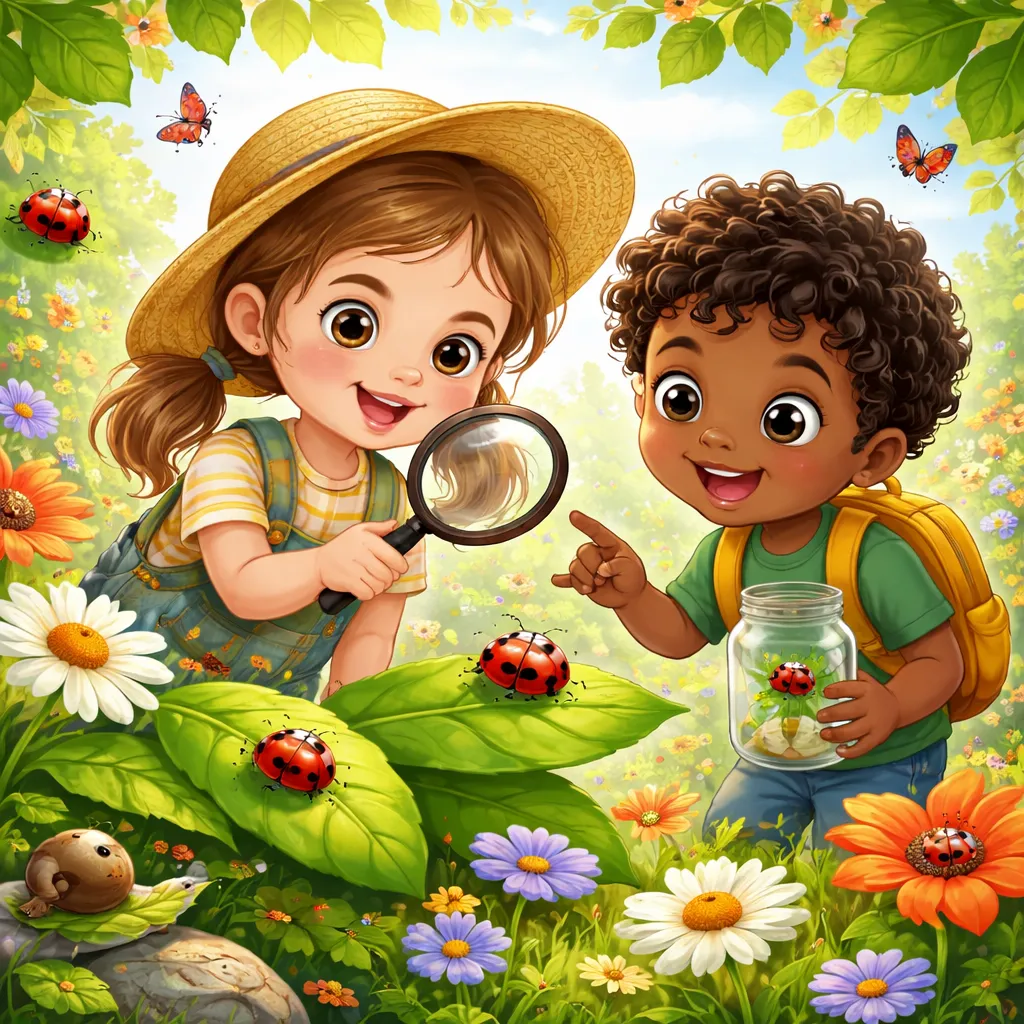
A ladybug is a small beetle with a round, dome-shaped body. Its back is usually bright red or orange. It has black spots on its wings. Some ladybugs have no spots. Others have stripes. The bright colors warn other animals to stay away.
Ladybugs are also called ladybirds or lady beetles. They are not bugs. They are beetles. Beetles have hard wing covers. Ladybugs tuck their delicate wings underneath. When they fly, the hard covers open. The soft wings spread out.
People love ladybugs. Gardeners welcome them. Ladybugs eat tiny insects that harm plants. They are nature’s helpers. Children often smile when a ladybug lands on their hand. These small beetles feel gentle and light.
Ladybugs live in gardens, forests, and fields. They like places with many plants. They rest on leaves and flowers. In winter, they gather in groups to stay warm. For children, ladybugs are one of the most friendly and familiar insects in the yard.
English Learning About This Animal
Let us learn the English word ladybug. We say it like this: /ˈleɪdiˌbʌɡ/. The word has two parts. Lady sounds like “lay-dee.” Bug sounds like “buhg.” Put them together: ladybug. Say it three times. Ladybug. Ladybug. Ladybug.
Now let us learn words about a ladybug’s body. The elytra are the hard wing covers. They are bright red or orange. The spots are the black marks on the elytra. The head is small and black. The thorax sits behind the head. It often has white marks. The antennae are short and thin. The legs are small and hidden underneath.
There is a sweet nursery rhyme about ladybugs. It goes, “Ladybug, ladybug, fly away home. Your house is on fire and your children are alone.” This old rhyme started as a way to send ladybugs back to the fields. Today we use it as a playful song. Another gentle saying is, “A ladybug landing brings good luck.” Many cultures see ladybugs as a sign of good fortune.
These English words help children describe this special beetle. When they say elytra, they learn a science word for the hard shell. When they say spots, they can count the marks on each ladybug they see. Parents can practice these words while holding a picture book. Point to the parts. Say the words together.
Animal Facts and Science Knowledge
Ladybugs belong to the beetle family called Coccinellidae. This is a large family. There are over five thousand kinds of ladybugs around the world. Ladybugs are insects. They have six legs. They have two pairs of wings. The front wings are the hard elytra. The back wings are soft and used for flying.
Ladybugs live in many places. They prefer gardens, meadows, and forests. They need plants with aphids. Aphids are small insects that drink plant juice. Ladybugs eat aphids. A single ladybug can eat fifty aphids in one day. This makes them excellent garden helpers.
Ladybugs go through four life stages. The first stage is the egg. A female lays tiny yellow eggs on a leaf. The second stage is the larva. Ladybug larvae look like small black alligators. They eat many aphids. The third stage is the pupa. The larva attaches to a leaf and transforms. The fourth stage is the adult ladybug.
Ladybugs have special abilities. They play dead when scared. They pull in their legs and drop to the ground. This fools predators. Ladybugs also release a yellow liquid from their legs. This liquid smells and tastes bad. Birds learn not to eat them. Their bright colors also warn predators to stay away.
Ladybugs hibernate in winter. They gather in large groups under leaves or rocks. Sometimes they gather inside houses. They stay together to keep warm. When spring comes, they wake up and return to gardens. This yearly cycle helps them survive cold months.
How to Interact With This Animal Safely
Ladybugs are gentle insects. They do not bite or sting. They are safe to hold. If a ladybug lands on your child, let it crawl. It will explore for a moment. Then it will fly away. This is a gentle way to connect with nature.
If your child wants to pick up a ladybug, show them how. Place a hand flat near the ladybug. Let it crawl onto the hand. Do not grab or squeeze. Hold the hand still. Watch the ladybug walk. Count its spots. Then place the hand near a leaf. Let the ladybug crawl off.
Teach children to be gentle. Ladybugs are small. Their legs are delicate. Rough hands can hurt them. Always wash hands after touching a ladybug. This removes any scent that might attract other insects. It also teaches good hygiene.
Never take a ladybug away from its home. Ladybugs need their garden. They need aphids to eat. They need leaves and flowers to rest. If your family finds ladybugs indoors in winter, help them outside. Place them near a bush or pile of leaves. They will find a safe place to wait for spring.
If you want to attract ladybugs to your garden, avoid strong chemicals. Pesticides kill ladybugs. Plant flowers like marigolds and dill. These attract aphids. Aphids attract ladybugs. A healthy garden gives ladybugs food and shelter. Children can help by watering plants and watching for ladybug visitors.
What Can We Learn From This Animal
Ladybugs teach us to be helpful. They eat pests that harm plants. They work quietly in the garden. Children learn that small actions can help others. Sharing toys, saying kind words, or helping with small chores all make a difference.
Ladybugs teach us to be brave. They are small. But they are not afraid. They use bright colors to warn bigger animals. They play dead when danger comes. Children learn that being small does not mean being weak. Standing up for yourself and staying calm are brave choices.
Ladybugs teach us about change. They start as eggs. They become larvae. They change inside a pupa. Then they become beautiful adults. Children learn that growing up takes time. Each stage is important. Learning new things, making mistakes, and trying again are all part of growing.
Ladybugs teach us to appreciate beauty. Their bright colors and gentle spots make people smile. Children learn to notice small beautiful things around them. A sunny day, a pretty flower, or a tiny beetle can bring joy. Finding beauty in small moments is a wonderful habit.
Fun Learning Activities
Let us make learning about ladybug fun. One activity is the ladybug count. Find a picture of a ladybug. Count the spots together. Ask your child to draw a ladybug. Add the same number of spots. Say “one spot” and “two spots.” This builds counting and language skills.
Another activity is the ladybug walk. Ask your child to crawl slowly like a ladybug larva. Then pretend to change into a ladybug. Stand up. Spread arms like wings. Fly around the room. Land on pillows or cushions. Say “ladybug crawls” and “ladybug flies.”
Draw a ladybug and label its parts. Draw the elytra, spots, head, thorax, antennae, and legs. Write the words next to each part. Say them aloud. For younger children, draw the ladybug first. Let them point to the parts as you say the words.
Create a story about a ladybug’s day. Ask your child where the ladybug goes. Does it visit a rose bush? Does it eat aphids? Does it meet other ladybugs? Write a few sentences together. Let your child draw pictures. Read the story aloud before rest time.
Make a simple ladybug from a stone. Find a smooth, round stone. Paint it red. Add black spots with paint or marker. Let it dry. Place the stone in the garden. This becomes a ladybug friend. It reminds children of what they learned.
These simple activities bring learning to life. Children build English vocabulary while playing. They learn science through gentle observation. They connect with nature in meaningful ways. Learning about ladybug becomes a joyful journey. Each moment spent together strengthens language, curiosity, and a lasting love for the small wonders in the garden.