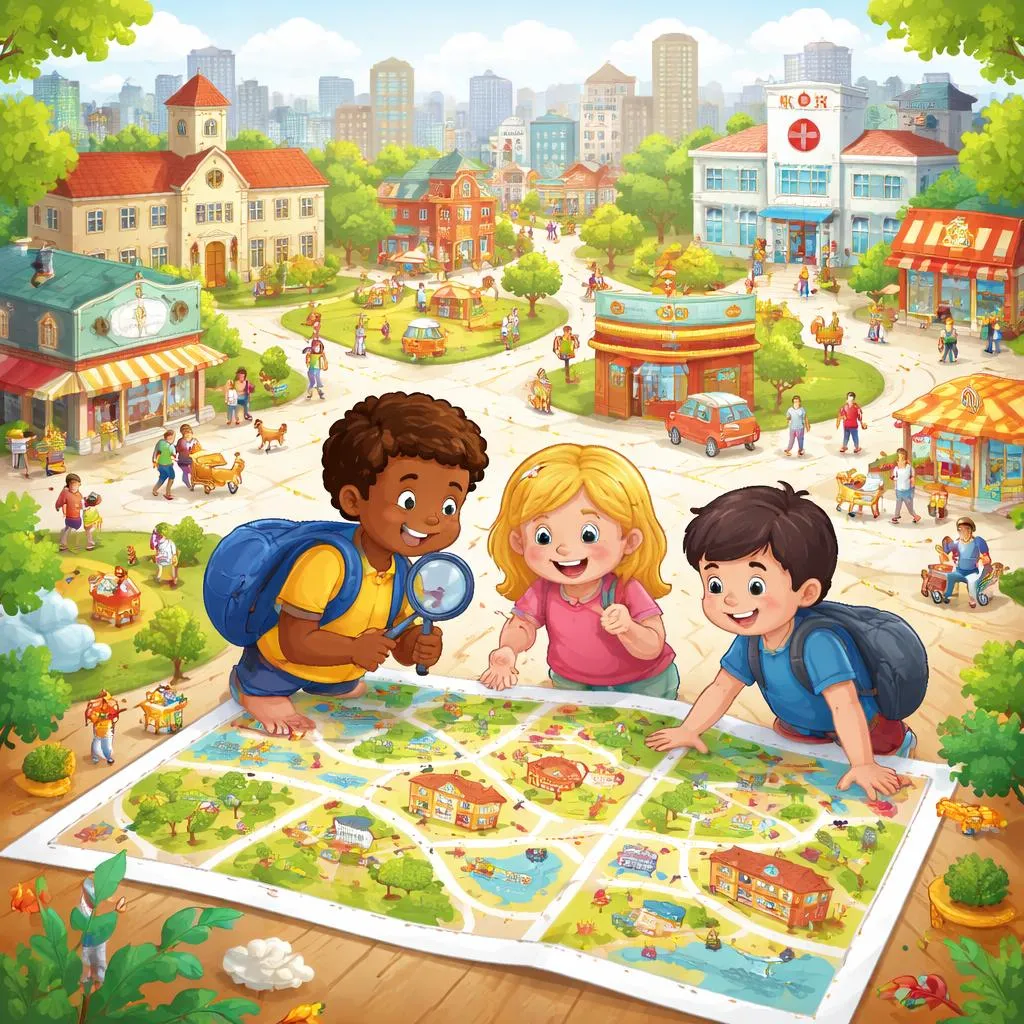

Hello, wonderful educators! Today we are exploring an important topic for young learners. We will focus on "places city." These are the locations children see every day in their community. Understanding these words helps children navigate their world. They can talk about where they go and what they do. We will examine what city places are. We will explore categories and examples. We will share practical teaching strategies. We will provide engaging classroom activities. This guide will help you teach city vocabulary effectively. Let's begin this urban exploration journey together.
What Are Places in a City?
City places are the locations and buildings found in towns and cities. They include places where people live, work, shop, learn, and play. Each place has a specific purpose. Children encounter these places regularly in their daily lives.
Learning city place names helps children understand their community. They can talk about going to the store with family. They can discuss visiting the park on weekends. They can describe where the doctor works. This vocabulary builds real-world connections.
City places also appear frequently in stories. Characters go to school, visit the library, or shop at the market. Knowing these words helps children understand narratives.
City vocabulary also supports safety knowledge. Children learn where to find help. Police stations, fire stations, and hospitals are important safety landmarks.
Meaning and Explanation of City Places
Let us explore the meaning behind different city places. Each location serves specific functions in the community.
Residential Places: These are where people live. Houses, apartments, and neighborhoods fall in this category. Different families live in different types of homes.
Educational Places: These are where people learn. Schools, libraries, and museums provide education. Children spend much time in these places.
Commercial Places: These are where people shop and do business. Stores, markets, malls, and shops sell goods. Banks handle money. Restaurants serve food.
Recreational Places: These are where people have fun. Parks, playgrounds, sports fields, and swimming pools offer play spaces. Theaters show movies. Zoos display animals.
Community Service Places: These help people in various ways. Hospitals and clinics provide healthcare. Police stations keep people safe. Fire stations respond to emergencies. Post offices handle mail.
Transportation Places: These help people move around. Bus stops, train stations, airports, and taxi stands are transportation hubs. Streets and roads connect everything.
Religious and Cultural Places: These serve spiritual and cultural needs. Churches, temples, mosques, and community centers bring people together for shared activities.
Government Places: These run the city. City halls, courthouses, and government offices manage public services.
Categories or Lists of Common City Places
Organizing city places into categories helps learning. It creates mental folders for students. Let us look at helpful categories.
Places Where We Live: House, apartment building, neighborhood, condo, townhouse, mobile home, farmhouse, cottage. Children live in different types of homes.
Places Where We Learn: School, classroom, library, museum, daycare, preschool, university, art school, music school, computer lab. Learning happens in many locations.
Places Where We Shop: Store, shop, supermarket, grocery store, bakery, bookstore, toy store, clothing store, shoe store, pharmacy, market, mall, shopping center, farmers market. Shopping is a common family activity.
Places Where We Eat: Restaurant, café, diner, fast food place, pizzeria, ice cream shop, food court, bakery, deli, food truck. Eating out is a special treat.
Places Where We Play: Park, playground, sports field, swimming pool, beach, skating rink, amusement park, zoo, aquarium, arcade, movie theater, concert hall. Play places bring joy.
Places That Help Us: Hospital, clinic, doctor's office, dentist office, police station, fire station, post office, bank, pharmacy, veterinary clinic. These provide essential services.
Transportation Places: Bus stop, bus station, train station, subway station, airport, taxi stand, bike path, sidewalk, crosswalk, bridge, tunnel. These help us travel.
Outdoor Public Places: Street, road, avenue, square, plaza, fountain, garden, river, lake, pond, hill, mountain view. These are part of the city landscape.
Religious and Cultural Places: Church, temple, mosque, synagogue, community center, cultural center, art gallery, history museum, science center. These enrich community life.
Work Places: Office, factory, workshop, studio, construction site, farm, laboratory. Adults go to these places to work.
Daily Life Examples with City Places
We can weave city place names into everyday conversations. This makes learning natural and continuous.
During morning greetings, discuss weekend plans. "Did anyone go to the park this weekend?" "Is anyone going to the library after school?" This connects vocabulary to real experiences.
During community helper discussions, name their workplaces. "Firefighters work at the fire station." "Teachers work at school." "Doctors work at the hospital."
During story time, identify places in books. "Look, the character is going to the store." "Now they are at the park." "Their house is on this street."
During field trips or walks, point out places. "We are passing the post office." "There is the fire station." "Look, that is the library we visited."
During dramatic play, create city scenarios. Set up a pretend store, restaurant, or school. Children use place names naturally in their play.
Printable Flashcards for City Places
Flashcards provide excellent visual support for vocabulary lessons. Here are many ideas for creating them.
Place Picture Cards: Create cards with clear photographs of each city place on one side. Write the place name on the other side. Include a wide variety.
Category Cards: Create cards showing different place categories. Residential, commercial, recreational, educational. Students sort place cards into categories.
Place and Worker Cards: Create cards showing places on one set. Create cards showing workers on another. School matches teacher. Hospital matches doctor. Fire station matches firefighter.
Place and Activity Cards: Create cards showing places on one set. Create cards showing activities on another. Park matches playing. Library matches reading. Restaurant matches eating.
Community Map Cards: Create simple map cards showing different places. Students identify places on the map. They describe where things are located.
Learning Activities or Games for City Places
Games make vocabulary practice fun and memorable. Here are many engaging ideas.
Activity 1: Build a City
Use blocks, boxes, and art materials. Students build a city together. They create buildings and name them. This is a school. This is a hospital. This is a store. This builds teamwork and vocabulary.
Activity 2: City Place Sorting
Provide pictures of different city places. Students sort them into categories. Places where we shop. Places where we learn. Places where we play. This builds categorization skills.
Activity 3: I Spy in the City
Say, "I spy with my little eye, a place where we borrow books." Students guess library. "I spy a place where sick people get help." Students guess hospital. This builds deductive reasoning.
Activity 4: City Place Bingo
Create bingo cards with city place pictures. Call out place names or descriptions. Students cover matching pictures. First to cover a row wins.
Activity 5: Place and Worker Match
Create cards with places and matching workers. Students match each worker to their workplace. The teacher goes to school. The doctor goes to hospital. The firefighter goes to fire station.
Activity 6: City Place Charades
Act out being in a city place without speaking. Pretend to read at the library. Pretend to shop at the store. Pretend to eat at a restaurant. Students guess the place.
Activity 7: My Neighborhood Map
Give students a simple map outline. They draw their house. They add places near their home. A store they visit. A park they play in. Their school. They share their maps.
Activity 8: City Place Scavenger Hunt
Take a walk around the neighborhood. Give students a list of places to find. Check off each place spotted. Discuss what happens there.
Activity 9: Place Memory Match
Create pairs of place cards. Place them face down. Students turn over two trying to find matches. They name the place when they make a match.
Activity 10: Where Am I? Game
Describe a place without naming it. "I am in a place with many books. People sit quietly and read. Where am I?" Students guess library. This builds listening and deduction.
Activity 11: City Place Interview
Students interview each other about places they visit. "Do you go to the park?" "What is your favorite store?" "Have you been to the museum?" They share answers.
Activity 12: Place and Activity Sort
Create cards with activities. Swimming, reading, shopping, eating, playing. Students match each activity to the correct place. Swimming at pool. Reading at library.
Activity 13: City Place Alphabet
Go through the alphabet naming city places. A is for airport. B is for bank. C is for church. See how many the class can name together.
Activity 14: Place Pictionary
Draw a city place on the board. Students guess what it is. The drawer cannot speak or write words. This builds visual literacy.
Activity 15: City Place Story
Start a story about a child visiting city places. "One day, Maria went to the park. Then she went to the store." Students continue the story adding places.
Activity 16: Place Patterns
Create patterns using place pictures. Park, store, school, park, store, school. Students continue the pattern. They create their own patterns.
Activity 17: City Place Collage
Provide magazines with city pictures. Students cut out places and create a city collage. They name each place they include.
Activity 18: Place Questions Game
One student thinks of a place. Others ask yes or no questions to guess. "Do people eat there?" "Do children go there?" "Is it indoors?" This builds questioning skills.
Activity 19: City Place Songs
Create simple songs about city places using familiar tunes. "We're going to the library, the library, the library. We're going to the library, to find some books to read."
Activity 20: Place Hopscotch
Draw a hopscotch grid with place pictures in each square. Students toss a marker. They hop to that square and name the place. They say what people do there.
Activity 21: City Place Puzzles
Create simple puzzles with place pictures cut into pieces. Students assemble the puzzles and name the place. This builds fine motor skills.
Activity 22: Place Opinion Line
Create a line across the room. One end says "favorite" other end "least favorite." Name a place. Students stand where they agree. Discuss reasons.
Activity 23: City Place Bingo with Descriptions
Call out descriptions instead of names. "This place has swings and slides." Students cover park. "This place sells bread and cakes." Students cover bakery.
Activity 24: Place Drawing Dictation
Describe a city scene. Students draw what you describe. "Draw a school on the left. Draw a park next to it. Draw a store across the street." This builds listening and following directions.
Activity 25: Our City Map Project
Create a large class map. Students contribute drawings of important places. Their homes, the school, favorite stores, parks. Display the map and discuss.
We have explored the wonderful world of city places together. Learning "places city" vocabulary helps children understand their community. They can name where they live, learn, shop, and play. They can describe their neighborhood. They can talk about where family members work. We looked at what city places are. We explored helpful categories. We found examples in daily life. We created printable flashcards for practice. We shared engaging games and activities. This integrated approach makes learning natural and meaningful. Use these strategies in your classroom. Adapt them to your students' needs. Watch as your learners gain confidence in navigating their world. They will recognize places in their community. They will talk about where they go and what they do. Their connection to their city will grow stronger with every place they learn.