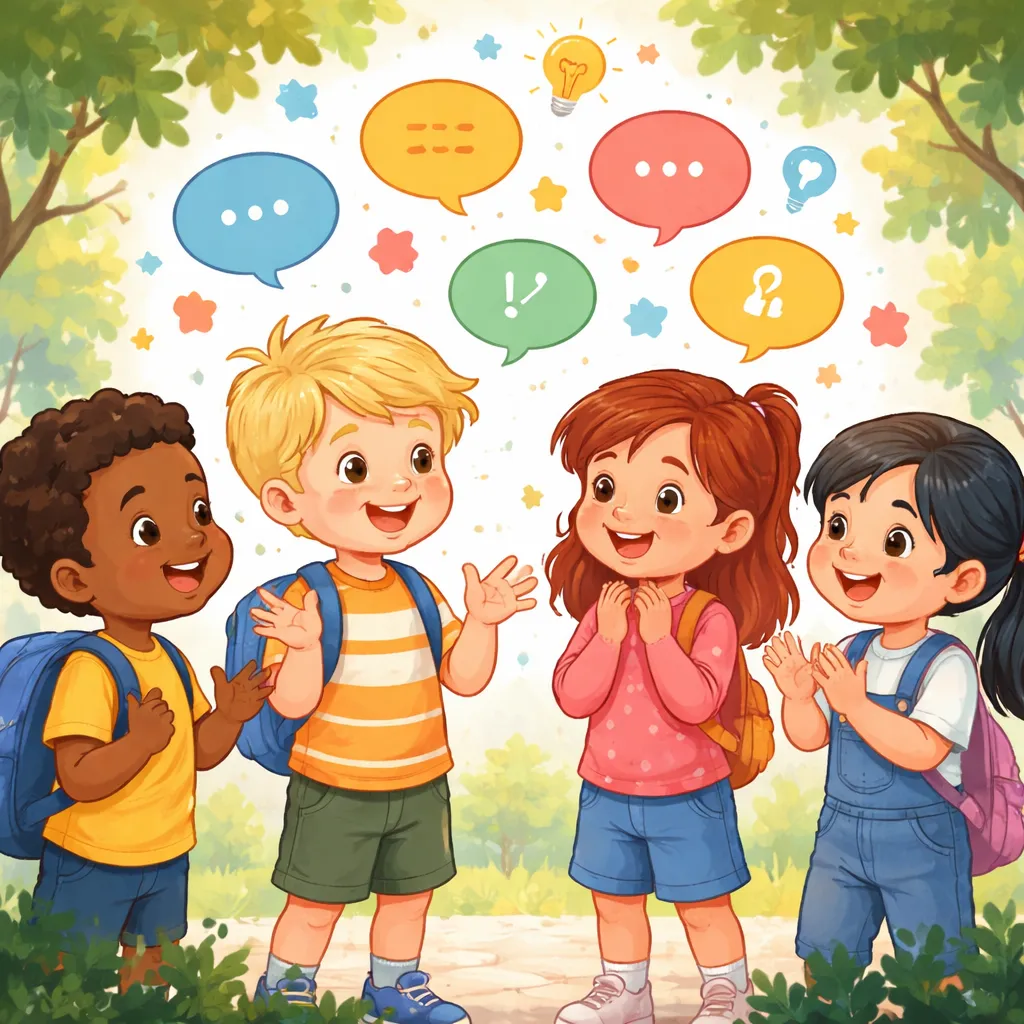

Every day your child shares facts with you. They tell you what they see, what they feel, and what they know. The sky is blue. Grandma is coming tomorrow. I am hungry right now. These statements all share something important. They use indicative mood. This is the mood of facts, opinions, and everyday communication. Today we explore the 70 most common indicative mood for 6-year-old children and how this sentence form builds the foundation for all language.
Indicative mood comes most naturally to children. From their earliest sentences, they state what they believe to be true. This is the mood of sharing information, expressing feelings, and describing the world. When children master indicative mood, they gain the ability to communicate clearly about everything that matters to them.
What Is Indicative Mood?
Let us begin with a simple definition we can share with our children. Indicative mood means the sentence states a fact or asks a question about a fact. It deals with things that are real, true, or believed to be true.
Think of indicative mood as the "telling how it is" mood. When you say something that could be true or false, you use indicative mood. "The sun is hot." That is a fact. "I like ice cream." That is an opinion, but you state it as true for you. Both use indicative mood.
Indicative mood covers most of what we say. Statements of fact use it. "Dogs bark." Questions about facts use it too. "Do dogs bark?" Even negative statements use it. "Dogs do not meow." All of these deal with reality as we understand it.
For young children, we can explain it simply. Indicative mood is for talking about things that are real. Things you can see, hear, feel, or know. Things that happened or will happen. Things you believe to be true. The 70 most common indicative mood for 6-year-old learners all follow this pattern of talking about reality.
Meaning and Explanation for Young Learners
How do we explain indicative mood to a six-year-old in ways they understand? We use examples from their daily experience and contrast with other moods they know.
Tell your child that we have different voices for different kinds of talking. One voice is for telling facts. That is indicative mood. Another voice is for giving commands. That is imperative mood. Another voice is for imagining. That is conditional mood. Today we focus on our fact-telling voice.
Here are some indicative mood examples from a child's world. "This is my favorite shirt." That states an opinion as fact. "We have school today." That states a schedule fact. "The baby is sleeping." That states an observation fact. Each one tells how things are right now.
Indicative mood works for feelings too. "I feel happy." That states an internal fact. "My tummy hurts." That states a physical fact. Feelings are real and true for the person experiencing them. Indicative mood lets children share their inner world.
Negative statements also use indicative mood. "I do not like broccoli." That states a fact about preference. "The store is not open yet." That states a fact about schedule. Indicative mood handles both what is and what is not.
These explanations help children understand the 70 most common indicative mood for 6-year-old speakers. They see that most of what they say uses this mood naturally.
Present Tense in Indicative Mood
Present tense indicative mood describes what is true right now. Children use this constantly throughout their day.
Listen to a child in the morning. "I am awake now." Present tense states the current reality. "My cereal is yummy." Present tense shares an immediate opinion. "The sun is shining." Present tense observes the world outside.
Present tense indicative mood describes routines. "We eat lunch at noon." This states a regular fact. "Grandma calls on Sundays." This states a recurring event. These sentences tell how things usually are.
Children use present tense indicative mood to share knowledge. "Cows say moo." This states a fact about the world. "Water is wet." This states a physical truth. "My name is Sarah." This states an identity fact. These sentences build a foundation of shared knowledge.
Present tense indicative mood expresses current feelings. "I love you." This states a deep truth from the heart. "I am scared of thunder." This states an emotional reality. "This game is fun." This states an opinion about play.
These present tense examples appear throughout the 70 most common indicative mood for 6-year-old children. They match the immediate, present-focused experience of young children.
Past Tense in Indicative Mood
Past tense indicative mood helps children share what already happened. This is how they tell stories about their day and remember important events.
Hear a child after school. "I played with Emma today." Past tense shares a completed event. "We had pizza for lunch." Past tense reports what they ate. "My teacher read a funny book." Past tense describes a shared experience.
Past tense indicative mood shares accomplishments. "I tied my shoes all by myself." Pride shines through this memory. "I wrote my whole name." Achievement lives in the past tense. "I went potty like a big kid." Milestones become stories through past tense.
Children use past tense indicative mood to report problems. "My ice cream fell on the ground." Disappointment remembered. "Tommy pushed me at recess." Events recounted. "I lost my favorite sticker." Loss described. Past tense helps process experiences.
Past tense indicative mood shares dreams and memories. "I dreamed about a purple dinosaur." Dreams become real through telling. "Remember when we went to the beach?" Shared memories build family bonds. "Grandma gave me this doll." History connects to the present.
These past tense stories form a large part of the 70 most common indicative mood for 6-year-old speakers. They help children process and share their experiences.
Future Tense in Indicative Mood
Future tense indicative mood lets children make plans and share what will happen. This helps them understand and anticipate what comes next.
Imagine a child looking ahead. "We will go to the zoo tomorrow." Future tense states a planned event. "Grandma comes next week." Present tense can indicate future with time words. "I am going to be five soon." Growing up happens in future time.
Future tense indicative mood expresses hopes. "I will get a bike for my birthday." Hope stated as expected fact. "We are going to build a snowman." Anticipation shared. "Daddy will read to me tonight." Comfort promised.
Children use future tense indicative mood to understand schedules. "School ends in June." Calendar facts. "The movie starts in five minutes." Timing shared. "We leave for vacation on Saturday." Plans communicated.
Future tense indicative mood makes promises. "I will share my toys." Commitment stated. "I will be careful with your things." Promise made. "I will love you forever." Love projected into endless future.
These future-looking sentences appear in the 70 most common indicative mood for 6-year-old children. They help children navigate time and anticipate what comes next.
Questions in Indicative Mood
Questions using indicative mood seek information about facts. They ask about what is true, what happened, or what will happen.
Simple indicative questions start with question words. "Where is my blue sock?" Seeks location fact. "Who ate the last cookie?" Seeks doer fact. "Why is the sky blue?" Seeks explanation fact. Each asks about reality.
Yes or no questions in indicative mood seek confirmation. "Is it raining outside?" Asks about current weather fact. "Did you feed the cat?" Asks about completed action fact. "Will we see Grandma today?" Asks about future plan fact.
Children ask indicative questions constantly. "What are we having for dinner?" Seeks menu fact. "When does school start?" Seeks schedule fact. "How do birds fly?" Seeks mechanism fact. Curiosity drives these questions about the world.
Questions about feelings also use indicative mood. "Are you happy?" Asks about emotional fact. "Does this hurt?" Asks about physical fact. "Do you love me?" Asks about relational fact. These questions seek truth about inner states.
Questions form an important part of the 70 most common indicative mood for 6-year-old learners. They show children seeking to understand their world.
Other Uses of Indicative Mood
Indicative mood serves many purposes beyond simple statements of fact. Children use it in sophisticated ways as their language develops.
Opinions use indicative mood even though they are not universal facts. "This is the best show ever." Opinion stated as fact for the speaker. "Blue is the prettiest color." Preference expressed as truth. Indicative mood lets children share their personal reality.
Beliefs use indicative mood. "There is a monster under my bed." Belief stated as fact, even if not objectively true. For the child, this feels real. "Angels watch over me." Spiritual belief expressed as truth. Indicative mood honors what children hold true.
Warnings often use indicative mood. "That stove is hot." Fact stated to protect. "The floor is slippery." Truth shared to prevent falls. Indicative mood delivers important safety information.
Explanations rely heavily on indicative mood. "The wheel fell off because it was loose." Cause and effect stated as facts. "Ice melts when it gets warm." Scientific truth explained. "The baby is crying because she is tired." Reason given as fact.
These varied uses appear throughout the 70 most common indicative mood for 6-year-old children. Indicative mood proves flexible enough for all kinds of communication about reality.
Learning Tips for Parents
Supporting your child's use of indicative mood happens naturally through conversation. Here are gentle ways to encourage this growth.
Model varied indicative mood sentences in your own speech. Use different tenses and both positive and negative statements. "I see a bird outside." "We went to the store yesterday." "Grandma will visit next week." "The mail has not arrived yet." Your child hears this variety naturally.
Ask questions that invite indicative mood responses. "What did you do at school today?" Invites past tense sharing. "What are you thinking about?" Invites present tense sharing. "What will we do this weekend?" Invites future tense planning. Questions naturally elicit indicative mood answers.
Expand on your child's indicative mood statements. If your child says "I played," you can respond "You played with who? What did you play? Where did you play?" This encourages richer indicative mood expression without correction.
Read books together and notice how they use indicative mood. Most picture books tell stories using indicative mood predominantly. Point out how the author shares facts about characters and events. This builds awareness of how stories work.
These tips support mastery of the 70 most common indicative mood for 6-year-old children through natural, pressure-free interaction.
Educational Games for Indicative Mood
Games make learning about indicative mood fun and memorable. Here are some games to play together.
The Fact or Not Game builds awareness. Take turns saying sentences. The other person decides if it states a fact or something else. "The sky is green." That is not a fact. "I like pizza." That is a fact about preference. "Close the door." That is a command, not indicative mood. This builds discrimination between sentence types.
The Story Chain Game practices all tenses. One person starts a story with a present tense indicative sentence. "There is a dragon sleeping on a hill." The next person adds a past tense indicative sentence. "Yesterday he burned a village by accident." The next adds future tense. "Tomorrow he will meet a friendly knight." Continue building the story together.
The Question and Answer Game pairs questions with indicative mood answers. One person asks an indicative question. "What color is your favorite shirt?" The other answers with an indicative mood statement. "My favorite shirt is red." Then switch roles. This practices both question and statement forms.
The Memory Game shares past tense indicative statements. Take turns sharing something that happened today. "I saw a squirrel in the backyard." "I ate pancakes for breakfast." "I lost my favorite pencil." This builds comfort with past tense indicative mood in a natural way.
These games turn learning the 70 most common indicative mood for 6-year-old children into quality family time. No pressure, just playful exploration with language.
Indicative mood forms the backbone of all communication. It is how we share facts, express feelings, ask questions, and tell stories. Children use it from their very first sentences. By understanding this mood more deeply, we can appreciate the sophisticated ways children express themselves. Every "I want" and "I see" and "I remember" builds their ability to connect with others and understand their world. Celebrate these moments. They are the foundation of all the language learning yet to come.