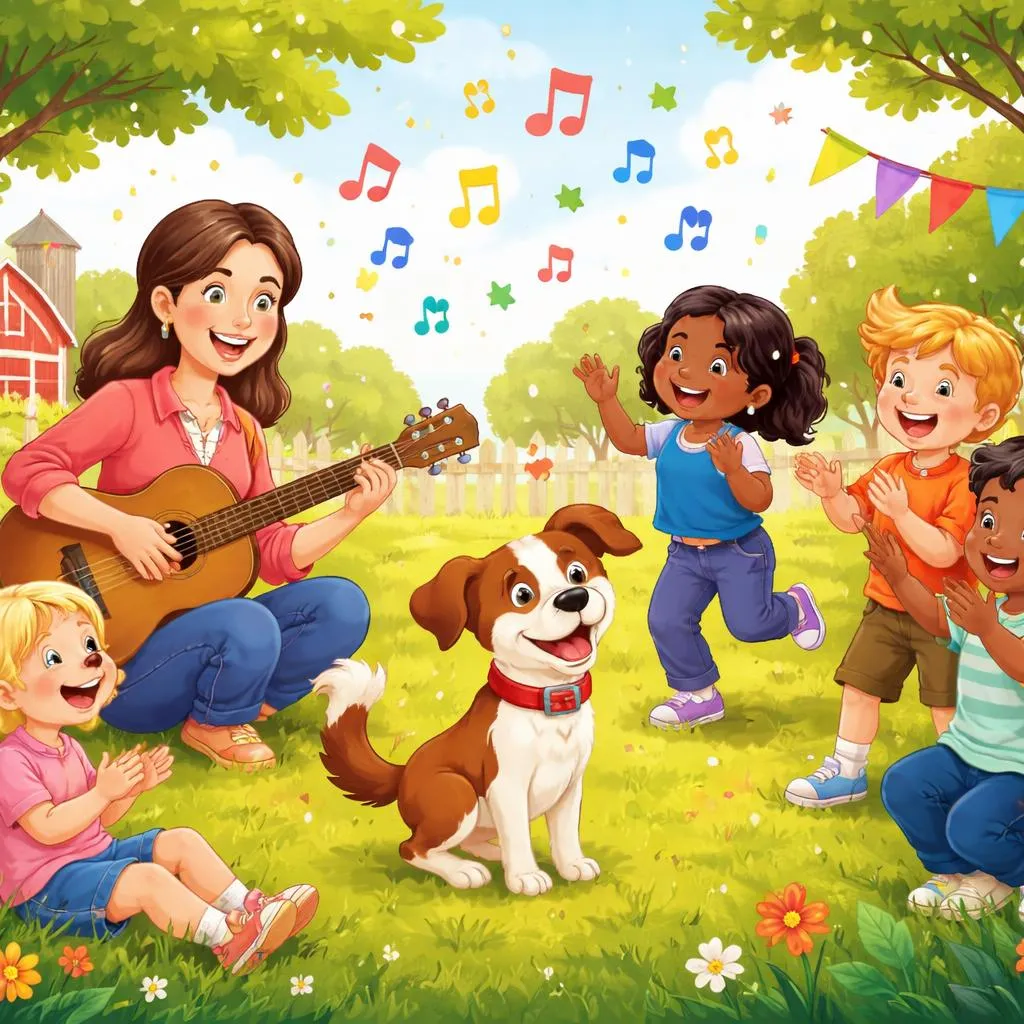

Some songs never grow old. They travel from generation to generation. Children still sing them today just as their grandparents did. The Bingo song is one of these timeless treasures. It tells a simple story about a farmer and his dog. The name B-I-N-G-O spells out the dog's name. Children love the clapping and the missing letters. The song builds phonics skills, memory, and rhythm all at once. By exploring the bingo song nursery rhyme, teachers can create rich learning experiences. Let us discover how to use this classic folk song in the young learners' classroom.
What Is the Bingo Song Nursery Rhyme? The Bingo song is a traditional English language folk song. Its exact origins are unknown. The song has been sung for over two hundred years. It appears in many collections of nursery rhymes and children's songs.
The song tells about a farmer who has a dog. The dog's name is Bingo. The name is spelled out in the song. Each verse removes one letter and replaces it with a clap. By the end, children clap the entire name instead of singing it.
The song has a simple repetitive structure. This makes it easy for young children to learn. They quickly catch on to the pattern. They anticipate which letter will disappear next. The clapping adds a physical element that children enjoy.
The song teaches several important skills. Children learn letter recognition. They practice spelling. They develop memory through the cumulative pattern. They build coordination through clapping. All of this happens while having fun.
The Lyrics of the Bingo Song Here is the most common version of the Bingo song. This shows the pattern of removing letters and adding claps.
There was a farmer had a dog, And Bingo was his name-o. B-I-N-G-O, B-I-N-G-O, B-I-N-G-O, And Bingo was his name-o.
There was a farmer had a dog, And Bingo was his name-o. (Clap)-I-N-G-O, (clap)-I-N-G-O, (clap)-I-N-G-O, And Bingo was his name-o.
There was a farmer had a dog, And Bingo was his name-o. (Clap)-(clap)-N-G-O, (clap)-(clap)-N-G-O, (clap)-(clap)-N-G-O, And Bingo was his name-o.
There was a farmer had a dog, And Bingo was his name-o. (Clap)-(clap)-(clap)-G-O, (clap)-(clap)-(clap)-G-O, (clap)-(clap)-(clap)-G-O, And Bingo was his name-o.
There was a farmer had a dog, And Bingo was his name-o. (Clap)-(clap)-(clap)-(clap)-O, (clap)-(clap)-(clap)-(clap)-O, (clap)-(clap)-(clap)-(clap)-O, And Bingo was his name-o.
There was a farmer had a dog, And Bingo was his name-o. (Clap)-(clap)-(clap)-(clap)-(clap), (clap)-(clap)-(clap)-(clap)-(clap), (clap)-(clap)-(clap)-(clap)-(clap), And Bingo was his name-o.
Some versions use different names. The pattern works with any five-letter name. Teachers can adapt the song for classroom use.
Vocabulary Learning from the Song The Bingo song introduces several useful vocabulary words. Children learn them in a memorable musical context.
Farmer: A person who works on a farm. Farmers grow food and raise animals. Children see farmers in books and sometimes in their communities.
Dog: A common pet. Many children have dogs at home. The song connects to their personal experience.
Name-o: A playful version of "name." The -o ending adds a fun, song-like quality. Children enjoy the sound.
B-I-N-G-O: The letters that spell the dog's name. Children learn letter names and the concept of spelling.
There was: A story opening. This phrase signals that a tale is beginning. Children learn narrative structure.
Had: The past tense of have. The farmer owned a dog. This introduces past tense in a natural way.
Clap: The action of bringing hands together. The song uses clapping to replace letters. Children learn this action word.
Use these words in other contexts. Talk about farmers when learning about food. Discuss dogs as pets. Practice spelling other simple names. The song provides a springboard for broader learning.
Phonics Points in the Song The Bingo song offers excellent phonics practice. The spelling pattern highlights letter names and sounds.
Letter names: The song teaches the names of B, I, N, G, O. Children learn to recognize and say each letter. This is a foundational skill for reading.
Letter sequence: The letters appear in a specific order. Children learn that B comes first, then I, then N, then G, then O. This builds alphabetical awareness.
Consonant sounds: B, N, G are consonants. Each has a distinct sound. Children hear these sounds in the song.
Vowel sounds: I and O are vowels. The long I sound appears in Bingo. The long O sound ends the name. Children hear vowel sounds in context.
Spelling patterns: The song shows that words are made of letters in sequence. This concept is essential for reading and writing.
Phonemic awareness: When letters are replaced with claps, children must remember which sound is missing. This builds phonemic awareness skills.
Rhythm and syllables: Clap the syllables in "Bingo." Bing-o has two claps. This builds syllable awareness.
Clap along with the song. Feel the rhythm. Children learn to connect sounds to movements. This multisensory approach supports learning.
Grammar Patterns in the Lyrics The song demonstrates several grammar patterns. Children absorb these through repetition.
Past tense: "There was a farmer" uses past tense. "Had" is also past tense. The story happened before now. Children learn that stories often use past tense.
Subject-verb agreement: "There was a farmer" uses singular verb with singular subject. "There were farmers" would be different. The song models correct agreement.
Possession: "Had a dog" shows possession without using 's. The farmer owned the dog. This is a simple way to show ownership.
Name as object: "Bingo was his name" shows that the name equals Bingo. The structure "X was Y" appears in the song.
Repetition for emphasis: The name is repeated three times. This shows how English uses repetition for effect in songs.
Conjunctions: "And" connects ideas throughout the song. "There was a farmer and Bingo was his name." This models simple sentence combining.
Prepositional phrases: None appear directly, but teachers can extend the song. "On the farm" or "in the house" can be added.
The song provides simple, clear language input. Children absorb these patterns through joyful repetition.
Learning Activities with the Song Songs become powerful teaching tools when we add activities. Here are ideas for using the Bingo song in the classroom.
Clapping Practice: Teach children the clapping pattern. Start with both hands clapping together. As letters disappear, children continue clapping in the same rhythm. This builds coordination and rhythm skills.
Letter Cards: Create large cards for B, I, N, G, O. Hold them up as the song is sung. When a letter is removed, put that card down. Children see the letters disappear visually.
Name Adaptation: Adapt the song for children's names. Use names with five letters. Emma, Lucas, Chloe, James. Sing the song with each child's name. This makes the song personal and meaningful.
Dog Puppet: Create a simple dog puppet. Use a paper bag or sock. The puppet can be Bingo. Children love when the puppet "sings" along.
Spelling Practice: After singing, practice spelling Bingo. Write the letters on the board. Have children come up and point to each letter as it is sung.
Draw Bingo: Children draw pictures of Bingo the dog. They can write the name B-I-N-G-O under their drawing. Display them around the room.
Farm Animal Extension: Sing about other farm animals. "There was a farmer had a cow, and Milky was her name-o." Change the name and spelling. This extends the pattern.
Printable Materials for Classroom Use Having printable resources makes lesson planning easier. Here are materials to prepare for the Bingo song.
Lyric Poster: Create a large poster with the full lyrics. Add simple illustrations of the farmer and Bingo. Display it during singing time. Children can follow along.
Letter Cards: Create five large cards for B, I, N, G, O. Make them colorful and easy to see. Use them during the song to show which letters remain.
Bingo Puppet Template: Provide a template for making a Bingo puppet. Children color and cut out the dog shape. Attach a craft stick for holding.
Name Cards: Create cards for different five-letter names. Use children's names from the class. Use these for adapted versions of the song.
Coloring Pages: Design coloring pages showing the farmer and his dog. Include the words "Bingo" for children to trace or color. Children color while listening.
Letter Tracing Pages: Create pages for practicing writing B, I, N, G, O. Include both capital and lowercase letters. Children trace and then try on their own.
Spelling Puzzles: Create puzzles where children arrange letters to spell Bingo. Use magnetic letters or paper letter tiles.
Educational Games for Deeper Learning Games make learning joyful. Here are games centered around the Bingo song.
Letter Hide and Seek: Hide the five letter cards around the room. Children search for them. When they find a letter, they bring it to the group and say its name. Arrange them in order at the end.
Bingo Says: Play a variation of Simon Says using the song. "Bingo says clap your hands." "Bingo says pat your head." This builds listening skills and connects to the song.
Spelling Relay Race: Divide children into teams. Place magnetic letters at one end of the room. Call out a letter. One child from each team runs, finds the letter, and brings it back. The first correct letter wins a point. Spell Bingo at the end.
Letter Memory Match: Create two sets of letter cards for B, I, N, G, O. Place them face down. Children take turns flipping two cards, trying to find matches. When they make a match, they say the letter name.
Name that Letter: Hold up a letter card without showing it. Give clues. "This letter comes after A." "This letter starts the word ball." Children guess the letter. This builds letter knowledge.
Bingo Freeze Dance: Play the song. Children dance like dogs. When the music stops, they freeze. Anyone who moves is out. The last one dancing wins.
Clapping Pattern Copy: Clap a pattern. Children copy it. Start with simple patterns. Increase difficulty. This builds listening and coordination.
Connecting to Other Learning Areas The Bingo song connects to many curriculum areas. Here are ways to extend learning.
Farm Unit: Learn about farms and farmers. What grows on farms? What animals live there? Read books about farms. Visit a farm if possible.
Dogs Unit: Learn about dogs as pets and working animals. What do dogs need? How do they help people? Read stories about dogs. Discuss responsible pet care.
Names Unit: Talk about why names are important. Learn about children's names. Where do names come from? What do they mean? Create a class name chart.
Letter Recognition: Focus on the five letters in Bingo. Practice recognizing them in books and around the classroom. Hunt for B, I, N, G, O in environmental print.
Spelling Practice: Spell other simple words with five letters. Cat, dog, and sun have three letters. Try five-letter words like happy, funny, or children's names.
Rhythm and Music: Explore other songs with clapping patterns. Learn "If You're Happy and You Know It" and "Pat-a-Cake." Compare the clapping patterns.
Counting: Count the letters in Bingo. Five letters. Count the claps in each verse. One clap, then two, then three, then four, then five. This connects to math.
Creating New Verses Encourage children to create new verses for the song. This builds creativity and language skills.
New Animal Verses: There was a farmer had a cow, And Milly was her name-o. M-I-L-L-Y...
New Pet Verses: There was a girl who had a cat, And Smokey was his name-o. S-M-O-K-E...
New Color Verses: There was a child who had a ball, And Blue was its name-o. B-L-U-E...
New Food Verses: There was a baker had a cake, And Sweet was its name-o. S-W-E-E-T...
Children can suggest new ideas. Write their verses on chart paper. Sing them together. This builds ownership and pride in learning.
The bingo song nursery rhyme carries generations of childhood joy. Every time children sing and clap, they connect to this long tradition. They learn letter names and sounds. They practice spelling and memory. They develop rhythm and coordination. The simple story of a farmer and his dog becomes a vehicle for rich learning. Through this song, children build foundational skills they will use for years to come. And they do it all while having fun.