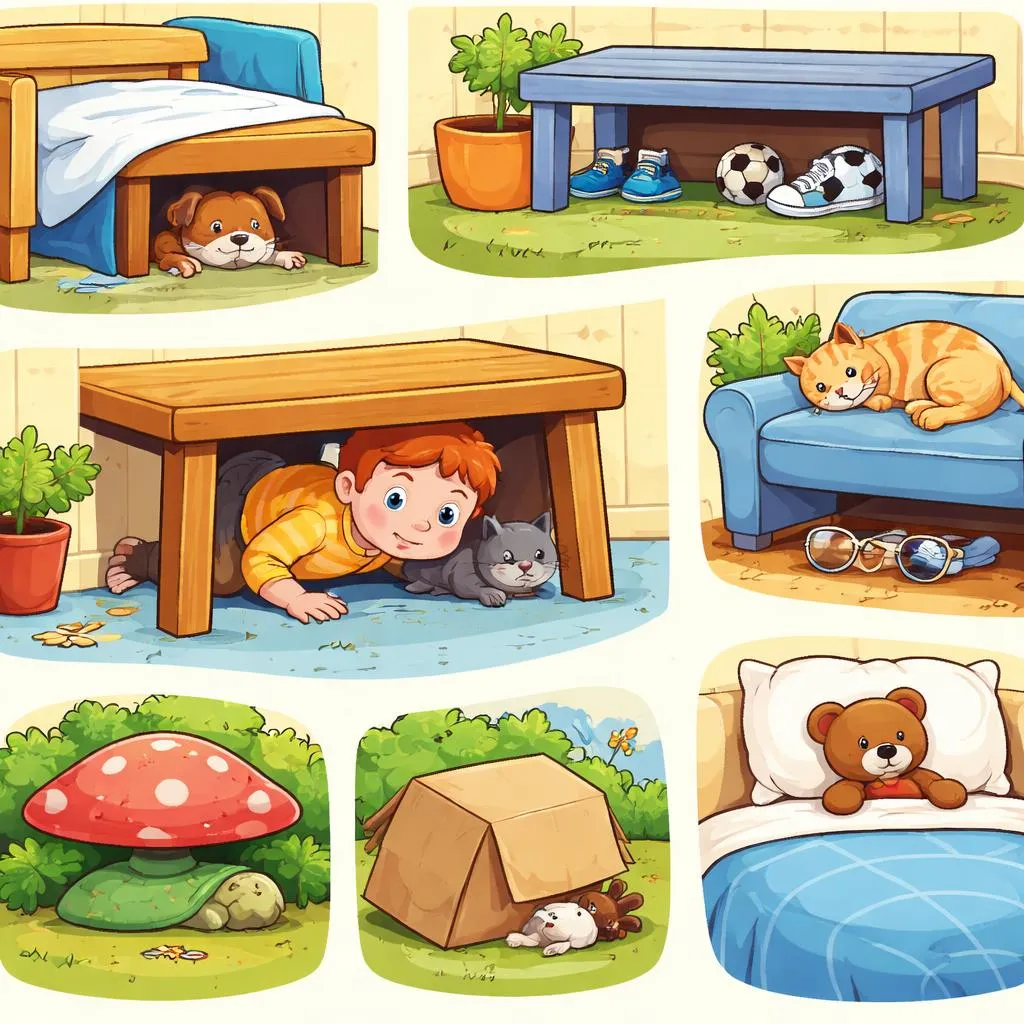

Hello, dedicated educators! Today we are exploring a fundamental concept in early language development. We will focus on the "under preposition." This small word carries big meaning. It helps children describe the location of objects in their world. Understanding prepositions builds spatial awareness and communication skills. We will examine its meaning and uses. We will explore how to teach it effectively. We will share practical teaching strategies. We will provide engaging classroom activities. This guide will help you teach this important preposition clearly. Let's begin this positional word journey together.
Meaning of the Preposition Under
The preposition under indicates a position below or beneath something else. It shows that one object is lower than another. The object on top covers or shelters the object below.
We use under to describe location. The cat is under the table. This means the table is above the cat. The cat occupies the space beneath the table.
Under can also mean covered by something. She wore a shirt under her sweater. The shirt is beneath the sweater. The sweater covers the shirt.
Under can indicate less than in age or amount. Children under five eat free. This means children younger than five. The temperature is under freezing. This means below freezing point.
Understanding under helps children follow directions. Put your backpack under your chair. This tells exactly where the backpack belongs.
Present Tense with Under
We use the present tense with under to describe current locations. The verb be commonly appears with under.
The book is under the desk right now. The pencil is under the paper. The cat sleeps under the bed every afternoon. These describe positions at the present moment.
We can also use other present tense verbs with under. The dog hides under the porch when it rains. The children play under the big tree. The fish swim under the bridge.
Questions in present tense ask about current locations. Where is my shoe? It is under the couch. Is the ball under the table? Yes, it is under there.
Negative statements tell where things are not. The remote is not under the pillow. The keys are not under the mat. We already looked there.
Past Tense with Under
The past tense describes where things were located before now. We use was and were with under for past locations.
The book was under the desk yesterday. The cat was under the bed all morning. The toys were under the sofa last night. These describe positions that existed in the past.
We can use other past tense verbs with under. The dog hid under the porch during the storm. The children played under the tree last week. The fish swam under the bridge when we visited.
Questions in past tense ask about previous locations. Where was my hat? It was under the coat. Were the keys under the mat? No, they were not there.
Past tense helps tell stories about where things were. We looked everywhere for the missing sock. Finally we found it under the dresser.
Future Tense with Under
The future tense describes where things will be located later. We use will be with under for future locations.
The book will be under the desk after school. The cat will sleep under the bed tonight. The toys will be under the sofa again. These predict future positions.
We can use other future verbs with under. The dog will hide under the porch when the storm comes. The children will play under the tree tomorrow. The fish will swim under the bridge next week.
Questions in future tense ask about upcoming locations. Where will you put the gift? I will put it under the tree. Will the cat be under the bed tonight? Probably yes.
Future tense helps with planning and prediction. We will store the boxes under the stairs. The extra chairs will go under the table during the party.
Questions with Under
Forming questions with under follows regular question patterns. We use question words like where, what, and who.
Where questions are most common with under. Where is the pencil? It is under the book. Where did you find it? Under the couch. Where will we hide the treasure? Under the big rock.
Yes or no questions ask for confirmation. Is the ball under the table? Are the keys under the mat? Was the cat under the bed? Will the gift be under the tree?
Questions can ask about multiple items. Which toys are under the bed? How many socks are under the dresser? What did you find under the pillow?
Teaching question formation helps children seek information. They learn to ask about locations when things are missing.
Other Uses of Under
Under has several important uses beyond basic location. Understanding these expands children's language comprehension.
Under as Covered: She wore a swimsuit under her clothes. The ground is under the snow. This shows one thing covering another.
Under as Less Than: Children under five are free. The temperature stayed under freezing. This shows amounts below a certain point.
Under as Controlled By: The team played well under their new coach. The country prospered under the leader. This shows authority or influence.
Under in Idioms: The project is under construction. He is under the weather today. The situation is under control. These common phrases use under in special ways.
Under as Hidden: The truth finally came out from under the lies. She kept her feelings under wraps. These show things not visible or known.
Learning Tips for Teaching Under
Teaching the preposition under requires concrete experiences. Here are some helpful tips for the classroom.
Start with Real Objects: Use actual items to demonstrate under. Place a book under a chair. Put a pencil under a paper. Let children see and touch the spatial relationship.
Use Clear Contrasts: Teach under alongside its opposite, over or on top. Show the difference. The toy is under the box. Now it is on top of the box. Contrasts clarify meaning.
Incorporate Movement: Have children physically go under things. Crawl under a table. Stand under an umbrella. Put hands under a desk. Kinesthetic learning reinforces understanding.
Use Songs and Rhymes: Many children's songs teach prepositions. "The bear went over the mountain" contrasts with under. Find or create simple tunes about under.
Read Books with Under: Choose picture books that use under repeatedly. Point to the illustrations. "Look, the mouse is under the chair." This connects text to images.
Educational Games for Teaching Under
Games make preposition practice fun and memorable. Here are many engaging activities.
Game 1: Under the Blanket
Place a blanket over a table to create a cave. Children take turns going under the blanket. Others guess who is under there. "Is Maria under the blanket?" This builds question skills.
Game 2: Hide and Seek with Toys
Hide small toys under various objects. Give clues. "I spy something under the red chair." Children search and name what they find. "I found the ball under the red chair!"
Game 3: Under Obstacle Course
Create an obstacle course with things to go under. Crawl under a table. Go under a rope. Slide under a chair. Children navigate the course while saying "under" at each point.
Game 4: Simon Says with Under
Play Simon Says using under. "Simon says put your hand under your chin." "Simon says hide your pencil under your book." Students follow commands. This builds listening and comprehension.
Game 5: Under Drawing
Give each child a paper with a simple drawing. A table, a tree, a bed. They draw something under each object. A cat under the table. A ball under the tree. A shoe under the bed.
Game 6: Under Mystery Box
Place a box with a hole cut in the side. Put objects under the box. Children reach under to feel the object. They guess what is under the box without looking. This builds sensory skills.
Game 7: Under Bingo
Create bingo cards with pictures showing objects in different positions. Some show under relationships. Call out descriptions. "Find the ball under the chair." Students cover matching pictures.
Game 8: Under Scavenger Hunt
Give children a list of things to find under. Find something under a desk. Find something under a book. Find something under a rug. Children search and report back.
Game 9: Under the Rainbow
Use colored objects for practice. Place a red block under a blue block. Ask, "What color is under the blue block?" Children answer. This combines color and preposition learning.
Game 10: Under Song Creation
Create a simple song about under. Use a familiar tune. "The cat is under the table, under the table, under the table. The cat is under the table, meow, meow, meow." Add verses with different objects.
Game 11: Under Picture Sort
Provide magazine pictures showing objects in various positions. Children sort pictures into groups. Pictures showing under go in one pile. Other positions go in different piles.
Game 12: Under the Cup Game
Place a small toy under one of three cups. Move the cups around. Children guess which cup the toy is under. "Is it under the red cup?" This builds memory and prediction.
Game 13: Under Description Game
Show a complex picture with many objects. Ask questions about locations. "What is under the table?" "What is under the bed?" Children study the picture and answer.
Game 14: Under Building Blocks
Provide building blocks. Give instructions. "Put the red block under the blue block." "Now put the yellow block under the red block." Children follow directions and build structures.
Game 15: Under and Over Relay
Set up two lines. One for under actions. One for over actions. Students race to complete the action correctly. Crawl under the table. Jump over the line. This contrasts the concepts.
Game 16: Under Flashcards
Create flashcards with pictures showing under relationships. Hold up a card. Ask, "Where is the dog?" Students respond, "The dog is under the table." This builds complete sentences.
Game 17: Under Puppet Play
Use puppets to demonstrate under. Have a puppet hide under a box. Another puppet asks, "Where is my friend?" Children answer, "Under the box!" This adds dramatic play.
Game 18: Under the Sea Connection
Connect under to the ocean theme. Talk about animals that live under the sea. Fish swim under the waves. Crabs hide under rocks. This builds thematic vocabulary.
Game 19: Under Listening Walk
Take a listening walk around the school. Notice things under other things. Leaves under trees. Sidewalk under feet. Sky under clouds? Discuss perspective. This builds observation.
Game 20: Under Story Time
Read a story and pause when under appears. Ask children to act out the under parts. "The mouse ran under the chair." Children pretend to be the mouse going under chairs.
We have explored the important preposition under in depth. This small word helps children describe their world accurately. It tells where things are located. It shows relationships between objects. It follows directions and answers questions. We looked at its meaning and uses. We explored present, past, and future tenses. We learned how to form questions. We discovered other important uses. We shared teaching tips for the classroom. We played games that make practice fun. Teaching under builds spatial awareness and communication skills. Students use this word constantly in daily life. They need to understand it for following directions. They need to use it for describing locations. Use these strategies in your classroom. Adapt them to your students' needs. Watch as your learners gain confidence in using under correctly. Their descriptions of the world will become more precise. Their ability to follow directions will improve. Their spatial vocabulary will grow stronger with each lesson.