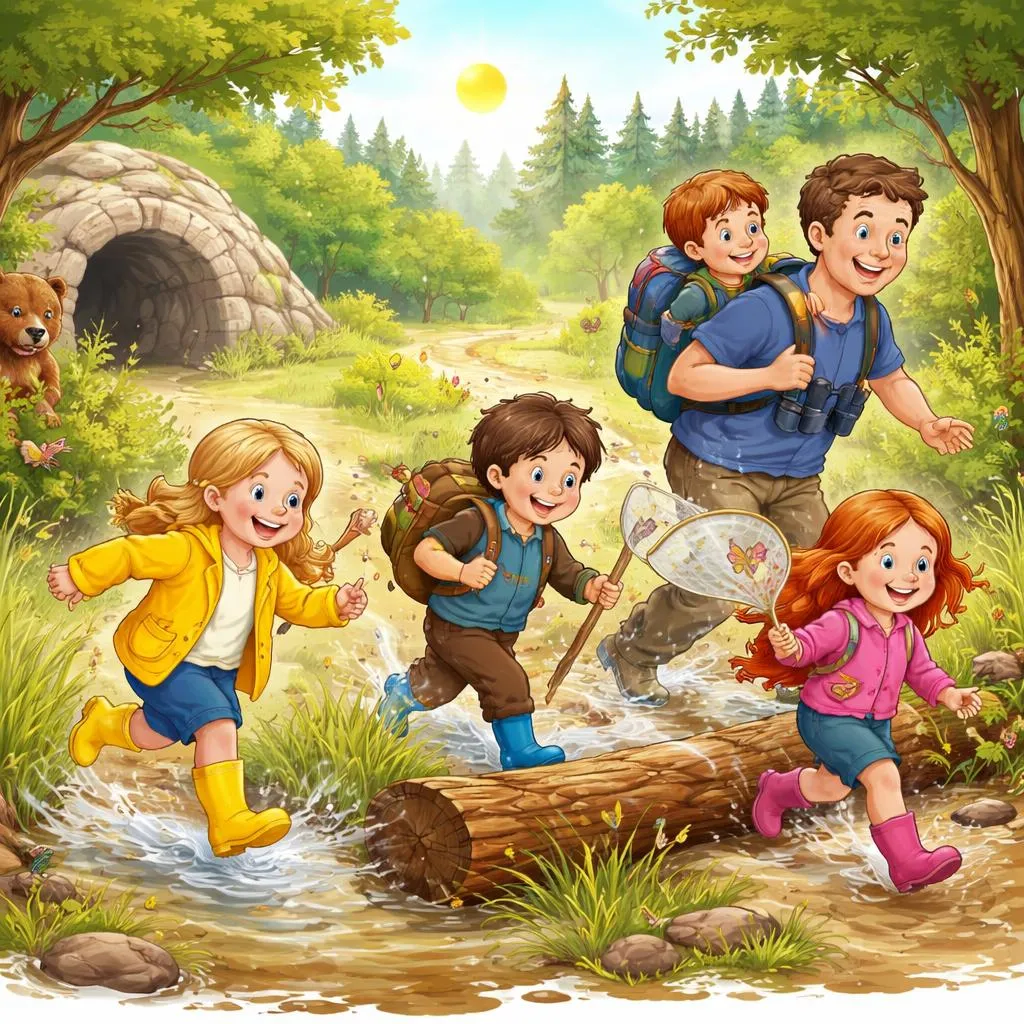

There are stories that beg to be acted out. They take us on a journey. They place obstacles in our path. The chant "we are going on a bear hunt song" is one of these immersive experiences. It combines a thrilling adventure with repetitive language. Children love the suspense. They love the sound effects for each obstacle. As teachers, we can use this chant to teach sequencing, onomatopoeia, and prepositions of movement. Let's explore how to bring this bear hunt adventure into our classroom.
What is the "We Are Going on a Bear Hunt" Story? This is a beloved children's story and chant. It was written by Michael Rosen and illustrated by Helen Oxenbury. The story follows a family on an adventure. They are going to find a bear. On their journey, they encounter different obstacles. They go through long grass, a river, mud, a forest, a snowstorm, and a cave.
The phrase "we are going on a bear hunt song" usually refers to the rhythmic, chant-like telling of the story. Many versions set the words to music. The story has a repetitive structure. The family faces each obstacle, says "We can't go over it. We can't go under it. Oh no! We've got to go through it!" Then they make the sounds of moving through that obstacle. This repetition and rhythm make it perfect for young learners.
The Lyrics of the Story Chant Let's look at the typical structure of the chant.
Leader: We're going on a bear hunt! Group: We're going on a bear hunt! Leader: We're going to catch a big one! Group: We're going to catch a big one! Leader: I'm not scared! Group: I'm not scared! Leader: Uh-oh! Grass! Long, wavy grass. Group: Uh-oh! Grass! Long, wavy grass. Leader: We can't go over it. Group: We can't go over it. Leader: We can't go under it. Group: We can't go under it. Leader: We've got to go through it! Group: We've got to go through it! Everyone: Swish, swish, swish, swish! (rubbing hands together)
The pattern repeats for each obstacle.
River: Splash, splash, splash, splash!
Mud: Squelch, squelch, squelch, squelch!
Forest: Stumble, trip, stumble, trip!
Snowstorm: Hooo, hooo, hooo, hooo!
Cave: Tiptoe, tiptoe, tiptoe, tiptoe!
Finally, they find the bear and run back through all the obstacles in reverse, faster and faster. The phrase "we are going on a bear hunt song" captures this thrilling, repetitive adventure.
Vocabulary Learning: Words from the Story This story introduces a rich variety of vocabulary.
Hunt: A search for something. Looking for something specific.
Catch: To grab or capture something.
Scared: Afraid. Feeling fear.
Grass: Green plants that cover the ground.
River: A large stream of flowing water.
Mud: Soft, wet earth.
Forest: A large area covered with trees.
Snowstorm: A heavy fall of snow with strong winds.
Cave: A large hole in a rock or mountain.
Through: Going in one side and out the other.
Each obstacle introduces a new setting word. The sound effects introduce onomatopoeia. The central phrase "we are going on a bear hunt" sets the stage for the entire adventure.
Phonics Points: Sounds in the Story The story is excellent for phonics practice, especially with sound effects.
Onomatopoeia: The story is full of words that sound like what they describe.
Swish: The sound of moving through grass.
Splash: The sound of water.
Squelch: The sound of feet in mud.
Hooo: The sound of wind in a snowstorm.
Tiptoe: The soft sound of quiet steps.
We can practice making these sounds. We can experiment with volume and speed. Fast sounds for running back. Slow sounds for the first journey.
The "B" Sound: "Bear" and "big" start with the /b/ sound. We practice making our lips press together.
The "H" Sound: "Hunt" starts with the /h/ sound. We feel the air from our lungs.
The rich sound effects in "we are going on a bear hunt song" make phonics practice natural and engaging.
Grammar Patterns: Language in the Story The story contains several useful grammar patterns.
Contractions: "We're" is a contraction of "we are." "We've" is a contraction of "we have." We explain that we put words together to speak faster.
Future Intention: "We're going to" shows a plan for the future. We are telling everyone what we intend to do. We can practice making our own plans. "We're going to the park." "We're going to eat lunch."
Prepositions: The story uses "over," "under," and "through." These are prepositions of movement. We can practice them with physical actions. We step over a line. We crawl under a table. We walk through a doorway.
Negatives: "Can't" means "cannot." It shows something is not possible. "We can't go over it." We practice making negative sentences. "I can't fly." "I can't eat a whole cake."
The repetitive structure of "we are going on a bear hunt song" gives us many chances to hear and practice these grammar patterns.
Learning Activities: Bringing the Story to Life Here are some activities to deepen the learning experience.
Activity 1: Obstacle Course We set up an obstacle course in the classroom or playground. Chairs become the forest. Blue mats become the river. Pillows become the snowstorm. As we chant the story, we move through each obstacle. We make the sounds together. This kinesthetic activity makes the words physical.
Activity 2: Sound Effect Orchestra We assign different sound effects to different groups. One group makes the swish sounds. One group makes the splash sounds. One group makes the squelch sounds. As we tell the story, each group provides their sound effect at the right time. This builds listening and teamwork.
Activity 3: Story Mapping We create a large map on the board or on paper. We draw the house where the family starts. We draw the grass, the river, the mud, the forest, the snowstorm, and the cave. As we tell the story, we move a character along the map. This builds sequencing and comprehension.
Activity 4: Bear Hunt Drama Students act out the story. Some students are the family. One student is the bear hiding in the cave. They move through each obstacle. They make the sounds. They run back when the bear appears. This dramatic play builds confidence and language skills.
Printable Materials: Visuals for the Classroom Printables support the lesson and provide independent practice.
Obstacle Cards: We create picture cards for each obstacle. Grass, river, mud, forest, snowstorm, cave. We use these during the chant to show what comes next.
Sound Effect Cards: We create cards with the onomatopoeia words. Swish, splash, squelch, stumble, hooo, tiptoe. Students match the sound card to the obstacle card.
Sequencing Cards: We create a set of cards showing the order of the story. The family at home. Each obstacle in order. The cave with the bear. The family running back. Students put the cards in order.
Coloring Page: We provide a coloring page showing the family at one of the obstacles. Students can color the scene. They can practice writing the key phrase "we are going on a bear hunt" at the bottom.
Educational Games: Making Learning Playful Games turn the story into an interactive experience.
Game 1: Obstacle Memory We place the obstacle cards face down. Students take turns turning over two cards. They try to find a match. When they make a match, they must make the sound effect for that obstacle.
Game 2: What Comes Next? We tell the story but pause before naming the next obstacle. "We're going on a bear hunt. We're going to catch a big one. Uh-oh! Long, wavy..." The class shouts "GRASS!" This builds anticipation and recall.
Game 3: Reverse Speed Run We practice the return journey. We go through all the obstacles in reverse order. We go faster and faster. Students love the challenge of keeping up. This builds memory and quick thinking.
Game 4: Create a New Obstacle We challenge students to create a new obstacle for the bear hunt. What else could the family meet? A lake? A hill? A bridge? We create a new sound effect for it. We add it to our version of "we are going on a bear hunt song" . This extends creativity and language skills.
By using these strategies, we transform a beloved story into a rich learning experience. We explore vocabulary, phonics, grammar, and sequencing. The bear hunt becomes an adventure we share together. It takes us through obstacles and back home again, safe and sound.