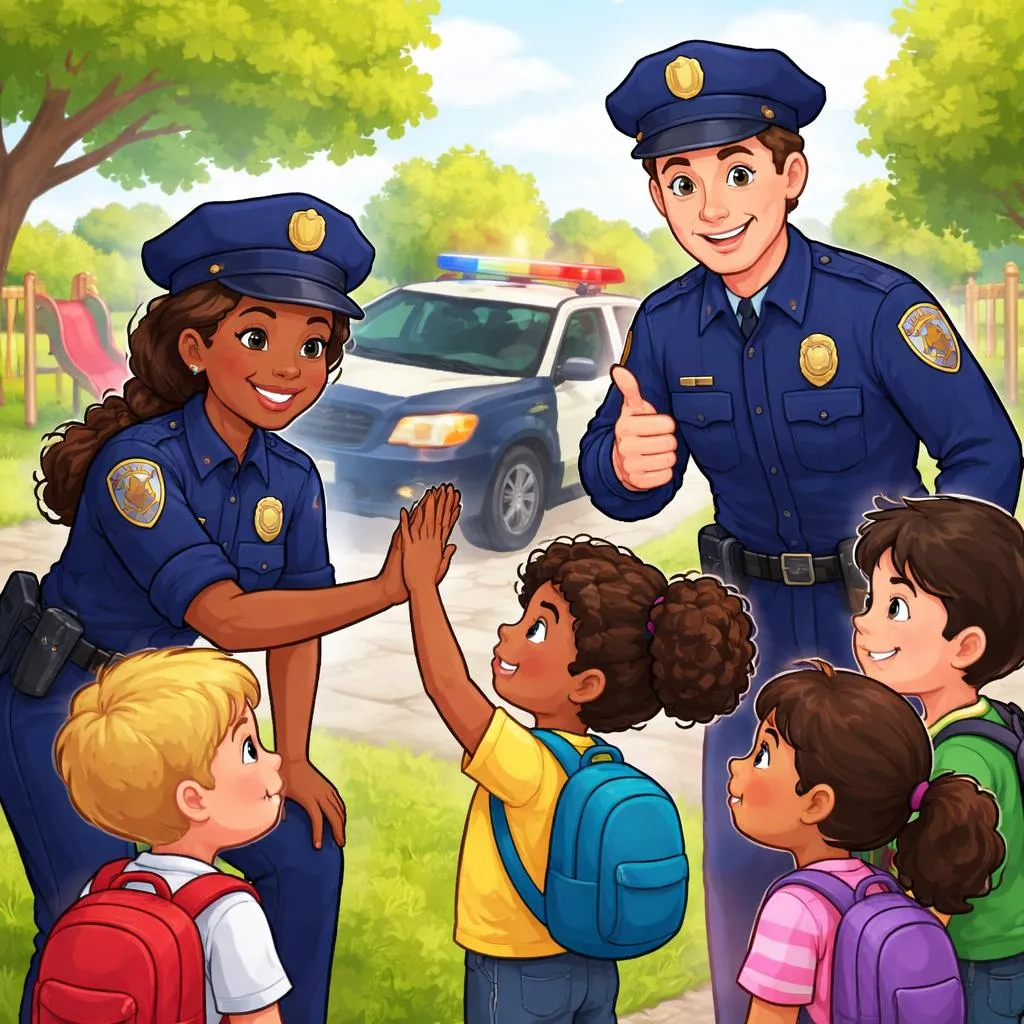

What Do These Expressions Mean? “A police officer” and “a policeman” both mean a person who protects people, enforces laws, and keeps communities safe. They tell a child that this person wears a uniform and helps in emergencies. Children hear these words when learning about helpers, seeing a patrol car, or visiting a station. Both describe the same job.
“A police officer” is the modern, gender-neutral term for the job. It is common and respectful. A child says it when saying “The police officer helped us cross the street.” It includes everyone.
“A policeman” is an older term. It means a man who is a police officer. It is not used as much today. It does not include women police officers.
These expressions seem similar. Both mean “a person who keeps us safe.” Both describe protectors. But one is modern and inclusive while one is older and only for men.
What's the Difference? One is modern and includes everyone. One is older and refers only to men. “Police officer” is what we say today. It is respectful to all genders. Children learn this word first in many schools.
“Policeman” is an older word. It was used when almost all police officers were men. Today, women are police officers too. “Policeman” can sound old-fashioned.
Think of a child drawing a picture. “I want to be a police officer” is right for any child. “I want to be a policeman” is only for boys and sounds dated. One is for everyone. One is for a specific time.
One is for all officers. The other is for male officers only. “Police officer” for the whole team. “Policeman” for a man in the past. Use the first for today. Understand the second for history.
Also, many police departments now use “police officer” officially. “Policeman” is rarely used in official job titles. Teach children the modern word.
When Do We Use Each One? Use “police officer” for everyday conversation today. Use it for any person who serves as law enforcement. Use it as the respectful, modern term. It fits daily life.
Examples at home: “A police officer keeps us safe.” “My aunt is a police officer.” “I want to be a police officer when I grow up.”
Use “policeman” rarely. Use it in old stories or to talk about the past. Use it to teach history. Children almost never need to use this word.
Examples for history: “In old movies, they said ‘policeman.’” “My grandpa was a policeman in the 1950s.” (talking about the past) “The term ‘policeman’ was used before women became police officers.”
Most children should just say “police officer.” It is correct, respectful, and modern. “Policeman” is good to understand for reading old books. But for speaking, “police officer” is best.
Example Sentences for Kids A police officer: “Police officers help people in trouble.” “The police officer drove a car with lights.” “I saw a police officer at the school.”
A policeman: “In old books, they call police officers policemen.” (learning) “My grandpa was a policeman in the past.” (history) “The word policeman means a man who is a police officer.”
Notice “police officer” is the modern word. “Policeman” is older and less common now. Children learn both. One for today. One for history.
Parents can use “police officer” every day. Save “policeman” for history lessons. “In the past, people said ‘policeman.’ Now we say ‘police officer’ for everyone.” Learning happens in small moments.
Common Mistakes to Avoid Some children say “policeman” for every police officer. That can be disrespectful to women police officers. Use “police officer” instead. It includes everyone.
Wrong: “The policeman drove the car.” (if you don’t know the gender) Better: “The police officer drove the car.”
Another mistake: thinking “policeman” is the only correct word. It is not. “Police officer” is the preferred term today. Teach children the modern, respectful word.
Wrong: “Only boys can be policemen.” Right: “Anyone can be a police officer.”
Some learners think “police officer” is a new word. It has been used for many decades. It is not new, but it is the right word now.
Also avoid using “policeman” in official writing. Use “police officer” on forms and letters. It is the professional term.
Easy Memory Tips Think of “police officer” as a badge with “PO” on it. Modern. Inclusive. For today.
Think of “policeman” as an old black-and-white film. History. Old-fashioned. For the past.
Another trick: remember the letters. “Police officer” has no gender word. “Policeman” has “man” for only men. Everyone gets “police officer.” Only men in the past get “policeman.”
Parents can say: “Police officer for all. Policeman for a history call.”
Practice at home. Talk about helpers: “police officer.” Read an old book: “policeman.”
Quick Practice Time Let us try a small exercise. Choose the better phrase for each situation.
A child is drawing a thank-you picture for the local police station. a) “Thank you, policemen!” b) “Thank you, police officers!”
A child is reading a story written in 1960 about a police patrol. a) “The police officer stopped the car.” b) “The policeman stopped the car.”
Answers: 1 – b. A thank-you picture today fits the modern, inclusive “police officers.” 2 – a or b. In a story from 1960, “policeman” is historically accurate.
Fill in the blank: “When I talk about the hero who keeps our community safe today, I say ______.” (“Police officer” is the modern, respectful, inclusive choice.)
One more: “When I read a history book about law enforcement from 1970, it says ______.” (“Policeman” fits the historical, older, language-of-the-time description.)
Police officers are protectors. “Police officer” is for today. “Policeman” is for history. Teach your child both. A child who learns both can speak kindly in the present and read stories from the past.