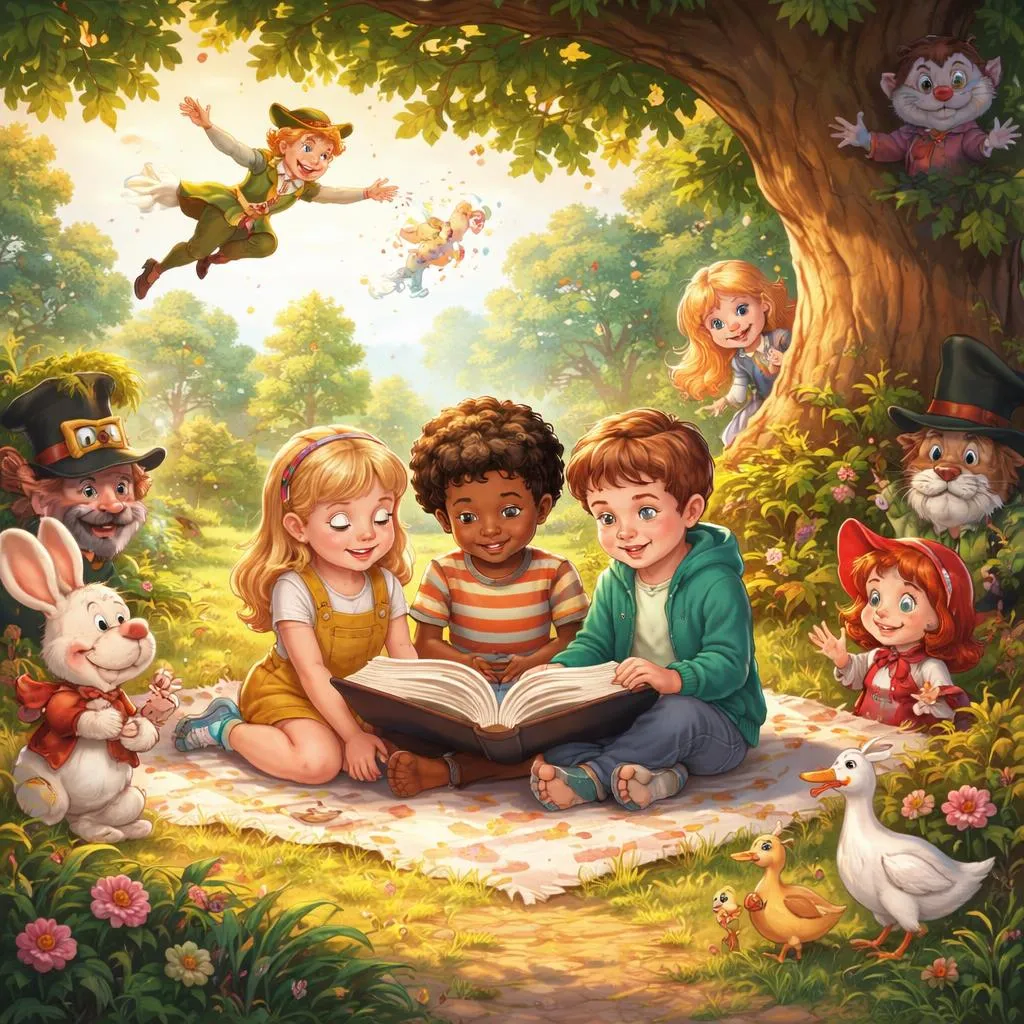

In an age of flashy animations and fast-paced digital content, a gentle question arises for educators and parents. Why should modern children still open the pages of old-fashioned books? The answer lies in the timeless appeal of classic children's story characters. These figures are more than just drawings on a page. They are the foundation of early literacy, carrying lessons and language patterns that have nurtured young minds for generations. This article explores how to introduce these beloved figures to a new generation, turning reading time into a powerful learning experience.
What Are Classic Children's Story Characters? Classic children's story characters are the memorable personalities from traditional tales that have stood the test of time. They originate from folklore, fairy tales, and early children's literature. These characters often embody simple, universal traits that children can easily recognize. Think of the curious monkey, the brave little tailor, or the kind-hearted elephant. They live in worlds of imagination, yet their feelings and choices feel very real. For a young learner, meeting these characters is like making a new friend who also teaches important lessons about life and language.
Meaning and Explanation Behind the Characters Understanding these characters helps children understand themselves. Each classic figure usually represents a single, clear idea or virtue. For example, the "Three Little Pigs" show the value of hard work and planning. "Little Red Riding Hood" teaches a lesson about being cautious. This simplicity is a powerful teaching tool. When a child sees the character's actions, they grasp the abstract concept without needing a long explanation. The characters act out the meaning. This makes them perfect vessels for teaching both moral education and vocabulary related to feelings, actions, and consequences.
Categories or Lists of Beloved Characters To make teaching easier, it helps to group these characters. Here is a simple way to categorize them for classroom or home lessons.
Animal Characters: These are very common in classic tales. They talk, wear clothes, and act like people.
Peter Rabbit: The mischievous bunny who loves Mr. McGregor's garden.
Winnie-the-Pooh: The friendly bear who loves honey and his friends.
The Very Hungry Caterpillar: A tiny creature with a big appetite.
Magical and Fairy Tale Characters: These characters come from the world of magic and make-believe.
Cinderella: The kind girl who goes to the ball.
Pinocchio: The wooden puppet whose nose grows.
Alice: The curious girl who falls into Wonderland.
Adventurous and Brave Characters: These figures show courage and cleverness.
Jack (from Jack and the Beanstalk): The boy who climbs the beanstalk.
Max (from Where the Wild Things Are): The boy who becomes king of the wild things.
Madeline: The small girl in Paris who is not afraid of anything.
Daily Life Examples with These Characters The best way to make stories stick is to connect them to a child's everyday world. When a child refuses to clean their room, a teacher might ask, "What would the Three Little Pigs say about building a strong house?" This makes the lesson practical. At snack time, talk about the Very Hungry Caterpillar and his food choices. When a child feels scared, remind them of how the brave little engine kept trying. By linking character traits to daily moments, the stories become a shared language between the adult and the child. It turns abstract ideas into real-world guidance.
Printable Flashcards for Character Learning Flashcards remain a fantastic, hands-on tool for vocabulary building. For classic children's story characters, create a set of cards. On one side, place a simple, clear image of the character. On the other side, write the character's name and one strong trait. For example:
Front: A picture of Goldilocks.
Back: "Goldilocks. Curious and forgetful."
Teachers can use these cards for quick recall games. Show the picture, and the child says the name. Or, say the name, and the child describes what the character did. These cards build memory and link the visual of the character with the written word. They are a simple, printable resource that turns a passive reading moment into an active learning drill.
Learning Activities or Games for the Classroom Games transform reading into an energetic, social experience. Here are two activities designed around classic children's story characters.
Activity 1: Character Hot Seat Place a chair at the front of the room. One student sits in the chair and thinks of a classic character. The other students ask yes or no questions to guess who it is. "Are you an animal?" "Do you like to eat honey?" "Did you lose something?" This game builds critical thinking and reinforces the specific details that make each character unique.
Activity 2: Story Basket Gather props related to different stories. Include a red hood, a wooden spoon (for the porridge), a small basket, or a toy pig. Let children pick an item from the basket. They must then name the character or story connected to that item. For an advanced group, ask them to act out a small scene using the prop. This tactile activity connects objects to narrative, deepening comprehension.
Teaching Character Traits Through Comparison Once children know several characters, a powerful lesson involves comparing them. Use a simple chart on the board. Ask questions that require thinking about two different characters.
"How is Peter Rabbit like the little boy who cried wolf?" (Both made choices that got them into trouble).
"How is Cinderella different from the Ugly Duckling?" (One story is about finding happiness with help, the other is about changing over time). This activity moves beyond simple recall. It pushes young learners to analyze and categorize information. They start to see patterns in storytelling and human behavior. This is an early, gentle step into literary analysis, perfectly suited for developing minds.
Building Vocabulary with Story Words Every classic story comes with a special set of words. Reading about these characters naturally introduces rich language. A story about a "giant" introduces words like "enormous," "fee-fi-fo-fum," and "castle." A tale about a "fairy" brings words like "magic," "wand," and "spell." Teachers can create a "word wall" in the classroom. After reading a story, add new words to the wall, next to a picture of the character. Encourage children to use these new words during the day. Instead of saying "big," they can say "enormous like the giant." This natural integration of new vocabulary is far more effective than memorizing a list.
Encouraging Creative Writing with Familiar Faces Classic characters provide a safe starting point for young writers. A blank page can be scary. But a page with a prompt about a known character feels like a friendly challenge. Ask the class to imagine a new adventure.
"What if the Three Bears visited the Three Pigs?"
"Where would the Cat in the Hat go on a rainy day?"
"What new vegetable would Peter Rabbit find in the garden?" This activity sparks imagination. The child already knows the character's personality. They just need to decide what that character would do in a new situation. It builds confidence in writing and storytelling by providing a strong, familiar foundation to build upon.
The Role of Illustrations in Understanding The pictures in classic books are just as important as the words. They give the characters a face and a world. When teaching, it is vital to spend time looking at the illustrations. Ask guiding questions.
"Look at the bear's face. How do you think he feels?"
"What do you see in the forest that looks scary?"
"What colors did the artist use in the sad part?" This practice, often called "picture walking," builds visual literacy. Children learn to gather information from images. It also helps them understand mood and emotion, which are often conveyed more clearly in a drawing than in the text for a beginning reader.
Making Connections to Modern Media Many classic children's story characters now appear in movies and TV shows. This is not a bad thing. Use these modern versions as a bridge back to the book. After watching a film adaptation, read the original story. Then, have a discussion.
"What was different in the movie?"
"What did the book have that the movie left out?"
"Which version did you like better? Why?" This comparison teaches children to be critical viewers. They learn that stories can be told in different ways. It also reinforces that the book is often the original source, giving the classic tale a place of honor in a modern, digital world.
Building a Lifelong Reading Habit Ultimately, the goal of introducing these characters is to build a love for reading. A child who loves Peter Rabbit will look for another story about a mischievous animal. A child who laughs at the Pigeon in the Mo Willems books will seek out other humorous tales. Classic children's story characters act as the first step on a long path of reading. They provide the comfort of the familiar and the joy of a good story. When a child sees a character they know on the cover of a book, they feel confident. They know they will enjoy the story inside. This confidence is the key to becoming a reader who reads not just for school, but for pleasure, for a lifetime.
Printable Materials for Story Sequencing Another excellent printable resource is a story sequencing set. Take a classic story like "The Gingerbread Man." Create simple cards showing key moments: the old woman baking, the gingerbread man running away, meeting the cow, crossing the river with the fox. Mix up the cards. Ask the child to put them in the correct order. This activity checks comprehension in a physical, hands-on way. It requires the child to recall the plot structure. They must identify the beginning, middle, and end. This is a foundational skill for both reading and writing. It turns the linear narrative of a book into a puzzle they can solve with their hands.
Educational Games for Story Retelling Games that involve retelling a story are powerful for language development. One simple game is "Story Circle." Have the children sit in a circle. Start telling a well-known story, like "The Three Little Pigs." After a few sentences, stop and point to the next child. They must continue the story from exactly where you left off. This game requires intense listening and quick thinking. The child must recall the correct sequence and use the right words to continue the tale. It turns a whole class into a team of storytellers, working together to bring a classic tale to life.
In the end, the magic of classic children's story characters remains undiminished. They offer a common ground, a shared world of imagination that connects generations. By using thoughtful activities, games, and discussions, teachers and parents can ensure these characters continue to inspire, teach, and comfort young readers for many years to come. The simple act of opening a book together and meeting an old friend on the page is a gift that keeps on giving, building skills and memories that last a lifetime.