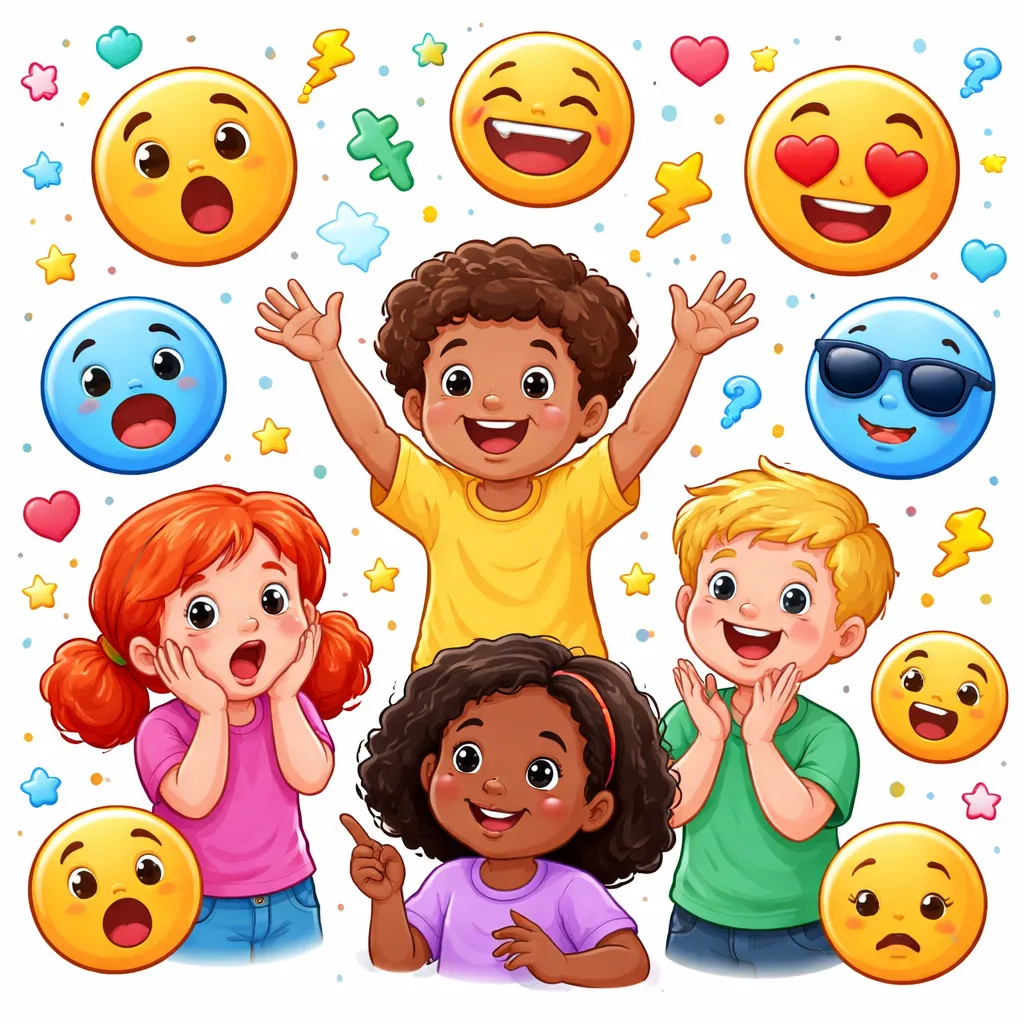

Interjections are the words that burst out when we feel something strongly. Wow! Ouch! Yay! Oh no! These words express surprise, pain, joy, and disappointment. They add emotion to language. Without interjections, our speech would be flat and unfeeling. Today we explore the 90 essential interjections for 8-year-old children and how mastering them helps express feelings vividly.
Eight-year-olds experience a wide range of emotions. They need words to express surprise, excitement, disappointment, and concern. Interjections give them an immediate way to share feelings. They make language more alive and personal.
What Are Interjections?
Let us begin with a clear definition we can share with our children. Interjections are words that express strong feelings or emotions. They often stand alone and are followed by an exclamation mark.
Think of interjections as the words that pop out when you feel something suddenly. When you stub your toe, "Ouch!" comes out. When you get a surprise, "Wow!" escapes. When something goes wrong, "Uh oh!" appears. These words are pure feeling.
Interjections are different from other parts of speech. They don't connect to other words grammatically. They stand alone or are set off by commas. They add emotion but not grammar to sentences.
For eight-year-olds, we can explain it simply. Interjections are feeling words. They are the sounds we make when something surprising, exciting, or scary happens. They show how we feel in that moment. The 90 essential interjections for 8-year-old learners are the words children need to express their emotions.
Meaning and Explanation for Young Learners
How do we explain interjections to an eight-year-old in ways they understand? We use examples from their world and show how these words express feelings.
Tell your child that interjections are the words that show how you feel right now. When you're happy, you say "Yay!" When you're surprised, you say "Wow!" When you're hurt, you say "Ouch!" These words are like feelings bursting out.
Here are some interjections children use. "Yay We're going to the park!" Shows excitement. "Oops I dropped my crayon." Shows a small mistake. "Oh no It's raining!" Shows disappointment. "Wow Look at that!" Shows surprise.
Interjections can be one word or short phrases. "Wow" is one word. "Oh dear" is two words. "Good grief" is two words. They all work the same way – expressing feeling.
Different interjections express different feelings. Happy feelings: Yay, hurray, whee, hooray. Surprise: Wow, whoa, oh, ah, gosh. Pain: Ouch, ow, yow. Disappointment: Oh no, uh oh, drat, darn. Understanding: Aha, oh, I see. Greeting: Hi, hello, hey.
These explanations help children understand the 90 essential interjections for 8-year-old speakers. They see that these words add emotion to language.
Categories of Interjections
Interjections fall into categories based on the emotions they express. Understanding these categories helps children choose the right word for their feeling.
Happy interjections express joy and excitement. Yay, hurray, hooray, whee, yeah, woo-hoo, yippee, whoopee, huzzah. "Yay It's my birthday!" "Whee This slide is fun!" "Hurray We won the game!"
Surprise interjections express wonder or shock. Wow, whoa, oh, ah, gosh, goodness, gracious, my goodness, oh my, heavens, golly, gee, wowza. "Wow That's amazing!" "Whoa That was close!" "Oh my I can't believe it!"
Pain interjections express physical discomfort. Ouch, ow, yow, yeow, oof, ah, er. "Ouch I stubbed my toe!" "Ow That hurts!" "Yow That was hot!"
Disappointment interjections express sadness or frustration. Oh no, uh oh, drat, darn, shoot, rats, bummer, alas, aw. "Oh no I dropped my ice cream!" "Uh oh The tower fell!" "Drat I forgot my homework!"
Understanding interjections show moments of realization. Aha, oh, I see, uh-huh, mm-hmm, ah-ha. "Aha Now I understand!" "Oh That's how it works!" "I see That makes sense."
Greeting interjections start conversations. Hi, hello, hey, yo, howdy. "Hi Grandma!" "Hello everyone!" "Hey Wait for me!"
Attention interjections get someone's notice. Hey, psst, yo, ahem. "Psst Over here!" "Ahem Excuse me!" "Hey Look at this!"
These categories make up the 90 essential interjections for 8-year-old learners. Each expresses different feelings.
Daily Life Examples
Interjections appear constantly in family conversations. Here are examples from a typical day with an eight-year-old.
Morning time brings many interjections. "Yawn I'm still sleepy. Oops I dropped my sock. Wow The sun is bright! Yay It's Saturday! Oh no I forgot to set my alarm." Interjections start the day with feeling.
During school, interjections multiply. "Aha I know the answer! Whoa That's a big spider! Darn I made a mistake. Whew That test was hard. Yes Recess time!" School is full of emotional moments.
After school brings more interjections. "Yippee Practice is cancelled! Ouch I bumped my knee. Hey Wait for me! Wow You got a new game? Bummer It's raining." Every event brings interjections.
Evening and bedtime have their own interjections. "Mmm Dinner smells good! Ugh Broccoli again? Ahh This bath is nice. Aww I love this story. Goodnight Sleep tight." Interjections color every moment.
Throughout the day, children use interjections constantly. The 90 essential interjections for 8-year-old children appear again and again in these everyday moments.
Happy Interjections
Happy interjections express joy, excitement, and celebration. Eight-year-olds use these when something good happens.
Yay is the most common happy interjection. "Yay We're going to the zoo!" "Yay I got a sticker!" Expresses simple joy.
Hurray and hooray are celebratory. "Hurray It's my birthday!" "Hooray We won!" Often used in group celebrations.
Whee expresses joy during fun activities. "Whee This slide is fast!" "Whee Let's go again!" Often said while doing something fun.
Yeah expresses satisfaction or agreement with joy. "Yeah I did it!" "Yeah That's what I wanted!" Not to be confused with casual yes.
Woo-hoo and yippee express high excitement. "Woo-hoo We're going to Disneyland!" "Yippee No school today!" For big exciting news.
Whoopee is old-fashioned but fun. "Whoopee Party time!" Children might hear it in books or movies.
Huzzah is very old-fashioned, like pirates or knights. "Huzzah The king has arrived!" Fun for pretend play.
Children use these constantly. "Yay It's pizza day!" "Hurray Grandma's here!" "Whee This is fun!" Happy interjections spread joy.
These happy interjections appear in the 90 essential interjections for 8-year-old speakers. They help children share positive feelings.
Surprise Interjections
Surprise interjections express wonder, shock, or amazement. Eight-year-olds use these when something unexpected happens.
Wow is the most common surprise interjection. "Wow That's a huge truck!" "Wow You did that yourself?" Expresses impressed surprise.
Whoa expresses shock or stop. "Whoa That was close!" "Whoa Look at that!" Can mean both surprise and "stop."
Oh and ah express various surprises. "Oh I didn't see you there!" "Ah Now I understand!" Tone of voice matters.
Gosh and goodness are mild surprises. "Gosh That's a lot!" "Goodness You scared me!" Polite surprise.
My goodness and oh my express stronger surprise. "My goodness You've grown!" "Oh my What happened?" Common in adult speech children hear.
Heavens and good heavens are old-fashioned. "Heavens Is that the time?" "Good heavens What a mess!" Children hear in books.
Golly and gee are mild, slightly old-fashioned. "Golly That's big!" "Gee I didn't know that!" Still in use.
Wowza is playful intense surprise. "Wowza That's amazing!" Fun, informal word.
Children use these constantly. "Wow Look at that rainbow!" "Whoa That was a big sneeze!" "Oh I forgot my book!" Surprise interjections show wonder.
These surprise interjections appear in the 90 essential interjections for 8-year-old learners. They help children express amazement.
Pain and Discomfort Interjections
Pain interjections express physical discomfort. Eight-year-olds use these when they get hurt or feel unwell.
Ouch is the most common pain interjection. "Ouch I stubbed my toe!" "Ouch That pinch hurt!" For sudden pain.
Ow is similar to ouch. "Ow That's sore!" "Ow Stop that!" Quick, sharp expression of pain.
Yow and yeow express stronger pain. "Yow That's hot!" "Yeow That really hurts!" For intense pain.
Oof expresses pain from impact. "Oof I fell down!" "Oof That was hard!" Often from a fall or hit.
Ah can express pain too, especially at the doctor. "Ah That hurts a little." "Ah-ah-ah" for sneezing.
Er expresses mild discomfort or hesitation. "Er That doesn't feel right." "Er I'm not sure." Mild.
Children use these constantly. "Ouch I bumped my head!" "Ow Don't pull my hair!" "Oof That was a hard landing!" Pain interjections get help quickly.
These pain interjections appear in the 90 essential interjections for 8-year-old speakers. They help children communicate discomfort.
Disappointment and Frustration Interjections
Disappointment interjections express sadness, frustration, or when things go wrong. Eight-year-olds use these frequently.
Oh no is the most common disappointment interjection. "Oh no It's raining!" "Oh no I dropped my cookie!" Expresses dismay.
Uh oh expresses that something bad might happen or just happened. "Uh oh I think I made a mistake." "Uh oh Here comes trouble!" Warning of problems.
Drat expresses mild frustration. "Drat I forgot my pencil!" "Drat We're out of milk!" Old-fashioned but still used.
Darn is similar to drat. "Darn I missed the bus!" "Darn That didn't work!" Mild frustration.
Shoot is very common. "Shoot I lost my place!" "Shoot We have to leave now!" Mild disappointment.
Rats is playful frustration. "Rats I wanted the red one!" "Rats We're too late!" Slightly old-fashioned but fun.
Bummer expresses disappointment about something. "Bummer The game is cancelled!" "Bummer You can't come?" Casual disappointment.
Alas is old-fashioned, expressing sorrow. "Alas Our vacation is over!" "Alas It was not meant to be." Children hear in stories.
Aw expresses sympathy or mild disappointment. "Aw That's too bad." "Aw Don't be sad." Often comforting.
Children use these constantly. "Oh no My tower fell!" "Uh oh I think I broke it." "Shoot I forgot my homework!" Disappointment interjections share struggles.
These disappointment interjections appear in the 90 essential interjections for 8-year-old learners. They help children express when things go wrong.
Understanding Interjections
Understanding interjections show moments of realization or comprehension. Eight-year-olds use these when they figure something out.
Aha is the classic realization interjection. "Aha Now I understand!" "Aha That's where my shoe went!" The moment of discovery.
Oh expresses sudden understanding. "Oh I get it now!" "Oh That's what you meant!" Very common.
I see shows comprehension. "I see That makes sense." "I see Now I know." More formal than oh.
Uh-huh and mm-hmm show understanding or agreement. "Uh-huh I understand." "Mm-hmm Go on." Nodding often accompanies.
Ah-ha is like aha but longer. "Ah-ha Found it!" "Ah-ha The mystery is solved!" Dramatic realization.
Children use these constantly. "Aha I figured out the puzzle!" "Oh That's how you do it!" "I see Now I know why." Understanding interjections show learning.
These understanding interjections appear in the 90 essential interjections for 8-year-old speakers. They help children share moments of discovery.
Greeting and Attention Interjections
Greeting interjections start conversations. Attention interjections get someone's notice. Eight-year-olds use these constantly.
Greeting interjections: Hi, hello, hey, howdy, yo. "Hi Mom!" "Hello everyone!" "Hey What's up?" "Howdy partner!" "Yo Over here!" Start conversations warmly.
Attention interjections: Hey, psst, yo, ahem. "Hey Look at this!" "Psst Come here!" "Yo Wait up!" "Ahem Excuse me!" Get someone's notice.
Hey does double duty – both greeting and attention. Tone of voice tells which. Friendly "Hey!" vs urgent "Hey!"
Psst is a quiet attention-getter. "Psst Over here, secretly!" Used when you don't want others to hear.
Ahem is a throat-clearing sound to get attention politely. "Ahem May I have your attention?" Formal but useful.
Children use these constantly. "Hi Can I play?" "Hey Look at my drawing!" "Psst I have a secret!" Greeting and attention interjections start interactions.
These greeting and attention interjections appear in the 90 essential interjections for 8-year-old learners. They help children begin conversations.
Punctuation with Interjections
Interjections need correct punctuation. Eight-year-olds should learn how to punctuate them in their writing.
Strong feelings get exclamation marks. "Wow That's amazing!" "Ouch That hurts!" "Yay We're going!" The exclamation mark shows the emotion is strong.
Mild feelings get commas. "Oh, I see." "Well, let's think about it." "Ah, now I understand." The comma separates the mild interjection from the rest.
Interjections can stand alone as sentences. "Wow! " "Ouch! " "Yay! " They are complete on their own when expressing strong feeling.
In dialogue, interjections show how characters feel. "Oh no" she cried. "Aha" he shouted. They make writing come alive.
Children practice this in their writing. "Yay It's my birthday!" "Oops I made a mistake." "Well, I'm not sure." Correct punctuation shows they understand.
These punctuation patterns appear in learning the 90 essential interjections for 8-year-old speakers. They help children write with feeling.
Learning Tips for Parents
Supporting your child's use of interjections happens naturally through conversation. Here are gentle ways to encourage this growth.
Model rich interjection use in your own speech. Use varied interjections to express feelings. "Wow Look at that beautiful sunset!" "Oh no I forgot my keys!" "Yay We're going to have fun!" Your child hears these emotional expressions.
Notice interjections during read-aloud time. When you encounter interjections in books, discuss them. "Listen, the character said 'Alas' when something sad happened. That word shows sorrow." Building interjection awareness.
Encourage emotional expression. When your child has strong feelings, help them find words. "You seem really excited. What word could show that? Yay? Woo-hoo?" Building emotional vocabulary.
Play interjection games. "Let's practice words for different feelings." Happy? Yay! Surprised? Wow! Hurt? Ouch! Quick practice builds recall.
Discuss appropriate interjections. Some interjections are more polite than others. "Darn is okay, but we don't use stronger words." Setting boundaries helps.
These tips support mastery of the 90 essential interjections for 8-year-old children through natural, positive interaction.
Printable Flashcards for Interjection Practice
Flashcards can help children learn and remember interjections. Here are ideas for making your own set.
Create category cards for different feeling types. Happy, surprised, pain, disappointed, understanding, greeting. Sort interjections into these categories.
Create picture cards showing emotional situations. A child winning a race for "yay." A child stubbing a toe for "ouch." A child surprised by a gift for "wow." Pictures connect words to feelings.
Create word cards with the 90 essential interjections. Practice reading them and using them with appropriate emotion. Say them with feeling.
Create situation cards describing scenarios. "You just got a new bike." Child responds with appropriate interjection. "Yay!" "You dropped your ice cream." "Oh no!" Practice matching interjections to situations.
Create punctuation cards showing when to use exclamation marks vs commas. Strong feelings get ! Mild feelings get ,. Practice punctuating interjections.
How to play with the cards. Spread cards out and take turns picking one. Use the interjection with appropriate emotion and punctuation. Identify the feeling. "Wow is for surprise. Wow That's amazing!"
These flashcards make the 90 essential interjections for 8-year-old learners tangible and fun. Children learn to connect words with feelings.
Learning Activities and Games
Games make learning about interjections playful and memorable. Here are some activities to enjoy together.
The Emotion Charades Game practices matching interjections to feelings. One person picks an interjection card and acts out the feeling without speaking. Others guess the interjection. "Are you saying ouch?" "Are you saying yay?" Great for emotional awareness.
The Situation Match Game practices choosing the right interjection. Describe a situation. Your child chooses the best interjection. "You just got the best present ever." "Yay!" "You stubbed your toe." "Ouch!" "You see a huge dinosaur." "Wow!" Quick practice builds skill.
The Story Time Game adds interjections to stories. Read a story together and add interjections at exciting moments. "The dragon appeared, and everyone said Wow!" "The knight fell down – Ouch!" Makes reading interactive and fun.
The Emotion Diary Game connects interjections to real life. At dinner, share moments from the day and the interjections that went with them. "When I saw the test, I thought Oh no!" "When I got an A, I said Yay!" Builds emotional vocabulary.
The Interjection Hunt finds interjections in comics and books. Comic books are full of interjections. Pow! Bam! Wow! Oof! Go on a hunt and count how many you find.
The Telephone Game with Emotion practices passing interjections. Whisper an interjection with feeling to your child. They pass it to the next person. See if the feeling survives to the end. "Wow" said with surprise becomes "Wow" said with surprise?
These games turn learning the 90 essential interjections for 8-year-old children into active family fun. No pressure, just playful emotional expression.
Interjections are the words of the heart. They burst out when feelings are too strong to hold in. They add color, emotion, and life to language. A rich collection of interjections helps children express their inner world accurately and vividly. By age eight, children should use a wide range of interjections appropriately. They should know which words express which feelings. They should punctuate them correctly in writing. They should understand that different situations call for different emotional words. The next time your child exclaims with feeling, notice the word they choose. Are they surprised? Hurt? Excited? Disappointed? Interjections reveal the emotional landscape of childhood. Building strong interjection skills builds emotionally articulate children who can share their feelings with words. This foundation will serve them in every relationship, every story, every moment of joy or disappointment they experience.