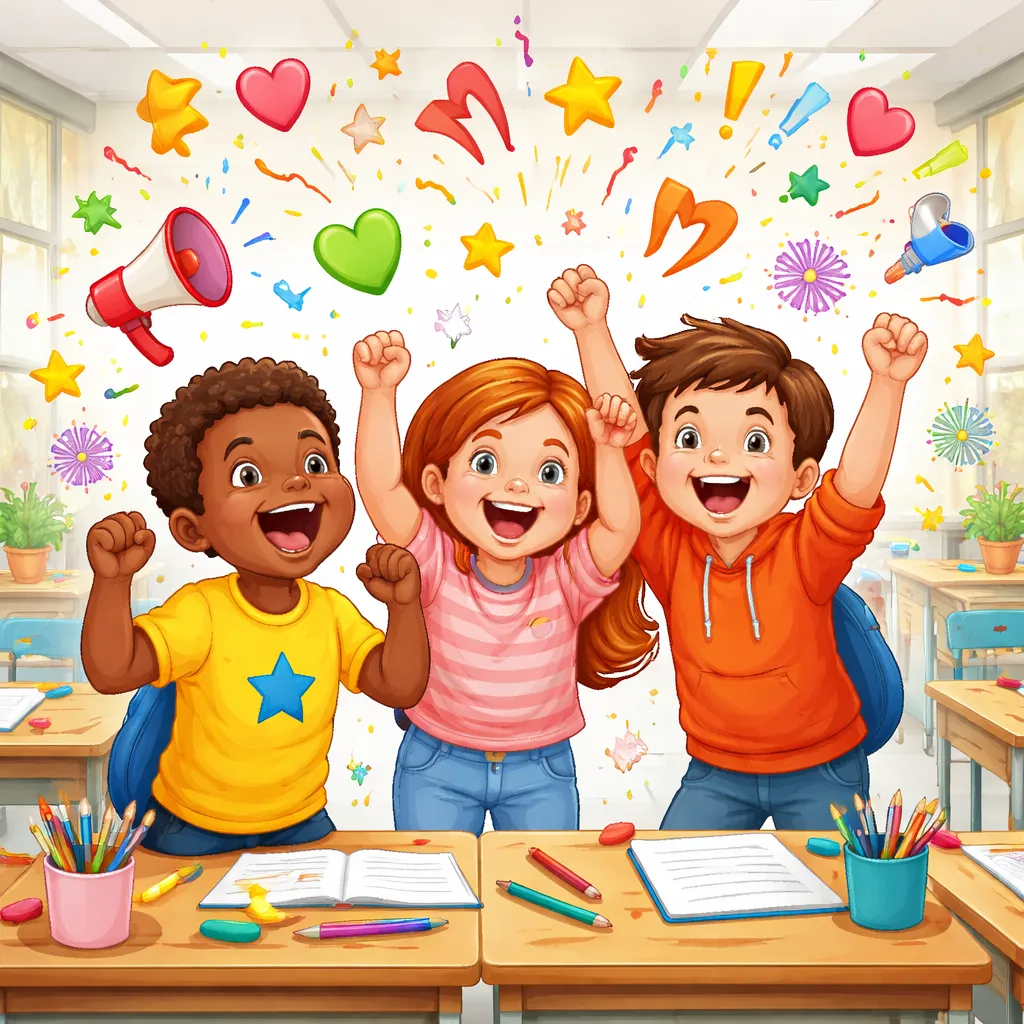

Your child feels strong emotions every day. Excitement, surprise, joy, fear, and wonder all burst out in exclamations. "Wow!" "That's amazing!" "I can't believe it!" "Help!" These are exclamatory sentences. They show strong feeling and end with an exclamation point. Mastering the top 100 exclamatory sentences for elementary students helps children express their emotions clearly and understand the excitement in stories and conversations. This guide will explain what exclamatory sentences are, list the most important examples, and show how to practice at home.
What Is an Exclamatory Sentence?
An exclamatory sentence expresses strong feeling or emotion. It shows excitement, surprise, joy, anger, fear, or any intense reaction. Exclamatory sentences always end with an exclamation point. They make our language lively and emotional.
Think about moments of strong feeling. When something wonderful happens, we might say "That's fantastic!" When surprised, "Oh my goodness!" When scared, "Watch out!" When happy, "I'm so excited!" All of these are exclamatory sentences.
Exclamatory sentences can be very short, like "Wow!" or longer, like "What a beautiful sunset that is!" They often begin with what or how for special emphasis. "What a great day!" "How wonderful!"
Exclamatory sentences are different from declarative sentences that state facts. "The cake is good" is a statement. "This cake is delicious!" is an exclamation. The feeling makes the difference.
The top 100 exclamatory sentences for elementary students include exclamations for all kinds of strong feelings.
Meaning and Explanation: Why Exclamatory Sentences Matter
Exclamatory sentences add emotion to language. They show how people feel, not just what they think. Without exclamations, conversations would be flat and unemotional. Exclamations make language human.
Think about sharing good news. "I got a new puppy!" expresses joy much more than "I got a new puppy." The exclamation point and the feeling behind it share the excitement with others.
In emergencies, exclamations can save lives. "Fire!" "Help!" "Stop!" These short exclamations get immediate attention and action. They are essential for safety.
In stories, exclamations bring characters to life. "The dragon is coming!" shouted the knight. "We're saved!" cried the villagers. "What a treasure!" exclaimed the princess. Without exclamations, stories would lose their drama.
Children naturally use exclamations. They express delight, surprise, and fear spontaneously. Teaching them a range of exclamatory sentences gives them more ways to share their feelings.
The top 100 exclamatory sentences for elementary students give children the emotional vocabulary they need.
Categories or Lists: The Top 100 Exclamatory Sentences
Here are the top 100 exclamatory sentences for elementary students, grouped by the feelings they express. These are the exclamations children use and encounter most often.
Exclamations of Joy and Excitement (20): Yay! Hooray! I'm so happy! This is the best day ever! I love it! That's wonderful! How exciting! We won! I did it! This is amazing! Fantastic! Great job! I'm so proud! What fun! This is awesome! Yippee! Hurray! I'm thrilled! What a great surprise! I can't wait! These express happiness and excitement.
Exclamations of Surprise (15): Wow! Oh my! I can't believe it! No way! Really? You're kidding! That's incredible! What a surprise! Oh my goodness! Goodness gracious! Well, I never! How amazing! Unbelievable! Whoa! Oh! These express astonishment.
Exclamations of Fear and Alarm (15): Help! Watch out! Look out! Be careful! Oh no! Run! Stop! Fire! Help me! I'm scared! It's coming! Watch where you're going! Duck! Get down! Save me! These express fear and call for help.
Exclamations of Disappointment and Sadness (10): Oh no! Aw, man! That's terrible! How sad! I'm so sorry! What a shame! Boo! Darn! Oh dear! That's awful! These express disappointment.
Exclamations of Anger and Frustration (10): Grr! I'm so mad! That's not fair! Leave me alone! Stop it! I've had enough! No! Cut it out! That's annoying! How frustrating! These express anger.
Exclamations of Pain (5): Ouch! Ow! That hurts! Oof! Yow! These express physical pain.
Exclamations of Delight (5): Yum! Delicious! This tastes great! Mmm! So good! These express enjoyment of food.
Exclamations of Wonder (5): Awesome! Cool! Amazing! Beautiful! Gorgeous! These express appreciation.
Exclamations of Celebration (5): Happy birthday! Congratulations! Way to go! Good for you! Well done! These celebrate achievements.
Short Exclamations (5): Wow! Whee! Aha! Oops! Uh-oh! These are single-word exclamations for various situations.
Exclamations with What (5): What a beautiful day! What a cute puppy! What a great idea! What a mess! What a noise! These use what for emphasis.
Exclamations with How (5): How wonderful! How exciting! How beautiful! How kind! How amazing! These use how for emphasis.
The top 100 exclamatory sentences for elementary students include these essential emotional expressions. Children will use them every day.
Daily Life Examples: Exclamatory Sentences All Around Us
Exclamatory sentences appear whenever people feel strong emotions. Pointing them out helps children see that these emotional expressions are part of real life.
In morning routines, exclamations show feelings. "I don't want to get up!" "Yay, it's Saturday!" "Oh no, I'm late!" "Wow, look at the snow!" Each exclamation shares an emotion.
During exciting moments, exclamations burst out. "We're going to the park!" "I got a new toy!" "Look what I made!" "It's my birthday!" Joyful exclamations fill happy moments.
In scary situations, exclamations warn and call for help. "Watch out for that car!" "Help, I'm stuck!" "Don't touch that, it's hot!" These exclamations protect us.
At celebrations, exclamations abound. "Happy birthday!" "Congratulations!" "Great job!" "Hooray for the winner!" These share joy with others.
When tasting something delicious, exclamations show appreciation. "Yum, this is so good!" "Delicious!" "Mmm, I love this!" These express enjoyment.
The top 100 exclamatory sentences for elementary students help children notice and use these emotional expressions.
Printable Flashcards: Visual Tools for Learning
Flashcards make exclamations concrete. Creating and using them together turns learning into an activity. Here are some ways to use flashcards for exclamatory sentence practice.
Create cards with exclamations on one side and pictures showing the emotion on the other. "Yay!" on front. A picture of a happy child on back. "Oh no!" on front. A picture of something disappointing on back. "Watch out!" on front. A picture of a dangerous situation on back. Your child reads the exclamation and connects it to the emotion.
Create situation cards showing moments that might prompt exclamations. A picture of a birthday party. Your child says "Happy birthday!" or "Yay!" A picture of someone getting hurt. Your child says "Ouch!" A picture of something amazing. Your child says "Wow!" This connects exclamations to real situations.
Create emotion cards with faces showing different feelings. A happy face, a surprised face, a scared face, an angry face. Your child matches exclamations to the faces. "Yay!" goes with the happy face. "Oh no!" goes with the scared or sad face.
Create pairs of exclamations that go with similar feelings. Group happy exclamations together. Group surprise exclamations together. Group alarm exclamations together. This builds understanding of emotional categories.
Learning Activities or Games: Making Exclamations Fun
Games turn emotional language into play. Here are some games that help children practice the top 100 exclamatory sentences for elementary students in enjoyable ways.
Feelings Charades: Act out situations that would prompt exclamations. Act out winning a race. Your child says "Yay!" or "I won!" Act out stubbing a toe. Your child says "Ouch!" Act out seeing something surprising. Your child says "Wow!" This connects exclamations to real situations.
Exclamation Hunt: Read a book together and search for exclamation points. Each time you find one, read the exclamatory sentence aloud. Talk about what feeling the character was expressing. Why did they use an exclamation?
Exclamation Bingo: Create bingo cards with exclamatory sentences in each square. Call out situations. "You just got a wonderful surprise." Your child covers "Wow!" or "I can't believe it!" "You hurt yourself." Your child covers "Ouch!" "Something scared you." Your child covers "Help!" or "Watch out!" First to get five in a row wins.
Finish the Exclamation Game: Start exclamations and have your child finish them. "What a beautiful..." "How exciting..." "I'm so..." "Watch out for..." "Happy..." This builds exclamation-forming skills.
Emotion Match Game: Create cards with emotions and cards with exclamations. Match "happiness" with "Yay!" "Hooray!" "I'm so happy!" Match "surprise" with "Wow!" "Oh my!" "I can't believe it!" Match "fear" with "Help!" "Watch out!" "I'm scared!" This builds understanding of emotional language.
Story Building with Exclamations: Build a story together where characters use exclamations. "Help! The dragon is coming!" shouted the villager. "Wow! He's huge!" said the knight. "Watch out! He's breathing fire!" cried the princess. "Hooray! The knight defeated the dragon!" everyone cheered. The story grows while exclamation practice happens.
Exclamation Memory: Create pairs of cards with matching exclamations. Each pair has the same exclamation. Turn them face down and play memory. When a player finds a match, they must use the exclamation in a sentence with the right feeling.
What Would You Say Game: Describe situations and have your child say the appropriate exclamation. "You open a present and it's exactly what you wanted." "Wow! Thank you!" "You see a car coming fast while you're crossing the street." "Watch out!" "You taste the best ice cream ever." "Yum! This is delicious!"
As your child becomes familiar with the top 100 exclamatory sentences for elementary students, their emotional expression becomes richer and more varied. They can share joy, surprise, fear, and excitement with appropriate words. They understand the emotions in stories and can respond to others' feelings. Exclamations add the human touch to language. Keep practice connected to real emotions. Encourage your child to express feelings with words. Notice exclamations in books and conversations. Celebrate when they use a new exclamation appropriately. These emotional sentences will help them connect with others and share their inner world.