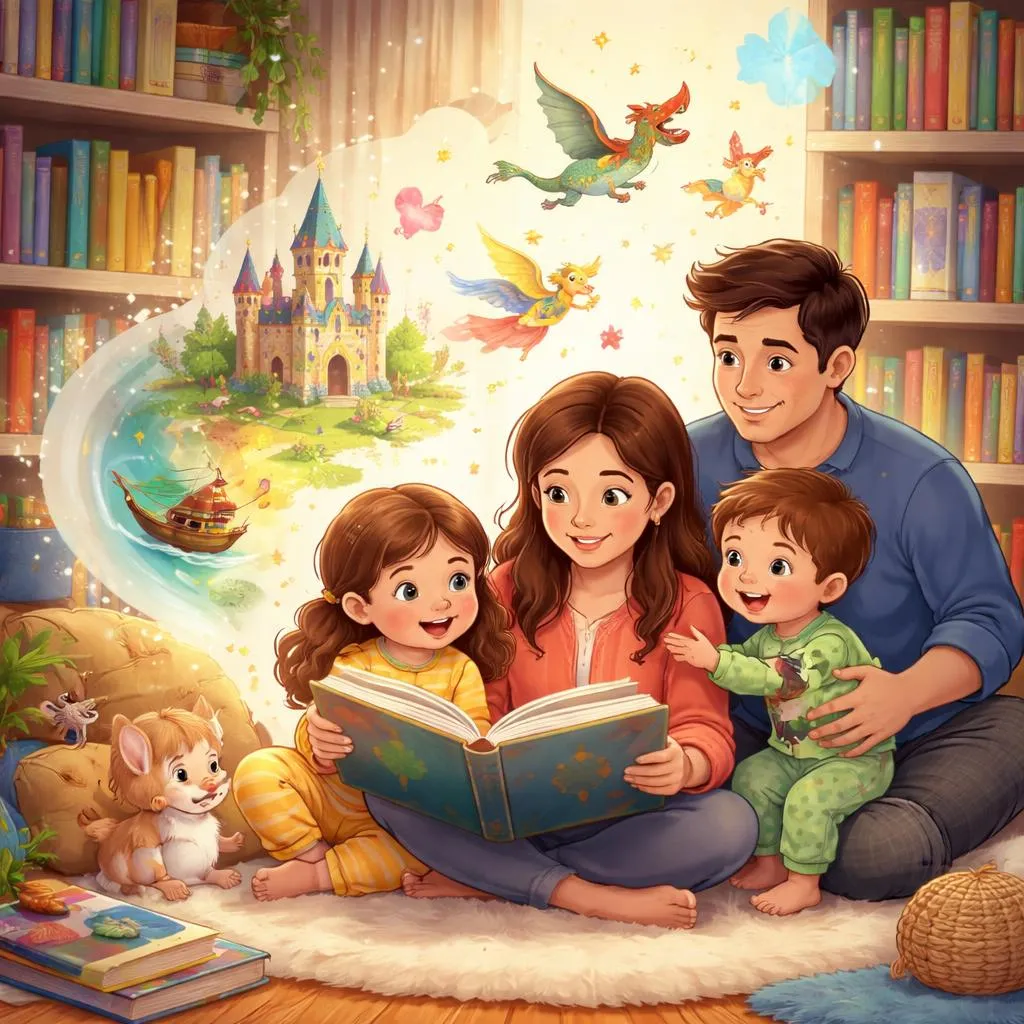

A shelf of worn books. Spines cracked from years of reading. Pages soft from turning. These books hold stories that grandparents read, parents read, and now children read. Children's classic story books connect generations. They carry wisdom and wonder from the past into the future.
Let us explore together which classic books belong on every family's shelf and how to share them with the children you love.
<h2>What is the story?</h2> Children's classic story books come in many shapes and sizes. Some are picture books for the youngest listeners. Others are chapter books for independent readers. All have stood the test of time.One beloved classic is Goodnight Moon by Margaret Wise Brown. In a great green room, a little bunny says goodnight to everything. Goodnight room. Goodnight moon. Goodnight cow jumping over the moon. Goodnight light and the red balloon. The simple words and gentle rhythm have soothed millions of children to sleep for over seventy years.
Another essential book is The Very Hungry Caterpillar by Eric Carle. A tiny caterpillar hatches from an egg. He is very hungry. He eats through one apple on Monday, two pears on Tuesday, three plums on Wednesday. He keeps eating until he gets a stomachache. Then he builds a cocoon and emerges as a beautiful butterfly. The holes in the pages let little fingers poke through as the caterpillar eats.
Where the Wild Things Are by Maurice Sendak tells of Max, who wears a wolf suit and makes mischief. His mother calls him wild thing and sends him to bed without supper. That night a forest grows in his room. An ocean tumbles past with a boat for Max. He sails to where the wild things are. He tames them with a stare and becomes their king. But he grows lonely and wants to be where someone loves him best of all.
For older readers, Charlotte's Web by E.B. White tells of friendship between a pig named Wilbur and a spider named Charlotte. When Wilbur learns he will become Christmas dinner, Charlotte promises to save him. She spins words in her web praising Wilbur. Some pig. Terrific. Radiant. Humble. The farmer lets Wilbur live. Charlotte dies at the fair, but her children stay with Wilbur forever.
The Lion, the Witch and the Wardrobe by C.S. Lewis begins with four children sent to a country house during the war. Lucy discovers a wardrobe that leads to Narnia, a land frozen in eternal winter by the White Witch. All four children eventually enter and help Aslan the lion defeat the witch and bring spring to Narnia.
<h2>The message of the story</h2> Children's classic story books carry messages that matter for every generation. Goodnight Moon teaches about routines and saying goodbye to the day. It comforts children as they transition to sleep.The Very Hungry Caterpillar teaches about growth and change. The caterpillar starts small and grows. He makes mistakes but learns. Finally he transforms into something beautiful. Children learn that they too are growing and changing.
Where the Wild Things Are teaches about handling big feelings. Max feels angry and acts wild. He travels to where the wild things are and becomes their king. But he chooses to return home where he is loved. Children learn that anger passes and love remains.
Charlotte's Web teaches about friendship and sacrifice. Charlotte gives everything for Wilbur. She asks nothing in return. The story also gently teaches about death as part of life. Children learn to feel deeply and keep loving.
The Narnia books teach about good and evil, courage and loyalty. Aslan gives himself for Edmund, then rises again. Children learn that love is stronger than hate and that spring always follows winter.
We can ask our children, What do you think this book is trying to tell us? Why do you think people have loved this story for so long?
<h2>Vocabulary learning</h2> Children's classic story books introduce rich vocabulary in natural ways.Goodnight Moon uses simple words but introduces rhythm and rhyme. Children learn words like mush and whisper and quiet old lady.
The Very Hungry Caterpillar introduces days of the week and food names. Children learn lollipop, pickle, Swiss cheese, and salami. They learn cocoon and butterfly.
Where the Wild Things Are introduces words for feelings and actions. Mischief, tamed, rumpus, lonely, and loved. Children learn that words can name what they feel inside.
Charlotte's Web introduces barn vocabulary and beautiful adjectives. Manure, trough, gander, spiderling. Radiant, humble, terrific. Children learn that words have power to save lives.
The Narnia books introduce words like faun, witch, wardrobe, stone table, and Aslan. Children learn that new words open doors to new worlds.
After reading, we can use these words naturally. When your child feels angry, you might say, You are having a wild rumpus feeling. When they try something new, you might say, You are being very brave, like Lucy.
<h2>Phonics points</h2> The titles and characters in children's classic story books give us phonics practice.Goodnight has two syllables. Good-night. The G is hard. The OO makes an OO sound. The D at the end of good touches roof of mouth. The N at the start of night is nasal. The IGH makes a long I sound. Good-night.
Caterpillar has four syllables. Cat-er-pil-lar. The C is hard. The A is short. The T touches roof of mouth. The R curls twice. The I is short. The L lifts tongue twice. Cat-er-pil-lar.
Charlotte has two syllables. Char-lotte. The CH can make a SH sound. Shhh-charlotte. The L lifts tongue. The O is short. The T is soft. Charlotte.
Wardrobe has two syllables. Ward-robe. The W rounds lips. The AR makes an AR sound. The D touches roof of mouth. The R curls. The O is long. The B pops. Ward-robe.
We can play with these sounds by finding other words with the same patterns. Goodnight and good morning both start with good. Caterpillar and cat both start with Cat. Wardrobe and war both start with War.
<h2>Grammar patterns</h2> Children's classic story books use language patterns that help children understand how sentences work.Margaret Wise Brown uses simple sentences with repetition. Goodnight room. Goodnight moon. Goodnight cow jumping over the moon. The pattern builds comfort and predictability.
Eric Carle uses sequences. On Monday he ate through one apple. On Tuesday he ate through two pears. Children learn the pattern and can predict what comes next.
Maurice Sendak uses sentences that build. And when he came to the place where the wild things are, they roared their terrible roars and gnashed their terrible teeth and rolled their terrible eyes and showed their terrible claws. The repeated structure builds intensity.
E.B. White writes with clarity. The barn was very large. It was very old. Simple sentences build a complete picture.
After reading, we can notice these patterns together. The story says the wild things roared their terrible roars. What other words could describe their roars? Loud? Frightening? Enormous?
<h2>Learning activities</h2> Children's classic story books inspire wonderful hands-on activities.Create a goodnight book for your own child. Take photos of their room and the things they love. Write goodnight to each one. Read it together at bedtime.
Make a caterpillar craft. Use egg cartons cut into strips. Paint them green. Add pipe cleaner antennae. Act out the story as your caterpillar eats through different foods.
Build a wild things fort. Use blankets and pillows to create a cave. Go on a wild rumpus inside. Then come out to where supper is waiting, still hot.
Plant a small garden like the one in The Secret Garden or Mr. McGregor's garden. Watch things grow. Talk about how gardens need patience and care, just like friendships.
<h2>Printable materials</h2> Many wonderful printable materials exist for children's classic story books.Look for coloring pages featuring characters from classic books. The Very Hungry Caterpillar. Max and the wild things. Wilbur and Charlotte. Children can color while you read aloud.
Find printable paper dolls of classic characters. Dress them in their story clothes. Act out scenes together.
Some websites offer printable story sequencing cards for classic tales. Put pictures from Where the Wild Things Are in order. Max makes mischief. He sails to where the wild things are. He becomes king. He returns home. This builds comprehension.
You might also find printable bookmarks with quotes from classic stories. I'll love you forever. Some pig. Let the wild rumpus start. Use them while you read.
<h2>Educational games</h2> Games based on classic story books make learning active and fun.Play a game of memory with characters from different classic books. Turn over cards and find matches. When you find a match, name the book the character comes from.
Create a classic book bingo. Make cards with pictures of characters and objects from different books. Call out descriptions and cover the matching pictures.
Play what happens next. Start telling a classic story but stop at an exciting moment. Ask your child what they think happens next. Then read the real ending and compare.
For younger children, play a simple matching game matching characters to their books. Match the caterpillar to The Very Hungry Caterpillar. Match Max to Where the Wild Things Are. Match Wilbur to Charlotte's Web.
These games show that classic books offer endless opportunities for learning through play. Children absorb the stories while having fun together.
<h2>Building a home library</h2> Every family can build a collection of children's classic story books. Start with a few and add over time. Look for copies at library sales, used bookstores, and as gifts.Keep books where children can reach them. A low shelf in the playroom. A basket by the bed. Books that are available get read.
Read together every day. Even ten minutes makes a difference. Let children see you reading your own books too. They learn that reading is for everyone.
Reread favorites. Children love hearing the same stories again and again. Each reading brings new understanding. The story becomes a friend.
Pass books down. Write your name and date inside. Add notes about who loved this book. When your child grows up, they will have treasures to share with their own children.
<h2>The gift of classic books</h2> Children's classic story books give gifts that last forever. They give language and vocabulary. They give characters who become friends. They give lessons about life, love, loss, and courage.Classic books also give connection. When you read a book your mother read, you feel close to her. When your child reads a book you loved, they feel close to you. These books weave families together across time.
Most of all, classic books give joy. The pleasure of a good story. The comfort of returning to beloved characters. The satisfaction of words that sing. This joy makes readers for life.
When we share children's classic story books with our children, we give them a heritage. We give them a place in the long line of readers who have loved these stories. We give them roots and wings.
So start today. Pull a classic from the shelf. Settle into a cozy spot. Read aloud. Let the words work their magic. Your child will remember this moment forever. And one day, they will do the same for their own children.