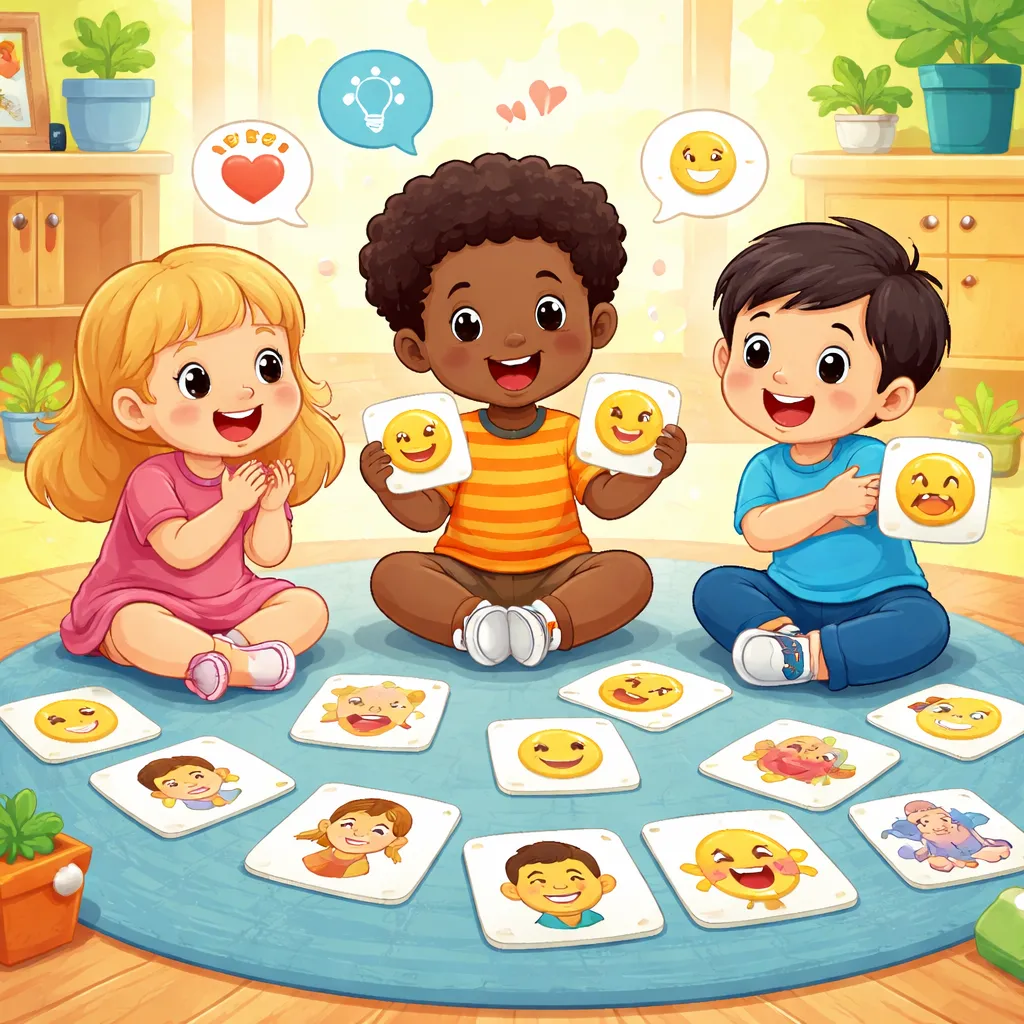

Children love to describe things. They talk about exciting games, broken toys, and tired puppies. These describing words often come from verbs. They are called participles. Present participles end in -ing and describe ongoing actions. Past participles often end in -ed and describe completed actions or feelings. Today we explore the 70 most common participles for 6-year-old children and how these words add color to their descriptions.
Participles are special because they come from verbs but act like adjectives. A jumping frog uses jumping to describe the frog. A broken toy uses broken to describe the toy. These words help children paint pictures with language.
What Are Participles?
Let us begin with a clear definition we can share with our children. Participles are words that come from verbs and can describe nouns. They often end in -ing or -ed. Running water, baked cookies, excited children – these all use participles.
Think of participles as verb words that have gone to work as describers. The verb run becomes running to describe water. The verb bake becomes baked to describe cookies. The verb excite becomes excited to describe children. They keep their verb family but do a new job.
There are two kinds of participles. Present participles end in -ing. They describe actions happening now or things that cause feelings. "A sleeping baby." "An amusing story." Past participles often end in -ed but can have other endings. They describe completed actions or things that receive feelings. "A tired mom." "A broken toy."
For young children, we can explain it simply. Participles are describing words that come from action words. They help us say more about people, animals, and things. The 70 most common participles for 6-year-old learners are the ones children use every day to describe their world.
Meaning and Explanation for Young Learners
How do we explain participles to a six-year-old in ways they understand? We use examples from their world and show how these words describe.
Tell your child that sometimes we take an action word and turn it into a describing word. Run becomes running to describe things that run. "A running dog." Jump becomes jumping. "A jumping frog." Bake becomes baked. "Baked cookies." The words help us describe.
Here are some present participles children use. "A smiling baby." The baby is smiling. "Falling leaves." The leaves are falling. "A shining sun." The sun is shining. Each -ing word describes what something is doing.
Here are some past participles children use. "A tired puppy." The puppy feels tired. "A broken crayon." Someone broke the crayon. "Closed eyes." Someone closed the eyes. Each describes a state or result.
Some participles describe feelings. "I am excited." Excited comes from excite. "She is scared." Scared comes from scare. "He is bored." Bored comes from bore. These describe how we feel.
These explanations help children understand the 70 most common participles for 6-year-old speakers. They see that verbs can become describers.
Categories of Participles
Participles fall into two main categories: present and past. Each has its own job and meaning.
Present participles end in -ing. They describe ongoing actions. "A running child." "Falling snow." "A singing bird." They also describe things that cause feelings. "An exciting game." The game causes excitement. "A boring movie." The movie causes boredom.
Past participles often end in -ed but have irregular forms too. They describe completed actions. "A finished puzzle." "Broken glass." "Closed door." They also describe feelings that result from something. "An excited child." Something excited the child. "A bored student." Something bored the student.
Irregular past participles don't follow the -ed rule. These are very common. "A written note." "Hidden treasure." "A sung song." "Lost toys." "Found money." "Bought presents." Children need to learn these separately.
Participial phrases are groups of words with a participle. "The dog barking loudly woke me up." The phrase describes the dog. "The cookies baked by Grandma were delicious." The phrase describes the cookies.
These categories make up the 70 most common participles for 6-year-old learners. Each helps children describe in different ways.
Daily Life Examples
Participles appear constantly in family conversations. Here are examples from a typical day with a six-year-old.
Morning time brings many participles. "I am a sleepy girl." Past participle describing state. "The shining sun wakes me up." Present participle describing action. "I want scrambled eggs." Past participle describing prepared food. "My favorite shirt is blue." Favorite is a special case. "I feel excited about today." Past participle describing feeling.
During play, participles multiply. "I have a jumping rope." Present participle describing purpose. "My broken toy makes me sad." Past participle describing damage. "Let's find hidden treasure." Past participle describing secret location. "I am tired of this game." Past participle describing feeling. "That was a surprising move." Present participle describing effect.
Mealtime produces many participles. "I like baked potatoes." Past participle describing cooking method. "Frozen peas are cold." Past participle describing state. "This is burned toast." Past participle describing accident. "I want shredded cheese." Past participle describing preparation. "The steaming soup is hot." Present participle describing action.
Bedtime brings its own participles. "I am exhausted." Past participle describing extreme tiredness. "Read me a bedtime story." Bedtime is compound noun. "I want my favorite blanket." Favorite describes. "I feel relaxed now." Past participle describing calm state. "I had a frightening dream." Present participle describing dream's effect.
Throughout the day, children use participles without thinking about it. The 70 most common participles for 6-year-old children appear again and again in these everyday moments.
Present Participles in Detail
Present participles end in -ing and describe ongoing actions or things that cause feelings.
Describing actions right now. "Look at the running water." The water is running now. "Hear that singing bird?" The bird is singing now. "See the falling leaves?" The leaves are falling now. These describe what is happening at this moment.
Describing what something does regularly. "A flying insect." Insects fly. "A swimming fish." Fish swim. "A climbing monkey." Monkeys climb. These describe typical actions.
Describing the purpose of something. "A washing machine." It washes clothes. "Drawing paper." Paper for drawing. "Playing cards." Cards for playing. The present participle tells what the thing is for.
Describing things that cause feelings. "An exciting game." The game causes excitement. "A boring movie." The movie causes boredom. "A scary story." The story causes fear. These describe the effect something has.
Children use present participles constantly. "I have a cuddly bear." "That's a silly joke." "It's a sparkly princess dress." Each uses an -ing word to describe.
These present participles appear throughout the 70 most common participles for 6-year-old speakers. They add action and life to descriptions.
Past Participles in Detail
Past participles describe completed actions or feelings that result from something.
Regular past participles end in -ed. "Washed hands." "Cleaned room." "Baked cookies." "Finished puzzle." "Closed door." These describe things that have been acted upon.
Irregular past participles are very common. "Broken toy." "Lost sock." "Found money." "Bought present." "Written note." "Sung song." "Hidden treasure." "Eaten food." "Drunk milk." Children need to learn these through exposure.
Describing feelings uses past participles. "I am tired." Something made me tired. "She is excited." Something excited her. "He is scared." Something scared him. "We are confused." Something confused us. These describe emotional states.
Describing states or conditions. "The broken window." It is in a broken state. "Spilled milk." It is in a spilled state. "Fallen leaves." They are in a fallen state. "Closed eyes." They are in a closed state.
Children use past participles constantly. "My favorite cup is chipped." "I want fried eggs." "My lost tooth finally came out." "I have a scraped knee." Each uses a past participle to describe.
These past participles form part of the 70 most common participles for 6-year-old learners. They help children describe results and feelings.
Participles as Adjectives
Participles very often act as adjectives. They describe nouns directly.
Before nouns, participles work like regular adjectives. "A smiling face." "Broken toys." "Excited children." "Falling snow." "Baked goods." They come right before the noun they describe.
After linking verbs, participles describe the subject. "The baby is sleeping." "The toy is broken." "I am excited." "The leaves are falling." "The cookies are baked." The participle follows the verb and describes the subject.
Some participles become so common they are just adjectives. "Interesting" "boring" "exciting" "tired" "scared" "surprised" are now adjectives in their own right. Children learn them as describing words.
The difference between -ing and -ed adjectives is important. -ing describes what causes the feeling. "The movie is boring." It causes boredom. -ed describes who has the feeling. "I am bored." I feel boredom. Children learn this distinction gradually.
Children use participial adjectives naturally. "That game is exciting." "I am excited." "The story was scary." "I was scared." They feel the difference even if they cannot explain it.
These participial adjectives appear in the 70 most common participles for 6-year-old speakers. They add precision to descriptions.
Questions with Participles
Questions often contain participles. Children ask about feelings and descriptions using these forms.
Questions about feelings use past participles. "Are you tired?" Asks about state. "Is she excited?" Asks about feeling. "Were you scared?" Asks about past feeling. "Are they confused?" Asks about confusion.
Questions about causes use present participles. "Is the movie boring?" Asks about effect. "Was the game exciting?" Asks about excitement level. "Is this story scary?" Asks about fear caused.
Questions about objects use participles for description. "Which toy is broken?" Asks about damaged one. "Where are the hidden treasures?" Asks about secret location. "Who ate the baked cookies?" Asks about prepared food.
Questions about ongoing actions use present participles with be. "What are you doing?" Asks about current action. "Is the baby sleeping?" Asks about current state. "Are they coming?" Asks about future action.
Children ask questions like "Are you tired?" "Is this movie scary?" "Where is my broken toy?" "What are you making?" These questions use participles naturally.
These question patterns appear in the 70 most common participles for 6-year-old learners. They help children gather information about states and feelings.
Other Uses of Participles
Participles serve many purposes beyond simple description. Children encounter them in various contexts.
Participial phrases add information. "The dog barking loudly woke me up." The phrase describes which dog. "Tired from playing, I took a nap." The phrase explains why. "Excited about the party, she could not sleep." The phrase gives reason.
Participles in instructions and signs. "Do not enter." "Keep closed." "No smoking." "Wet paint." These use participles to give information concisely.
Participles in compound words. "Sun-dried tomatoes." "Home-made cookies." "Hand-knitted scarf." "Wind-powered fan." The participle combines with another word to describe.
Participles in story titles. "The Lost Kitten." "The Sleeping Beauty." "The Frozen Princess." "The Hidden Treasure." These use participles to create interest.
Participles in songs and rhymes. "Twinkle, twinkle, little star, how I wonder what you are." Not a participle. But "Rock-a-bye baby" has a participle feel. Many nursery rhymes use participial language.
These varied uses appear throughout the 70 most common participles for 6-year-old children. Each adds richness to language.
Learning Tips for Parents
Supporting your child's use of participles happens naturally through conversation. Here are gentle ways to encourage this growth.
Model participles clearly in your own speech. Use both present and past participles naturally. "Look at the shining sun." "I am tired today." "That's an exciting idea." "We have baked cookies." Your child hears these patterns constantly.
Notice participles during read-aloud time. When you encounter a participle in a book, point it out casually. "Listen, the book says 'the sleeping bear.' Sleeping tells us what the bear is doing." Simple observations build awareness.
Ask questions that invite participial responses. "How do you feel?" Invites tired, excited, scared. "What kind of movie was it?" Invites boring, scary, exciting. "What happened to your toy?" Invites broken, lost, found.
Play the feeling game. Name a situation and ask how it makes you feel using participles. "How do you feel when you get a present?" "Excited!" "How do you feel after running?" "Tired!" "How do you feel in a dark room?" "Scared sometimes."
Practice -ing and -ed distinction gently. If your child says "I am boring," you can say "You are bored? The movie is boring, but you are bored." This models the difference naturally.
These tips support mastery of the 70 most common participles for 6-year-old children through natural, positive interaction.
Printable Flashcards for Participle Practice
Flashcards can help children practice participles. Here are ideas for making your own set.
Create picture cards showing actions and states. A running dog for "running." A broken toy for "broken." An excited child for "excited." A sleeping baby for "sleeping." A scary monster for "scary." A scared child for "scared." Pictures make meanings clear.
Create verb cards with base forms. run, break, excite, sleep, scare, bore, tire, close, open, lose, find, bake.
Create participle cards for both forms. running, broken, exciting, exciting? Wait, careful. For excite: exciting and excited. For scare: scary and scared. For bore: boring and bored. For tire: tiring and tired.
How to play with the cards. Lay out picture cards. Ask your child to find the correct participle card that describes each picture. The running dog matches "running." The broken toy matches "broken."
Try the matching game for -ing and -ed pairs. Match "exciting" with "excited." Talk about the difference. Exciting games make excited children. Match "scary" with "scared." Scary movies make scared viewers.
Create sentence building. Use sentence starters like "The ___ dog" and have child choose running or tired based on the picture. "The ___ toy" choose broken or shiny. Practice choosing the right participle.
These flashcards make the 70 most common participles for 6-year-old learners tangible and fun. Children see how participles describe.
Learning Activities and Games
Games make learning about participles playful and memorable. Here are some activities to enjoy together.
The I Spy Game practices participles. Look around and spy things using participles. "I spy something shining." "I spy something broken." "I spy someone sleeping." "I spy something hidden." Take turns spying and guessing.
The Feeling Game practices -ed participles for emotions. Take turns showing feelings with your face. One person makes a scared face. Others guess "You are scared!" Make excited, tired, surprised, bored faces. Guess the feeling.
The Cause and Effect Game practices -ing and -ed together. One person names something that causes a feeling. "Thunder." The other says how it makes them feel. "I feel scared." "Presents." "I feel excited." "Long car rides." "I feel bored."
The What Happened Game practices past participles. Look at things around the house and describe what happened using participles. "The window is closed." "The milk is drunk." "The toy is broken." "The cookies are eaten." Tell the story of each object.
The Story Building Game uses participles in narratives. One person starts a story with a participle. "There was a hidden treasure." Next person adds. "A brave knight wanted to find it." "He crossed a raging river." "He was tired but kept going." Continue building with participles throughout.
These games turn learning the 70 most common participles for 6-year-old children into active family fun. No pressure, just playful language exploration.
Participles bring language to life. They let children describe actions happening now and states that exist. They help children express feelings and name causes. They turn simple sentences into rich descriptions. Every "running dog" and "broken toy" and "excited child" adds color to communication. The distinction between -ing and -ed takes time to master. Children will mix them up as they learn. Gentle modeling over time will help them internalize the patterns. The next time your child uses a participle correctly, recognize the sophisticated language they are using. They are learning to describe not just what things are, but what they are doing and what has happened to them. This skill will serve them well as they become storytellers, observers, and communicators.