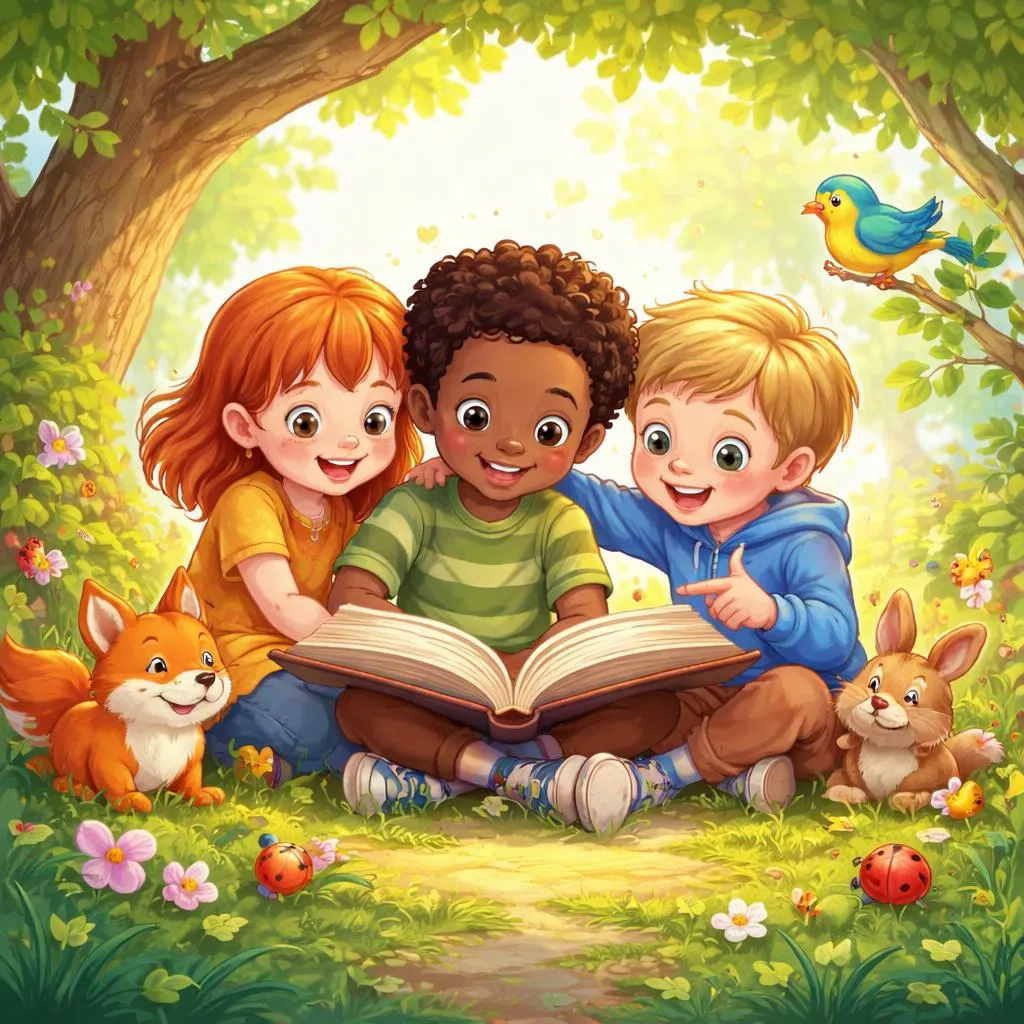

What Is a Children's Story Book About Friendship?
A children's story book about friendship centers on relationships between characters. The plot develops through shared experiences, challenges, and emotional growth. The main focus is connection rather than adventure alone.
These books often feature children, animals, or imaginative figures. The narrative highlights cooperation, empathy, forgiveness, and trust. The storyline remains simple, but the emotional layers are meaningful.
In classroom settings, this type of story supports both literacy and character education. The language becomes a bridge to discuss real social behavior.
Core Themes and Social Meaning
Friendship stories explore emotional intelligence. They show how characters respond to joy, conflict, and misunderstanding. The central theme is not perfection. It is growth.
Common themes include sharing, inclusion, patience, and apology. Many stories show a moment of tension before reconciliation. That structure models healthy conflict resolution.
Through repeated exposure, learners internalize social language. Words such as “trust,” “care,” “promise,” and “support” gain practical meaning. The story context gives emotional vocabulary a living framework.
Narrative Patterns and Common Structures
Most friendship narratives follow predictable structures. This consistency supports comprehension.
One common structure is the “meeting and bonding” pattern. Two characters meet. They share an activity. A small problem arises. They solve it together.
Another structure is “conflict and repair.” Friends disagree. Feelings become hurt. Reflection follows. A sincere apology restores the relationship.
A third structure presents “unexpected friendship.” Two very different characters connect. Their differences create tension, but also strength. This structure teaches acceptance through contrast.
Recognizing these patterns helps learners anticipate events. It also improves story retelling skills.
Real-Life Classroom or Home Scenarios
Friendship stories connect directly to daily experiences.
In a classroom, a learner may hesitate to join a group activity. A story about welcoming a new friend provides language for inclusion. Phrases such as “Would you like to join us?” become functional tools.
At home, siblings may argue over shared items. A story scene about taking turns offers a calm discussion model. Parents or teachers can pause and ask, “What solution did the characters choose?”
During playground time, someone may feel excluded. A narrative about noticing loneliness creates awareness. Learners begin to recognize emotional cues in real situations.
Each scenario extends the book’s message beyond reading practice.
Language Focus: Vocabulary and Grammar in Context
A children's story book about friendship naturally introduces emotional vocabulary.
Common adjectives include “happy,” “lonely,” “excited,” and “disappointed.” These words appear in meaningful context. Instead of memorization, learners observe reactions within the storyline.
Action verbs also play a key role. Words such as “share,” “invite,” “forgive,” and “support” appear repeatedly. Teachers can highlight these verbs and create simple substitution exercises.
Grammar patterns often include modal verbs for polite interaction. Characters ask, “Can I play with you?” or “Could you help me?” These structures reinforce respectful communication.
Causal sentences using “because” frequently appear. For example, “She felt sad because her friend moved away.” This pattern strengthens logical sentence formation.
By linking grammar instruction to narrative moments, language learning becomes purposeful.
Printable Flashcards and Teaching Tools
Printable materials extend story impact.
Emotion flashcards support vocabulary retention. Each card can display one feeling word with a facial expression. On the reverse side, a short sentence from the story reinforces usage.
Dialogue strips provide practical speaking practice. Teachers can print key lines from the story and invite learners to reorder them. This improves sequencing skills.
Character maps also function as visual organizers. Learners label traits such as “kind,” “brave,” or “patient.” This encourages descriptive language use.
These tools transform passive listening into structured reinforcement.
Interactive Learning Activities
Active engagement deepens understanding.
One effective activity is “Emotion Pause.” While reading, pause at a turning point. Ask learners to identify the character’s feeling. Encourage evidence-based answers using story details.
Another strategy is “Alternate Ending.” After a conflict appears, learners propose different solutions. This promotes critical thinking and flexible language use.
Role-play offers strong communicative practice. Pairs reenact a scene using simplified dialogue. The focus remains on tone and polite phrasing.
Small group discussions also work well. Prompt questions such as, “What makes someone a good friend?” encourage reflective language production.
Educational Games
Structured games reinforce key concepts.
“Friendship Bingo” includes actions like “Shared a toy” or “Helped someone.” Learners mark actions observed during the week. This connects vocabulary to lived behavior.
“Matching Emotion Cards” pairs feeling words with scenario cards. Learners justify their matches verbally. This develops reasoning skills.
“Story Sequence Race” challenges groups to arrange printed scenes in order. The activity strengthens comprehension and narrative awareness.
Games maintain energy while preserving educational value.
Stories about friendship offer more than gentle narratives. They provide language for empathy, grammar for respectful interaction, and scenarios for social reflection. When guided with intentional questioning and structured practice, a children's story book about friendship becomes a foundation for both literacy growth and emotional development.