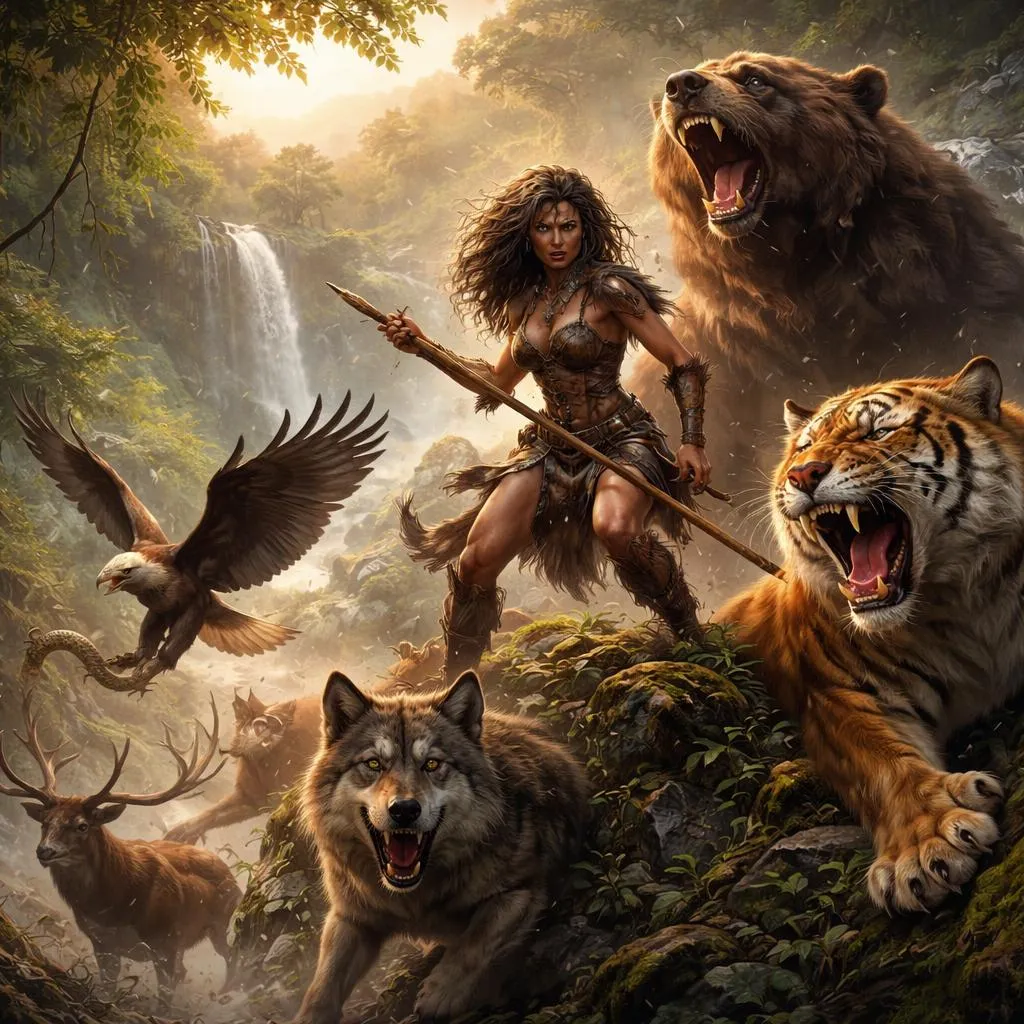

Hello, word explorer! You see a wild fox in the woods. You read about a savage beast in a story. Both seem untamed. But are they the same thing? They are two different kinds of "not tame". One is like a free wind. One is like a fierce warning. Let's discover their secret! Today, we explore the word pair "wild" and "savage". Knowing the difference makes you a word expert. Let's begin.
First, let's be Language Listeners. Listen at home. Here are two sentences. "We saw a wild rabbit in the garden." "The old tale spoke of a savage wolf." Both talk about untamed nature. A rabbit in the garden. A wolf in a tale. Do they sound the same? One sounds natural and free. One sounds scary and fierce. Can you sense the difference? Great listening! Now, let's explore.
Adventure! Into the World of Untamed Things
Welcome to understanding untamed nature. "Wild" and "savage" both mean not tame. But their feeling is very different. Think of "wild" as a free wind. It describes natural things, not controlled by people. A wild flower grows free. Think of "savage" as a fierce warning. It describes something very cruel, violent, or fierce. A savage storm caused damage. Both can describe nature. But "wild" is the free wind. "Savage" is the fierce warning. Let's learn about each one.
A Free Wind vs. A Fierce Warning Think about the word "wild". "Wild" often means natural and free. It is not controlled. The wild horse ran fast. Now, think about "savage". "Savage" means extremely cruel or violent. It is a strong, scary word. The story had a savage giant. We picked wild berries. The savage attack scared everyone. "Wild" is the free wind. "Savage" is the fierce warning.
Natural Freedom vs. Extreme Fierceness Let's compare their core feeling. "Wild" is often neutral or even beautiful. It describes the state of being free. We love wild places. "Savage" is always negative and strong. It describes extreme violence or cruelty. The savage battle was terrible. One describes a natural state. One describes a terrible action.
Their Special Word Partners and Common Uses Words have best friends. "Wild" often partners with words for nature and freedom. Wild animal. Wild flowers. The wild. Go wild. "Savage" often partners with words for violence and attacks. Savage beast. Savage attack. Savage blow. Note: "Wild" can describe places, animals, or even fun. "Savage" usually describes behavior or actions. A storm can be wild. An attack is savage.
Let's visit a school scene. In science, we study wild animals in their habitats. This describes animals living free in nature. In history, we read about a savage invasion long ago. The word "wild" fits the natural, free animals. The word "savage" fits the cruel, violent attack in history. One is a fact of nature. One is a judgment on action.
Now, let's go to the . The wind felt wild and free during our game. This describes the natural, strong, and free feeling. In our pretend game, the dragon was savage. The word "wild" fits the exciting, free, natural wind. The word "savage" fits the imagined, fiercely cruel dragon. One is an exciting natural feeling. One is a pretend fierceness.
Our Little Discovery So, what did we find? "Wild" and "savage" are different. "Wild" means living or growing in nature. It is not controlled by people. It can be free and beautiful. A wild bird sings. "Savage" means extremely cruel, violent, or fierce. It is a very strong, negative word. The savage lion roared. A storm can be wild. An attack is savage. "Wild" is the free wind. "Savage" is the fierce warning.
Challenge! Become a Word Champion
Ready for a nature test? Let's try your new skills!
"The Best Choice" Challenge Let's imagine a forest scene. The wild deer moved quietly through the trees. This describes the deer in its natural, free state. The hunter told a tale of a savage bear. The word "wild" is the champion for the natural, free deer. The word "savage" is the best choice for the bear described as extremely fierce in a story. One is a description. One is a strong characterization.
"My Sentence Show" Your turn to create! Here is your scene: Watching the weather. Can you make two sentences? Use "wild" in one. Use "savage" in one. Try it! Here is an example: "The wild wind blew the leaves." This describes the strong, natural, free wind. "The savage storm destroyed the old shed." The word "wild" fits the strong, natural wind. The word "savage" fits the extremely destructive storm. Your sentences will show natural force versus destructive force!
"Eagle Eyes" Search Look at this sentence. Can you find the word that could be better? Let's check a home context. "My little brother has a savage imagination when he plays." Hmm. "Savage" means very cruel or violent. A child's imagination is usually not cruel. A better word is "wild". A better sentence is: "My little brother has a wild imagination when he plays." Using "wild" fits the free, uncontrolled, and fun imagination. "Savage" is too strong and negative. Did you spot it? Super thinking!
Harvest and Action! Turn Knowledge Into Your Superpower
Great exploring! We started thinking "wild" and "savage" both meant not tame. Now we know their feeling is very different. "Wild" describes things in their natural, free state. It can be neutral or positive. "Savage" describes extreme fierceness, violence, or cruelty. It is a strong, negative word. You can now describe the untamed world with perfect clarity.
What you can learn from this article: You can now see that "wild" describes things that are natural, free, and not controlled by people, like wild animals or wild places. You can now understand that "savage" is a much stronger word. It describes something extremely fierce, violent, or cruel. You know that a fox is a wild animal. A story might have a savage monster. You learned the key idea: "wild" is about natural freedom; "savage" is about extreme fierceness.
Life practice application: Try your new skill today! Be a word detective. Look at nature. Is it a natural, free thing like a forest, a flower, or an untamed animal? You can call it wild. Are you reading a story or describing something extremely violent, cruel, or fierce? Then you might use savage. Remember, wild is for the beautiful, free, natural world. Savage is for extreme and scary actions. Next time you watch a nature show, listen for "wild". When you read a legend, watch for "savage". You are now a master of these words!