
What is the rhyme?
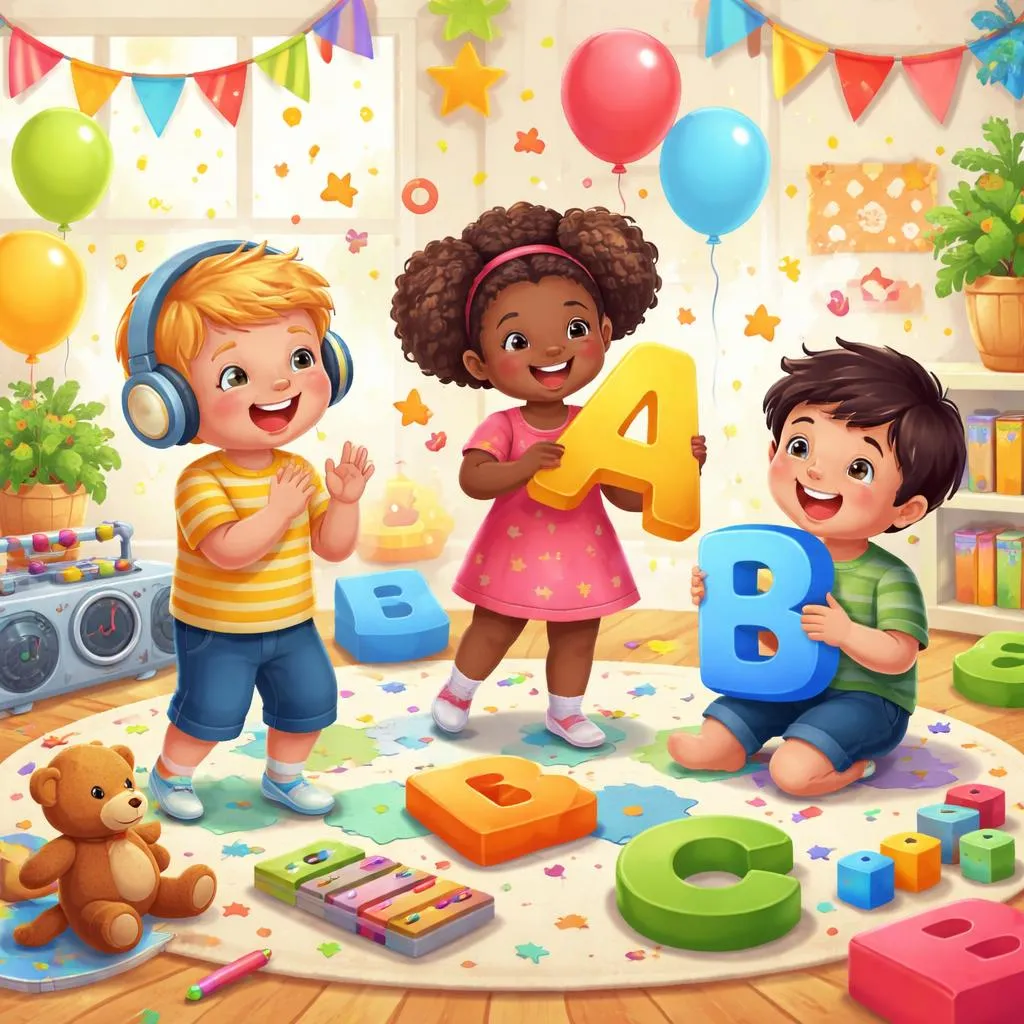
Let's start our reading journey with the most important song of all. The "ABC" or alphabet song is the foundational nursery rhyme for learning English. It sets the 26 letters of the alphabet to the classic tune of "Twinkle, Twinkle, Little Star." This isn't just a fun tune; it's the essential tool that helps children memorize the names and fixed order of all the letters.
Singing about the alphabet turns an abstract set of symbols into a predictable, musical sequence. The rhythm and melody act as a memory aid, making it much easier to recall the letters than by rote memorization alone. This song is often a child's first step into the world of written language, building confidence and providing a shared reference point for all future learning.
The lyrics of nursery rhymes
The lyrics to the classic alphabet song are beautifully straightforward. They are simply the 26 letters, sung in groups to fit the melody:
A, B, C, D, E, F, G, H, I, J, K, L, M, N, O, P, Q, R, S, T, U, V, W, X, Y, and Z. Now I know my ABCs, Next time won't you sing with me?
The grouping (most notably L, M, N, O, P run together) and the familiar tune create a clear mental map. The final two lines provide a joyful sense of accomplishment and an invitation to participate again. Mastering these lyrics gives learners the key to unlocking written words.
Vocabulary learning
The primary vocabulary of this song is, of course, the 26 letter names: A, B, C... through to Z. This is the core set of proper nouns that form the basis of written English. Beyond the names, the song introduces the very concept of sequence and order.
The closing line, "Now I know my ABCs," introduces the important phrase "I know my..." which can be used for other sets (numbers, colors). Learning the alphabet song provides the fundamental vocabulary for all future spelling, reading, and dictionary use. It is the ultimate thematic word list.
Phonics points
While the traditional song teaches letter names, it is the crucial first step toward phonics. Phonics is about linking those letters to their sounds. We can use the song as a starting point for this deeper learning. After singing the letter name, we can practice its most common sound.
For example, after singing "A," we can say, "A says /a/ like in apple." The song's structure allows us to pause and explore each letter. We can also highlight letters with distinctive sounds, like the buzzing /z/ for Z, or the /b/ sound for B. The melody makes this repetitive practice engaging rather than tedious.
Grammar patterns
The alphabet song, in its simplicity, models a fundamental concept: proper nouns. Each letter name is a proper noun and is always written with a capital letter when referred to individually (e.g., "The letter A"). The song reinforces this through consistent capitalization in print.
The final line, "Next time won't you sing with me?" is a polite question in the negative form, inviting participation. It's a gentle, early exposure to question structure and social language. The song itself is a declarative statement of sequence, teaching the grammar of lists and order.
Learning activities
A powerful activity is "Kinesthetic Alphabet." As you sing the song, assign a simple movement to different letter groups. For A-G, clap hands. For H-P, stomp feet. For Q-V, touch your head. For W-Z, spin around. This links physical memory to the auditory sequence.
Another great activity is "Letter Hunt." After singing, give children a specific letter to find in the room. "Who can find something that starts with B?" They might point to a book or a bag. This bridges the gap between the sung letter name and its sound and real-world application, a core principle of phonics.
Printable materials
Printable resources are invaluable. Create "Alphabet Arc" mats. This is a printable sheet with a rainbow arc divided into 26 segments, each with a box for a letter tile. Children can place physical letters (from magnets or tiles) on the arc in order as they sing, building a visual and tactile representation of the alphabet.
"Missing Letter" worksheets are also excellent. Provide rows of letters in sequence, but with one missing in each row (e.g., A, B, __, D). Children write in the missing letter. This moves beyond rote singing to active recall and writing practice, strengthening their mental map of the letter order.
Educational games
Turn practice into play with "Alphabet March." Place letter cards (A-Z) in a large circle on the floor. Sing the song slowly. As you sing each letter, a child walks to that card and stands on it. This physically walks them through the sequence. For a challenge, scramble the cards and have them put the circle in order first.
Play "I Spy The Alphabet." Using an alphabet chart, say, "I spy with my little eye... the letter that comes after G." Or, "I spy the letter that milk starts with." This game tests both letter order knowledge and initial sound awareness, blending the song with early phonics skills.
Mastering the alphabet through song is a joyful rite of passage. It provides the essential framework for all literacy. By pairing the memorable melody with hands-on activities, sensory play, and games, we ensure this knowledge is deep, flexible, and ready to use. The song doesn't just teach letters; it teaches that learning can be musical, social, and full of discovery. This strong, confident start with the alphabet is the best gift we can give a young reader, setting the stage for a lifetime of curiosity about words and the world they create.