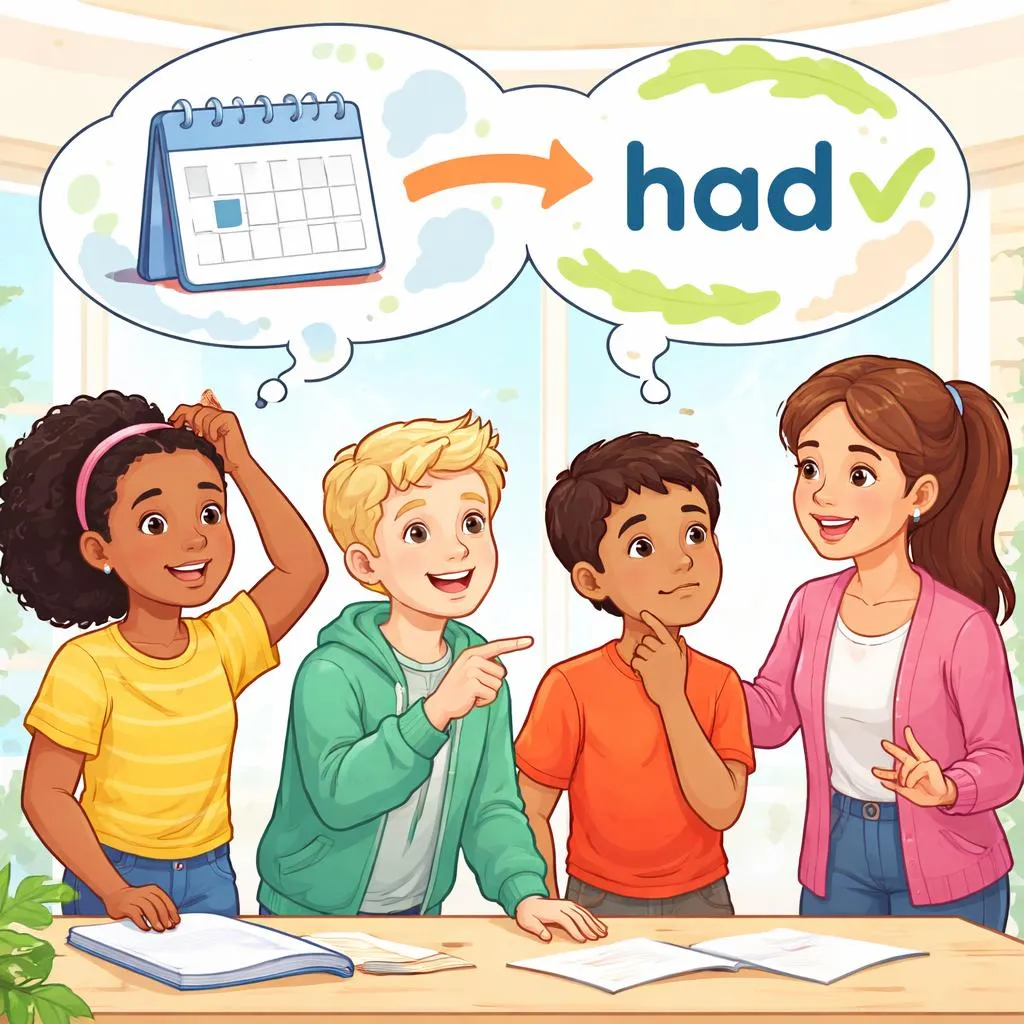

动词“have”在英语中经常出现。孩子们用它来谈论他们拥有的东西。他们用它来描述经历。他们用它作为其他时态的助动词。但是当时间流逝,我们讨论昨天或上周时,“have”必须改变。have的过去式帮助孩子们分享回忆,描述他们以前拥有的东西。它让他们能够讲述关于他们生活的的故事。教授这个语法点可以给孩子们提供工具,让他们自信地谈论他们过去的经历。让我们来探讨一下如何引导年轻的学习者掌握这个重要的语言步骤。
have的过去式的含义 单词“have”表示现在拥有的东西、关系、特征和经历。have的过去式是“had”。这个词适用于所有主语。意思保持不变。只有时间改变。
过去的拥有:这描述了某人以前拥有的东西。“我小时候有一辆蓝色的自行车。”这辆自行车过去属于这个孩子。也许这个孩子现在还有它。也许没有。重点是过去的时间。
过去的关系:这描述了以前存在的关系。“她去年养了一只宠物兔。”这只兔子过去是家庭的一部分。
过去的特征:这描述了以前真实的特征。“他在幼儿园时留着长发。”现在的头发不一样了。
过去的经历:这描述了发生的事情。“我们昨天在公园玩得很开心。”乐趣发生在过去。
过去作为助动词:“Had”帮助构成过去完成时。“她午饭前已经完成了她的工作。”这表明一个过去的动作发生在另一个动作之前。
同一个词“had”涵盖了所有这些含义。孩子们需要理解“现在用have”和“那时用had”之间的联系。像昨天、上周和“我小时候”这样的时间标记有助于明确这一点。
have的过去式的变位 动词“have”是不规则的。它不遵循标准模式。过去式是“had”,适用于每个人。这种简单性对年轻的学习者有帮助。
所有主语的过去式: 我 had 你 had 他 had 她 had 它 had 我们 had 他们 had
没有例外。一个词适用于所有人。这比规则动词容易得多,规则动词对某些主语添加-ed,对其他主语进行更改。孩子们通过这种模式很快就能获得自信。
否定过去式: 我 did not have 你 did not have 他 did not have 她 did not have 它 did not have 我们 did not have 他们 did not have
注意否定形式使用“did not have”。主要动词在否定形式中恢复为“have”。这与肯定陈述不同。孩子们需要练习这种模式。
否定形式的缩写: I didn't have You didn't have He didn't have She didn't have It didn't have We didn't have They didn't have
这些缩写在口语中非常常见。孩子们经常听到它们,并且可以学会自然地使用它们。
过去式的疑问句: Did I have? Did you have? Did he have? Did she have? Did it have? Did we have? Did they have?
在疑问句中,“did”出现在主语之前。主要动词保持为“have”。这种模式与其他过去时态的动词疑问句相匹配。
have的现在时 在教授过去式之前,孩子们需要对现在时有一个扎实的理解。“have”的现在时表示当前的拥有、关系和经历。
现在时的肯定例句: I have a red crayon. You have a new backpack. He has a cold today. She has two sisters. It has a long tail. We have music class now. They have a big house.
现在时的否定例句: I do not have a pencil. You do not have to go. He does not have a brother. She does not have her lunch. It does not have a handle. We do not have enough time. They do not have a car.
现在时的疑问句: Do I have a turn? Do you have a minute? Does he have a pet? Does she have a bike? Do we have homework? Do they have tickets?
每天练习现在时的句子。在课堂上使用真实的情况。“You have blue eyes.”“I have a question.”“She has a new dress.”这为引入过去式打下了坚实的基础。
have的过去式,附带例句 现在我们介绍过去式的“had”。清晰的时间标记帮助孩子们理解何时使用它。
过去的拥有例句: When I was little, I had a red tricycle. Last year, she had a different teacher. Before we moved, we had a big garden. My grandfather had an old car. They had a cat when they lived in that house. The school had a playground before the new building.
过去的关系例句: She had a best friend named Lily in kindergarten. He had a pen pal from Mexico last year. We had a wonderful babysitter when we were small. They had neighbors who gave them cookies.
过去的特征例句: The baby had blue eyes when she was born. He had curly hair before his first haircut. The house had a red door originally. She had a high voice when she was little.
过去的经历例句: We had pizza for lunch yesterday. I had a dream about flying last night. They had a party for their dog's birthday. She had a stomach ache this morning. He had fun at the playground after school.
过去作为助动词的例句: I had finished my work when Mom arrived. She had eaten lunch before the field trip. They had already seen that movie. We had packed our bags the night before.
注意每个句子都包含一个清晰的过去时间标记。这有助于孩子们理解动作发生的时间。“had”这个词表示拥有、关系或经历发生在现在之前。
将来时态与have 用“have”谈论将来时使用“will have”或“going to have”。
Will have的例句: Tomorrow, I will have a spelling test. Next week, she will have a dance recital. Someday, we will have our own house. They will have a party for their anniversary. He will have a baby sister in the spring.
Going to have的例句: I am going to have ice cream after dinner. She is going to have a birthday party. We are going to have a field trip next month. They are going to have visitors this weekend. It is going to have a new battery soon.
将来时的否定形式: I will not have time to play. She won't have homework tonight. We are not going to have school on Monday. They will not have enough chairs.
像tomorrow、next week和soon这样的时间标记表示将来。这些词帮助孩子们理解动作发生的时间。
have的过去式的疑问句 用“had”构成疑问句使用“did”作为助动词。这种模式与其他过去时态的动词相匹配。
是或否的疑问句: Did you have a good weekend? Did she have breakfast this morning? Did they have fun at the party? Did he have a cold last week? Did we have homework yesterday? Did it have a scratch on it?
信息疑问句: What did you have for lunch? Where did she have her birthday party? When did they have their test? Why did he have to leave early? How many pets did you have when you were little? Who did you have for a teacher in kindergarten?
答案练习: Yes, I did. No, I did not. Yes, she had pizza. No, they did not have time. Yes, we had fun. No, it did not have a price tag.
在对话中练习这些疑问句模式。询问孩子们过去的经历。他们早餐吃了什么?他们周末过得好吗?这种个人联系使语法变得有意义。
采访活动:孩子们互相采访关于过去的拥有和经历。提供问题卡。“Did you have a pet when you were little?”“What did you have for your last birthday?”伙伴们提问和回答。与全班分享有趣的答案。
had的其他用法 “Had”除了have的过去式外,还有其他重要的用法。孩子们在英语学习过程中会遇到这些。
had to表示过去的义务: I had to go to bed early last night. She had to finish her homework before playing. We had to wear uniforms at our old school. They had to wait for the bus in the rain.
这表达了过去的必要性。它是“have to”的过去式。
had better表示强烈的建议: You had better bring an umbrella. It looks like rain. She had better study for the test. We had better leave now or we will be late.
这更高级。它表达了强烈的建议或警告。虽然形式是过去式,但意思是现在或将来。
had在条件句中: If I had more time, I would help you. If she had a car, she could drive us. If we had known, we would have come earlier.
这些句子谈论的是虚构的情况。它们更复杂。在孩子们掌握了基本的过去式含义之后再介绍它们。
had在过去完成时态中: When I arrived, she had already left. They had finished eating before the movie started. He had never seen the ocean until last summer.
这表明一个过去的动作发生在另一个过去的动作之前。使用像already、never和before这样的时间词来使意思清晰。
教授have的过去式的学习技巧 向年轻的学习者教授语法最好使用特定的策略。以下是有效介绍have的过去式的技巧。
使用时间线:在黑板上画一条简单的线。在中间标记“now”。在左边标记“yesterday”。在右边标记“tomorrow”。将“have”放在now处。将“had”放在yesterday处。这种视觉效果有助于孩子们理解时间差异。
与个人经历联系起来:询问孩子们小时候拥有的东西。如果可能,带上婴儿照片。谈论第一个玩具、第一个宠物、第一个卧室。这使语法变得个性化和令人难忘。
使用手势:对于现在时的“have”,指向现在。对于过去式的“had”,向后指过肩膀。始终如一地使用这些手势。孩子们会将动作与时间含义联系起来。
与现在的have进行对比:展示“I have a blue backpack now”和“I had a red backpack last year”之间的区别。这突出了随时间的变化。孩子们喜欢看到事物是如何变化的。
使用故事:阅读简单的图画书,谈论过去的拥有。“When I Was Little” by Jamie Lee Curtis效果很好。停顿并指出“had”的例子。
经常重复:在一天中自然地使用“had”。“Yesterday we had music class.”“Last week you had a different seat.” 频繁的接触有助于这种形式深入人心。
温和地纠正:当孩子们说“have”表示过去时,只需正确地重复即可。“是的,昨天我 had a turn。”不要大惊小怪。温和的示范比明确的纠正更有效。
用于练习的教育游戏 游戏将语法练习变成游戏。以下是练习have的过去式的游戏。
记忆链:开始一个关于过去拥有的东西的记忆链。第一个孩子说“When I was little, I had a teddy bear.”下一个说“When I was little, I had a teddy bear and I had a red bike.”继续添加项目。这同时培养了记忆和过去式的练习。
Then and Now Sorting:准备展示拥有的东西的图片卡。有些显示婴儿用品。有些显示当前的项目。孩子们将卡片分类为“had as baby”和“have now”。讨论差异。
Show and Tell Past Version:孩子们从家里带回他们小时候拥有的东西。一条婴儿毯。一个旧玩具。一张照片。他们展示它并说“I had this when I was little。”这使语法与真实物体联系起来。
Mystery Possessions:一个孩子想到他们过去拥有的东西。其他人问是或否的问题来猜测。“Did you have it outside?”“Did you have it for play?”“Did you have it last year?”这同时练习了疑问句的构成和过去式。
Story Building:开始一个关于过去的故事。“Last weekend, we had...”孩子们轮流完成句子。每个孩子添加一个新想法。“We had a picnic.”“We had ice cream.”“We had fun.”这同时培养了创造力和语法。
Had Bingo:创建带有过去经历的宾果卡。“Had pizza.”“Had a birthday party.”“Had a pet.”孩子们问同学“Did you have pizza last week?”当有人说是时,他们标记方格。这培养了问题练习和社交互动。
Before and After:给孩子们两张卡片。一张写着“before”。一张写着“now”。说出句子。“I had long hair.”孩子们举起正确的卡片。“I have short hair.”他们举起now卡片。这练习了在过去和现在之间进行选择。
Pack the Suitcase Past Version:描述一次过去的旅行。“We went to the beach last summer. What did we have in our suitcase?”孩子们说出物品。“We had swimsuits.”“We had sunglasses.”“We had towels.”这同时培养了词汇和过去式。
have的过去式为年轻的学习者打开了新的世界。他们可以分享对最喜欢的玩具的回忆。他们可以描述过去的经历。他们可以谈论事物是如何变化的。这个语法点直接与他们自己的生活和故事联系起来。通过耐心的教学和大量的练习,“had”成为他们英语的自然组成部分。他们用它来讲述昨天、去年和他们小时候的事情。而这才是关于对他们来说重要的事情的真实交流。