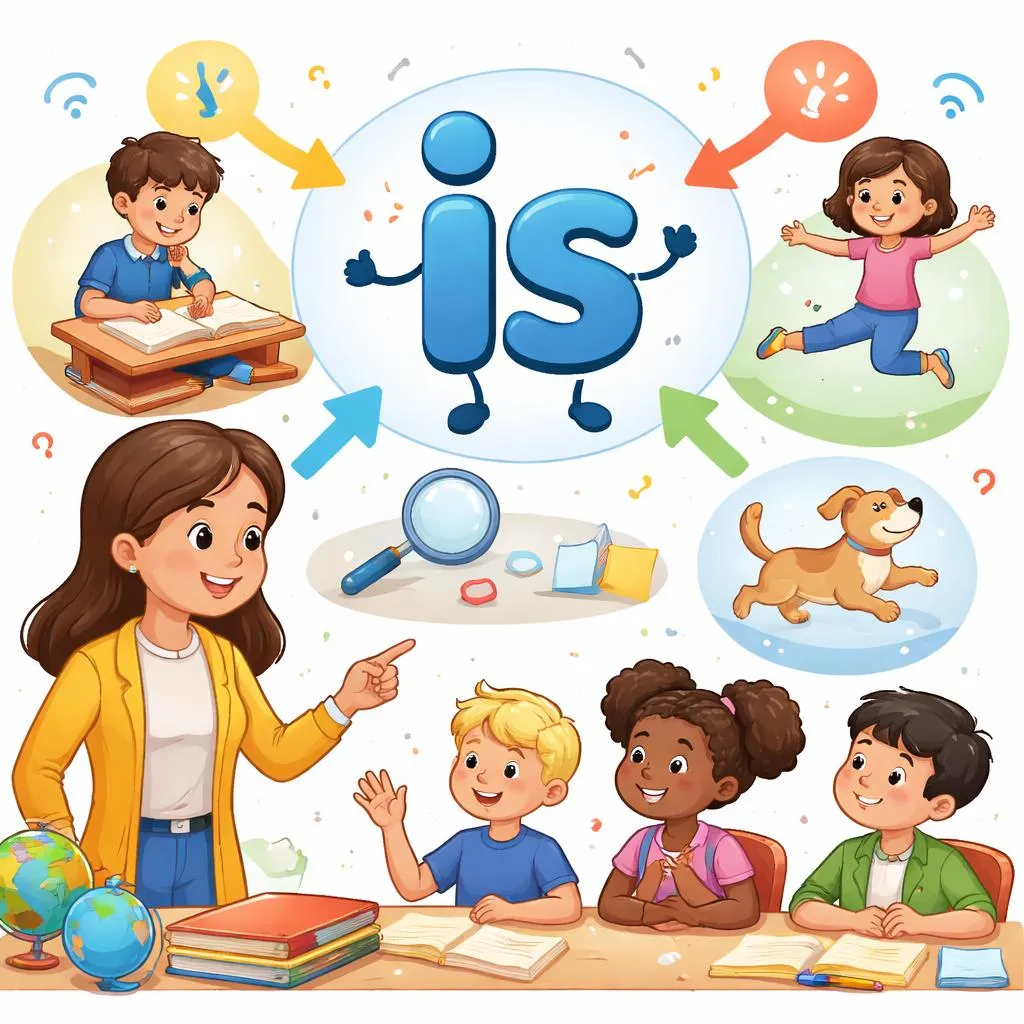

“is”这个词在英语中经常出现。孩子们从小就听到这个词。“It is time to eat.”“She is happy.”“This is a book.”但是,这个小词的作用是什么呢?了解“is”是一个动词可以帮助孩子们构建正确的句子。它将主语与描述联系起来。它说明事物是什么。教动词“is”为孩子们未来的所有语法学习奠定了基础。让我们通过清晰的解释和引人入胜的活动,探索如何引导年轻的学习者掌握这个重要的语法点。
“Is”作为动词的含义
单词“is”是动词“to be”的一种形式。它是一个系动词。它将句子的主语与关于该主语的信息联系起来。它不表示动作。它表示存在状态。
Is 说明某物是什么:
A dog is an animal. This apple is red. She is my teacher.
Is 说明某物的感觉:
The baby is happy. He is tired. It is cold outside.
Is 说明某物在哪里:
The book is on the table. Mom is at work. The park is near school.
Is 说明某人是谁:
He is my brother. She is a doctor. It is a cat.
对于年轻的学习者,解释说“is”就像数学中的等号。它连接两个相同的事物。“The sky is blue”表示天空等于蓝色。这种简单的比较有助于孩子们理解这个功能。
当“is”单独作为句子中的主要动词时,它总是一个动词。 The cat is soft. (is = verb) She is reading. (is = helping verb, reading = main verb)
在第二个例子中,“is”帮助另一个动词。它仍然是一个动词,但它的工作不同。
“Is”的变位
动词“is”是动词“to be”的一部分。它会根据不同的主语和时态而变化。
to be的现在时形式:
I am You are He is She is It is We are They are
to be的过去时形式:
I was You were He was She was It was We were They were
to be的将来时形式:
I will be You will be He will be She will be It will be We will be They will be
带有 is 的否定形式:
He is not (he isn't) She is not (she isn't) It is not (it isn't)
带有 is 的疑问形式:
Is he? Is she? Is it?
形式“is”只出现在现在时中,用于 he、she 和 it。这使得它更容易作为一个单独的概念来教授。孩子们了解到“is”与一个人或一件事一起使用,而不是与 I 或 you 或 we 一起使用。
“Is”的现在时
带有“is”的现在时描述现在为真的事情。这是年轻学习者最常见的用法。
带有 is 的肯定陈述:
He is tall. She is happy. It is a sunny day. The cat is sleeping. My name is Sam. This book is new. The sky is blue.
带有 is 的否定陈述:
He is not hungry. She is not at school. It is not raining. The dog is not outside. This pencil is not sharp. The milk is not cold. The movie is not scary.
带有 is 的缩写:
He's tall. (he is) She's happy. (she is) It's sunny. (it is) That's my book. (that is) Here's your coat. (here is)
带有形容词的 is:
The car is red. The girl is kind. The weather is nice. The food is hot.
带有名词的 is:
He is a teacher. She is my friend. It is a cat. This is a pencil.
带有介词短语的 is:
The book is on the table. Mom is at the store. The park is near school. The children are in the classroom. (are for plural)
在日常生活中练习这些句子。指着一个男孩说“He is Juan”。指着一个女孩说“She is Maria”。举起一支红色的蜡笔说“It is red”。这会将语法与真实的课堂生活联系起来。
“Is”的过去时
“is”的过去形式是“was”。这描述了之前的事情。
带有 was 的过去时:
He was tired yesterday. She was at the park last week. It was a cold morning. The cat was hungry this morning. My name was different when I was little. The book was on the table. The sky was cloudy.
带有 was 的过去时否定形式:
He was not at school yesterday. She was not happy about the news. It was not raining this morning. The dog was not in the yard. The pencil was not on the desk. The milk was not cold enough. The movie was not good.
过去时的缩写否定形式:
He wasn't at school. She wasn't happy. It wasn't raining.
过去时带有形容词的 was:
The car was red before we painted it. The girl was kind to everyone. The weather was nice last week. The food was hot when it arrived.
过去时带有名词的 was:
He was a teacher before he retired. She was my friend in kindergarten. It was a puppy when we got it.
使用清晰的时间标记与过去时。Yesterday, last week, this morning, when I was little。这些词表明时间已经过去。孩子们学会将“was”与这些时间词一起使用。
“Is”的将来时
将来时对所有主语都使用“will be”。这包括 he、she 和 it。
带有 will be 的将来时:
He will be five years old tomorrow. She will be at the party on Saturday. It will be sunny next week. The cat will be hungry after playing. The book will be on the shelf later. The sky will be dark at night.
带有 will not be 的将来时否定形式:
He will not be at school tomorrow. She will not be late again. It will not be cold in July. The dog will not be outside in the rain. The movie will not be scary.
将来时的缩写:
He'll be five. (he will) She'll be at the party. (she will) It'll be sunny. (it will) He won't be at school. (will not) She won't be late. (will not) It won't be cold. (will not)
带有 going to 的将来时:
He is going to be a doctor someday. She is going to be happy with her gift. It is going to be a long day.
将来时的时间标记包括 tomorrow, next week, on Saturday, later, someday。这些词帮助孩子们理解动作发生的时间。
带有 Is 的疑问句
用“is”构成疑问句遵循一个简单的模式。将“is”移到句子的开头。
带有 is 的是非问句:
Is he your brother? Is she a teacher? Is it time to go? Is the cat sleeping? Is this your pencil? Is the sky blue today? Is the milk cold?
带有 is 的信息问句:
Where is he? Who is she? What is it? Why is the dog barking? When is the party? How is your mom? What color is the car?
过去时带有 was 的疑问句:
Was he at school yesterday? Was she happy about the news? Was it raining this morning? Was the dog outside? Was the pencil on the desk?
将来时带有 will be 的疑问句:
Will he be at the party? Will she be ready on time? Will it be sunny tomorrow?
练习回答:
Yes, he is. No, she is not. Yes, it is time. No, the cat is not sleeping. Yes, this is my pencil. No, the sky is not blue today. Yes, the milk is cold.
在日常生活中练习提问模式。询问孩子们的感觉。“Is she happy today?”询问物体。“Is this a crayon?”询问地点。“Where is the teacher?”这使得问题变得自然而有意义。
“Is”的其他用法
“Is”除了描述事物外,还有其他重要的用途。孩子们在进步的过程中会遇到这些。
Is 用于年龄:
He is five years old. She is six today. The baby is one year old.
Is 用于时间:
It is three o'clock. It is time for lunch. Today is Monday.
Is 用于天气:
It is sunny outside. It is cold this morning. It is raining again.
Is 用于感觉:
He is happy about the party. She is sad today. The dog is excited.
Is 用于身份:
This is my friend. That is a dog. She is the teacher. He is the doctor.
Is 在 there is / there are 中:
There is a book on the table. There is a bird in the tree. There is milk in the fridge.
这种结构引入了存在。孩子们学习说出存在于某个地方的东西。
Is 在 it is + 形容词中:
It is big. It is small. It is beautiful. It is fun.
这种模式非常常见。孩子们在对话中经常使用它。
Is 作为助动词:
She is reading a book. He is playing outside. It is raining.
在这些句子中,“is”帮助主要动词。它表明动作正在发生。
学习技巧:如何教“Is”作为动词
教“is”是一个动词需要清晰的策略。以下是有效介绍此概念的技巧。
- **从具体例子开始:**在课堂上使用真实的物体。举起一支红色的蜡笔说“It is red”。指着一个男孩说“He is Juan”。孩子们比抽象的例子更能理解具体的例子。
- **使用等号比较:**表明“is”就像数学中的等号。“The sky = blue”变成“The sky is blue”。这种视觉效果有助于孩子们理解连接功能。
- **与动作动词对比:**展示动作动词和“is”的区别。“He runs”表示动作。“He is tall”描述。孩子们了解到两者都是动词,但它们的工作不同。
- **使用图片:**展示人物和物体的图片。问“Who is this?”“What is this?”孩子们用“is”的句子回答。“She is a girl.”“It is a car.”
- **一次教一个主语:**专注于“he is”几天。然后添加“she is”。然后添加“it is”。掌握来自专注的练习。避免一次教所有形式。
- **使用歌曲和歌谣:**创建简单的歌谣。“He is, he is, he is my friend. She is, she is, she is my friend. It is, it is, it is my toy.”节奏有助于记忆。
- **温柔地纠正:**当孩子们说“he are”时,只需正确地重复即可。“Yes, he is tall.”温柔的建模比明确的纠正更有效。
- **使用手势:**指着自己表示“am”。指着一个孩子表示“are”。指着另一个孩子表示“is”。手势在视觉上加强了语法。
用于练习的教育游戏
游戏使语法练习变得快乐。以下是练习“is”作为动词的游戏。
- Is It True? 举起一个物体并做一个陈述。“This is a pencil.”如果为真,孩子们点点头。如果为假,孩子们摇摇头。“This is an elephant.”孩子们大笑并摇头。这建立了理解力。
- Mystery Bag 将一个物体放入袋子中。孩子们提问来猜测。“Is it soft?”“Is it round?”“Is it red?”装袋的孩子用“is”回答。“Yes, it is soft.”“No, it is not round.”这建立了提问练习。
- Who Is It? 在不报出名字的情况下描述房间里的一个孩子。“She has brown hair. She is wearing a blue shirt. She is sitting near the window.”孩子们猜测“Is it Maria?”全班回答“Yes, it is Maria!”或“No, it is not Maria.”
- Match the Picture 给孩子们展示人物、动物和物体的图片卡。给出句子条。“She is a teacher.”“It is a dog.”“He is a firefighter.”孩子们将句子与正确的图片匹配。
- Is Bingo 创建带有图片的人、动物和物体的宾果卡。大声说出句子。“It is a cat.”“She is a doctor.”孩子们覆盖匹配的图片。第一个覆盖一行的人获胜。
- Sentence Building 给孩子们单词卡。他们排列它们以用“is”造句。“The cat is black.”“She is my friend.”“It is a book.”这建立了句子结构。
- Spin and Say 创建一个带有人物、动物和物体图片的旋转器。孩子们旋转并用“is”造句。一张狗的图片变成了“It is a dog”。一张女孩的图片变成了“She is a girl”。
“Is”的常见挑战
年轻的学习者经常在“is”的某些方面苦苦挣扎。了解这些挑战有助于教师提供支持。
- **忘记 is:**一些孩子在没有动词的情况下说“He happy”。提醒他们英语需要一个动词。“He is happy。”对完整的句子进行建模。
- **将 is 与 I 一起使用:**孩子们可能会通过过度概括说“I is happy”。解释说 I 使用“am”。单独练习“I am”句子。
- **混淆 is 和 are:**孩子们可能会说“They is playing”。解释说 they 使用“are”。使用手势来显示一个与多个的区别。
- **忘记缩写:**孩子们可能总是使用完整的形式。在对话中自然地引入缩写。“He's”通过重复变得舒适。
- **没有 is 的问题:**孩子们可能会用升调说“He is happy?”,但没有语序变化。对正确的形式进行建模。“Is he happy?”
- **混淆 is 和 has:**一些孩子说“He is a car”时,他们的意思是“He has a car”。对比这些含义。“He is a boy. He has a car.”
耐心地解决这些挑战。孩子们通过接触和练习来学习,而不是仅仅通过纠错来学习。
了解“is 可以是一个动词”是英语语法中的一个基本概念。这个小词将主语与描述联系起来。它说明事物是什么以及它们的感觉。它出现在问题和答案中。很好地教授这个概念可以给孩子们建立更长句子的信心。他们学会描述他们的世界。他们学会询问他们想知道的事情。他们学会表达感受和想法。通过歌曲、游戏和日常练习,“is”成为他们英语的自然组成部分。而这才是真正交流的开始。