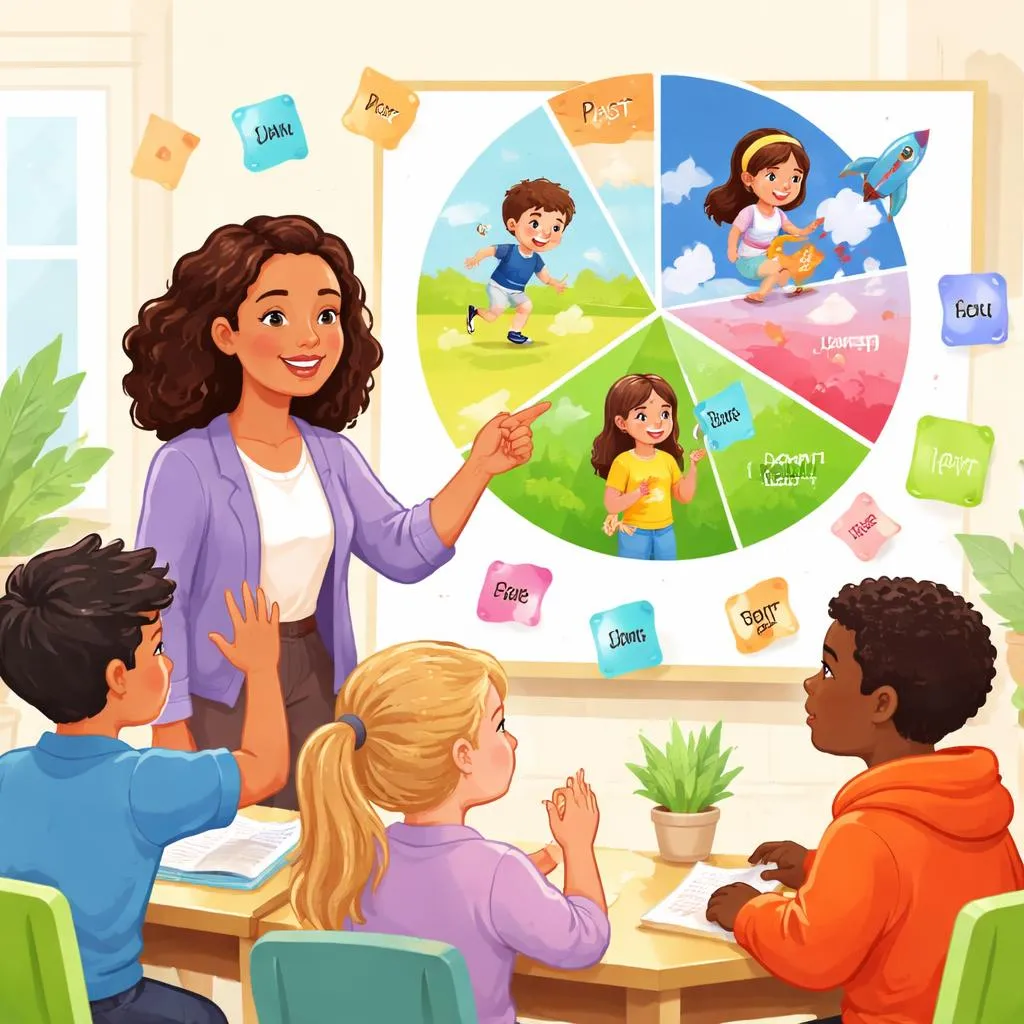

动词“have”在英语中随处可见。孩子们在课堂上经常听到它。“Do you have a pencil?”“I have a question.”“We have finished our work.” 了解如何正确使用“have”的不同时态对于年轻的学习者来说至关重要。这个动词有很多用途。它表示所有格。它有助于构成完成时态。它出现在常用表达中。掌握 have 动词时态家族可以为孩子们提供清晰地表达过去、现在和未来的工具。让我们探讨如何引导年轻的学习者学习这个重要的语法领域。
动词 Have 的含义 动词“have”在英语中具有几个重要的含义。理解这些含义有助于孩子们在不同的情况下正确使用它。
所有格:这是年轻学习者最常见的含义。“I have a red ball.”“She has two sisters.”“They have a big house.” 这个动词表示某人拥有或持有某物。
关系:“I have a mother and father.”“He has a best friend.” 这与家庭和社会关系有关。
特征:“She has blue eyes.”“The elephant has big ears.” 这描述了特征和品质。
动作和经历:“We have breakfast at eight.”“I have a headache.”“They have fun at the park.” 在这里,“have”与名词结合来描述活动或状态。
助动词:“Have”有助于构成完成时态。“I have eaten lunch.”“She has gone home.” 在这个角色中,它不携带自己的含义。它支持主要动词。
一次教这些含义可以防止混淆。从所有格开始。随着孩子们获得信心,逐渐转向其他用法。
Have 的变位 动词“have”是不规则的。它不遵循标准模式。年轻的学习者需要清晰的图表和大量的练习。
原形:have
现在时形式: I have You have We have They have He has She has It has
过去时形式:had 用于所有主语
过去分词:had
现在分词:having
he、she 和 it 从“have”变为“has”非常重要。孩子们一开始经常忘记这一点。温和的纠正和重复有助于建立正确的模式。
过去式“had”很简单,因为它对每个人都保持不变。这种一致性为现在时带来的挑战提供了一个很好的休息。
Have 的现在时 “have”的现在时经常出现在课堂语言中。教好它为所有其他用法奠定了基础。
肯定句: I have a blue backpack. You have a new teacher. We have music class today. They have two pet cats. He has a cold this morning. She has a beautiful voice. It has four legs and a tail.
否定句: I do not have a ruler. You do not have to go. We do not have any juice. They do not have a car. He does not have a brother. She does not have a pencil. It does not have a handle.
注意否定用法“do not”和“does not”加上“have”。主要动词保持为“have”。只有助动词发生变化。
口语中的缩写: I've, you've, we've, they've 用于肯定。 He's, she's, it's 用于肯定(小心不要与“is”混淆)。 Don't have, doesn't have 用于否定。
在日常生活中每天练习现在时。问孩子们他们的桌子里有什么。谈论班级日程表上有什么。这会将语法与现实生活联系起来。
Have 的过去时 过去时“had”适用于所有主语。这种简单性使其比现在时更容易。
肯定句: I had a red bike when I was little. You had a turn already. We had pizza for lunch yesterday. They had a party last week. He had a stomach ache this morning. She had long hair in kindergarten. It had a scratch on the door.
否定句: I did not have time to finish. You did not have to come early. We did not have enough chairs. They did not have a choice. He did not have his shoes. She did not have her lunch. It did not have a battery.
否定句遵循与现在时相同的模式。对每个人都使用“did not have”。主要动词保持为“have”而不是“had”。
过去的疑问句: Did you have fun at the park? Did she have a good birthday? Did they have homework last night? What did he have for breakfast?
时间标记帮助孩子们理解何时使用过去时。使用像 yesterday、last week、this morning、when I was little 这样的词。这些信号提醒孩子们从现在时切换到过去时。
带有 Have 的将来时 用“have”谈论未来使用“will have”或“going to have”。
Will have: I will have a test tomorrow. You will have a new teacher next year. We will have lunch at noon. They will have a party on Saturday. He will have a baby sister soon. She will have a dance recital. It will have a new cover.
Going to have: I am going to have ice cream later. You are going to have a surprise. We are going have a field trip. They are going to have visitors. He is going to have a checkup. She is going to have piano lessons. It is going to have a flat tire.
否定形式在助动词后添加“not”。 I will not have time. She is not going to have cake.
未来时间标记包括 tomorrow、next week、later、soon、on Saturday。这些词表示动作尚未发生。
带有 Have 的问题 用“have”构成问题遵循孩子们可以通过练习学习的模式。
现在时问题: Do I have to go now? Do you have a minute? Does he have a sister? Does she have a pet? Do we have enough time? Do they have any money?
现在时,用“have”作为主要动词: Have you any idea? (更正式) Do you have any idea? (更常见)
过去时问题: Did I have a turn? Did you have breakfast? Did he have a good day? Did she have her coat? Did we have a choice? Did they have tickets?
将来时问题: Will you have time later? Will she have a cake? Are you going to have a party? Is he going to have surgery?
带有“have”作为助动词的问题: Have you eaten lunch? Has she finished her work? Had they arrived before us?
通过访谈和调查练习问题形式。孩子们互相询问所有物、经历和计划。这自然地培养了流利性。
Have 的其他用法 除了所有格和时态之外,“have”还出现在许多常用表达中。教这些可以扩大孩子们自然交流的能力。
Have to 表示义务: I have to go to bed at eight. We have to wear uniforms at school. She has to practice piano every day.
这表达了必要性。它比“should”更强,但不如“must”强。
Have + 名词表示活动: Have breakfast, have lunch, have dinner Have a drink, have a snack Have a bath, have a shower Have a party, have fun Have a dream, have a nightmare Have a walk, have a swim
这些组合非常常见。孩子们将它们作为块而不是分析每个单词来学习它们。
Have got: I have got a new book. (与 I have 相同) She has got blue eyes. (与 she has 相同)
这种形式在英式英语中更常见。美式英语更喜欢单独使用“have”。两者都是正确的。
Have + object + verb: I will have him call you. She had her hair cut. We had the car washed.
这些因果用法更高级。在孩子们掌握基本形式后介绍它们。
教学 Have 的学习技巧 教 have 动词时态家族需要耐心和创造力。以下是一些对年轻学习者很有效的策略。
从所有格开始:这是最具体的含义。孩子们理解拥有东西。在课堂上使用真实的物体。“I have a book.”“You have a crayon.” 边说边指着物体。
使用图表和颜色:创建一个大型课堂图表,显示“have”的所有形式。对主语进行颜色编码。I、you、we、they 用绿色。he、she、it 用红色。孩子们可以在忘记时参考它。
单独教“has”:第三人称单数会引起最多的错误。在 he、she、it 上花更多的时间。用很多例子练习。使用人和动物的图片。
连接到日常活动:谈论孩子们午餐盒里有什么。讨论班级日程表上有什么。询问宠物有什么。真实的话题使语法有意义。
使用歌曲和圣歌:为“have”和“has”创建简单的圣歌。“I have, you have, we have, they have. He has, she has, it has.” 将其设置为简单的旋律。重复有助于它坚持下去。
温和地纠正:当孩子们说“he have”时,只需正确重复即可。“是的,他有一件蓝色衬衫。” 不要大惊小怪。温和的建模比明确的纠正更有效。
用于练习的教育游戏 游戏将语法练习变成游戏。以下是一些用于练习 have 动词时态的游戏。
Have You Ever Bingo:创建带有体验的宾果卡。“Ridden a horse.”“Eaten sushi.”“Been to the beach.” 孩子们问同学“Have you ever...”并标记方格。这自然地练习了现在完成时。
What's in the Bag:将一个物体放在一个袋子里。孩子们问是或否的问题来猜测。“Does it have fur?”“Does it have wheels?”“Does it have a handle?” 这练习了用“have”来描述特征。
Memory Chain:开始一个记忆链。“I have a cat.” 下一个孩子说“She has a cat and I have a dog.” 继续添加项目。这练习了用“have”来表示所有格并建立记忆力。
Teacher for a Day:孩子们假装是老师。他们告诉班级他们必须做什么。“You have to sit quietly.”“You have to raise your hand.”“You have to finish your work.” 这练习了用“have to”来表示义务。
Picture Description:展示包含许多细节的复杂图片。孩子们用“have”描述他们所看到的。“The house has a red door.”“The family has three children.”“The dog has floppy ears.” 这将观察和语言结合在一起。
Yesterday and Today:给孩子们两张卡片。一张写着“yesterday”。一张写着“today”。说出句子。“I have a sandwich.” 孩子们举起正确的卡片。“I had cereal.” 孩子们举起 yesterday 卡片。这练习了在现在时和过去时之间进行选择。
Story Building:用“Once upon a time, there was a family. They had...” 孩子们轮流用“had”添加句子。这在练习过去时的同时培养了叙事技巧。
动词“have”伴随着孩子们整个英语学习之旅。它帮助他们谈论他们的世界。它通过问答将他们与他人联系起来。它让他们分享经验并制定计划。掌握 have 动词时态家族可以给孩子们带来信心和流利性。他们可以说出他们拥有的、他们需要的以及他们所做的事情。那是真正的交流。