
每个句子都需要一个动词。许多句子需要最重要的动词。这个动词就是“to be”。它告诉我们某人是谁。它告诉我们某人的感受。它也告诉我们某物存在于哪里。
现在时:'to be'有三种形式。Am。Is。Are。这三个小词语蕴含着巨大的意义。“我很高兴。”“她是一名医生。”“他们在外面。”
孩子们在任何其他动词之前使用“to be”。“我饿了。”“他是我的朋友。”“我们累了。”他们不会去思考。他们只是说出来。
父母可以通过在日常谈话中注意到“to be”来提供帮助。当你说“今天很冷”时,你使用了“to be”的现在时。当你的孩子说“我五岁了”时,他们也使用了它。
这个动词打破了常规。它不像其他动词那样添加 -s。它完全改变了。Am,is,are。没有模式。只有记忆。
但这没关系。“To be”很短。它很常见。孩子们很快就学会了它,因为他们每天都会听到数百次。
让我们一起探索这个基本的动词。
什么是现在时:'To Be'? 现在时:'to be'描述存在状态。它不显示动作。它显示存在、身份或状况。
把“to be”想象成一个等号。“她是一名老师”意味着她 = 老师。“天空是蓝色的”意味着天空 = 蓝色。“我累了”意味着我 = 疲惫的状态。
英语将“to be”用于许多目的。为了说出你的名字:“我是玛丽亚。”为了说明你的年龄:“他七岁。”为了描述感受:“我们很兴奋。”为了说出事物的位置:“这本书在桌子上。”
其他动词表示动作。跑、跳、吃、睡。“To be”不显示任何动作。它只是将主语连接到更多信息。
孩子们首先学习“to be”,因为它回答了基本问题。“你是谁?”“我是利奥。”“你好吗?”“我很好。”“爸爸在哪里?”“他在工作。”
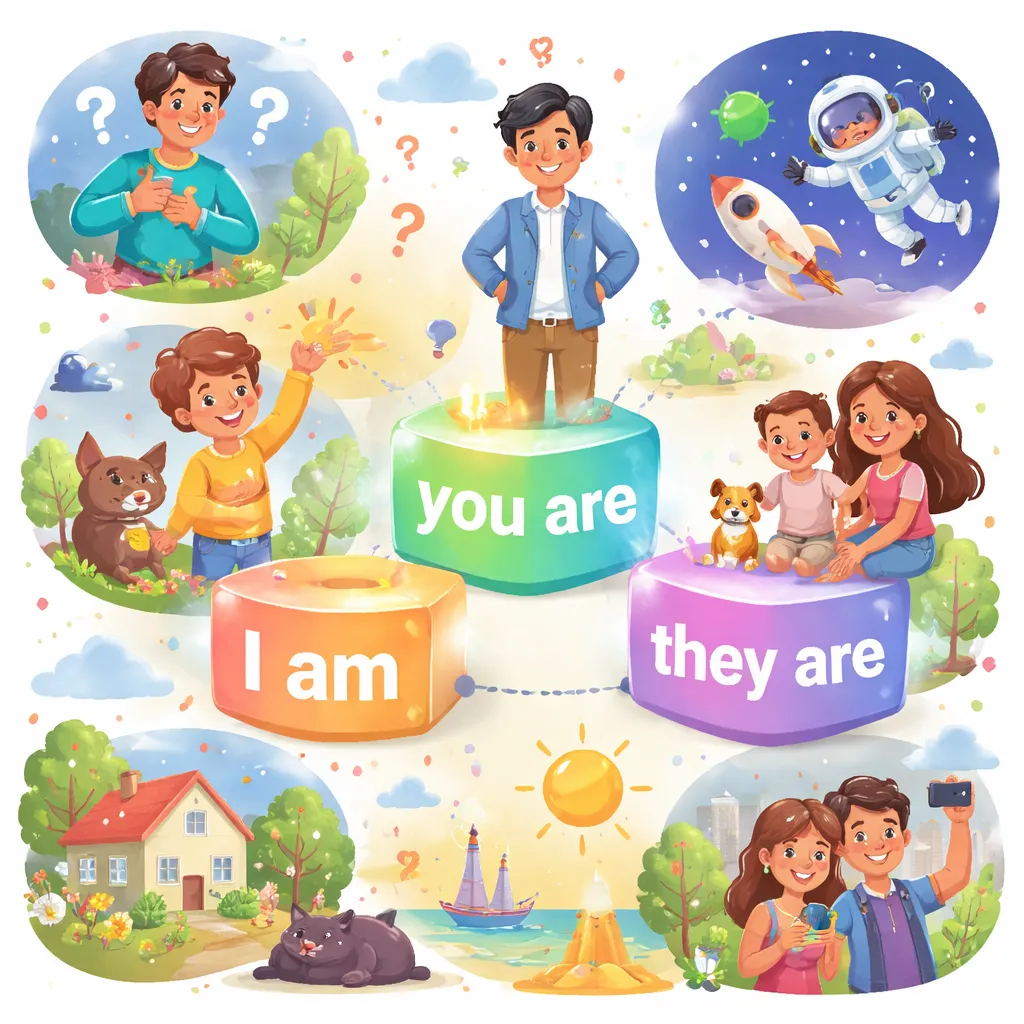
现在时的三种形式是:am,is,are。Am 与 I 搭配。Is 与 he, she, it 搭配。Are 与 you, we, they 搭配。
父母可以指出“to be”的变化比任何其他动词都多。大多数动词为 he/she/it 添加 -s。“To be”完全改变了。这使它变得特别。这也使它值得练习。
名称“现在时:'to be'”提醒我们这是现在的形式。不是过去式(was/were)。不是将来时(will be)。只是现在。
现在时的规则:'To Be' “to be”的规则与其他所有动词都不同。学习这五条规则。它们永远不会改变。
规则一:将 'am' 与代词 I 一起使用 I am a student. I am hungry. I am here. 永远是“I am”。永远不要“I is”。永远不要“I are”。I am 是一对固定的组合。
规则二:将 'is' 与 he, she, it 一起使用 He is my brother. She is a dentist. It is a sunny day. He is. She is. It is. 任何单个人、地点或事物都使用 is。
规则三:将 'are' 与 you, we, they 一起使用 You are my best friend. We are ready. They are late. You 总是使用 are。即使是一个人。“You are kind”对一个人使用 are。
规则四:通过将 am/is/are 移到前面来构成问题 Am I late? Is she sleeping? Are you okay? Where is the bathroom? 不要使用 do 或 does。只需移动动词。“Is he happy?”而不是“Does he be happy?”
规则五:通过在 am/is/are 之后添加 'not' 来构成否定式 I am not tired. He is not here. They are not home. 使用缩写:I'm not, isn't, aren't。“She isn't ready.”“We aren't lost.”
这五条规则涵盖了所有内容。“To be”没有例外。分别练习每条规则。逐一掌握 am, is, are。
如何使用现在时:'To Be' 在八种日常情况下使用现在时:'to be'。每种情况对于家庭对话来说都很自然。
情况一:识别人和事物 告诉某物是什么或是什么。“I am your father.”“This is my house.”“That is a butterfly.”
情况二:描述特征 谈论品质。“She is tall.”“He is funny.”“The soup is hot.”这些描述在“to be”之后使用形容词。
情况三:陈述感受和情绪 分享你的感受。“I am happy.”“We are worried.”“She is excited about the party.”
情况四:给出年龄 说出某人的年龄。“I am eight years old.”“My sister is five.”“They are teenagers.”
情况五:谈论位置 说出某物存在的位置。“The keys are on the table.”“Mom is in the kitchen.”“We are at the park.”
情况六:描述天气 谈论外部条件。“It is rainy.”“The sky is cloudy.”“It is very hot today.”
情况七:陈述职业 说出某人的工作。“She is a teacher.”“He is a firefighter.”“I am a student.”
情况八:表达时间 告诉现在几点。“It is three o'clock.”“It is time for bed.”“Lunch is at noon.”
父母可以整天使用“to be”。“It is time to wake up.”“You are doing great.”“Where is your shoe?”每个句子都自然地进行教学。
孩子们可以在睡前玩“I am...”游戏。说出关于你自己的三件事。“I am tired. I am happy. I am ready for a story.”这同时培养了自我表达和语法。
现在时的例子:'To Be' 大声朗读这些例子。按主题和用法分组。
I am 的例子
I am a kind person.
I am seven years old.
I am in my bedroom.
I am hungry for breakfast.
I am not afraid of the dark.
Am I late for dinner?
he, she, it 的例子
He is my best friend from school.
She is a wonderful painter.
It is a beautiful morning.
The cat is sleeping on the couch.
My grandpa is seventy years old.
Is she your sister?
He isn't feeling well today.
you, we, they 的例子
You are very good at drawing.
We are all ready to go.
They are outside playing soccer.
You are my favorite person.
We are excited about the trip.
Are they coming to the party?
You aren't wearing shoes!
带有 am, is, are 的问题
Am I in the right classroom?
Is the movie starting soon?
Are you listening to me?
Where is my blue backpack?
Why are they so happy?
How old is your dog?
带有 not 的否定式
I am not tired. I am wide awake.
He is not here right now.
She isn't a doctor. She is a nurse.
We are not lost. We know where we are.
They aren't ready yet.
每顿饭前阅读三个例子。让你的孩子把“I am”改成“She is”。把“They are”改成“He is”。这些小的改变可以培养灵活性。
常见错误 这五个错误经常发生。通过练习温和地纠正它们。
错误一:将 is 与 I 一起使用 错误:“I is happy.” 正确:“I am happy.” I 总是使用 am。永远不要 is。这是幼儿最常见的错误。每次都友善地纠正它。
错误二:将 are 与 he/she/it 一起使用 错误:“She are a teacher.” 正确:“She is a teacher.” He, she, it 使用 is。不是 are。单数主语需要 is。
错误三:在问题中忘记 to be 错误:“Where the bathroom?” 正确:“Where is the bathroom?” 问题需要 am, is 或 are。不要省略动词。
错误四:将 do/does 与 to be 一起使用 错误:“Does she be happy?” 正确:“Is she happy?” To be 不使用 do 或 does。而是将动词移到前面。
错误五:混淆 it's 和 its 错误:“The dog wagged it's tail.” 正确:“The dog wagged its tail.”(所有格) 正确:“It's a beautiful day.”(it is) It's = it is。Its = 属于它。所有格没有撇号。
把这些错误写在冰箱上。每次有人发现错误时,他们都会在旁边放一颗星。五颗星可以获得小奖励。这把纠正变成了游戏。
比较:'To Be' 与其他动词 将“to be”与常规动作动词进行比较。它们的工作方式非常不同。
意义差异 To be:描述状态。“I am tired.”(条件) 动作动词:描述动作。“I sleep.”(你做什么)
问题差异 To be:将动词移到前面。“Are you ready?” 动作动词:添加 do/does。“Do you sleep well?”
否定差异 To be:在动词后添加 not。“She is not here.” 动作动词:添加 don't/doesn't。“She doesn't sleep here.”
主语-动词一致性差异 To be:完全改变。I am, he is, you are。 动作动词:仅为 he/she/it 添加 -s。I eat, he eats, you eat。
带有形容词 To be + 形容词:“The flower is red.” 动作动词很少使用形容词。“The flower smells red”是错误的。
给孩子们的一个简单规则:使用“to be”表示事物是如何的。使用动作动词表示事物做什么。
父母可以玩“状态还是动作?”游戏。说一个句子。“The baby sleeps.”动作。“The baby is tired.”状态。“The dog runs.”动作。“The dog is fast.”状态。这个游戏需要两分钟。它培养清晰的思维。
练习题 一起完成这些练习。在纸上写下答案。
练习一:选择 am, is 或 are I ______ a student at this school. She ______ my best friend. They ______ playing in the garden. He ______ a very good cook. We ______ ready for the test. It ______ cold outside today. You ______ so kind to me. The books ______ on the shelf.
练习二:提出问题 将每个陈述变成一个问题。 You are happy. He is a doctor. They are at home. She is seven years old. We are late.
练习三:写否定句 使用 not 将每个陈述变成否定式。 I am tired. She is a teacher. They are ready. He is my brother. We are lost.
练习四:纠正错误 每个句子都有一个错误。正确重写。 I is hungry for lunch. Where the nearest bathroom? She are a wonderful singer. Does he be a firefighter? The dog wagged it's tail.
练习五:用正确的形式填空 24. ______ (I / be) late for school? 25. The children ______ (be) very noisy today.
答案和解释 一起检查你的答案。阅读每个解释。
练习一答案: am (I + am) is (she + is) are (they + are) is (he + is) are (we + are) is (it + is) are (you + are) are (the books = they)
练习二答案: 9. Are you happy? 10. Is he a doctor? 11. Are they at home? 12. Is she seven years old? 13. Are we late?
练习三答案: 14. I am not tired. / I'm not tired. 15. She is not a teacher. / She isn't a teacher. 16. They are not ready. / They aren't ready. 17. He is not my brother. / He isn't my brother. 18. We are not lost. / We aren't lost.
练习四答案: 19. I am hungry for lunch. (I 需要 am) 20. Where is the nearest bathroom? (需要 is) 21. She is a wonderful singer. (She 需要 is) 22. Is he a firefighter? (没有 does。移动 is) 23. The dog wagged its tail. (Its,没有撇号)
练习五答案: 24. Am I late for school? (I + am 以问题形式出现) 25. The children are very noisy today. (children = they)
关键解释: 问题 22 显示了最常见的错误。永远不要将“does”与“to be”一起使用。只需将“is”移到前面。
问题 24 使用“am I”,因为主语是 I。即使在问题中,I 也保留 am。
庆祝每一个正确的答案。冷静地回顾错误。学习“to be”需要时间,对每个人来说都是如此。
学习技巧 让现在时:'to be'成为每次对话的一部分。这七个技巧适用于忙碌的家庭。
技巧一:每天早上从感受开始 早餐时,问“你好吗?”回答“我很高兴。”“我困了。”“我很兴奋。”每个人在一天开始前都练习“to be”。
技巧二:玩“我间谍”游戏,关注位置 “我用我的小眼睛间谍,墙上有什么东西。”“我间谍,桌子下面有什么东西。”这个游戏自然地练习 is 和 are。
技巧三:描述你看到的人 在散步时,描述陌生人。“That man is tall.”“Those children are young.”“The dog is brown.”快速描述反复使用“to be”。
技巧四:使用便利贴表示 am, is, are 在一个蓝色的便利贴上写“I am”。在黄色的便利贴上写“He is / She is / It is”。在绿色的便利贴上写“You are / We are / They are”。把它们贴在墙上。在练习时指向它们。
技巧五:用“to be”唱歌 许多儿童歌曲都使用“to be”。“I am the music man.”“If you are happy and you know it.”“Row, row, row your boat”在“are you listening?”中使用“are”。一起唱。
技巧六:创建一个“关于我”的海报 在顶部写上“I am...”。帮助你的孩子完成句子。“I am 7 years old. I am a sister. I am good at drawing. I am brave.”把海报挂在卧室的门上。
技巧七:带着微笑纠正 当你的孩子说“She are nice”时,说“She is nice。她是一个人。一个人使用 is。你能为我再说一遍吗?”纠正时微笑。没有压力。只是练习。
现在时:'to be'是英语中使用最多的动词。没有它,你就无法进行真正的对话。掌握 am, is 和 are 打开了每一扇门。
每天练习五分钟。描述你的世界。“The sky is blue. The grass is green. I am happy we are learning together.”
现在用“to be”说三个关于这一刻的句子。“I am reading. The words are clear. This lesson is helpful.”你刚刚练习了英语中最重要的动词。继续。你做得很好。