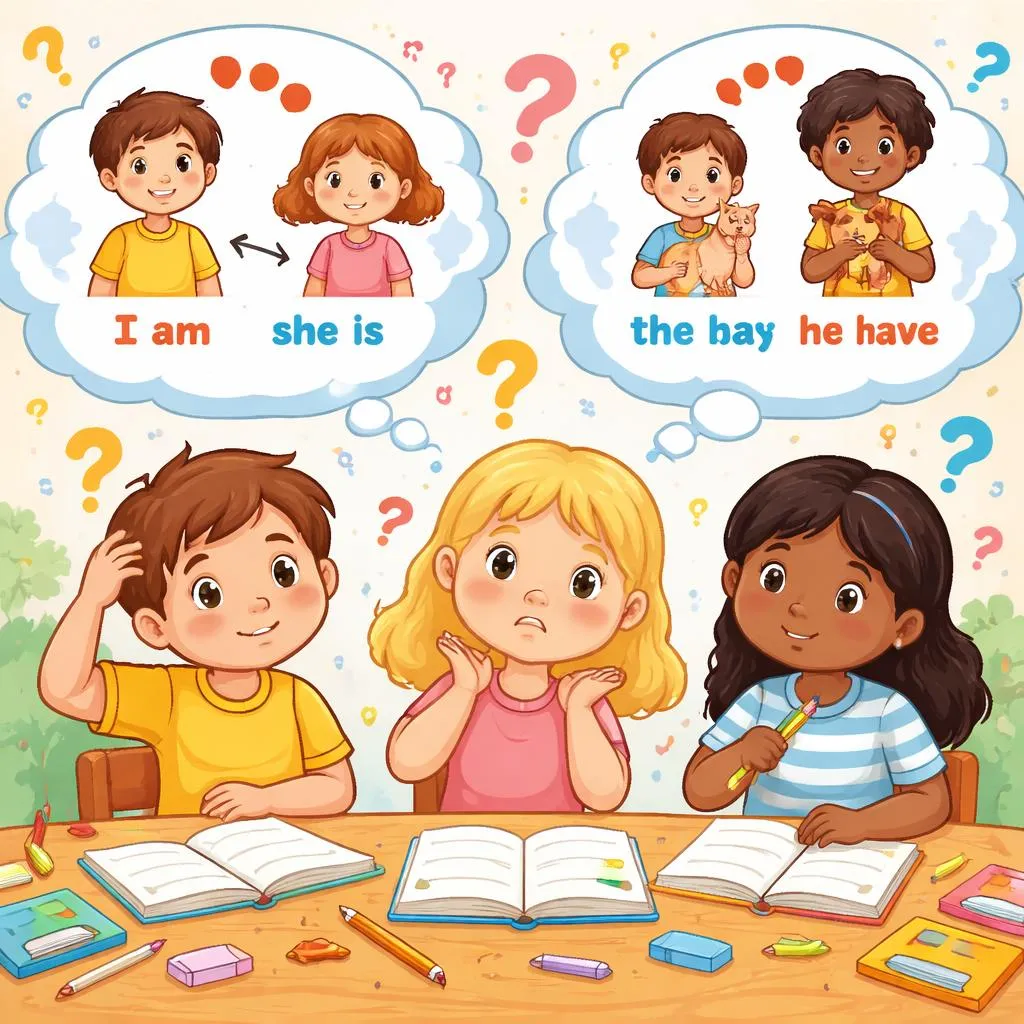

两个小动词给学习英语的孩子带来了很大的挑战。“Be”和“has”在对话中经常出现,但它们有不同的作用,会改变形式,并遵循不同的规则。了解如何正确使用“be”和“has”可以帮助孩子们构建清晰的句子。他们可以描述事物是什么。他们可以谈论人们拥有什么。让我们通过清晰的解释和引人入胜的活动来探讨如何引导年轻的学习者学习这些基本动词。
“Be”和“Has”的含义 动词“be”和“has”的含义非常不同。理解这些含义是正确使用它们的第一步。
Be描述某物是什么。它将主语与关于该主语的信息联系起来。 我很高兴。 她是一名老师。 他们在公园里。 这本书是红色的。
Be不表示动作。它表示存在状态。它告诉我们事物是什么、感觉如何以及它们在哪里。
Has表示拥有或所有权。它告诉我们某人拥有什么。 他有一个蓝色的背包。 她有两个姐妹。 这条狗有一条长尾巴。 它有一个坏掉的把手。
Has也表示关系、特征和经历。 她感冒了。 他有蓝色的眼睛。 我们在公园里玩得很开心。
对于年轻的学习者来说,从这些基本含义开始。“Be”用于描述。“Has”用于拥有。这种简单的对比有助于孩子们理解差异。
Be和Has的变位 这两个动词都是不规则的。它们会根据不同的主语而改变形式。孩子们需要学习这些模式。
Be的现在时: I am You are He is She is It is We are They are
Has的现在时(来自动词have): I have You have He has She has It has We have They have
Be的过去时: I was You were He was She was It was We were They were
Has的过去时(had): I had You had He had She had It had We had They had
Be的否定形式: I am not (I'm not) You are not (you aren't) He is not (he isn't) She is not (she isn't) It is not (it isn't) We are not (we aren't) They are not (they aren't)
Has的否定形式: I do not have (I don't have) You do not have (you don't have) He does not have (he doesn't have) She does not have (she doesn't have) It does not have (it doesn't have) We do not have (we don't have) They do not have (they don't have)
请注意,“has”在否定和疑问句中变为“have”。这是常见的错误来源。
Be和Has的现在时 现在时是孩子们最常使用这些动词的时候。清晰的例子可以帮助他们理解差异。
Be句子(描述): I am tall. You are my friend. He is happy today. She is a doctor. It is a sunny day. We are in the classroom. They are at the playground.
Has句子(拥有): I have a new pencil. You have a blue backpack. He has a pet dog. She has two brothers. It has four wheels. We have music class today. They have a big house.
否定Be句子: I am not tired. You are not late. He is not at school. She is not hungry. It is not cold outside. We are not leaving yet. They are not ready.
否定Has句子: I do not have a ruler. You do not have to go. He does not have a car. She does not have a phone. It does not have a battery. We do not have time. They do not have money.
在日常生活中练习这些句子。指着一个孩子说“He is Juan”。指着他们的背包说“He has a blue backpack”。这自然地对比了这两个动词。
Be和Has的过去时 过去时增加了另一层。“Be”变为“was”和“were”。“Has”变为“had”,适用于所有主语。
过去时Be句子: I was tired yesterday. You were late this morning. He was at the park last week. She was happy about the news. It was cold yesterday. We were in the library. They were at the party.
过去时Has句子: I had a red bike when I was little. You had a turn already. He had a stomach ache. She had long hair in kindergarten. It had a scratch on the door. We had pizza for lunch. They had a party last week.
否定过去时Be: I was not at school yesterday. You were not listening. He was not hungry. She was not ready. It was not raining. We were not late. They were not home.
否定过去时Has: I did not have time. You did not have to come. He did not have his shoes. She did not have her lunch. It did not have a battery. We did not have a choice. They did not have tickets.
使用清晰的时间标记与过去时。Yesterday, last week, this morning, when I was little。这些词语表明时间已经过去。
Be和Has的将来时 将来时使用“will be”表示“be”,使用“will have”表示“has”。
将来时Be句子: I will be five tomorrow. You will be late if you hurry. He will be happy to see you. She will be at the party. It will be sunny next week. We will be in first grade soon. They will be here later.
将来时Has句子: I will have a test tomorrow. You will have a new teacher. He will have a baby sister. She will have a dance recital. It will have a new cover. We will have lunch at noon. They will have a party.
否定将来时: I will not be at school. She will not be happy. We will not have time. They will not have cake.
缩写形式: I'll be, you'll be, he'll be, she'll be, we'll be, they'll be I'll have, you'll have, he'll have, she'll have, we'll have, they'll have I won't be, she won't have, etc.
将来时的时间标记包括tomorrow, next week, later, soon。这些词语帮助孩子们理解动作发生的时间。
Be和Has的疑问句 这两个动词的疑问句形式不同。“Be”移到前面。“Has”需要“do”或“does”。
Be的疑问句: Am I late? Are you ready? Is he your brother? Is she a teacher? Is it time to go? Are we there yet? Are they playing?
Has的疑问句(现在时): Do I have a turn? Do you have a minute? Does he have a sister? Does she have a pet? Does it have a handle? Do we have time? Do they have money?
Has的疑问句(过去时): Did I have a turn? Did you have breakfast? Did he have a good day? Did she have her coat? Did it have a scratch? Did we have a choice? Did they have tickets?
Be的简短回答: Yes, I am. No, I'm not. Yes, he is. No, she isn't. Yes, we are. No, they aren't.
Has的简短回答: Yes, I do. No, I don't. Yes, he does. No, she doesn't. Yes, we did. No, they didn't.
在日常生活中练习疑问句模式。用“be”询问感受。“Are you happy?”用“have”询问所有物。“Do you have a pencil?”这自然地对比了这两个动词。
其他用法和常见混淆 孩子们经常混淆“be”和“has”,因为在许多语言中,两者都翻译成一个动词。清晰的对比有所帮助。
描述与拥有: She is tall. (describes) She has long hair. (possesses a characteristic) He is a doctor. (describes identity) He has a stethoscope. (possesses an object)
年龄: I am five years old. (use be) Not: I have five years.
感受: I am hungry. (use be) I have hunger. (not correct) She is thirsty. (use be) She has thirst. (not correct)
身体状态: I am cold. (use be) I have cold. (means illness, not temperature) He is hot. (use be) He has heat. (not correct)
疾病: I have a cold. (use have) I am cold. (means temperature) She has a headache. (use have) She is headache. (not correct)
事物年龄: The car is five years old. (use be) The car has five years. (not correct)
这些对比非常重要。孩子们需要很多例子来内化正确的模式。
学习技巧,用于教授Be和Has 一起教授这两个动词需要清晰的策略。以下是帮助孩子们区分它们的技巧。
使用“描述与拥有”规则:解释“be”描述事物是什么。“Has”谈论事物拥有什么。这个简单的规则可以帮助孩子们选择。
使用手势:对于“be”,做一个水平手势,就像一个等号。对于“has”,用手做一个握持手势。手势强化了意义的差异。
创建对比图表:制作一个两列图表。一侧是“be”句子。一侧是“has”句子。每天进行比较。
使用图片:展示一个女孩的图片。练习两种类型的句子。“She is happy. She has a red dress.”这显示了两个动词描述同一个人。
温和地纠正:当孩子们说“She is a pencil”时,他们的意思是“She has a pencil”。只需正确地重复即可。“Yes, she has a pencil.”温和的建模比解释更有效。
用真实的物体练习:举起物体并练习这两个动词。“This is a book. It has pictures.”孩子们在语境中看到了差异。
使用歌曲:创作简单的歌曲来对比这两个动词。“I am tall, I have a ball. I am small, I have a doll.”节奏有助于记忆。
用于练习的教育游戏 游戏使语法练习变得愉快。以下是练习“be”和“has”的游戏。
Be或Has排序:创建句子卡。“She is happy.”“He has a dog.”孩子们将它们分成两堆:be句子和has句子。一起检查答案。
描述或拥有比赛:说出一个主语和一个单词。“She / blue eyes.”孩子们比赛说出正确的句子。“She has blue eyes!”“He / tall.”“He is tall!”第一个正确的答案获胜。
图片提示游戏:展示一张有很多细节的图片。孩子们轮流造句。一个孩子使用“be”。“The boy is happy.”下一个孩子使用“has”。“The boy has a ball.”在圈子里继续。
Be和Has神秘袋:将一个物体放入一个袋子里。孩子们问两种类型的问题。“Is it soft?” (be question)“Does it have a handle?” (has question)他们猜测它是什么。
Be和Has宾果游戏:创建宾果卡,其中句子缺少动词。“She ___ a teacher.”“He ___ a bike.”说出“is”或“has”。孩子们覆盖正确的单词。
造句:给孩子们单词卡。他们使用“be”和“has”造句。“The cat is black.”“The cat has green eyes.”这显示了这两个动词如何描述同一件事。
切换它:给出一个使用一个动词的句子。如果可能,孩子们将其更改为使用另一个动词。“She is a mother.”改为“She has a child.”“He has a car.”改为“The car is red.”这建立了灵活性。
常见错误以及如何解决它们 了解常见错误有助于教师提供有针对性的支持。
使用be代替have表示拥有: 错误:“She is a book.” 更正:“She has a book.” 练习:将“She is a girl”与“She has a book”进行对比。
使用have代替be表示描述: 错误:“He has tall.” 更正:“He is tall.” 练习:“He is tall. He has long legs.”
使用have表示年龄: 错误:“I have five years.” 更正:“I am five years old.” 练习:询问孩子们的年龄。模拟正确的答案。
使用be表示饥饿/口渴: 错误:“I am hunger.” 更正:“I am hungry.” 练习:将“I am hungry”与“I have hunger”(不正确)进行对比。
忘记在has的疑问句中使用does: 错误:“Has he a dog?” 更正:“Does he have a dog?” 练习:用“have”造句需要“do/does”。
混淆has和is的缩写形式: “He's”可以表示“he is”或“he has”。语境决定含义。 He's happy. (he is) He's got a dog. (he has) 明确地教导这两种含义。
用耐心解决这些错误。使用重复和多个例子。孩子们通过接触来学习,而不是仅仅通过纠正来学习。
动词“be”和“has”是英语的基本组成部分。孩子们每天都用它们来描述他们的世界,并谈论他们拥有的东西。一起教授这些动词可以帮助孩子们看到对比。他们了解到“be”描述事物是什么。“Has”谈论事物拥有什么。通过清晰的解释、引人入胜的活动和大量的练习,这些动词变得自然而然。孩子们正确地使用它们,无需思考。而这正是所有语法教学的目标。