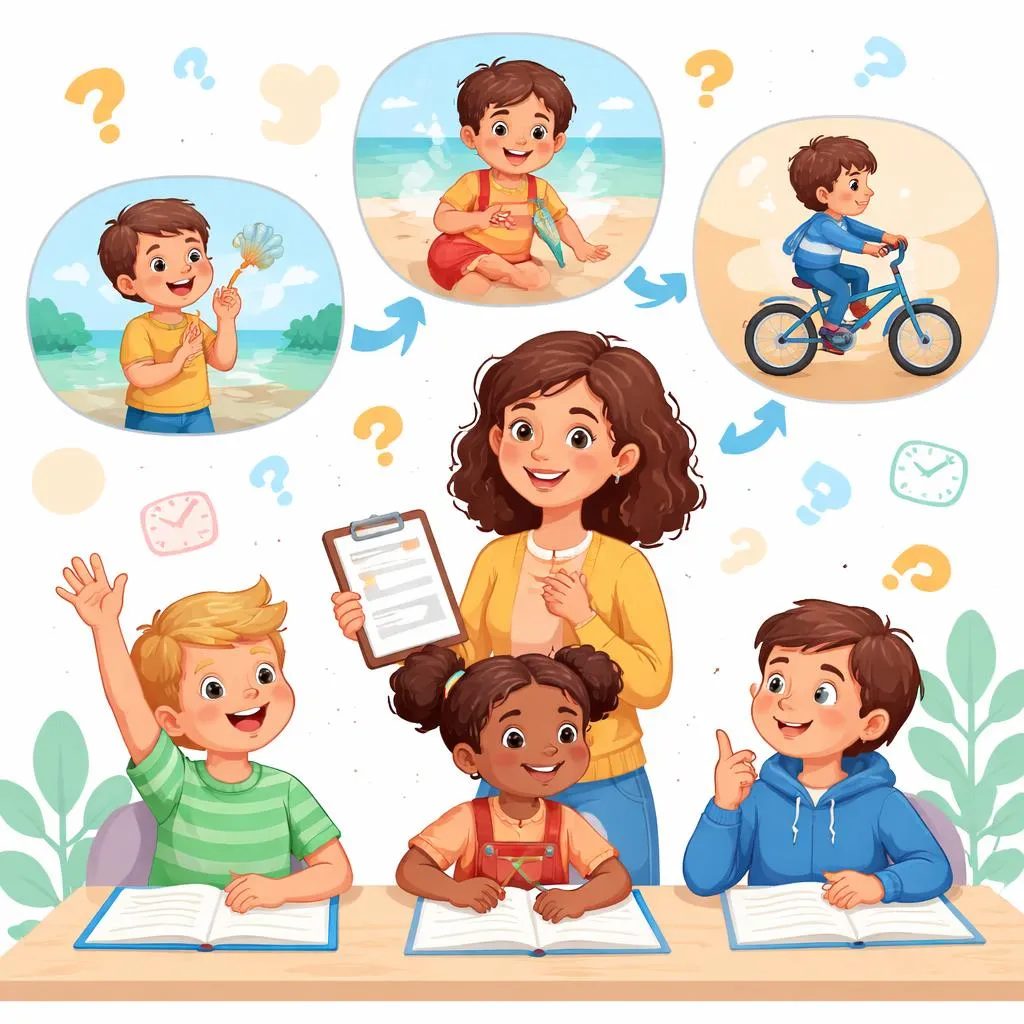

向年幼的學習者教授語法需要耐心和創造力。 英語初學者的句子中經常出現 "can" 這個字。 孩子們用它來表達能力,也用它來請求許可。 但當我們談論昨天、上週或去年時,"can" 必須改變。 這就是 can 的簡單過去式變得重要的原因。 理解這種轉變可以幫助孩子們更準確地談論過去。 它為講故事和分享經驗打開了大門。 讓我們一起探索如何以清晰和自信的方式引導年幼的學習者掌握這個重要的語法點。
Can 在過去的含義 "can" 這個詞表示現在的能力或可能性。 當我們談論過去時,我們使用 "could"。 這是 can 的簡單過去式。 意思保持相似。 它仍然談論能力。 但時間變成了過去。
例如,一個孩子可能會說 "I can read." 這表示現在。 要談論去年,我們說 "I could read when I was four." 這種能力存在於過去。
Could 也表示過去的可能性。 "We could go to the park yesterday" 意思是這是可能的。 這種含義也與許可有關。 "I could stay up late when Grandma visited" 意思是允許的。
教授這個概念需要清晰的例子。 孩子們需要看到現在的能力和過去的能力之間的區別。 他們需要練習在這兩者之間切換。
Can 的簡單過去式變位 動詞 "can" 是一個情態動詞。 這意味著它不遵循常規規則。 它在第三人稱中從不帶 -s。 它的過去式是 "could",適用於所有主語。 這讓年幼的學習者更容易。
現在時: I can You can He can She can It can We can They can
過去式: I could You could He could She could It could We could They could
請注意,"could" 對於每個人來說都是一樣的。 沒有例外。 這種簡單性幫助孩子們建立信心。 他們不需要記住不同的結尾。 一個詞對每個人都有效。
Can 的現在時 在教授過去式之前,我們必須確保孩子們理解現在時。 "can" 的現在時表示當前的能力或可能性。
課堂示例: I can jump high. She can draw beautiful pictures. We can sing the alphabet song. They can count to twenty.
我們也用 "can" 來表示現在的許可。 You can go outside now. He can have a snack after class.
否定形式是 "cannot" 或縮寫 "can't"。 I cannot find my pencil. She can't come to school today.
每天練習現在時句子。 使用動作和真實情況。 當孩子完成工作時,說 "You can play now." 當有人展示一項技能時,說 "Look! She can do it." 這為引入過去式奠定了堅實的基礎。
Can 的過去式 現在我們介紹 "could" 用於過去式。 首先需要解釋過去時間的概念。 年幼的學習者理解昨天、上週和去年。 始終如一地使用這些時間標記。
介紹過去的能力: When I was little, I could not read. Now I can. Last year, she could write her name. Before school started, he could count to ten. My baby sister could not walk. Now she can.
介紹過去的可能性: Yesterday, we could play outside because it was sunny. Last week, we could visit the library. When Grandpa visited, we could stay up late.
介紹過去的許可: When we finished our work, we could choose a game. At the party, children could have two cookies. During free time, we could draw or read.
請注意,每個句子都包含一個清晰的過去時間標記。 這可以幫助孩子們理解動作發生的時間。 詞語 "could" 表明能力或許可存在於現在之前。
Can 的未來時 用 "can" 談論未來需要不同的助動詞。 "Can" 本身沒有未來式。 我們使用 "will be able to" 來表示未來的能力。
例子: Next year, I will be able to read harder books. After practice, she will be able to ride her bike. When we learn more, we will be able to speak English better.
對於未來的可能性或許可,我們經常將 "can" 與未來時間詞一起使用。 現在時 "can" 適用於近期發生的事件。
例子: Tomorrow, we can go to the park. Next week, you can bring a toy for show and tell. After lunch, children can play outside.
年幼的學習者可以通過清晰的時間參考來理解這一點。 "Tomorrow" 和 "next week" 表示未來。 即使我們使用現在時,意思仍然很清楚。
用 Can 提問過去式 用 "could" 構成問題與 "can" 的模式相同。 我們只需將 "could" 移到句子的開頭。
是或否問題: Could you read when you were four? Could she swim last summer? Could they come to the party? Could he find his lost toy?
信息問題: What could you do when you were little? Where could we go after school yesterday? Who could help with the project? How many words could you spell last week?
在對話中練習這些問題模式。 詢問孩子們過去的能力。 他們小時候能做什麼? 他們不能做什麼? 這種個人聯繫使語法變得有意義。
回答練習: Yes, I could. No, I could not. Yes, she could swim. No, they could not come.
簡短的回答有助於建立流利性。 孩子們學會在對話中自然地做出反應。
Could 的其他用法 "Could" 除了 "can" 的過去式之外,還有其他重要的用法。 隨著他們的進步,年幼的學習者會遇到這些用法。
禮貌的請求: Could I have a pencil, please? Could you help me carry this? Could we play outside now?
這種用法在課堂語言中非常常見。 它聽起來比 "can" 更禮貌。 教孩子們用 "could" 提問可以培養良好的溝通習慣。
禮貌的建議: You could try the blue crayon. We could read this book together. She could ask the teacher for help.
這些建議在沒有命令的情況下提供了想法。 孩子們學會禮貌地提供幫助。
條件含義: If we finished early, we could play a game. If it stopped raining, we could go outside. If she practiced, she could get better.
這些句子談論的是依賴於其他事物的可能性。 這更進階。 在孩子們掌握了基本的過去式含義後再引入它。
教授 Can 的簡單過去式的學習技巧 向年幼的學習者教授語法最好使用特定的策略。 以下是一些有效介紹 can 的簡單過去式的技巧。
使用時間線:在黑板上畫一條簡單的線。 在中間標記 "now"。 在左邊標記 "yesterday"。 在右邊標記 "tomorrow"。 將 "can" 放在 now。 將 "could" 放在 yesterday。 這種視覺效果可以幫助孩子們理解時間差異。
與個人經歷聯繫起來:詢問孩子們小時候能做的事情。 如果可能,帶上嬰兒照片。 談論第一步、第一句話、第一次騎自行車。 這使得語法變得個人化和令人難忘。
使用手勢:對於現在的 "can",指向現在。 對於過去的 "could",向後指向肩膀。 始終如一地使用這些手勢。 孩子們會將動作與時間含義聯繫起來。
與 can't 形成對比:展示 "I can't do this now" 和 "I couldn't do it before" 之間的區別。 這突出了進步和成長。 孩子們喜歡看到他們學到了多少。
經常重複:在一天中使用 "could"。 "Yesterday we could play outside." "Last week you could not write that word." 經常接觸有助於形式深入人心。
用於練習的教育遊戲 遊戲使語法練習變得愉快。 以下是一些練習 can 的簡單過去式的遊戲。
能力記憶鏈:開始一個關於過去能力的記憶鏈。 第一個孩子說 "When I was three, I could walk." 下一個說 "When I was three, I could walk and I could say Mama." 繼續添加能力。 這將記憶和過去式練習結合在一起。
然後和現在排序:準備顯示能力的圖片卡。 有些顯示嬰兒(爬行、用奶瓶喝水)。 有些顯示現在的孩子(閱讀、騎自行車)。 孩子們將卡片分類為 "could do as baby" 和 "can do now"。 討論差異。
老師說過去版本:玩 "老師說",但使用過去的能力。 "老師說展示你昨天能做的事情。" 孩子們表演過去的動作。 這將動作與語法練習結合起來。
採訪遊戲:孩子們互相採訪關於過去的能力。 提供問題卡。 "Could you ride a bike two years ago?" "Could you write your name in kindergarten?" 夥伴提問和回答。 與全班分享有趣的答案。
故事完成:開始一個關於過去的故事。 "Last week, we could..." 孩子們輪流完成句子。 每個孩子都添加一個新想法。 這將創造力和語法結合在一起。
神秘能力:一個孩子想到他們過去擁有的能力。 其他人問是或否的問題來猜測。 "Could you do it outside?" "Could you do it with your hands?" 這練習了問題形成和過去式。
從 "can" 到 "could" 的旅程標誌著英語發展的一個重要步驟。 孩子們從談論現在轉向描述過去。 他們獲得了分享故事和回憶的能力。 透過耐心的教學和大量的練習,這個語法點變得自然而然。 課堂變成了一個慶祝過去能力和未來可能性令人興奮的地方。