
意思
哈囉,單字朋友們。今天,我們要學習一個非常友善且重要的單字。這個單字是「thank」。這個字是關於一種美好的感覺。它就是感恩的感覺。當你說「thank you」時,你是在表達你的感激之情。你很高興,因為有人為你做了好事。
「thank」是一個動詞。動詞是一個動作字。感謝的動作就是表達你的感激之情。可以把它想像成送出一個單字禮物。當有人幫助你時,你就送給他們一份「thank you」的禮物。這會讓他們的心感到溫暖。學習正確使用單字「thank」是成為有禮貌和友善的人的重要部分。讓我們來學習這個美好的動作字。
動詞變化
「動詞變化」的意思是改變動詞以配合主語和時態。對於動詞「thank」來說,變化很簡單。讓我們看看如何為不同的人使用「thank」。
現在時,我們通常使用「thank」或「thanks」。I thank my teacher. You thank your mom. He thanks his friend. She thanks the bus driver. We thank our parents. They thank the helper. 對於 he, she, 或 it,我們加上一個 's':thanks。
過去式是「thanked」。它是一個規則動詞,所以我們加上「-ed」。I thanked you. You thanked him. He thanked her. We thanked them.
未來式使用「will thank」。I will thank you. She will thank them. We will thank everyone.
現在時
我們使用「thank」的現在時來談論我們現在做的事情,作為一種習慣。讓我們看看例子。
I always thank my mom for dinner. You should thank your friend for the gift. He thanks the coach after practice. She thanks the librarian for the book. The child thanks the dentist. We thank the firefighters. They thank the teacher. 在這些句子中,感謝的動作發生在現在,或者是一種規律的禮貌行為。
我們也經常使用簡短形式「thanks」。這很常見也很隨意。「Thanks for your help.」「Thanks a lot.」這是一種快速友好的使用動詞的方式。
過去式
我們使用過去式「thanked」來談論我們已經表達感激之情的時間。讓我們看看過去使用「thank」的例子。
Yesterday, I thanked my grandma for the card. You thanked me last week. He thanked his sister for the advice. She thanked the mail carrier this morning. We thanked the guide after the tour. They thanked the host at the party. 感謝的動作已經完成了。它已經發生了。
即使感謝已經完成,美好的感覺仍然存在。使用「thank」的過去式可以幫助你講述人們所做的善事以及你如何感謝他們的故事。
未來式
我們使用未來式「will thank」來談論稍後表達感激之情的計畫。讓我們看看未來使用「thank」的例子。
Tomorrow, I will thank my teacher. You will thank your dad when you see him. He will thank you for the present. She will thank the team after the game. We will thank the volunteers. They will thank the performers. 這表明感謝的動作是計畫在尚未到來的時候進行的。
我們也可以使用「going to thank」。I am going to thank her. You are going to thank them. 這是另一種常見的談論未來計畫使用單字「thank」的方式。
問題
我們可以利用單字「thank」來提問。這些問題是關於感激之情的。
Did you thank your aunt for the present. 在「did」之後,單字「thank」是它的基本形式。Have you thanked the teacher yet. Will you thank him. Who will you thank. How can I thank you enough. When should we thank them. 這些問題可以幫助我們確保我們有禮貌且體貼。
一個非常常見的問題是:「Did you say thank you?」這提醒某人使用他們的良好禮儀。用「thank」提問和回答問題是有禮貌對話的重要組成部分。
其他用法
單字「thank」最常用在片語「thank you」中。這是一個表達感激之情的固定片語。我們可以讓它更強烈。Thank you very much. Thank you so much. Thank you a million.
我們也使用「thanks」作為一個隨意的名詞。Give my thanks to your family. Many thanks for your letter. 在這裡,「thanks」是你給予的東西,就像一份禮物。
我們可以利用「thank」來表示我們對某事而不是某人的感激之情。I thank my lucky stars. 這是一種慣用語,意思是您感到非常幸運。單字「thank」的核心概念始終與感激之情有關。
學習技巧
學習單字「thank」的一個好方法是每天使用它。養成習慣。當有人做了任何好事,無論大小,都要說「thank you」或「thanks」。這種做法使它變得自然。
製作一個「感恩圖表」。每天,寫下或畫下一件你感恩的事情。然後,用「thank」寫一個句子。「I thank the sun for a sunny day.」「I thank my friend for playing with me.」這將文法與積極的情緒聯繫起來。
唱一首「Thank You」歌。使用像「生日快樂」這樣的簡單曲調,但更改歌詞。「Thank you, thank you, for being kind. Thank you, thank you, it's on my mind!」音樂使單字和習慣變得歡樂且令人難忘。
教育遊戲
讓我們玩「Thank You 角色扮演」。用玩具或道具設置不同的場景。一個玩具廚房,其中一個「廚師」給另一個「食物」。接收者必須說:「Thank you for the pizza!」一個醫生辦公室,其中「醫生」幫助「病人」。病人說:「Thank you for helping me.」這種富有想像力的遊戲將單字「thank」置於現實生活的情境中。
試試「感恩拋擲」。拿一個軟球。圍成一個圈坐下。第一個玩家說:「I thank [person's name] for being my friend.」然後他們把球扔給那個人。接球者說:「I thank [new person's name] for sharing toys.」遊戲繼續進行。這結合了體育活動、社交聯繫和練習帶有「thank」的句子。
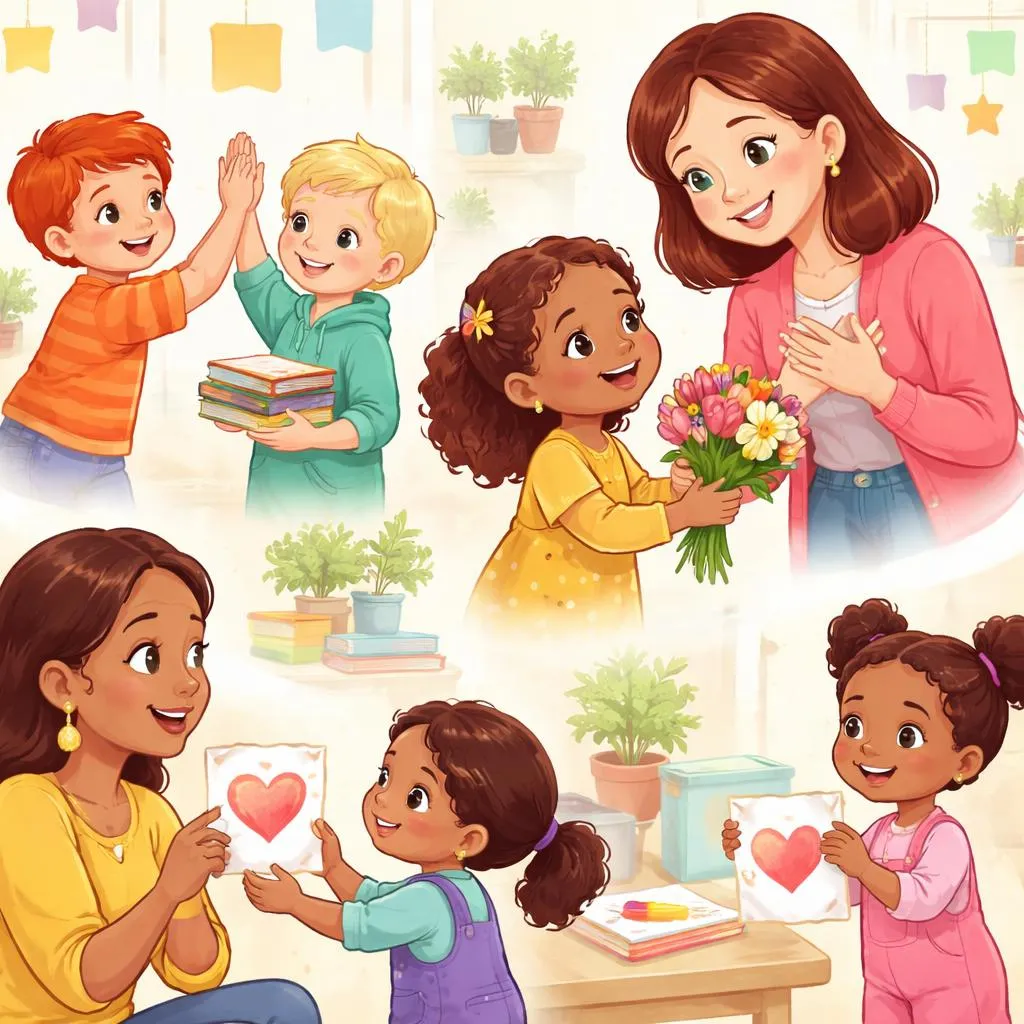
製作「Thank You 卡片」作為一種手工藝。提供紙、蠟筆和貼紙。每個孩子為他們想感謝的人製作一張卡片。幫助他們在裡面寫句子:「Thank you for...」他們可以畫一幅畫。這項創意活動加強了單字「thank」的目的,並給了他們一個美麗的產品來分享他們的感激之情。它表明說謝謝是一種可以寫、畫和贈送的行為,使課程變得有形且衷心。