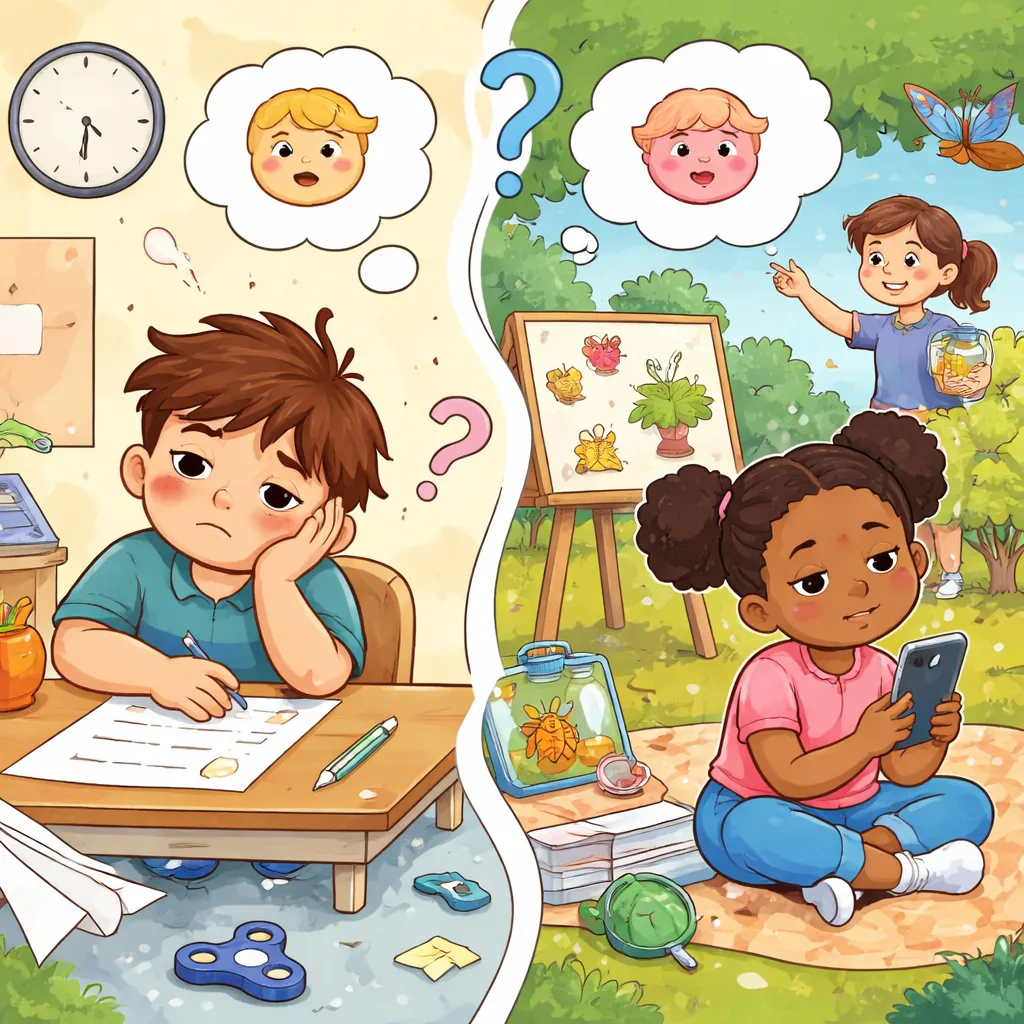

相似的詞語真的可以互換嗎?
許多英語單詞具有相似的含義。這常常讓孩子們在學習時感到困惑。像「bored」和「uninterested」這樣的詞都描述了缺乏興趣。它們似乎很容易以相同的方式使用。
然而,這些詞並不總是可以互換的。微小的差異會影響含義和語氣。這些差異幫助孩子們更清晰地表達想法。
當孩子們理解這些細節時,他們會同時提高語言技能和情緒意識。這使得溝通更加精確。
情境 1:「bored」和「uninterested」—— 哪個更常用?
單詞「bored」在日常英語中非常常見。孩子們在家裡和學校裡經常聽到它。例如,「I am bored」或「This game is boring」。
「Uninterested」出現的頻率較低。它聽起來更正式,情感色彩也較少。例如,「He seems uninterested in the topic」。
因此,「bored」成為早期詞彙的一部分。孩子們在日常會話中自然地使用它。
家長可以先介紹「bored」。然後,他們可以將「uninterested」作為一個更進階的詞彙添加進去。
情境 2:「bored」和「uninterested」—— 相同含義,不同語境
這兩個詞都描述了缺乏興趣。然而,它們出現在不同的情境中。
「Bored」通常描述一種感覺:
- I feel bored during the long class.
- She is bored at home.
它側重於情感體驗。
「Uninterested」通常描述態度或反應:
- He is uninterested in the lesson.
- She seems uninterested in sports.
它暗示缺乏好奇心,而不是強烈的情感。
孩子們應該學習「bored」是情感性的。「Uninterested」更多的是關於態度。
情境 3:「bored」和「uninterested」—— 哪個詞更「大」或更強調?
當比較強度時,「bored」通常感覺更強烈。
「Bored」顯示出主動的不適感。孩子可能會感到焦躁不安或疲倦。
「Uninterested」感覺更平靜,更中性。它表示沒有興趣,但沒有強烈的情感。
例如:
- A child feels bored when nothing is fun.
- A child feels uninterested when something does not attract attention.
這種差異幫助孩子們更準確地描述感受。
情境 4:「bored」和「uninterested」—— 具體 vs 抽象
「Bored」和「uninterested」都描述了抽象的概念。它們表達了精神和情感狀態。
「Bored」可以與可見的行為聯繫起來:
- a bored face
- a bored voice
孩子們可以很容易地識別這些跡象。
「Uninterested」通常描述內在的態度:
- an uninterested response
- an uninterested student
它不太明顯,也更微妙。
這使得「bored」更容易被年幼的學習者理解。「Uninterested」需要更深入的理解。
情境 5:「bored」和「uninterested」—— 動詞還是名詞?首先要了解角色
理解單詞的角色有助於孩子們避免混淆。
「Bored」來自動詞「bore」:
- The lesson bores him.
- He feels bored.
它與名詞「boredom」相關聯:
- She felt great boredom.
「Uninterested」來自形容詞「interested」:
- He is interested in music.
- He is uninterested in math.
它與名詞「interest」相關聯:
- The topic did not hold his interest.
學習這些詞族有助於孩子們逐步建立詞彙量。
情境 6:「bored」和「uninterested」—— 美式英語 vs 英式英語
這兩個詞都出現在美式英語和英式英語中。它們的含義保持不變。
「Bored」在兩個地區都很常見。它出現在日常對話中。
「Uninterested」也被用於這兩個地區,但它聽起來更正式。它更多地出現在書面或正式的演講中。
孩子們可以在大多數情況下使用「bored」。學習「uninterested」增加了多樣性和精確性。
情境 7:「bored」和「uninterested」—— 哪個適合正式場合?
在正式溝通中,詞彙的選擇很重要。
「Bored」聽起來很隨意。它適合日常對話和簡單的寫作。
「Uninterested」聽起來更正式,更中性。它適合:
- school writing
- reports
- descriptions
例如:
- “He is bored” sounds informal.
- “He is uninterested” sounds more formal.
教導這種差異有助於孩子們調整他們的語氣。
情境 8:「bored」和「uninterested」—— 哪個更容易讓孩子們記住?
孩子們通過簡單和熟悉的詞彙學習效果最好。
「Bored」更容易,因為:
- 它很短
- 它經常出現
- 它與清晰的感受相關聯
「Uninterested」更長,更複雜。它可能需要更多的時間來學習。
然而,一旦孩子們理解了「interest」,他們就可以將其與「uninterested」聯繫起來。
家長可以使用例子來闡明這一點。
迷你練習:你能找出這些相似詞之間的區別嗎?
一起嘗試這些練習。
選擇正確的詞:bored 或 uninterested。
- She felt ______ during the long movie.
- He seemed ______ in the lesson.
- The child was ______ at home with nothing to do.
- She looked ______ in the conversation.
答案:
- bored
- uninterested
- bored
- uninterested
鼓勵孩子們解釋他們的選擇。這可以建立更深入的理解。
家長提示:如何幫助孩子們學習和記住相似的詞
家長可以通過簡單的步驟來支持詞彙學習。
從「bored」開始。在日常生活中使用它。談論感受和經歷。
然後介紹「uninterested」。解釋它描述的是缺乏興趣,並不總是一種強烈的感覺。
提出引導性問題:
- 這是一種強烈的感覺還是一種平靜的態度?
- 孩子是在情感上做出反應,還是只是不感興趣?
使用真實的例子。孩子可能會在長時間的等待中感到無聊。孩子可能對他們不喜歡的話題不感興趣。
鼓勵孩子們在口語和寫作中使用這兩個詞。練習可以建立信心。
保持學習的積極性和支持性。當孩子們理解像「bored」和「uninterested」這樣的詞時,他們會獲得更好的工具來清晰地表達想法和感受。