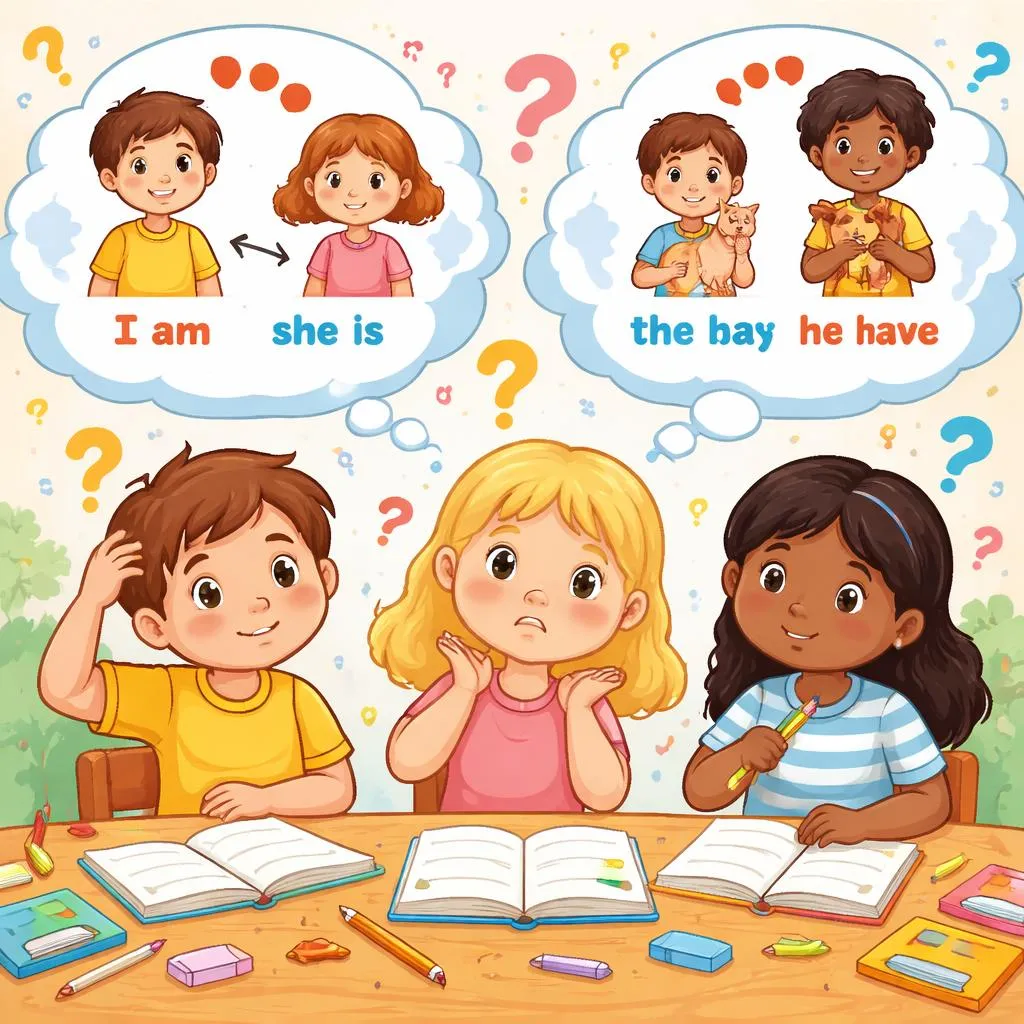

兩個小動詞給學習英語的孩子帶來了很大的挑戰。「Be」和「has」經常出現在對話中。它們有不同的作用,會變形,並且遵循不同的規則。了解如何正確使用「be」和「has」可以幫助孩子們建立清晰的句子。他們可以描述事物是什麼。他們可以談論人們擁有什麼。讓我們探討如何透過清晰的解釋和引人入勝的活動來引導年輕的學習者學習這些基本動詞。
「Be」和「Has」的含義 動詞「be」和「has」的含義非常不同。了解這些含義是正確使用它們的第一步。
Be 描述某物是什麼。它將主語與有關該主語的資訊聯繫起來。 我很高興。 她是一位老師。 他們在公園裡。 這本書是紅色的。
Be 不顯示動作。它顯示存在狀態。它告訴我們事物是什麼、它們的感覺以及它們在哪裡。
Has 顯示擁有或所有權。它告訴某人擁有什麼。 他有一個藍色的背包。 她有兩個姐妹。 這隻狗有一條長尾巴。 它有一個壞掉的把手。
Has 也顯示關係、特徵和經驗。 她感冒了。 他有藍色的眼睛。 我們在公園裡玩得很開心。
對於年輕的學習者來說,從這些基本含義開始。「Be」用於描述。「Has」用於擁有。這種簡單的對比可以幫助孩子們理解差異。
Be 和 Has 的變位 這兩個動詞都是不規則的。它們會針對不同的主語變形。孩子們需要學習這些模式。
Be 的現在時: 我 am 你 are 他 is 她 is 它 is 我們 are 他們 are
Has 的現在時(來自動詞 have): 我 have 你 have 他 has 她 has 它 has 我們 have 他們 have
Be 的過去時: 我 was 你 were 他 was 她 was 它 was 我們 were 他們 were
Has 的過去時 (had): 我 had 你 had 他 had 她 had 它 had 我們 had 他們 had
Be 的否定形式: I am not (I'm not) You are not (you aren't) He is not (he isn't) She is not (she isn't) It is not (it isn't) We are not (we aren't) They are not (they aren't)
Has 的否定形式: I do not have (I don't have) You do not have (you don't have) He does not have (he doesn't have) She does not have (she doesn't have) It does not have (it doesn't have) We do not have (we don't have) They do not have (they don't have)
請注意,在否定句和疑問句中,「has」變成「have」。這是常見的錯誤來源。
Be 和 Has 的現在時 現在時是孩子們最常使用這些動詞的地方。清晰的例子可以幫助他們理解差異。
Be 句子(描述): 我很高。 You are my friend. He is happy today. She is a doctor. It is a sunny day. We are in the classroom. They are at the playground.
Has 句子(擁有): I have a new pencil. You have a blue backpack. He has a pet dog. She has two brothers. It has four wheels. We have music class today. They have a big house.
否定 Be 句子: I am not tired. You are not late. He is not at school. She is not hungry. It is not cold outside. We are not leaving yet. They are not ready.
否定 Has 句子: I do not have a ruler. You do not have to go. He does not have a car. She does not have a phone. It does not have a battery. We do not have time. They do not have money.
在日常生活中練習這些句子。指著一個孩子說:「He is Juan。」指著他們的背包說:「He has a blue backpack。」這自然地對比了這兩個動詞。
Be 和 Has 的過去時 過去時增加了另一層。 「Be」變成「was」和「were」。「Has」變成「had」,適用於所有主語。
過去時 Be 句子: I was tired yesterday. You were late this morning. He was at the park last week. She was happy about the news. It was cold yesterday. We were in the library. They were at the party.
過去時 Has 句子: I had a red bike when I was little. You had a turn already. He had a stomach ache. She had long hair in kindergarten. It had a scratch on the door. We had pizza for lunch. They had a party last week.
否定過去 Be: I was not at school yesterday. You were not listening. He was not hungry. She was not ready. It was not raining. We were not late. They were not home.
否定過去 Has: I did not have time. You did not have to come. He did not have his shoes. She did not have her lunch. It did not have a battery. We did not have a choice. They did not have tickets.
使用清晰的時間標記與過去時。昨天、上週、今天早上、當我還是個孩子的時候。這些詞表示時間已經過去。
Be 和 Has 的未來時 未來時使用「will be」表示「be」,使用「will have」表示「has」。
未來 Be 句子: I will be five tomorrow. You will be late if you hurry. He will be happy to see you. She will be at the party. It will be sunny next week. We will be in first grade soon. They will be here later.
未來 Has 句子: I will have a test tomorrow. You will have a new teacher. He will have a baby sister. She will have a dance recital. It will have a new cover. We will have lunch at noon. They will have a party.
否定未來: I will not be at school. She will not be happy. We will not have time. They will not have cake.
縮寫: I'll be, you'll be, he'll be, she'll be, we'll be, they'll be I'll have, you'll have, he'll have, she'll have, we'll have, they'll have I won't be, she won't have, etc.
未來時間標記包括明天、下週、稍後、很快。這些詞可以幫助孩子們理解動作發生的時間。
Be 和 Has 的疑問句 對於這兩個動詞,形成疑問句的方式有所不同。「Be」移到前面。「Has」需要「do」或「does」。
Be 的疑問句: Am I late? Are you ready? Is he your brother? Is she a teacher? Is it time to go? Are we there yet? Are they playing?
Has 的疑問句(現在時): Do I have a turn? Do you have a minute? Does he have a sister? Does she have a pet? Does it have a handle? Do we have time? Do they have money?
Has 的疑問句(過去時): Did I have a turn? Did you have breakfast? Did he have a good day? Did she have her coat? Did it have a scratch? Did we have a choice? Did they have tickets?
Be 的簡短回答: Yes, I am. No, I'm not. Yes, he is. No, she isn't. Yes, we are. No, they aren't.
Has 的簡短回答: Yes, I do. No, I don't. Yes, he does. No, she doesn't. Yes, we did. No, they didn't.
在日常生活中練習疑問句模式。用「be」問感受。「Are you happy?」用「have」問擁有。「Do you have a pencil?」這自然地對比了這兩個動詞。
其他用法和常見的混淆 孩子們經常混淆「be」和「has」,因為這兩個詞在許多語言中都翻譯成一個動詞。清晰的對比有所幫助。
描述與擁有: She is tall. (describes) She has long hair. (possesses a characteristic) He is a doctor. (describes identity) He has a stethoscope. (possesses an object)
年齡: I am five years old. (use be) Not: I have five years.
感受: I am hungry. (use be) I have hunger. (not correct) She is thirsty. (use be) She has thirst. (not correct)
身體狀況: I am cold. (use be) I have cold. (means illness, not temperature) He is hot. (use be) He has heat. (not correct)
疾病: I have a cold. (use have) I am cold. (means temperature) She has a headache. (use have) She is headache. (not correct)
事物年齡: The car is five years old. (use be) The car has five years. (not correct)
這些對比非常重要。孩子們需要很多例子來內化正確的模式。
學習教學 Be 和 Has 的技巧 一起教這兩個動詞需要清晰的策略。以下是幫助孩子們區分它們的技巧。
使用「描述與擁有」規則:解釋「be」描述事物是什麼。「Has」談論事物擁有什麼。這個簡單的規則可以幫助孩子們選擇。
使用手勢:對於「be」,做一個水平手勢,就像一個等號。對於「has」,用手做一個握住的手勢。手勢強化了含義的差異。
創建對比圖表:製作一個兩欄圖表。一側是「be」句子。一側是「has」句子。每天比較它們。
使用圖片:展示一個女孩的圖片。練習這兩種句子。「She is happy. She has a red dress.」這顯示了這兩個動詞描述同一個人。
溫和地糾正:當孩子們說「She is a pencil」時,他們的意思是「She has a pencil」。只需正確重複即可。「Yes, she has a pencil.」溫和的建模比解釋更有效。
用真實的物體練習:舉起物體並練習這兩個動詞。「This is a book. It has pictures.」孩子們在上下文中看到了差異。
使用歌曲:創作簡單的歌曲來對比這些動詞。「I am tall, I have a ball. I am small, I have a doll.」節奏有助於記憶。
用於練習的教育遊戲 遊戲讓語法練習變得愉快。以下是練習「be」和「has」的遊戲。
Be or Has Sort:創建句子卡。「She is happy.」「He has a dog.」孩子們將它們分成兩堆:be 句子和 has 句子。一起檢查答案。
Describe or Possess Race:說出一個主語和一個單字。「She / blue eyes.」孩子們競相說出正確的句子。「She has blue eyes!」「He / tall.」「He is tall!」第一個正確的答案獲勝。
Picture Prompt Game:展示一張有很多細節的圖片。孩子們輪流造句。一個孩子使用「be」。「The boy is happy.」下一個孩子使用「has」。「The boy has a ball.」圍繞圓圈繼續。
Mystery Bag with Be and Has:將一個物體放入袋子裡。孩子們問兩種問題。「Is it soft?」(be 問題)「Does it have a handle?」(has 問題)他們猜測它是什麼。
Be and Has Bingo:創建賓果卡,其中句子缺少動詞。「She ___ a teacher.」「He ___ a bike.」說出「is」或「has」。孩子們覆蓋正確的單字。
Sentence Building:給孩子們單字卡。他們使用「be」和「has」造句。「The cat is black.」「The cat has green eyes.」這顯示了這兩個動詞如何描述同一件事。
Switch It Up:給出一個使用一個動詞的句子。如果可能,孩子們將其更改為使用另一個動詞。「She is a mother.」改為「She has a child.」「He has a car.」改為「The car is red.」這建立了靈活性。
常見錯誤及如何解決 了解常見錯誤可以幫助老師提供有針對性的支持。
使用 be 而不是 have 來表示所有權: 錯誤:「She is a book.」 更正:「She has a book.」 練習:將「She is a girl」與「She has a book」進行對比。
使用 have 而不是 be 來描述: 錯誤:「He has tall.」 更正:「He is tall.」 練習:「He is tall. He has long legs.」
使用 have 表示年齡: 錯誤:「I have five years.」 更正:「I am five years old.」 練習:詢問孩子們的年齡。模擬正確的答案。
使用 be 表示飢餓/口渴: 錯誤:「I am hunger.」 更正:「I am hungry.」 練習:將「I am hungry」與「I have hunger」(不正確)進行對比。
在 has 的疑問句中忘記 does: 錯誤:「Has he a dog?」 更正:「Does he have a dog?」 練習:用「have」造句需要「do/does」。
在縮寫中混淆 has 和 is: 「He's」可以表示「he is」或「he has」。上下文決定含義。 He's happy. (he is) He's got a dog. (he has) 明確地教這兩種含義。
用耐心來解決這些錯誤。使用重複和多個例子。孩子們透過接觸來學習,而不是僅僅透過糾正來學習。
動詞「be」和「has」是英語的基本組成部分。孩子們每天都用它們來描述他們的世界,並談論他們擁有的東西。一起教這些動詞可以幫助孩子們看到對比。他們了解到「be」描述事物是什麼。「Has」談論事物擁有什麼。透過清晰的解釋、引人入勝的活動和大量的練習,這些動詞變得自然。孩子們正確地使用它們,而無需思考。這就是所有語法教學的目標。