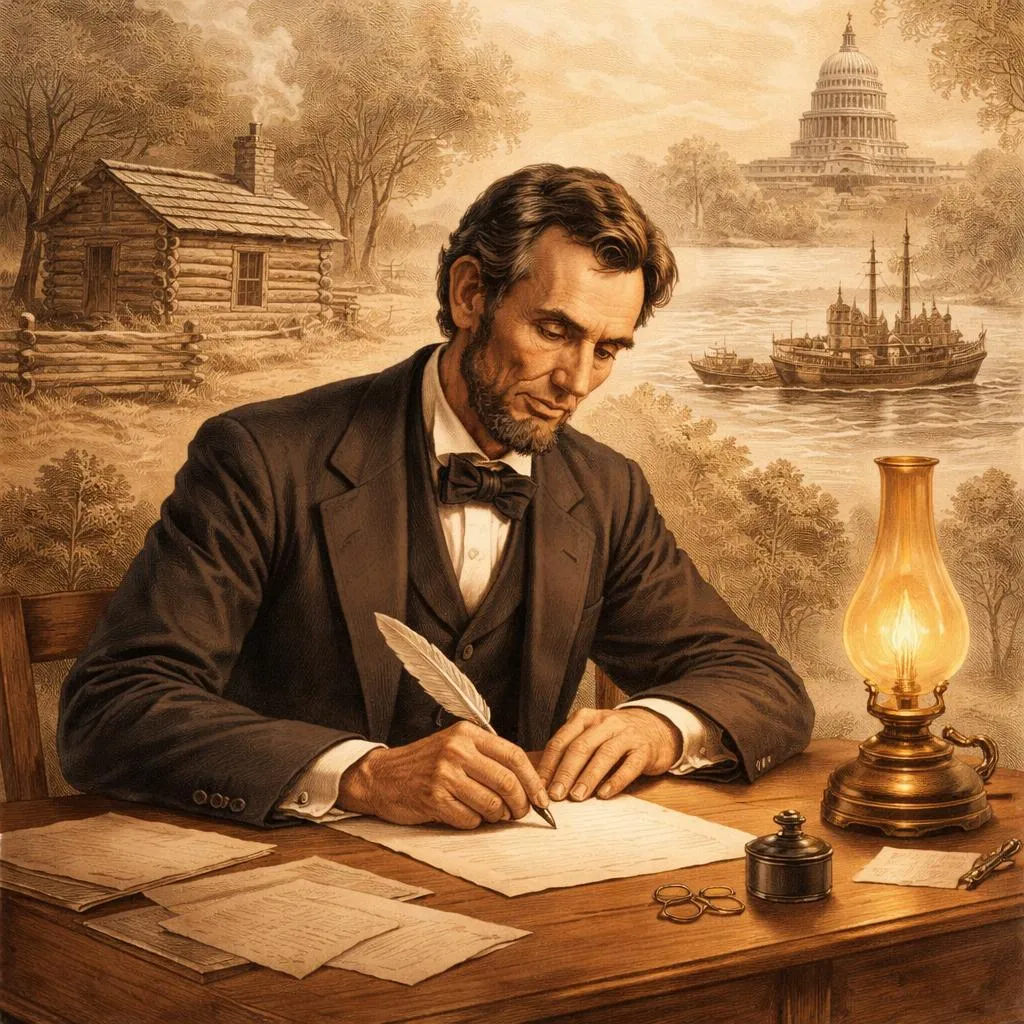

I was born February 12, 1809, in Hardin County, Kentucky. My parents were both born in Virginia, of undistinguished families—second families, perhaps I should say. My mother, who died in my tenth year, was of a family of the name of Hanks, some of whom now reside in Adams, and others in Macon County, Illinois. My paternal grandfather, Abraham Lincoln, emigrated from Rockingham County, Virginia, to Kentucky about 1781 or 1782, where a year or two later he was killed by the Indians, not in battle, but by stealth, when he was laboring to open a farm in the forest. His ancestors, who were Quakers, went to Virginia from Berks County, Pennsylvania. An effort to identify them with the New England family of the same name ended in nothing more definite than a similarity of Christian names in both families, such as Enoch, Levi, Mordecai, Solomon, Abraham, and the like.
My father, at the death of his father, was but six years of age, and he grew up literally without education. He removed from Kentucky to what is now Spencer County, Indiana in my eighth year. We reached our new home about the time the state came into the Union. It was a wild region, with many bears and other wild animals still in the woods. There I grew up. There were some schools, so called, but no qualification was ever required of a teacher beyond “readin’, writin’, and cipherin’” to the rule of three. If a straggler supposed to understand Latin happened to sojourn in the neighborhood, he was looked upon as a wizard. There was absolutely nothing to excite ambition for education. Of course, when I came of age I did not know much. Still, somehow I could read, write, and cipher to the rule of three, but that was all. I have not been to school since. The little advance I now have upon this store of education I have picked up from time to time under the pressure of necessity.
I was raised to farm work, which I continued till I was twenty-two. At twenty-one I came to Illinois, Macon County. Then I got to New Salem, at that time in Sangamon, now in Menard, County, where I remained a year as a sort of clerk in a store.
Then came the Black Hawk war, and I was elected a captain of volunteers, a success which gave me more pleasure than any I have had since. I went the campaign, was elated, ran for the legislature the same year (1832), and was beaten—the only time I have ever been beaten by the people. The next and three succeeding biennial elections I was elected to the legislature. I was not a candidate afterward. During this legislative period I had studied law, and removed to Springfield to practice it. In 1846 I was once elected to the lower house of Congress. I was not a candidate for reelection. From 1849 to 1854, both inclusive practiced law more assiduously than ever before. Always a Whig in politics; and generally on the Whig electoral tickets, making active canvasses. I was losing interest in politics when the repeal of the Missouri Compromise aroused me again. What I have done since then is pretty well known.
If any personal description of me is thought desirable, it may be said I am, in height, six feet four inches, nearly; lean in flesh, weighing on an average one hundred and eighty pounds; dark complexion, with coarse black hair and gray eyes. No other marks or brands recollected.
خلفية ومقدمة المؤلف
هذا المقطع مقتطف من الحياة المبكرة لأبراهام لينكولن، الرئيس السادس عشر للولايات المتحدة. ولد لينكولن في عائلة متواضعة على الحدود عام 1809، وقصته هي قصة مثابرة وتعليم ذاتي وتفانٍ في الخدمة العامة. إن نشأته في منطقة قاسية وغير متطورة، مع إمكانية محدودة للحصول على التعليم الرسمي، قد شكلت شخصيته وقيمه. على الرغم من هذه التحديات، علم لينكولن نفسه القانون وصعد ليصبح شخصية رئيسية في التاريخ الأمريكي، حيث قاد الأمة خلال أعظم أزماتها، الحرب الأهلية.
التفسير التفصيلي والأهمية
تكشف رواية لينكولن عن الحقائق القاسية للحياة على الحدود في أوائل القرن التاسع عشر في أمريكا. لم يثبطه نقص التعليم الرسمي والبيئة القاسية عن السعي للمعرفة وتحسين الذات. لقد أثبتت له تجاربه المبكرة في الزراعة والعمل اليدوي حقائق الناس العاديين، مما أثر على تعاطفه وأسلوب قيادته في وقت لاحق من حياته.
كما تسلط هذه الفقرة الضوء على أهمية المرونة. واجه لينكولن الهزيمة في حملته السياسية الأولى لكنه لم يستسلم. بدلاً من ذلك، واصل السعي لتحقيق أهدافه، وحقق في النهاية نجاحًا سياسيًا كبيرًا. تؤكد قصته أن النكسات جزء من النمو وأن التصميم يمكن أن يؤدي إلى إنجازات عظيمة.
الدروس والأفكار للطلاب
-
قيمة التعليم الذاتي: يعلمنا حياة لينكولن أن التعليم الرسمي ذو قيمة، ولكن التعلم يمكن وينبغي أن يستمر خارج الفصل الدراسي. الفضول والقراءة والخبرة العملية أدوات قوية للنمو الشخصي.
-
المثابرة من خلال التحديات: يتعلم الطلاب أن الفشل ليس النهاية بل هو حجر الزاوية. لم تثبطه الهزيمة السياسية الأولية لينكولن؛ بدلاً من ذلك، حفزته على العمل بجدية أكبر.
-
التواضع والعمل الجاد: انطلاقًا من بدايات متواضعة، تظهر قصة لينكولن أن النجاح لا يتعلق بمكان البداية، بل بكيفية عملك ونموك.
-
القيادة والخدمة: إن تفاني لينكولن في خدمة مجتمعه وبلده يشجع الطلاب على التفكير في كيفية مساهمتهم بشكل إيجابي في المجتمع.
تطبيق هذه الدروس في الحياة اليومية
-
في التعلم: يمكن للطلاب تبني عادة لينكولن في الدراسة الذاتية من خلال استكشاف الموضوعات خارج مناهجهم الدراسية، وتطوير مهارات التفكير النقدي وحل المشكلات.
-
في الأوساط الاجتماعية: يذكرنا تعاطف لينكولن وتفهمه للطلاب باحترام خلفيات وخبرات الآخرين، وتعزيز اللطف والتعاون.
-
في مواجهة الصعوبات: عند مواجهة النكسات في المدرسة أو الحياة الشخصية، يمكن للطلاب أن يتذكروا مرونة لينكولن ويواصلوا السعي لتحقيق أهدافهم.
تنمية الصفات الإيجابية من قصة لينكولن
- الفضول: شجع على طرح الأسئلة والبحث عن المعرفة بنشاط.
- التصميم: حدد الأهداف واستمر حتى عندما يبدو التقدم بطيئًا.
- النزاهة: حافظ على الصدق والإنصاف في جميع الإجراءات.
- القيادة: مارس المسؤولية وساعد الآخرين في الأنشطة الجماعية أو المشاريع المجتمعية.
من خلال التفكير في الحياة المبكرة لأبراهام لينكولن وقيمه، يمكن للطلاب أن يجدوا الإلهام لتطوير شخصيتهم ومهاراتهم، وإعدادهم للتحديات والفرص المستقبلية.
