
Almost contemporaneously with the publication in 1637 of Descartes' geometry, the principles of the integral calculus, so far as they are concerned with summation, were being worked out in Italy. This was effected by what was called the principle of indivisibles, and was the invention of Cavalieri. It was applied by him and his contemporaries to numerous problems connected with the quadrature of curves and surfaces, the determination on volumes, and the positions of centres of mass. It served the same purpose as the tedious method of exhaustions used by the Greeks; in principle the methods are the same, but the notation of indivisibles is more concise and convenient. It was, in its turn, superceded at the beginning of the eighteenth century by the integral calculus.
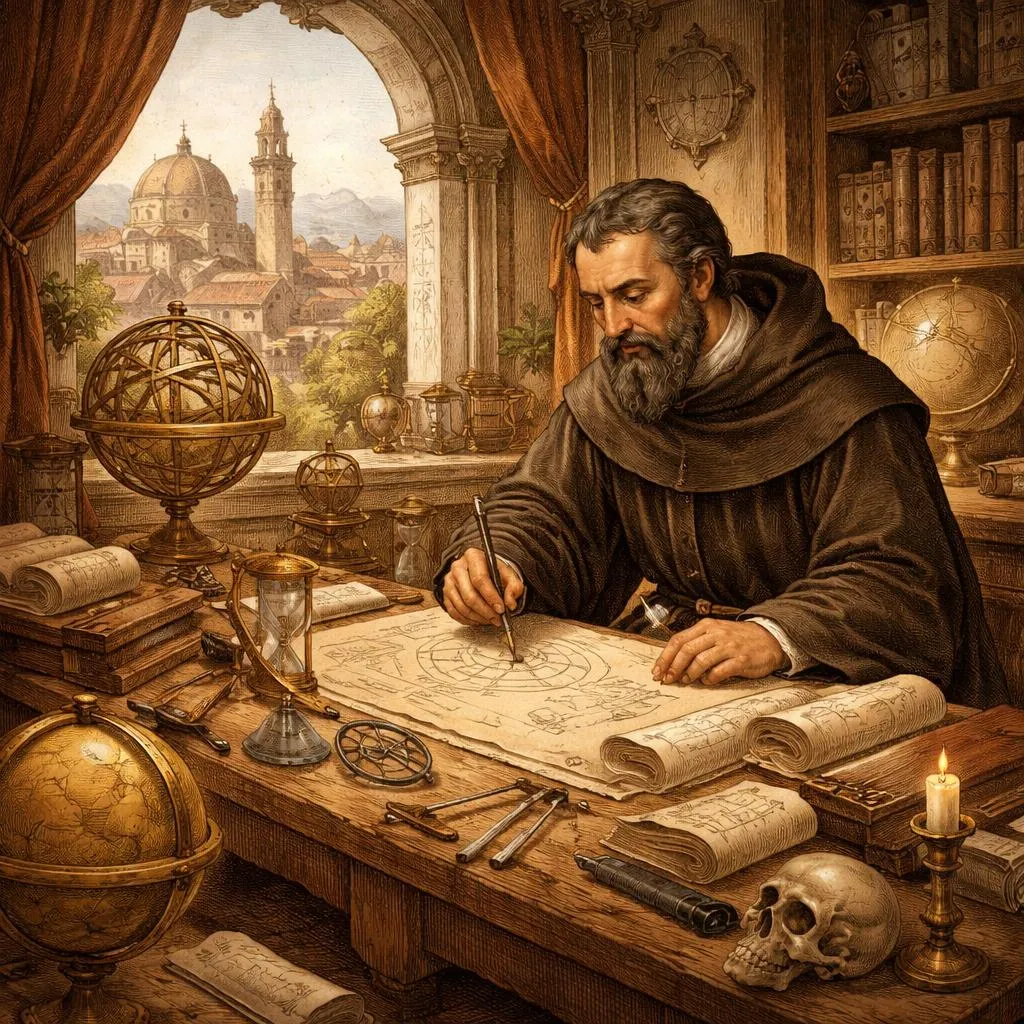
Bonaventura Cavalieri was born at Milan in 1598, and died at Bologna on November 27, 1647. He became a Jesuit at an early age; on the recommendation of the Order he was in 1629 made professor of mathematics at Bologna; and he continued to occupy the chair there until his death. I have already mentioned Cavalieri's name in connection with the introduction of the use of logarithms into Italy, and have alluded to his discovery of the expression for the area of a spherical triangle in terms of the spherical excess. He was one of the most influential mathematicians of his time, but his subsequent reputation rests mainly on his invention of the principle of indivisibles.
The principle of indivisibles had been used by Kepler in 1604 and 1615 in a somewhat crude form. It was first stated by Cavalieri in 1629, but he did not publish his results till 1635. In his early enunciation of the principle in 1635 Cavalieri asserted that a line was made up of an infinite number of points (each without magnitude), a surface of infinite number of lines (each without breadth), and a volume of an infinite number of surfaces (each without thickness). To meet the objections of Guldinus and others, the statement was recast, and in its final form as used by the mathematicians of the seventeenth century it was published in Cavalieri's Exercitationes Geometricae in 1647; the third exercise is devoted to a defence of the theory. This book contains the earliest demonstration of the properties of Pappus. Cavalieri's works on indivisibles were reissued with his later corrections in 1653.
The method of indivisibles rests, in effect, on the assumption that any magnitude may be divided into an infinite number of small quantities which can be made to bear any required ratios ( ex. gr. equality) one to the other. The analysis given by Cavalieri is hardly worth quoting except as being one of the first steps taken towards the formation of an infinitesimal calculus. One example will suffice. Suppose it be required to find the area of a right-angled triangle. Let the base be made up of, or contain n points (or indivisibles), and similarly let the other side contain na points, then the ordinates at the successive points of the base will contain a , 2 a ..., na points. Therefore the number of points in the area is a + 2 a + ... + na ; the sum of which is 1/2 n 2 a + 1/2 na . Since n is very large, we may neglect 1/2 na for it is inconsiderable compared with 1/2 n 2 a . Hence the area is equal to 1/2( na ) n , that is, 1/2 x altitude x base. There is no difficulty in criticizing such a proof, but, although the form in which it is presented is indefensible, the substance of it is correct.
It would be misleading to give the above as the only specimen of the method of indivisibles, and I therefore quote another example, taken from a later writer, which will fairly illustrate the use of the method when modified and corrected by the method of limits.
Let it be required to find the area outside a parabola APC and bounded by the curve, the tangent at A , and a line DC parallel to AB the diameter at A . Complete the parallelogram ABCD . Divide AD into n equal parts, let AM contain r of them, and let MN be the ( r + 1)th part. Draw MP and NQ parallel to AB , and draw PR parallel to AD . Then when n becomes indefinitely large, the curvilinear area APCD will be the the limit of the sum of all parallelograms like PN . Now
area PN : area BD = MP . MN : DC . AD .
But by the properties of the parabola
MP : DC = AM 2 : AD 2 = r 2 : n 2 ,
and MN : AD = 1 : n . Hence MP . MN : DC . AD = r 2 : n 3 . Therefore area PN : area BD = r 2 : n 3 . Therefore, ultimately,
area APCD : area BD = 1 2 + 2 2 + ... + (n-1) 2 : n 3 = 1/6 n (n-1)(2n-1) : n 3
which, in the limit, = 1 : 3.
It is perhaps worth noticing that Cavalieri and his successors always used the method to find the ratio of two areas, volumes, or magnitudes of the same kind and dimensions, that is, they never thought of an area as containing so many units of area. The idea of comparing a magnitude with a unit of the same kind seems to have been due to Wallis.
It is evident that in its direct form the method is applicable to only a few curves. Cavalieri proved that, if m be a positive integer, then the limit, when n is infinite, of (1 m + 2 m + ... + n m )/ n m+1 is 1/( m +1), which is equivalent to saying that he found the integral of x to x m from x = 0 to x = 1; he also discussed the quadrature of the hyperbola.
مقدمة عن الخلفية والمؤلف
يقدم هذا النص العمل الرائد لبونافنتورا كافاليري، وهو شخصية مهمة في تاريخ الرياضيات خلال أوائل القرن السابع عشر. ولد كافاليري في ميلانو عام 1598، وكان كاهنًا يسوعيًا وأستاذًا للرياضيات في بولونيا. وضع عمله أسس حساب التفاضل والتكامل، وهو فرع من الرياضيات يتعامل مع جمع عدد لا نهائي من الكميات الصغيرة لإيجاد المساحات والأحجام والكميات الأخرى. كان مبدأ كافاليري للمتناهيات في الصغر فكرة ثورية ساعدت علماء الرياضيات على تجاوز الأساليب اليونانية القديمة للإرهاق، مما يوفر نهجًا أبسط وأكثر مرونة لحساب المساحات والأحجام.
فهم مبدأ المتناهيات في الصغر
ينص مبدأ كافاليري على أن الخط يتكون من عدد لا نهائي من النقاط، والسطح من عدد لا نهائي من الخطوط، والحجم من عدد لا نهائي من الأسطح. قد تبدو هذه الفكرة مجردة أو حتى مربكة في البداية، لكنها خطوة أساسية نحو مفهوم التكامل في حساب التفاضل والتكامل الحديث. من خلال تخيل الأشكال على أنها تتكون من شرائح أو نقاط رقيقة إلى ما لا نهاية، يمكن لكافاليري حساب المساحات والأحجام عن طريق مقارنة هذه الشرائح بين الأشكال المختلفة.
على سبيل المثال، لإيجاد مساحة المثلث القائم الزاوية، تخيل كافاليري القاعدة على أنها تتكون من العديد من النقاط والارتفاع على أنه يحتوي على عدد متناسب من النقاط. بجمع هذه النقاط، توصل إلى الصيغة المألوفة لمساحة المثلث: نصف القاعدة مضروبًا في الارتفاع. على الرغم من أن طريقته تفتقر إلى الدقة التي نتوقعها اليوم، إلا أن الفكرة الأساسية كانت صحيحة ومهدت الطريق لعلماء الرياضيات في المستقبل.
الأهمية والتأثير
كان عمل كافاليري مهمًا لأنه قدم طريقة جديدة للتفكير في الهندسة والقياس كانت أكثر بديهية وأقل إرهاقًا من الطرق السابقة. توقع مبدأه للمتناهيات في الصغر حساب التفاضل والتكامل الذي طوره لاحقًا نيوتن وليبنيز. سمحت هذه الطريقة لعلماء الرياضيات بحل المشكلات التي تتضمن المنحنيات والأسطح التي كانت صعبة للغاية أو مستحيلة في السابق.
أثر عمله أيضًا على دراسة القطع المكافئ والكرات والقطع الزائد، مما وسع فهم هذه الأشكال وخصائصها. ساعد نهج كافاليري في سد الفجوة بين الهندسة والجبر، مما أدى إلى الأدوات الرياضية القوية المستخدمة في العلوم والهندسة اليوم.
ما يمكن للطلاب تعلمه
-
الإبداع والابتكار الرياضي: تُظهر قصة كافاليري كيف غالبًا ما تعتمد الأفكار الجديدة على الأفكار القديمة. أخذ الطريقة اليونانية القديمة للإرهاق وحسنها من خلال تخيل الأشكال على أنها تتكون من أجزاء غير قابلة للتجزئة. هذا يعلم الطلاب قيمة التفكير الإبداعي والنظر إلى المشكلات من وجهات نظر جديدة.
-
أسس حساب التفاضل والتكامل: في حين أن حساب التفاضل والتكامل قد يبدو معقدًا، فإن مبدأ كافاليري يوفر مقدمة بسيطة لمفهوم جمع عدد لا نهائي من الأجزاء الصغيرة لإيجاد الكل. يساعد فهم هذا المبدأ الطلاب على تقدير أصول وأهمية حساب التفاضل والتكامل.
-
السياق التاريخي: يساعد التعرف على كافاليري الطلاب على رؤية كيف تطورت الرياضيات بمرور الوقت وكيف ساهمت الثقافات المختلفة في المعرفة. يوضح أيضًا كيف تعايش العلم والدين، حيث كان كافاليري كاهنًا يسوعيًا وعالم رياضيات.
-
حل المشكلات: توضح الأمثلة المقدمة، مثل إيجاد المساحة الموجودة أسفل القطع المكافئ، كيف يمكن للاستدلال الرياضي أن يحل المشكلات العملية. يمكن للطلاب أن يتعلموا تطبيق الخطوات المنطقية واستخدام التقريبات لمعالجة الأسئلة المعقدة.
تطبيق هذه الدروس في الحياة والتعلم
-
في المدرسة: يمكن للطلاب استخدام مبدأ كافاليري كنقطة انطلاق لفهم التكامل في فصول حساب التفاضل والتكامل. إنه يشجع على تقسيم المشكلات المعقدة إلى أجزاء أصغر يمكن التحكم فيها، وهي مهارة مفيدة في أي موضوع.
-
في الحياة اليومية: يمكن تطبيق فكرة جمع الأجزاء الصغيرة لفهم الكل في الميزانية أو الطهي أو تخطيط المشاريع. على سبيل المثال، فإن إدارة الوقت عن طريق تقسيم المهام إلى أجزاء أصغر يعكس النهج غير القابل للتجزئة.
-
في المواقف الاجتماعية: يوضح تفاني كافاليري في كل من الإيمان والعلم أهمية الموازنة بين جوانب مختلفة من الحياة واحترام المجالات المتنوعة للمعرفة. يمكن للطلاب أن يتعلموا تقدير وجهات النظر المتعددة والتعاون عبر التخصصات.
تنمية الصفات الإيجابية من عمل كافاليري
-
الفضول والانفتاح: إن استعداد كافاليري لاستكشاف الأفكار الجديدة يشجع الطلاب على البقاء فضوليين ومنفتحين على التعلم، حتى عندما تبدو المفاهيم صعبة أو غير مألوفة.
-
المثابرة: تعرض عمله في البداية للانتقاد ولم يتم قبوله بالكامل، لكنه استمر في تحسين أفكاره. هذا يعلم قيمة المثابرة في مواجهة التحديات.
-
التفكير التحليلي: تتطلب طريقة المتناهيات في الصغر تحليلًا دقيقًا وتفكيرًا منطقيًا، وهي مهارات قيمة في الأوساط الأكاديمية واتخاذ القرارات اليومية.
الخاتمة
إن مبدأ بونافنتورا كافاليري للمتناهيات في الصغر هو أكثر من مجرد تقنية رياضية؛ إنها قصة عن الابتكار والمثابرة وتطور الفهم البشري. بالنسبة للطلاب، فإنه يوفر لمحة عن أصول حساب التفاضل والتكامل وقوة التفكير بشكل مختلف. من خلال دراسة عمله، يمكن للطلاب الصغار اكتساب رؤى حول حل المشكلات وتاريخ العلوم وأهمية الجمع بين الإبداع والمنطق. تمتد هذه الدروس إلى ما هو أبعد من الرياضيات، وتشجع على عقلية فضولية ومثابرة وتحليلية - وهي صفات ستخدمهم جيدًا في جميع مجالات الحياة.
