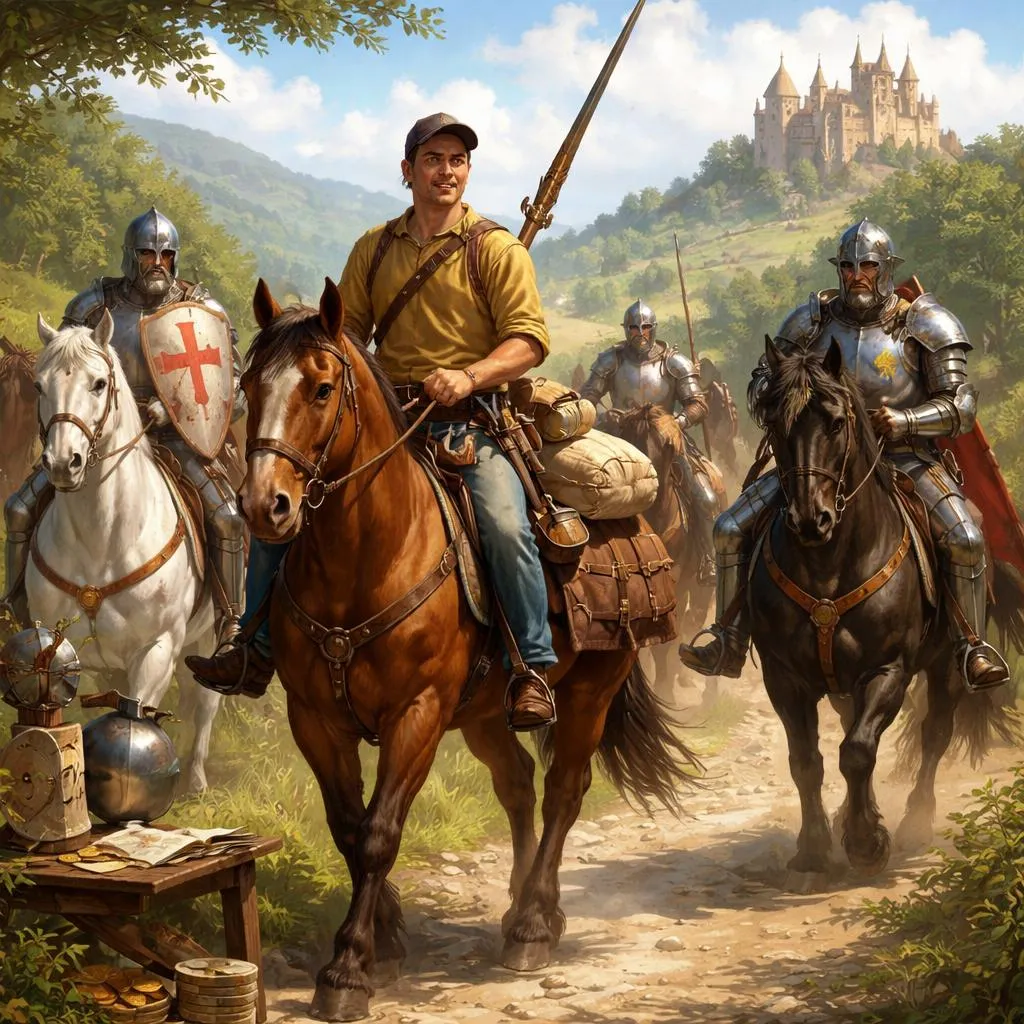

Sandy and I were on the road again, next morning, bright and early. It was so good to open up one’s lungs and take in whole luscious barrels-ful of the blessed God’s untainted, dew-fashioned, woodland-scented air once more, after suffocating body and mind for two days and nights in the moral and physical stenches of that intolerable old buzzard-roost! I mean, for me: of course the place was all right and agreeable enough for Sandy, for she had been used to high life all her days.
Poor girl, her jaws had had a wearisome rest now for a while, and I was expecting to get the consequences. I was right; but she had stood by me most helpfully in the castle, and had mightily supported and reinforced me with gigantic foolishnesses which were worth more for the occasion than wisdoms double their size; so I thought she had earned a right to work her mill for a while, if she wanted to, and I felt not a pang when she started it up:
“Now turn we unto Sir Marhaus that rode with the damsel of thirty winter of age southward—”
“Are you going to see if you can work up another half-stretch on the trail of the cowboys, Sandy?”
“Even so, fair my lord.”
“Go ahead, then. I won’t interrupt this time, if I can help it. Begin over again; start fair, and shake out all your reefs, and I will load my pipe and give good attention.”
“Now turn we unto Sir Marhaus that rode with the damsel of thirty winter of age southward. And so they came into a deep forest, and by fortune they were nighted, and rode along in a deep way, and at the last they came into a courtelage where abode the duke of South Marches, and there they asked harbour. And on the morn the duke sent unto Sir Marhaus, and bad him make him ready. And so Sir Marhaus arose and armed him, and there was a mass sung afore him, and he brake his fast, and so mounted on horseback in the court of the castle, there they should do the battle. So there was the duke already on horseback, clean armed, and his six sons by him, and every each had a spear in his hand, and so they encountered, whereas the duke and his two sons brake their spears upon him, but Sir Marhaus held up his spear and touched none of them. Then came the four sons by couples, and two of them brake their spears, and so did the other two. And all this while Sir Marhaus touched them not. Then Sir Marhaus ran to the duke, and smote him with his spear that horse and man fell to the earth. And so he served his sons. And then Sir Marhaus alight down, and bad the duke yield him or else he would slay him. And then some of his sons recovered, and would have set upon Sir Marhaus. Then Sir Marhaus said to the duke, Cease thy sons, or else I will do the uttermost to you all. When the duke saw he might not escape the death, he cried to his sons, and charged them to yield them to Sir Marhaus. And they kneeled all down and put the pommels of their swords to the knight, and so he received them. And then they holp up their father, and so by their common assent promised unto Sir Marhaus never to be foes unto King Arthur, and thereupon at Whitsuntide after, to come he and his sons, and put them in the king’s grace.*
[*Footnote: The story is borrowed, language and all, from the Morte d’Arthur.—M.T.]
“Even so standeth the history, fair Sir Boss. Now ye shall wit that that very duke and his six sons are they whom but few days past you also did overcome and send to Arthur’s court!”
“Why, Sandy, you can’t mean it!”
“An I speak not sooth, let it be the worse for me.”
“Well, well, well,—now who would ever have thought it? One whole duke and six dukelets; why, Sandy, it was an elegant haul. Knight-errantry is a most chuckle-headed trade, and it is tedious hard work, too, but I begin to see that there is money in it, after all, if you have luck. Not that I would ever engage in it as a business, for I wouldn’t. No sound and legitimate business can be established on a basis of speculation. A successful whirl in the knight-errantry line—now what is it when you blow away the nonsense and come down to the cold facts? It’s just a corner in pork, that’s all, and you can’t make anything else out of it. You’re rich—yes,—suddenly rich—for about a day, maybe a week; then somebody corners the market on you , and down goes your bucket-shop; ain’t that so, Sandy?”
“Whethersoever it be that my mind miscarrieth, bewraying simple language in such sort that the words do seem to come endlong and overthwart—”
“There’s no use in beating about the bush and trying to get around it that way, Sandy, it’s so, just as I say. I know it’s so. And, moreover, when you come right down to the bedrock, knight-errantry is worse than pork; for whatever happens, the pork’s left, and so somebody’s benefited anyway; but when the market breaks, in a knight-errantry whirl, and every knight in the pool passes in his checks, what have you got for assets? Just a rubbish-pile of battered corpses and a barrel or two of busted hardware. Can you call those assets? Give me pork, every time. Am I right?”
“Ah, peradventure my head being distraught by the manifold matters whereunto the confusions of these but late adventured haps and fortunings whereby not I alone nor you alone, but every each of us, meseemeth—”
“No, it’s not your head, Sandy. Your head’s all right, as far as it goes, but you don’t know business; that’s where the trouble is. It unfits you to argue about business, and you’re wrong to be always trying. However, that aside, it was a good haul, anyway, and will breed a handsome crop of reputation in Arthur’s court. And speaking of the cowboys, what a curious country this is for women and men that never get old. Now there’s Morgan le Fay, as fresh and young as a Vassar pullet, to all appearances, and here is this old duke of the South Marches still slashing away with sword and lance at his time of life, after raising such a family as he has raised. As I understand it, Sir Gawaine killed seven of his sons, and still he had six left for Sir Marhaus and me to take into camp. And then there was that damsel of sixty winter of age still excursioning around in her frosty bloom—How old are you, Sandy?”
It was the first time I ever struck a still place in her. The mill had shut down for repairs, or something.
خلفية ومقدمة المؤلف
هذا المقتطف مأخوذ من قصة مستوحاة من Morte d’Arthur، وهي مجموعة مشهورة من أساطير آرثرية جمعها السير توماس مالوري في القرن الخامس عشر. يعتبر عمل مالوري أحد أهم المصادر لحكايات الملك آرثر وفرسانه ومغامرات الفروسية التي شكلت الأدب والثقافة الغربية. يمزج Morte d’Arthur بين التاريخ والأسطورة والرومانسية، ويقدم حكايات عن الشجاعة والولاء والشرف والمأساة. تتضمن القصة هنا السير مارهاوس، فارس المائدة المستديرة، وتصور معركة فروسية كلاسيكية وموضوعات الشرف والمصالحة.
تفسير مفصل وأهمية
تجسد الفقرة روح الفروسية المتجولة في العصور الوسطى - الفرسان الذين يسافرون ويبحثون عن المغامرة وينخرطون في المعارك من أجل الحفاظ على العدالة والولاء. إن لقاء السير مارهاوس مع دوق ساوث مارش وأبنائه هو مثال حي على التحديات التي واجهها الفرسان: القتال الجسدي، واختبارات الشجاعة، والسعي لتحقيق السلام من خلال القوة. تقارن القصة أيضًا بين مُثُل الفروسية والواقع القاسي للحياة، حيث يعكس الراوي طبيعة النجاح العابرة و"مهنة" الفروسية المتجولة.
تضيف الحوارات بين الراوي وساندي منظورًا حديثًا، وروح الدعابة إلى حد ما، على الحكايات القديمة. يسلط الضوء على التوتر بين المُثُل الرومانسية والواقع العملي، وهو موضوع يتردد صداه مع القراء من جميع الأعمار. إن ذكر شخصيات مثل مورغان لو فاي والسير غاوين يربط هذه الحلقة بالأسطورة الآرثرية الأكبر، مما يثري نسيج الأساطير.
الدروس والأفكار للطلاب
-
الشجاعة والشرف: يظهر الفرسان الشجاعة في المعركة والشرف في النصر والهزيمة. يمكن للطلاب أن يتعلموا أهمية الدفاع عما هو صواب، ومواجهة التحديات بشجاعة، ومعاملة الآخرين باحترام حتى في الصراع.
-
الولاء والمصالحة: تنتهي القصة بدوق المهزوم وأبنائه وهم يتعهدون بالولاء للملك آرثر، مما يدل على أن القوة الحقيقية تشمل القدرة على المغفرة والمصالحة. هذا يعلم قيمة حل النزاعات سلميًا والحفاظ على التحالفات.
-
الواقع مقابل المثالية: تذكرنا تأملات الراوي للطلاب أنه على الرغم من أهمية المُثُل، فإن فهم الجانب العملي للحياة أمر بالغ الأهمية بنفس القدر. هذا التوازن هو المفتاح لاتخاذ قرارات حكيمة في المدرسة والصداقات والوظائف المستقبلية.
-
قوة سرد القصص: تدعم قصة ساندي، على الرغم من "حماقاتها الهائلة"، الراوي وتشجعه. يوضح هذا كيف يمكن للقصص أن تلهم وتريح وتعلمنا، حتى عندما تبدو خيالية.
تطبيق هذه الدروس في الحياة اليومية
-
في التعلم: تقبل التحديات كما يفعل الفرسان، بشجاعة وتصميم. عندما تواجه مواد صعبة، استمر واطلب المساعدة، مع العلم أن الجهد يؤدي إلى النمو.
-
في المواقف الاجتماعية: مارس الولاء والعدالة في الصداقات. عندما تنشأ صراعات، اهدف إلى المصالحة والتفاهم بدلاً من العداء المطول.
-
في النمو الشخصي: وازن الأحلام بالواقع. ضع أهدافًا ولكن كن مستعدًا للتكيف والتعلم من النكسات، تمامًا مثل وجهة نظر الراوي حول "مهنة" الفروسية المتجولة.
-
في الإبداع: استخدم سرد القصص كأداة للتعبير عن نفسك والتواصل مع الآخرين. مثل ساندي، يمكن أن يكون خيالك مصدرًا للقوة والفرح.
تنمية الصفات الإيجابية من القصة
-
الشجاعة: واجه المخاوف والتحديات مباشرة، سواء في التحدث أمام الجمهور أو الاختبارات أو المواقف الاجتماعية.
-
الاحترام: كرم آراء الآخرين وخلفياتهم، وتعزيز مجتمع داعم.
-
الحكمة: تعلم من النجاحات والإخفاقات، مع فهم أن كل تجربة تساهم في نموك.
-
الخيال: حافظ على إبداعك حيًا؛ يمكن أن يساعد في حل المشكلات وإثراء حياتك.
الخلاصة
تقدم هذه الفقرة من حكاية مستوحاة من آرثرية مادة غنية للطلاب لاستكشاف الموضوعات الخالدة للشجاعة والشرف والولاء والتوازن بين المثالية والواقع. من خلال التفكير في هذه القصص، يمكن للقراء الشباب اكتساب رؤى قيمة تنطبق ليس فقط على الأدب ولكن أيضًا على الحياة اليومية، مما يساعدهم على النمو ليصبحوا أفرادًا مفكرين وشجعان ورحماء.
