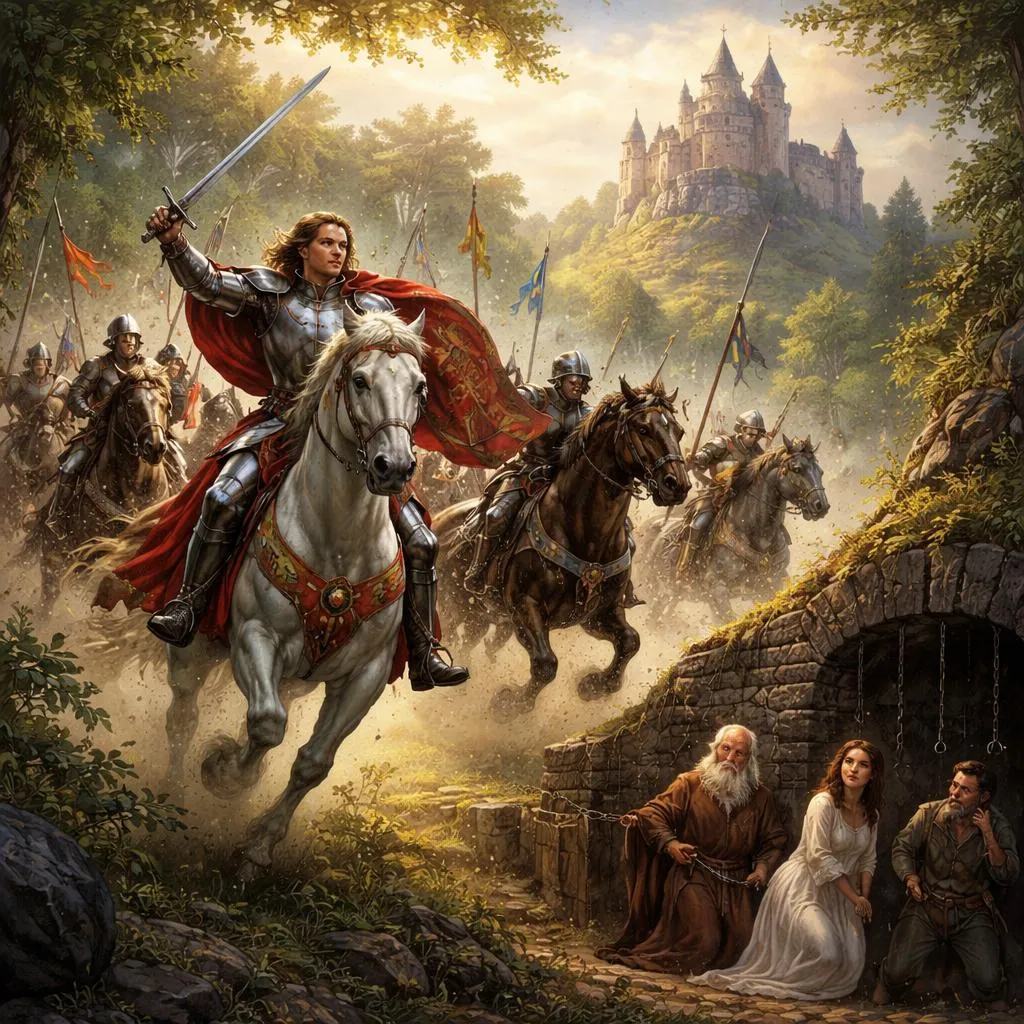

Nearing four in the afternoon. The scene was just outside the walls of London. A cool, comfortable, superb day, with a brilliant sun; the kind of day to make one want to live, not die. The multitude was prodigious and far-reaching; and yet we fifteen poor devils hadn’t a friend in it. There was something painful in that thought, look at it how you might. There we sat, on our tall scaffold, the butt of the hate and mockery of all those enemies. We were being made a holiday spectacle. They had built a sort of grand stand for the nobility and gentry, and these were there in full force, with their ladies. We recognized a good many of them.
The crowd got a brief and unexpected dash of diversion out of the king. The moment we were freed of our bonds he sprang up, in his fantastic rags, with face bruised out of all recognition, and proclaimed himself Arthur, King of Britain, and denounced the awful penalties of treason upon every soul there present if hair of his sacred head were touched. It startled and surprised him to hear them break into a vast roar of laughter. It wounded his dignity, and he locked himself up in silence. Then, although the crowd begged him to go on, and tried to provoke him to it by catcalls, jeers, and shouts of:
“Let him speak! The king! The king! his humble subjects hunger and thirst for words of wisdom out of the mouth of their master his Serene and Sacred Raggedness!”
But it went for nothing. He put on all his majesty and sat under this rain of contempt and insult unmoved. He certainly was great in his way. Absently, I had taken off my white bandage and wound it about my right arm. When the crowd noticed this, they began upon me. They said:
“Doubtless this sailor-man is his minister—observe his costly badge of office!”
I let them go on until they got tired, and then I said:
“Yes, I am his minister, The Boss; and to-morrow you will hear that from Camelot which—”
I got no further. They drowned me out with joyous derision. But presently there was silence; for the sheriffs of London, in their official robes, with their subordinates, began to make a stir which indicated that business was about to begin. In the hush which followed, our crime was recited, the death warrant read, then everybody uncovered while a priest uttered a prayer.
Then a slave was blindfolded; the hangman unslung his rope. There lay the smooth road below us, we upon one side of it, the banked multitude wailing its other side—a good clear road, and kept free by the police—how good it would be to see my five hundred horsemen come tearing down it! But no, it was out of the possibilities. I followed its receding thread out into the distance—not a horseman on it, or sign of one.
There was a jerk, and the slave hung dangling; dangling and hideously squirming, for his limbs were not tied.
A second rope was unslung, in a moment another slave was dangling.
In a minute a third slave was struggling in the air. It was dreadful. I turned away my head a moment, and when I turned back I missed the king! They were blindfolding him! I was paralyzed; I couldn’t move, I was choking, my tongue was petrified. They finished blindfolding him, they led him under the rope. I couldn’t shake off that clinging impotence. But when I saw them put the noose around his neck, then everything let go in me and I made a spring to the rescue—and as I made it I shot one more glance abroad—by George! here they came, a-tilting!—five hundred mailed and belted knights on bicycles!
The grandest sight that ever was seen. Lord, how the plumes streamed, how the sun flamed and flashed from the endless procession of webby wheels!
I waved my right arm as Launcelot swept in—he recognized my rag —I tore away noose and bandage, and shouted:
“On your knees, every rascal of you, and salute the king! Who fails shall sup in hell to-night!”
I always use that high style when I’m climaxing an effect. Well, it was noble to see Launcelot and the boys swarm up onto that scaffold and heave sheriffs and such overboard. And it was fine to see that astonished multitude go down on their knees and beg their lives of the king they had just been deriding and insulting. And as he stood apart there, receiving this homage in rags, I thought to myself, well, really there is something peculiarly grand about the gait and bearing of a king, after all.
I was immensely satisfied. Take the whole situation all around, it was one of the gaudiest effects I ever instigated.
And presently up comes Clarence, his own self! and winks, and says, very modernly:
“Good deal of a surprise, wasn’t it? I knew you’d like it. I’ve had the boys practicing this long time, privately; and just hungry for a chance to show off.”
خلفية ومقدمة المؤلف
هذه المقطع الحيوي هو إعادة سرد إبداعية مستوحاة من الحكايات الأسطورية للملك آرثر وفرسانه، تدور أحداثها على خلفية درامية ومسرحية. تستمد القصة من التقاليد الغنية لأساطير آرثر، التي تم تداولها وإعادة سردها لقرون. نشأت هذه الأساطير في بريطانيا في العصور الوسطى وتم تكييفها من قبل عدد لا يحصى من المؤلفين والشعراء والمسرحيين. يستخدم مؤلف هذه الرواية بالذات نبرة حديثة، فكاهية إلى حد ما، لإضفاء حياة جديدة على القصة الكلاسيكية، ودمج الصور التاريخية مع لمسة من السخرية والمفاجأة.
التفسير التفصيلي والأهمية
يلتقط المشهد لحظة توتر ومشهد: الملك المحكوم عليه ورفاقه يسخر منهم حشد معادٍ، ومع ذلك فإن كرامة الملك وولاء فرسانه يغيران المد في النهاية. وصول الفرسان على الدراجات، وهي لمسة فكاهية ولا زمنية، يرمز إلى الأمل والشجاعة وانتصار العدالة على القسوة والظلم. تستكشف القصة موضوعات الولاء والشجاعة والكرامة في الشدائد وقوة القيادة.
إن رفض الملك أن ينكسر بسبب سخرية الحشد يسلط الضوء على أهمية القوة الداخلية واحترام الذات. يوضح الإنقاذ الدرامي للفرسان قيمة الوقوف من أجل ما هو صواب، حتى عندما تبدو الاحتمالات ساحقة. تلامس هذه القصة أيضًا فكرة أن النبل الحقيقي لا يأتي من المظهر الخارجي أو المكانة الاجتماعية، بل من الأفعال والشخصية.
الدروس والرؤى للطلاب
-
الشجاعة والمرونة: يواجه الملك وأتباعه الإذلال والخطر لكنهم لا يستسلمون. يمكن للطلاب أن يتعلموا أهمية الثبات في معتقداتهم وقيمهم، حتى عندما يسخر منهم الآخرون أو يعارضونهم.
-
الولاء والصداقة: يعلم ولاء الفرسان لملكهم قيمة دعم الأصدقاء والوقوف معًا في الأوقات الصعبة.
-
القيادة والكرامة: يوضح سلوك الملك الهادئ والمهيب، على الرغم من ملابسه الرثة وجروحه، أن القيادة الحقيقية تتعلق بالشخصية، وليس فقط بالقوة أو المظهر.
-
العدالة والإنصاف: تشجع ذروة القصة، حيث ينقذ الفرسان الملك من الإعدام الجائر، الطلاب على التفكير في الإنصاف والشجاعة للدفاع عما هو صواب.
تطبيق هذه الدروس في الحياة اليومية
-
في المدرسة: يمكن للطلاب ممارسة المرونة بعدم الاستسلام عند مواجهة التحديات، مثل المواد الصعبة أو الضغوط الاجتماعية. يمكنهم أيضًا إظهار الولاء من خلال دعم زملائهم في الفصل والوقوف ضد التنمر.
-
في الصداقات: مثل الفرسان، يجب أن يكون الطلاب أصدقاء موثوقين وداعمين، ويساعدون بعضهم البعض في الأوقات الصعبة.
-
في القيادة: سواء في المشاريع الجماعية أو الأندية، يمكن للطلاب أن يتعلموا القيادة بكرامة وإنصاف، وإلهام الآخرين من خلال مثالهم.
-
في المواقف الاجتماعية: الوقوف من أجل العدالة والإنصاف، حتى بطرق صغيرة، يساعد على خلق مجتمع ألطف وأكثر احترامًا.
تنمية الصفات الإيجابية من القصة
-
بناء القوة الداخلية: مارس الثقة بالنفس والهدوء، خاصة عند مواجهة الانتقادات أو النكسات.
-
تطوير الولاء: قدّر الصداقات ورعاها، وأظهر اللطف والدعم.
-
اعتناق الشجاعة: تحمل التحديات بشجاعة وتحدث ضد الظلم.
-
ممارسة القيادة: قدّم القدوة الحسنة، مع الاحترام والنزاهة.
التأمل والتقدير
تدعو هذه القصة القراء إلى التفكير في معنى أن يكونوا نبلاء وشجعانًا حقًا. إنها تتحدىنا للنظر إلى ما هو أبعد من المظاهر وتقدير الشجاعة والولاء والعدالة. من خلال الانخراط في مثل هذه القصص، يمكن للطلاب تطوير التعاطف والوعي الأخلاقي وفهم أعمق للشخصية الإنسانية. ستخدمهم هذه الصفات جيدًا ليس فقط في الأدب ولكن في جميع مجالات الحياة.
باختصار، هذه الرواية الخيالية للحظة آرثرية هي أكثر من مجرد حكاية مسلية. إنها مصدر غني للإلهام والتوجيه للقراء الشباب، وتشجعهم على تنمية الفضائل التي ستساعدهم على النمو ليصبحوا أفرادًا مفكرين وشجعانين ورحيمين.
