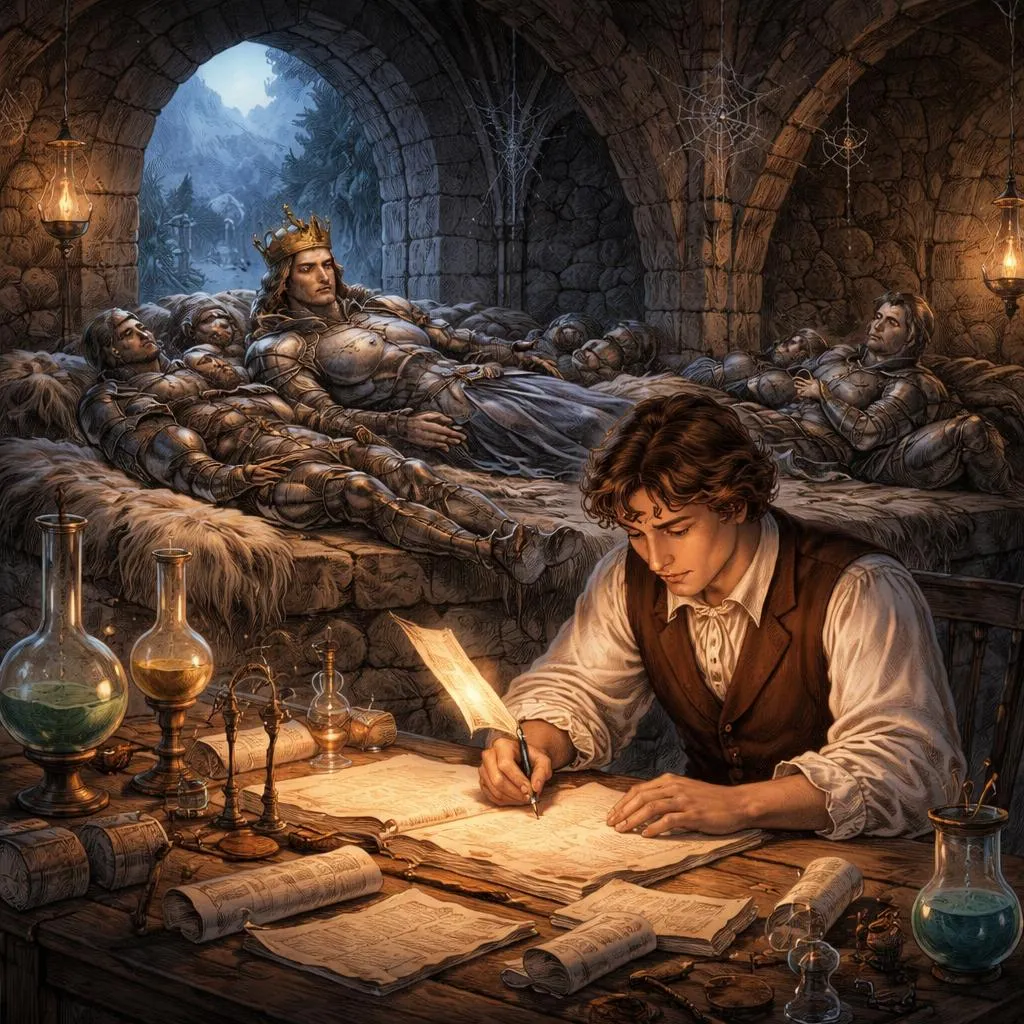

I, Clarence, must write it for him. He proposed that we two go out and see if any help could be accorded the wounded. I was strenuous against the project. I said that if there were many, we could do but little for them; and it would not be wise for us to trust ourselves among them, anyway. But he could seldom be turned from a purpose once formed; so we shut off the electric current from the fences, took an escort along, climbed over the enclosing ramparts of dead knights, and moved out upon the field. The first wounded mall who appealed for help was sitting with his back against a dead comrade. When The Boss bent over him and spoke to him, the man recognized him and stabbed him. That knight was Sir Meliagraunce, as I found out by tearing off his helmet. He will not ask for help any more.
We carried The Boss to the cave and gave his wound, which was not very serious, the best care we could. In this service we had the help of Merlin, though we did not know it. He was disguised as a woman, and appeared to be a simple old peasant goodwife. In this disguise, with brown-stained face and smooth shaven, he had appeared a few days after The Boss was hurt and offered to cook for us, saying her people had gone off to join certain new camps which the enemy were forming, and that she was starving. The Boss had been getting along very well, and had amused himself with finishing up his record.
We were glad to have this woman, for we were short handed. We were in a trap, you see—a trap of our own making. If we stayed where we were, our dead would kill us; if we moved out of our defenses, we should no longer be invincible. We had conquered; in turn we were conquered. The Boss recognized this; we all recognized it. If we could go to one of those new camps and patch up some kind of terms with the enemy—yes, but The Boss could not go, and neither could I, for I was among the first that were made sick by the poisonous air bred by those dead thousands. Others were taken down, and still others. To-morrow—
To-morrow. It is here. And with it the end. About midnight I awoke, and saw that hag making curious passes in the air about The Boss’s head and face, and wondered what it meant. Everybody but the dynamo-watch lay steeped in sleep; there was no sound. The woman ceased from her mysterious foolery, and started tip-toeing toward the door. I called out:
“Stop! What have you been doing?”
She halted, and said with an accent of malicious satisfaction:
“Ye were conquerors; ye are conquered! These others are perishing —you also. Ye shall all die in this place—every one—except him. He sleepeth now—and shall sleep thirteen centuries. I am Merlin!”
Then such a delirium of silly laughter overtook him that he reeled about like a drunken man, and presently fetched up against one of our wires. His mouth is spread open yet; apparently he is still laughing. I suppose the face will retain that petrified laugh until the corpse turns to dust.
The Boss has never stirred—sleeps like a stone. If he does not wake to-day we shall understand what kind of a sleep it is, and his body will then be borne to a place in one of the remote recesses of the cave where none will ever find it to desecrate it. As for the rest of us—well, it is agreed that if any one of us ever escapes alive from this place, he will write the fact here, and loyally hide this Manuscript with The Boss, our dear good chief, whose property it is, be he alive or dead.
خلفية ومقدمة المؤلف
هذا المقتطف من "The Last of the Winnebagos"، وهي قصة كتبتها كوني ويليس، وهي مؤلفة خيال علمي مشهورة معروفة برواياتها الخيالية واستكشافها العميق للطبيعة البشرية. تدور أحداث القصة في مستقبل بائس حيث تواجه الإنسانية تحديات كبيرة، وتمزج بين عناصر الخيال والفنتازيا والخيال العلمي. غالبًا ما تستخدم ويليس رواياتها لاستكشاف موضوعات البقاء والولاء وعواقب الحرب.
التفسير التفصيلي والأهمية
تصور الفقرة مشهدًا كئيبًا لحقل معركة مليء بالفرسان القتلى والجرحى، يرمز إلى أعقاب الصراع وعبثية الحرب. تمثل الشخصيات، بما في ذلك "The Boss" وكلارنس، المرونة والقيادة وسط اليأس. إن وجود ميرلين، متنكرًا في هيئة امرأة متواضعة، يضيف عنصرًا صوفيًا، مما يشير إلى أن الأمل والحكمة يمكن أن يأتيان من أماكن غير متوقعة. تستكشف القصة موضوعات التضحية، وحتمية التغيير، والطبيعة المعقدة للنصر والهزيمة.
تتناول الرواية أيضًا فكرة الوقوع في فخ أفعال المرء - جسديًا ومجازيًا. الشخصيات محاصرة بين مخاطر البقاء في مكانها ومخاطر المضي قدمًا، مما يعكس الخيارات الصعبة التي يواجهها الناس في أوقات الأزمات. يشير نوم "The Boss" لمدة ثلاثة عشر قرنًا إلى فترة توقف طويلة أو فترة انتظار قبل التجديد أو الصحوة، مما يرمز إلى الأمل في المستقبل على الرغم من المعاناة الحالية.
الدروس والأفكار للطلاب
-
الشجاعة والقيادة: إن تصميم The Boss على مساعدة الجرحى على الرغم من المخاطر يعلم أهمية الشجاعة والمسؤولية. يمكن للطلاب أن يتعلموا أن القادة الحقيقيين يتصرفون بإيثار ويواجهون التحديات مباشرة.
-
الرحمة في الشدائد: إن الجهد المبذول لمساعدة المصابين، حتى عندما تكون الموارد محدودة، يسلط الضوء على التعاطف واللطف. وهذا يشجع القراء الصغار على رعاية الآخرين، وخاصة في الأوقات الصعبة.
-
الحكمة والقدرة على التكيف: يذكرنا تنكر ميرلين وأفعاله الغامضة بأن الحكمة يمكن أن تكون مخفية في أشكال غير مرجحة وأن القدرة على التكيف أمر بالغ الأهمية. يجب أن يكون الطلاب منفتحين ومستعدين للتعلم من مصادر غير متوقعة.
-
فهم العواقب: توضح القصة كيف أن للأفعال عواقب، مما يؤدي في بعض الأحيان إلى حبس الناس في مواقف صعبة. يمكن أن يساعد هذا الطلاب على التفكير النقدي في اختياراتهم والتأثير الذي تحدثه على أنفسهم وعلى الآخرين.
تطبيق هذه الدروس في الحياة اليومية
-
في التعلم: تمامًا مثلما تواجه الشخصيات قرارات صعبة، يمكن للطلاب تطوير مهارات حل المشكلات من خلال التعامل مع التحديات بعناية والبحث عن المساعدة عند الحاجة.
-
في المواقف الاجتماعية: إن إظهار الرحمة والقيادة بين الأقران يعزز بيئة داعمة. إن الدفاع عن الآخرين والتصرف بلطف يبني صداقات قوية.
-
في النمو الشخصي: إن احتضان التغيير والتعلم من الأخطاء يساعد الطلاب على النمو. مثل هوية ميرلين المخفية، يأتي النمو أحيانًا من تجارب غير متوقعة.
تنمية القيم الإيجابية من القصة
-
المرونة: شجع الطلاب على الاستمرار في المحاولة حتى عندما تبدو الأوضاع ميؤوسًا منها، تمامًا مثل الشخصيات التي تواصل رعاية بعضها البعض على الرغم من الصعاب الهائلة.
-
التعاطف: قم بالترويج للأنشطة التي تساعد الطلاب على فهم مشاعر الآخرين، وتعزيز رسالة القصة حول مساعدة المحتاجين.
-
التفكير النقدي: استخدم السيناريوهات المعقدة للقصة لممارسة تحليل المشكلات والنظر في وجهات نظر مختلفة.
-
احترام التاريخ والقصص: إن فهم أن القصص تحمل دروسًا من الماضي يمكن أن يلهم الطلاب لتقدير الأدب والتعلم منه.
الخاتمة
تقدم هذه القصة مادة غنية للقراء الشباب لاستكشاف موضوعات الشجاعة والرحمة والحكمة. من خلال التفكير في صراعات الشخصيات وخياراتها، يمكن للطلاب الحصول على رؤى حول حياتهم وتطوير المهارات التي ستساعدهم على مواجهة التحديات في المدرسة وخارجها. إن تشجيع المناقشة والمشاريع الإبداعية بناءً على القصة يمكن أن يعمق الفهم ويجعل هذه الدروس لا تُنسى وذات مغزى.
